Crash

  • | | | | |

    First Air Jet Crash Update


    Click to view full size photo at Airliners.net
    Contact photographer Gilbert Hechema

    What: First Air Boeing 737-210C en route from Yellow Knife to Resolute
    Where: near Resolute Airport, Nunavut, Canada
    When: August 20, 2011
    Who: 4 crew, 11 passengers, 12 fatalities
    Why: After the First Air jet was on final instrument landing system approach to 35T but failed to update its position.

    The fog obscured its location, but shortly afterwards, lifting fog revealed the burning wreckage broken into three pieces, and the scattered 2,250 kilograms of food the flight was carrying. That food has been of interest to hungry polar bears, and a trial to forensic crews protecting the evidence.

    Remains of the passengers have been recovered. Eleven individuals were flown to Ottowa for identification. The black boxes have been recovered and taken to an Ottawa lab.

    The Air Line Pilots Association has been declared an official observer of the crash.

    Note: CFIT is a “Controlled flight into terrain,” an accident in which an airworthy aircraft under pilot control is unintentionally flown into an obstacle.

  • | | | |

    Petrobra Oil Field Chopper Crashes off Coastal Brazil


    Click to view full size photo at Airliners.net
    Contact photographer André Martinis

    What: Senior Táxi Aéreo Agusta Westland AW139 from oil platform to Rio de Janeiro
    Where: in the Campos Basin, Rio de Janeiro
    When: August 19, 2011, 17:15
    Who: 4 aboard, 4 fatalities
    Why: On Friday afternoon, the chopper charted to Brazilian oil major Petrobras set out from the PetrobrasP-65 platform en route to Macaé.

    While miles from shore, the crew declared emergency, and went down 100 km off the coast of Rio de Janeiro. Contact with the chopper was lost at 17:00 local time.

    A Bandeirante Patrol plane and two search Brazilian military aircraft, the 4th Squadron of the 7th Aviation Group, a H-34 Super Puma helicopter, and the 3rd Squadron of the 8th Aviation Group initiated a search for the downed Senior Táxi helicopter. In all, there were five aircraft, a helicopter and four ships, including a Guajará Navy patrol vessel and a Lynx helicopter on standby in the area.

    After two days of searching in rough seas, three bodies were found on the ocean floor 100 meters down and 62 miles from the coast. One body is still somewhere in the ocean.

    The fatalities are listed as Rommel Oliveira Garcia, pilot, Lauro Pinto Haytzann, co-pilot, both employees of Senior Air Taxis, and passengers Ricardo Leal de Oliveira from the company Engevix, and Joao Carlos Pereira da Silva, the Brasitest inspector.

  • | | | |

    Another Antonov Crashes in Siberia

    What: Sayanian Cedar Antonov 2 en route fron Petropavlovka to Toora-Kem
    Where: Tuva, Russia
    When: August 22, 2011
    Who: 9 aboard, 1 fatality
    Why: The Antonov 2 owned by a logging company made a hard landing in the Todzhi district of Tuva. The plane was on the way to Toora-Kem when it ended up on the island near the Choigan-Hol Lake.

    Passengers were reported to be fishermen en route to fishing sites. One passenger was killed in the crash. A Mi-8 chopper with a 3-person rescue crew was sent to the area.

    The injured were transported to area hospitals.

  • | | | | | |

    Mystery Boeing Crash in Nunavut Canada


    Click to view full size photo at Airliners.net
    Contact photographer Gilbert Hechema

    What: First Air Boeing 737-210C en route from Yellow Knife to Resolute
    Where: near Resolute Airport, Nunavut, Canada
    When: August 20, 2011
    Who: 4 crew, 11 passengers, 12 fatalities
    Why: On approach to Resolute Bay Airport, the plane impacted the hillside. The wreckage was found five miles from the airport.

    Three survivors were recovered. There were twelve fatalities, including the entire crew. Two survivors (a seven year old and a 48 year old) were taken to Ottawa hospital, and the third (a 23 year old woman) is reported to be stable at Qikiqtani General Hospital in Iqaluit where all of the survivors were originally taken. Two forensic teams are on the scene (one to identify the bodies, and one for accident investigation), and the black boxes have been recovered.

    The weather at the time of the crash was he weather was rainy with a low cloud ceiling, and reported to be patchy fog. A mock rescue military exercise was going on with 700 military personnel when the crash was reported. They responded to the crash with helicopters and medical personnel. Eleven RCMP personnel were also part of the rescue unit. The senior administrative officer, Ralph Alexander, said it wasn’t foggy enough in Resolute at the time of the crash to have caused the accident, and that planes landed there in worse visibility. However there have been reports of locals hearing the impact but not seeing anything because of dense fog. The charred wreckage is in three parts with smaller plane parts and remains scattered.

    The crash site is less than two kilometres west of Resolute, a small tight-knit community with many individuals directly affected by the twelve fatalities.

    The passenger manifest has not yet been made public but the owner of South Camp Inn, Aziz (Ozzie) Kheraj, reportedly lost a granddaughter on the crash, and one survived.

    First Air held a news conference at in Kanata, Ontario on Sunday at 11 a.m. ET.

    Transport Canada issued the following release:


    At approximately 12:30 EST, First Air Flight 6560 from Yellowknife to Resolute Bay crashed on approach to Resolute Bay. There were 15 passengers on board. At this time, 12 people are thought to be dead and three injured. Our thoughts go out to those affected by this tragic accident.

    Transport Canada has appointed a Minister’s Observer, who will keep TC informed of the investigation’s progress. We will cooperate fully with the Transportation Safety Board who is currently on site investigating this accident.

    The Canadian Armed Forces are in Resolute Bay for Exercise Operation Nanook 2011 and are responding in support of emergency operations to the situation.

    Contacts:

    Media Relations
    Transport Canada, Ottawa
    613-993-0055

    First Air published this:

    On Sunday August 21, 2011, First Air Vice President of Marketing and Sales, Chris Ferris, made the following statement to the media from the First Air Head Office in Kanata:

    As you are aware, yesterday at 12:40pm First Air experienced a tragic loss of
    charter flight 6560. We are deeply saddened by this tragedy and offer our sincere condolences to the families.

    The details we have at this time are as follows: a First Air Boeing 737-200 combi travelling from Yellowknife to Resolute Bay, went down 5 miles from the airport. The flight was carrying 11 passengers and four crew. There were 12 fatalities including all four crew members.

    Our first priority has been contacting and looking after the families of passengers and crew. Out of respect for the passengers, our crew, and their families, we are not releasing any names or passenger details.

    The three injured passengers were Medivac’d to Iqaluit for further treatment last evening. Two of the three passengers have since been moved to Ottawa, while the third remains in Iqaluit in stable condition.

    At this time the cause of the accident is unknown. The Transportation Safety Board is conducting their investigation and First Air is cooperating fully.

    Our thoughts and focus are with the families and friends of the passengers and crew; and the community of Resolute Bay. Field teams including counsellors, have been deployed to provide support in Resolute Bay, Yellowknife and other main stations in our network.

    We would like to thank the Canadian Military whose on-site presence and immediate response was instrumental in the rescue efforts.

    We will be providing further updates as they become available.

  • | | |

    Chopper Down in Beijing, Search for Survivors


    Click to view full size photo at Airliners.net
    Contact photographer Makila

    What: Changhe CA109 (Agusta A109) Police helicopter
    Where: Beijing China
    When: August 17, 2011
    Who: 4 aboard missing, 1 rescued
    Why: In Beijing, five crew members were in a police helicopter returning from a drill when it crashed into a reservoir. One crew member was rescued.

    The drill occurred in a mountainous region of Miyun County that ended at 9:12 a m.

  • | | | | | |

    Another Antonov Crash In Russia, Engine Fire, Cargo Flight, 11 lost


    Pictured: A KNAAPO Antonov An-12BP like the one that crashed

    Click to view full size photo at Airliners.net
    Contact photographer Vala

    What: Avis Amur AN12 AN-12 en route from Magadan to Keperveyem
    Where: Magadan
    When: Aug 9th 2011
    Who: 11 crew
    Why: While en route, the plane developed an engine fire and radioed that they would be returning to Magadan. The fire is being attributed to a fuel leak. The flight crashed on the way back, disappearing from radar. Fog and adverse weather prevented rescue teams from being able to fly in. The 9 crew and 2 attendants have been reported missing. The plane was carrying 16 tons of food.

    The cargo plane was being leased from KnAAPO. Rescuers took a ground route to the area of the crash. The emergency beacon went off 10 kilometers from the Omsukchan village. No survivors were found.

    Avis-Amur is being investigated for a maintenance of safety violations, and there may be criminal charges pending.


    Click to view full size photo
    Contact photographer Pavel Azernikov

  • | | | |

    Chopper Crash Kills 10

    What: PT Nyaman Air Bell 412 Chopper chartered by PT Nusa Halmahera Minerals en route from Manado Sulawesi Island in Indonesia to the Gosowong Mine
    Where: Manado, Bitung, North Sulawesi
    When: August 2, 2011, 2:30
    Who: 10 aboard, (8 employees and 2 flight crew)
    Why: The helicopter PK-FUG flown by pilot Edi Purnomo crashed into Mount Dua Saudara while en route. Nine aboard died in the crash, including two Australians, two South Africans and four Indonesians were passengers on the flight. The crew were Indonesian.
    The flight was missing initially. Foggy weather hampered the search until it was finally found at 2 a m August 3, with one survivor, who died en route to the hospital. Work has been suspended at Newcrest’s Gosowong gold mine in North Sulawesi, Indonesia.

    The chopper took off at 4:26 a.m. and lost contact with ATC shortly after takeoff.

    The chipper was a joint venture between Australia’s Newcrest Mining and Indonesian company Aneka Tambang.
    Contact information for the families:

    Callers from Australia – 1800 267 616 Callers from PNG – 0008 661 164 Callers from Indonesia
    o Landline – +62 21 7884 6956 ext 4005
    o Mobile – +62 816 237002 Callers from other countries
    o Landline – +61 3 9522 5562 o Mobile – +61 419 654 092

  • | | | |

    Airblue 202 A Year Later


    India’s Civil Aviation Authority (CAA) has issued a statement which they are calling an interim report. It is not what we would call an interim report, but appears to be a report that there is a report that restates the facts as they were known already, not containing actual investigation output. The media has already highlighted the findings of the interim report several times. The report notes that the investigation covered system issues, fire, bird strikes, etc but does not mention causes or place responsibility, and promises a release when component manufacturers have responded.

    So basically, the families have waited a year for the Air Blue Interim report, on the July 28 flight from Karachi’s Jinnah International Airport to Benazir Bhutto International Airport and still have no satisfactory answers.

  • | | | | | |

    Antonov Overshoots Runway in Rough Weather

    What: IrAero Antonov An-24RV en route from Chita to Blagoveshchensk
    Where: Blagoveshchensk Airport, Russia
    When: August 08, 2011
    Who: 35 passengers, 5 crew, 10+ injuries
    Why: On approach to Blagoveshchensk airport, the plane encountered rough weather and overshot the runway.

    The plane encountered wind shear on approach, injuring ten passengers. The plane lost a wing in the landing, and the fuselage was damaged, coming to rest 200 meters from the runway. Three children were aboard.

    A passenger said (loosely quoted) “We were sitting closer to the wing. As soon as the plane touched the ground, it started to shake. Panic among the passengers, nobody knew what was happening. I heard children crying. When the plane finally stopped, I breathed a sigh of relief. Thank God, still alive!”


    Link to photographer, Sergey Makarov
    Email Sergey Makarov

  • | | | | |

    Spanair JK5022: Final Report

    Update
    What: Spanair Flight JK5022, a 15-year-old MD-82 jet en route to Las Palmas in the Canary Islands.
    Where: Madrid airport Terminal Four
    When: Wednesday, Aug. 20, 2008 2:45pm
    Who: Carrying 166 passengers and nine crew, at the time of this writing, the number of fatalities had mounted to 154 people.
    Why: The jet swerved off the runway and caught fire during takeoff.

    The final report of Spanair Flight JK5022 was released, it claims that the pilots failed to deploy the flaps for takeoff. The report blames the crash on “pilot error.” The automated voice warning to alert the crew did not sound.

    Already more than one hour late, the flight experienced a technical issue with the plane (a sensor reporting excessive temperature in an air intake, and the temperature sensor was de-activated on the ground) that forced the first takeoff attempt to be aborted when there were failure signals taxiing away from the terminal. The aircraft was inspected and then tried to take-off for the second time, which ended in the crash.

    The National Transportation Safety Board said that “that the probable cause of the accident was the flightcrew’s failure to use the taxi checklist to ensure the flaps and slats were extended for takeoff. Contributing to the accident was the absence of electrical power to the airplane takeoff warning system which thus did not warn the flightcrew that the airplane was not configured properly for takeoff. The reason for the absence of electrical power could not be determined.

    A similar disaster occurred in the Northwest Flight 255 in Detroit in 1987 when 154 people also died in an MD-82 due to incorrect flap settings.

    As a consequence, Spanair and McDonnell Douglas now require a TOWS* system check prior to every flight.

    The Interim Report is available here.

    Final report (Spanish).PDF

    *The Take Off Warning System is part of CAWS. TOWS provides alert warnings on the following components involved in the configuration of the aircraft for takeoff: Flaps, Slats, Brakes, Auto brake, Auto spoilers, Spoilers and Stabilizer Trim.

  • | | | | | | | |

    Asiana Cargo Jet Lost at Sea


    Click to view full size photo at Airliners.net
    Contact photographer Niki Kapsamunov

    What: Asiana Boeing 747-400 Cargo plane en route from South Korea’s Incheon International Airport and to Pudong China
    Where: southern resort island of Jeju, South Korea
    When: July 27, 2011 3:05am local time
    Who: two people
    Why: At 7600 feet, the crew reported control problems, and the aircraft’s transponder transmitted the emergency code. Sixty-seven minutes after takeoff, the crew reported fire in the cargo hold and lost contact with ATC. They were planning to divert to Jeju, but instead the plane crashed off of Jeju island. There were strong winds at the time of the plane’s disappearance. The captain was 51 and the first officer was 44; and pilot, Choi Sang-ki, and co-pilot, Lee Jung-woong are still missing.

    One wing of the plane has been recovered, then the rest of the wreckage was found by a coast guard patrol boat 67 miles west of Jeju city. The 58 tons of cargo included amino acid solution, synthetic resin, lithium batteries, paint and other potentially dangerous material. A search for the black boxes is ongoing.

  • | | |

    Russia: Mi-8 helicopter Crashes, Killing 3, Two Survivors

    What: Mi-8 helicopter
    Where: Billings, Chukotka region Russia
    When: July 25 2011
    Who: 5 passengers, 3 fatalities
    Why: On a standard operational flight on the Chukotka border, the Mi-8 helicopter developed engine problems and then one engine shut down. The pilot lost control of the helicopter and it crashed in Kamchatka, and caught on fire on impact.

    Doctors and paramedics were flown in to the site.

    One crew member and two passengers died on the scene. There were two survivors, the crew commander and the co-pilot.

    THe chopper is reported by news agencies as belonging to a local airline.

  • | | | | |

    Private Chopper Crashes Carrying Australian Concrete Entrepreneur

    What: DAVCRON PTY LTD Bell 206
    Where: South Turramurra, Sydney Australia
    When: July 22, 2011
    Who: 2 fatalities
    Why: While on a routine flight from Rosehill to the owner’s hanger in Wyee, the bell chopper crashed north of Sydney while flying in a heavy downpour. The wreckage was spread in a hundred meter area at the foot of a cliff in Lane Cove National Park. The pilot and passenger were confirmed dead. Emergency services could only reach by rappelling down. Recovery has been postponed till the weekend because of continued bad weather.

    Witnesses say they may have seen something fly off the back of the helicopter and one witness said the helicopter was upside down when it fell. Descriptions of the troubled helicopter included “clattering” and “explosion.”

    Initially the victims of the crash were not known, but their names have been released. The bodies of pilot Colin Greenwood, 35 and 85 year old Businessman Bruce Campbell were found in the wreckage.

    Officials say the pilot had filed a flight plan although it was not required.

    Campbell founded Davcron Engineering Pty Ltd and owned the chopper which regularly on Fridays flew him to his semi-rural home. Campbell has three sons and is a grandfather of five.

  • | | | | |

    Waterford Pilot Crashes by Williams Lake

    What: 1946 Piper J3C-65 Cub
    Where: Waterford Township
    When: July 19, 2011 7:10 p.m.
    Who: pilot
    Why: The pilot was attempting to make a lake landing with the single engine seaplane when he hit trees near Ideal Terrace and crashed in a field near Williams Lake. The pilot managed to avoid houses in the area, but was injured in the crash with severe injuries to his neck and cuts on his legs.

  • | |

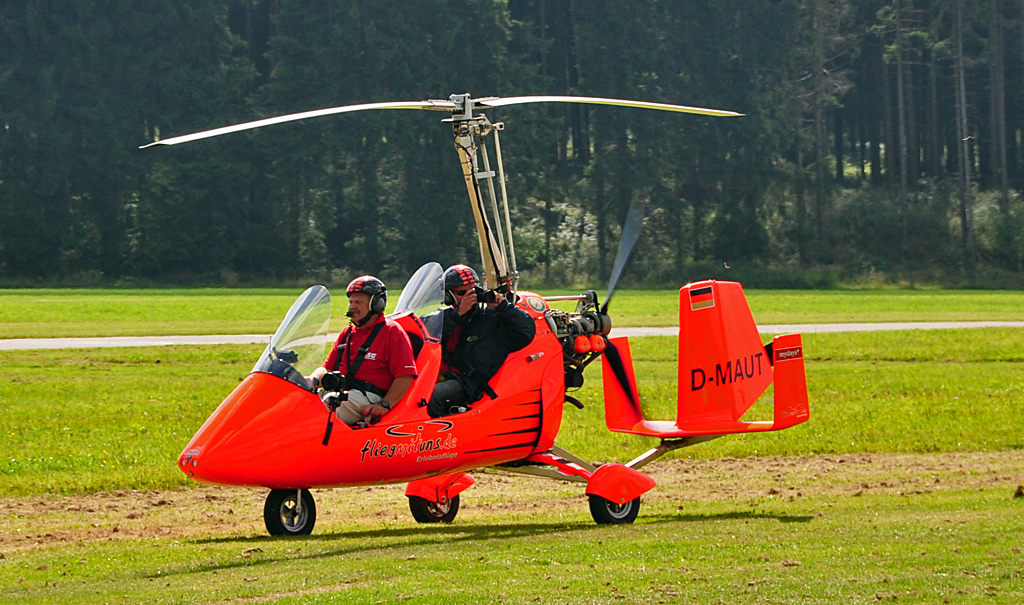
    Gyro Crashes in German Field

    What: Fliegmituns.de AutoGyro Europe MTOsport
    Where: near Breitscheid Airfield, Germany
    When: July 15, 2011 at 15:10
    Who: 2 fatalities
    Why: On approach to Breitscheid, the Gyrocopter went into a tailspin, fell like a stone, and crashed in a field. The 59 year old pilot and the 26 year old passenger (who had received the flight as a birthday gift from his girlfriend) both died on the scene, 150 meters from the runway.

    The pilot had been an Air Force transport pilot, and worked for the Defense Department, and an Airbus captain.

    Both the pilot and the passenger are being autopsied in order to exclude heart attack or illness as a cause for the accident.


    photo, credit: Rolp Reinhardt

  • | | | | |

    Cessna Crash under Investigation

    What: Cessna C-210
    Where: Airport Road near Pastoral Center St. Charles Borromeo, Romeoville, near Lewis University Airport
    When: June 26, 2011, 2:49 p.m.
    Who: Pilot Victor Pantaleo and passenger
    Why: After experiencing engine problems on taking off from the Brookeridge Airpark in Downers Grove, the pilot was attempting to return to the airport, when the plane struck trees before impacting the ground front of St. Charles Barromeo Pastoral Center in Romeoville. The plane took down powerlines when it crashed.

    The passenger was half ejected from the plane, and rescuers had to disengage him but he survived. Pantaleo was airlifted to Good Samaritan Hospital in Downers Grove and was pronounced dead.

    Firefighters from the Lockport Township Fire Department responded to the crash.

    The NTSB is investigating.

    The mass for Panatelo was held at at Our Lady of Mt. Carmel Church.

  • | | |

    Luddington Crash Report Posted: Debris in Fuel

    TSB Identification: CEN10FA465
    14 CFR Part 91: General Aviation
    Accident occurred Friday, July 23, 2010 in Ludington, MI
    Aircraft: CESSNA U206F, registration: N82531
    Injuries: 4 Fatal,1 Minor.

    On July 23, 2010, at 1017 eastern daylight time (edt), a Cessna U206F, N82531, sustained substantial damage when it was ditched in Lake Michigan about 5 miles west of Ludington, Michigan, after a loss of engine power. The airplane was owned and operated by the pilot as a personal flight under 14 Code of Federal Regulations Part 91. It departed the Gratiot Community Airport (AMN), Alma, Michigan, at 0850 and was en route to Rochester International Airport (RST), Rochester, Minnesota. The single-engine airplane was over Lake Michigan at 10,000 feet above mean sea level (msl) when the engine lost power. The pilot reversed course but was unable to reach the shore, and he ditched the airplane. The pilot survived and was rescued by a fishing boat about 38 minutes later. The pilot rated passenger and three other passengers did not survive. Visual meteorological conditions prevailed at the time of the accident. An instrument flight rules (IFR) flight plan was activated.

    (Full)
    HISTORY OF FLIGHT

    On July 23, 2010, at 1017 eastern daylight time (edt), a Cessna U206F, N82531, sustained substantial damage when it was ditched in Lake Michigan about 5 miles west of Ludington, Michigan, after a loss of engine power. The airplane was owned and operated by the pilot as a personal flight under 14 Code of Federal Regulations Part 91. It departed the Gratiot Community Airport (AMN), Alma, Michigan, at 0850 and was en route to Rochester International Airport (RST), Rochester, Minnesota. The single-engine airplane was over Lake Michigan at 10,000 feet above mean sea level (msl) when the engine lost power. The pilot reversed course but was unable to reach the shore, and he ditched the airplane. The pilot survived and was rescued by a fishing boat about 38 minutes later. The pilot rated passenger and three other passengers did not survive. Visual meteorological conditions prevailed at the time of the accident. An instrument flight rules (IFR) flight plan was activated.

    On July 23, 2010, about 0659, the pilot rated passenger called the Princeton Automated Flight Service Station to obtain a weather brief and to file an IFR flight plan. The briefer informed him that there was an airmen’s meteorological information (AIRMET) for IFR conditions for the entire route of flight that was valid until about 1100 – 1400. There was a Convective significant meteorological information (SIGMET) to the south that paralleled the route of flight. The briefer reported that the winds aloft were from 260 degrees at 41 knots at 9,000 feet, and 270 degrees at 35 knots at 12,000 feet. The pilot rated passenger filed the flight plan and identified the flight as a “lifeguard” flight.

    The pilot reported that the purpose of the flight was to take one of the passengers to the Mayo Clinic in Rochester, Minnesota, for medical treatments. The flight was a personal flight and was not associated with a charity organization. The patient and his wife were seated in the aft seats, seats 5 and 6. The patient’s doctor was sitting in the middle row on the left in seat 3. The pilot was in the left front seat and the pilot rated passenger was in the right front seat, seat 2. The fuel tanks were filled to capacity the night before the flight. The pilot reported that after climbing to 10,000 feet msl, he leaned the fuel mixture to approximately 14 gallons per hour (gph).

    The pilot reported that all of the instrument readings were within normal limits as they crossed the shore near Ludington, Michigan. The head winds were about 40 knots “directly on the nose.” Near mid-point over the lake (about 24 statute miles from the shoreline), the engine began to misfire and lose power, with the fuel flow dropping to about 11 gph. The pilot attempted to regain power by pushing in the mixture control to full rich but without effect. About 1005, the pilot contacted the Minneapolis Air Route Traffic Control Center (ARTCC) and reported that the airplane was losing power. He reversed course toward the Michigan shoreline. The fuel flow dropped to about 8 gph. The pilot switched fuel tanks and adjusted the mixture control in and out to try to regain power. He attempted to prime the engine but that had no effect. He reported that he turned on the high boost pump and got a short burst of power for about 30 – 45 seconds, but then the engine “failed completely.”

    The airplane descended through a cloud layer. About 1012, the airplane was about 12 miles from Ludington and about 2,300 feet above mean sea level (msl) and the airplane was still in the clouds. The surface weather at Ludington indicated that the cloud bases were at 1,800 feet msl. The pilot reported that they had a few minutes before water impact after breaking out of the clouds, so he had everyone don and inflate their life vests. Before impact, the pilot unlatched the pilot’s door on the left side of the airplane, and he had the front door of the rear cargo door unlatched. The pilot reported that he did not lower the flaps since the cargo doors would not open if the flaps were extended.

    The pilot reported that when he ditched the airplane, either the tail or the landing gear hit the water as he pulled up to go over a swell. The airplane pitched forward, flipped over on its back, and began to fill with water. The pilot unbuckled his seat belt and shoulder harness, fell a short distance, pushed the door open, and got out. He reported that the airplane was sinking rapidly. He saw the right seat passenger and the doctor in the water. A wave hit the pilot and when he resurfaced “everything was gone.” He kept yelling but got no response. He eventually started to swim toward the shoreline. About 30 minutes later a US Coast Guard helicopter flew over him but they did not spot him. A few minutes later a fishing boat spotted him and rescued him from the water. He was transferred to a Coast Guard vessel and was taken to shore.

    Using side scanning sonar, the Michigan State Police Dive Team located the airplane in about 173 feet of water on July 30. The dive team recovered all the bodies, with the last body being recovered on the morning of August 1, 2010.

    The airplane was found resting on its main landing gear on the sandy lake bottom. The airframe and engine were separated by the water impact. Both were raised to the surface by a local commercial recovery service on August 1, 2010. The airframe and engine were taken to a local facility where the National Transportation Safety Board (NTSB) conducted its on-site investigation.

    PERSONNEL INFORMATION

    The 66-year-old pilot held a private pilot certificate with a single-engine land and airplane instrument ratings. He reported that he had 2,660 total flight hours with 1,200 hours in a Cessna 206. He had logged 25 hours of flight time in the last 90 days, and 7 hours in the last 30 days. He held a third-class medical certificate that was issued in November 2008.

    The pilot reported that he had flown similar “lifeguard” flights in the airplane with the pilot rated passenger in the past. He reported that the pilot rated passenger performed copilot duties when he flew with him. The pilot rated passenger also owned an airplane. When they flew in the pilot rated passenger’s airplane, the accident pilot would perform copilot duties.

    The 70-year-old pilot rated passenger held a private pilot certificate with a single-engine land and airplane instrument ratings. He held a third-class medical certificate that was issued on November 17, 2009. He had 2,150 hours of total flight time at the time of his medical examination.

    AIRCRAFT INFORMATION

    The airplane was a single-engine Cessna U206F, serial number U-206-01734, manufactured in 1972. It was designed to seat six and it had a maximum gross weight of 3,600 pounds. The airplane was equipped with a pilot (left) side door and a clamshell rear door serving the back two rows of seats. The accident airplane had its middle, right seat (Seat 4) removed. The engine was a 300-horsepower Continental IO-520-F3B, serial number 280171R.

    Annual Inspections
    The airplane’s maintenance logbooks indicated that four different inspection authorization (IA) mechanics had conducted the required annual maintenance inspections on the airplane within the last ten years. The logbooks indicated that the same IA mechanic had performed the last three annual maintenance inspections. On September 27, 2007, the IA mechanic performed his first annual maintenance inspection of the airplane. The total airframe time was 3,893.4 hours. His second annual inspection of the airplane was conducted on October 1, 2008, and the airplane had a total time of 3,908.1 hours. The last annual maintenance inspection was conducted on November 5, 2009, and it had a total time of 3,938.0 hours. At the time of the accident, the airplane had flown 7.5 hours since the last inspection and had a total time of 3,945.5 hours.

    FAA inspectors interviewed the IA mechanic concerning the annual maintenance inspections he had conducted on the accident airplane. According to the FAA inspectors, the IA mechanic reported that he used the inspection checklists provided by the pilot/owner in order to conduct the annual maintenance inspections. The pilot/owner provided the IA mechanic with the Cessna Service Manual for “Stationair Series, Skywagon 206 Series and Super Skylane Series, 1969 thru 1971.” The service manual indicated the items that needed to be inspected during a 50-hour inspection and 100-hour (annual) inspection. In the section of the checklist covering the “Engine Compartment,” Item 29 states that the “Fuel-air control unit screen” is required to be checked during every 100-hour inspection. In the section of the checklist covering the “Fuel System,” Item 2 states that the “Fuel strainer screen and bowl” is required to be checked during every 100-hour inspection.

    The Cessna Service Manual provides the following information about the fuel strainer:

    “Section 13-42. FUEL STRAINER DISASSEMBLY. (See figure 13.9.) To disassemble and assemble the strainer, proceed as follows:

    a. Turn off fuel selector valve.
    b. Disconnect strainer drain tube and remove safety wire, nut, and washer at bottom of filter bowl and remove bowl.
    c. Carefully unscrew standpipe and remove.
    d. Remove filter screen and gasket. Wash filter screen and bowl in solvent (Federal Specification P-S-661, or equivalent) and dry with compressed air.
    e. Using a new gasket between filter screen and top assembly, install screen and standpipe. Tighten standpipe only finger tight.
    f. Using all new O-rings, install bowl. Note that step-washer at bottom of bowl is installed so that step washer seats against O-ring. Connect strainer drain tube.

    The engine manufacturer’s “Operator’s Manual for IO-520 Series Aircraft Engines, FAA Approved September 1980,” also provided a checklist for 100-hours inspections of the engine. Item 14 of the 100-hour inspection checklist stated: “Fuel Metering Unit Inlet Screen: Inspect and clean.”

    According to the FAA inspectors, the IA mechanic reported that during the last annual inspection of the fuel strainer screen and bowl, he removed the bowl and found some water in it, but he did not remove the screen or gasket. According to the FAA, he also stated several times during the interview that he never checks the fuel metering inlet fuel screen, and that he did not check it during the last annual inspection.

    The aircraft logbook indicated that during the annual maintenance inspection on May 20, 2004, the following entry was made by a different IA mechanic: “Replaced fuel strainer cable assy [assembly] and replaced strainer screen assy [assembly].” The engine logbook for the same annual inspection had this entry: “Removed engine primer system and capped at engine.”

    METEOROLOGICAL CONDITIONS

    At 0955, the observed surface weather observation at Ludington (LUD), Michigan, was: wind 290 degrees at 6 knots with gusts to 17 knots; visibility 10 miles; ceiling 1,800 feet overcast; temperature 24 degrees Celsius; dew point 22 degrees Celsius; altimeter 29.81 inches of mercury.

    At 1016, the observed surface weather observation at Ludington (LUD), Michigan, was: wind 270 degrees at 7 knots; visibility 10 miles; ceiling 1,600 feet overcast; temperature 24 degrees Celsius; dew point 22 degrees Celsius; altimeter 29.82 inches of mercury.

    WRECKAGE AND IMPACT INFORMATION

    The postaccident inspection of the airframe and engine occurred on August 2 – 3, 2010. The inspection revealed that the fuselage was intact; however, the empennage was partially separated with extensive wrinkling and bending around the tailcone section aft of the rear seats. Some of the damage to the empennage was a result of the recovery effort. Both wingtips exhibited aft crushing. The engine was separated from the fuselage. The nose landing gear was separated from the fuselage and not recovered. All flight control surfaces remained attached to the airframe structure. Flight control cable continuity was established from all flight controls to all the primary and secondary flight control surfaces. The elevator trim tab measurement equated to about 10 degrees up. The flaps were found down about 30 degrees. The flap indicator and flap switch were found at the 20 degree position. The push pull rods to lift the flaps were cut by rescue divers during the recovery of the bodies. The rear cargo doors were found in the closed position, but they opened and closed normally. The key was still in the ignition and on the “Both” position.

    The inspection of the airplane’s fuel system revealed that about 60 gallons of fuel remained in the wing fuel tanks, about 30 gallons in each side. About the first five gallons drained from the wings appeared to be a mixture of fuel and water. The remaining liquid drained was light blue in color and appeared to be aviation fuel. Both wing fuel bladder tanks and exit port screens were clean. The fuel boost pump was removed and drained of water. The boost pump operated when it was powered by a 12 volt battery. The airplane was equipped with the optional fuel primer and the fuel primer control lever in the cockpit; however, the fuel line was capped-off (not operational) at the firewall.

    The inspection of the firewall fuel strainer revealed that the gasket did not provide a complete seal between the fuel screen and upper body. Instead, a portion of the gasket was positioned over the exit port which created a gap between the fuel screen and the upper body of the fuel strainer.

    The inspection of the engine revealed that all the cylinders and engine accessories remained attached to the crankcase. Oil was present in the engine. The crankshaft was rotated and drive train continuity to the cylinders and accessories was confirmed. All damage observed was consistent with impact. The propeller remained attached to the engine crankshaft flange. Both propeller blades exhibited aft bending toward the non-cambered side of the propeller blade.

    The inspection of the engine’s throttle and fuel metering assembly revealed that the fuel inlet filter screen was safety wired. The safety wire was removed and the fuel inlet screen was removed from the fuel metering assembly. The removal of the fuel inlet screen required a consistent pull (it did not come out freely) to remove it. The visual inspection of the inlet screen revealed that it was partially obstructed by debris that had become attached to the screen. The orifice of the fuel inlet passage was inspected. It contained the same debris material that obstructed the fuel screen and the debris blocked a majority of the orifice opening.

    The firewall fuel strainer, the fuel inlet screen, and debris found in the fuel inlet screen were sent to the NTSB Materials Laboratory for examination. The engine was shipped to the engine manufacturer for further inspection.

    MEDICAL AND PATHOLOGICAL INFORMATION

    No autopsies were performed.

    SURVIVAL ASPECTS

    The pilot reported that he used the life vests that were in the pilot rated passenger’s airplane since he could not find his life vests the night prior to the flight. He put the life vests in the seat pockets so that they would be accessible to the passengers. He reported that the passengers donned their life vests during the descent prior to water impact. He had the pilot rated passenger take the controls momentarily while he donned his life vest. He stated that he heard “a couple of the vests go off” while still inside the airplane.

    During recovery of the airplane and its occupants, the patient and his wife were found in the airplane with the patient still seated in seat 6. The patient still had his vests on, but the wife’s vest had come off and it was found in the airplane. Both life vests were deflated when the bodies were recovered. The pilot rated passenger and the patient’s doctor were found on the lake bottom within 50 yards of the airplane. The doctor still had his vest on but in a deflated condition. The pilot rated passenger was not wearing a life vest. A life vest was found near the copilot’s seat, seat 2, in a deflated condition.

    The inspection of the life vests revealed that they were manufactured in the 1980’s and the CO2 cartridges used to inflate the vests were also manufactured in the 1980’s. The inspection of the life vests revealed that passenger life vests had one CO2 cartridge attached to the vest. All the cartridges were found expended during the on-site inspection. The pilot’s vest had two CO2 cartridges but only one cartridge had been expended. The pilot reported that he was not aware that the vest had two cartridges.

    Search Conditions
    According to the Mason County Sheriff’s Department, the weather was cloudy with good visibility during the initial on-scene search for the wreckage and survivors. The water temperature was between 68 and 72 degrees Fahrenheit on the surface with 2 to 4 foot seas. The waters current appeared to be moving north towards Big Sauble Lighthouse, and then moving to the northwest from the lighthouse.

    Cessna Stationair Owner’s Manual
    The Cessna Stationair Owner’s Manual provided information and procedures for emergency landing without engine power, ditching, clamshell cargo doors, cargo door emergency exit procedures, and glide distance.

    Emergency Landing Without Engine Power
    The Emergency Procedure section of the airplane Owner’s Manual provides the procedures for “Emergency Landing Without Engine Power.” The procedure stated the following:

    If an engine stoppage occurs, establish a flaps up glide at 85 MPH. If time permits, attempt to restart the engine by checking for fuel quantity, proper fuel selector valve position, and mixture control setting. Also check that engine primer is full in and locked and ignition switch is properly positioned.

    If all attempts to restart the engine fail and a forced landing is imminent, select a suitable field and prepare for the landing as follows:

    1. Pull mixture control to idle cut-off position.
    2. Turn fuel selector valve “OFF”.
    3. Turn off all switches except master switch.
    4. Approach at 90 MPH.
    5. Extend wing flaps as necessary with gliding distance of field
    6. Turn off master switch.
    7. Unlatch cabin doors prior to final approach.
    8. Land in a slightly tail-low attitude.
    9. Apply heavy braking.

    Ditching
    The Emergency Procedure section of the airplane Owner’s Manual provides the procedures for “Ditching.” The ditching procedures state:

    1. Plan approach into wind if winds are high and seas are heavy. With heavy swells and light wind, land parallel to swells.
    2. Approach with flaps 40 degrees and sufficient power for a 300 ft./min rate of descent at 75 MPH.
    3. Unlatch the cabin door.
    4. Maintain a continuous descent until touchdown in level attitude. Avoid a landing flare because of difficulty in judging airplane height over a water surface.
    5. Place folded coat or cushion if front of face at time of touchdown.
    6. Evacuate airplane through cabin doors. If necessary, open window to flood cabin compartment for equalizing pressure so that door can be opened.
    7. Inflate life vests and raft (if available) after evacuation of cabin.

    Information on Cargo Door
    The airplane’s Owner’s Manual states that when conducting the “Before Entering the Airplane” checklist during the preflight, it is important check the cargo doors are securely latched and locked. An “IMPORTANT” note states:

    “The cargo doors must be fully closed and latched before operating the electric wing flaps. A switch in the upper door sill of the front cargo door interrupts the wing flap electrical circuit when the front door is opened or removed, thus preventing the flaps being lowered with possible damage to the cargo door or wing flaps when the cargo door is open.”

    The Owner’s Manual section titled “Cargo Door Emergency Exit” states the following information:

    “If it is necessary to use the cargo door as an emergency exit and the wing flaps are not extended, open the forward door and exit. If the wing flaps are extended, open the doors in accordance with the instructions shown on the placard which is mounted on the forward cargo door.”

    The red placard found on the front cargo door of the accident airplane stated:

    EMERGENCY EXIT OPERATIONS
    1. OPEN FWD CARGO DOOR AS FAR AS POSSIBLE.
    2. ROTATE RED LEVER IN REAR CARGO DOOR FWD.
    3. FORCE REAR CARGO DOOR FULL OPEN.

    Glide Distance
    The Operator’s Manual indicated that the maximum glide distance for the airplane with the following parameters: 1) Speed 85 mph indicated airspeed; 2) Propeller windmilling; 3) Flaps up; and 4) Zero wind. The Maximum Glide chart indicated that the maximum glide distance from a height of 10,000 feet above the terrain is a ground distance of 15 statute miles.

    TESTS AND RESEARCH

    Life Vests
    The life vests were tested at a manufacturer’s facility. The vests were overdue their inspection requirements. The pressure tests indicated that the vests inflated when new CO2 cartridges were used and held pressure. No anomalies were found with the life vests that would have precluded normal inflation and operation. Federal Aviation Regulation (FAR) Part 91 regulations do not require life vests for each occupant if the airplane is operated not for hire.

    Engine Inspection
    The engine was sent to the manufacturer for inspection and operational testing. The engine was put on a test stand and run. The engine experienced a normal start. The engine RPM was advanced to 1,200 rpm and held for 5 minutes to stabilize; 1,600 rpm and held for 5 minutes to stabilize; 2,450 rpm and held for 5 minutes to stabilize; and at full throttle and held for 5 minutes to stabilize. The throttle was rapidly advanced from idle to full throttle six times and it accelerated and decelerated without hesitation or interruption in power. It produced rated horsepower.

    NTSB Materials Laboratory Examination
    The NTSB Materials Laboratory examined the debris found in the fuel metering assembly’s fuel inlet screen. The examination of the material removed from the filter revealed several categories of materials present within the mixture. The materials present included: 1) cellulosic material similar to wood and sawdust; 2) non-metallic amber-colored flakes similar to varnish or shellac; 3) thin, ribbon-like metallic shavings; 4) white flakes similar to paint; 5) granular particulates similar to sand or dirt; and 6) fibers similar to fabric and glass fiber

  • | | | | | |

    Pilots Blamed in Aires Crash


    Click to view full size photo at Airliners.net
    Contact photographer Juan_BOG

    What: Aires Boeing 737-700 en route from Bogota to San Andrés Island Colombia
    Where: Gustavo Rojas Pinilla International Airport on the Colombian island of San Andres
    When: August 15 2010, 2:15 a.m.
    Who: 131 aboard, 6 crew, 4 minors, 121 adult passengers
    Why: Prior to touchdown, the plane was struck by lightning (11 strikes recorded within 6 miles of the runway within a five-minute span of the crash)

    According to Colombian media sources, Colombian aviation inspectors blame the pilot for not “adjusting” to flying in the high wind due to flying in too low an altitude.

    The plane crashed and broke into three pieces. 115 were injured and one died; Maria Camila Angarita was a second casualty when she died in the hospital.

  • | | | |

    Turkish Crash Kills Two in Aegean Sea


    What: Turkish Air Force Cessna T-37C Tweet
    Where: Aegean Sea off the coast of Güzelbahçe, Turkey
    When: July 14, 2011, noon
    Who: 2 aboard
    Why: The Turkish Airforce flight fell into the Aegean Sea, killing both the pilot and passenger. The Cessna is normally used for training. The flight took off from the Jet Base Flight Training Center but it has not been released if this was a training exercise. The pilot and passenger have not yet been recovered.

  • | | | |

    Firefighter Dies as Chopper Falls Apart

    What: Robinson R22 helicopter
    Where: Garfield
    When: June 27, 2011
    Who: Steve Titsworth
    Why: Steve Titsworth, a retired (30 year) firefighter was flying the Robinson R22 chopper belonging to Don Arsenault when the chopper began falling apart. The propellers split and flew into the river; the rotor fell into the trees; and the rest of the chopper crashed hit a tree about 300 feet south of the river. The wreckage caught fire and was engulfed.

    The chopper had recently been overhauled.

    Ex-firefighter was copter crash victim : kxan.com

  • | | | | |

    Russian Flight Ditches on River Ob, 7 lost, 22 hospitalized


    Click to view full size photo at Airliners.net
    Contact photographer Gleb Osokin – Russian AviaPhoto Team

    What: Angara Airlines Antonov 24RV en route from Tomsk-Bogashevo Airport to Surgut Airport, Russia
    Where: near Strezhevoy, Russia
    When: July 11, 2011, 11:55
    Who: 4 crew, 33 passengers, 6 fatalities
    Why: The plane took off from Tomsk at 10:10, and developed an engine fire around 11:48. The pilot attempted to divert to divert to Nizhnevartovsk Airport and had to make an emergency landing, crashing into the Ob river. The tail and port engine detached on impact.

    Twenty passengers were hospitalized, and seven passengers died in the crash.

    Film of the crash


  • | | | | |

    Recife-Natal Flight Crashes After Takeoff, 16 lost


    Click to view full size photo at Airliners.net
    Contact photographer Gustavo Bolson Maia

    What: NOAR Linhas Aéreas Let L-410UVP-E20 en route from Recife to Natal
    Where: 1.1 miles SSE of Recife-Guararapes International Airport
    When: July 13, 2011
    Who: 2 crew, 14 passengers, 16 aboard
    Why: Shortly after takeoff from Guararapes-Gilberto Freyre International airport in Recife, the Noar LET L410 Turboprop, the pilot declared an emergency. The crew said it would attempt to land at Boa Viagem beach, and made a steep descent.


    Click to view full size photo at Airliners.net
    Contact photographer Wagner Damasio – Cavok Brasil Team
    The plane reportedly into a vacant lot sandwiched between the Piedade and Boa Viagem neighborhoods at 0651 local time. The fire burned the plane, leaving a charred shell 300 feet short of where the pilot had intended to land. There was a total loss of life, but the black boxes have been recovered.

    The plane had a recent history of power loss on takeoff.

    The pilot had 15.000 flight hours and 2.000 on type.

    The pilot avoided landing on a densely populated area.

    LET is a Czech-built plane that had been in operation for a year. According to a spokesperson, two LET-410 twin-engine aircraft were purchased new in the Czech Republic. The Noar began its daily operations in the Northeast on June 14, 2010.

    Noar is a small regional airline

    12 second capture of the plane coming down behind a building.

    Raw video

    Raw video in traffic

  • | | |

    Linhas Aéreas Flight 4896


    Noar Linhas Aéreas Flight 4896 took off from Boa Viagem, Recife, Brazil, on 13 July 2011, issued a mayday shortly after, and after experiencing trouble with one engine, the Let L-410UVP-E20 crashed 1,300 yds from the end of the runway. Two crew and fourteen passengers were killed on the scene.

    From the final:

    The CVR data indicate a change in the emotional state of the PIC on account of the aircraft adverse condition, to which he had to respond with an operational procedure that was different from the one for a normal flight situation.
    The copilot, in turn, in his communications, gives the impression of being highly tense on account of the emergency situation.
    This became clear with the delay of the copilot in retracting the landing gear, and in the PIC’s initiative to “feather” the propellers that had already been feathered by the copilot, after an order given by the very PIC.
    The evident anxiety identified in the cockpit is reflected in the barriers and filters that influenced the process of communication between the two pilots, sensitively affecting the PIC’s situational awareness.
    Moreover, it is a known fact that non-routine situations can cause a rise in one’s level of anxiety, but such alteration of the emotional state may be intensified when one does not have enough knowledge to manage the circumstance, and this interferes in the analysis of the scenario and adoption of appropriate measures.

    See Final Report (Text Only)

  • | | |

    Family lost in Cessna Disappearance in Puerto Rico Day Trip

    What: Ernesto Ortiz(private owner) Cessna A185F Skywagon en route from Culebra to Ponce Mercedita
    Where: 1 mile from Yabucoa Puerto Rico
    When: July 1, 2011
    Who: 5 aboard
    Why: When the plane failed to reach its destination, a search began for the lost Cessna. It was apparently lost in a storm.

    The family was visiting from Hapeville Georgia and had flown to Puerto Rico for a day trip.

    The missing were identified as Antonio Torregrosa Sánchez, 65, pilot of the ship, Sonia Torregrosa Torres (68 years), Edd Diorio (58), Rosarito Villa Gomez (19 years) and Mario Villa Gomez, 13. Coast Guard Cutter Key Biscayne and response boats from the San Juan boat station have continued to search, along with local authorities and Puerto Rican Emergency Management. The Federal Aviation Administration tracked the plane’s radar history to its last point of contact, approximately a mile off the Yabacoa coast. Only the remains of Maria have been found.