Aircraft

  • | |

    Cessna Nails Emergency Landing on Florida Highway

    What: single engine C172 en route from Gainesville to Destin
    Where: U.S. Highway 98
    When: Monday, Nov. 8, 2010, 8 pm
    Who: Pilot Michael Dustin Phillips
    Why: While en route, the engine began running rough. The pilot diverted to Tallahassee, but did not reach the airport. The pilot had to make an emergency landing on the highway due to a “mechanical failure” using car headlights to orient the landing. The plane model is described as “172, P172, R172, Skyhawk, Hawk XP, Cutla”

    Manufacturer: CESSNA
    Model: 172A
    N-Number: 7595T
    Engine: CONT MOTOR 0-300 SER
    Serial number: 47195
    Mode s Code: 52437221
    Airworthiness Date: 1959-12-24
    Last Activity Date: 2005-04-18
    Year: 1959
    Certification: Standard
    Issuance date: 2008-09-27

  • | | | |

    Bird Strike over Dodger Stadium


    Click to view full size photo at Airliners.net
    Contact photographer Ben Wang

    What: Horizon Air de Havilland Dash 8-400/Alaska Airlines en route from Redding CA to Los Angeles CA
    Where: Los Angeles
    When: Nov 8th 2010
    Who: 73 passengers
    (Another report alleges there were 39 passengers.)
    Why: On approach to LA, crew members reported that a bird struck the right wing.

    The plane landed safely at the airport at about 2 pm Monday. Damage assessment on the fuel tank and the right wing is forthcoming, but initially, it appears to be substantial.

  • |

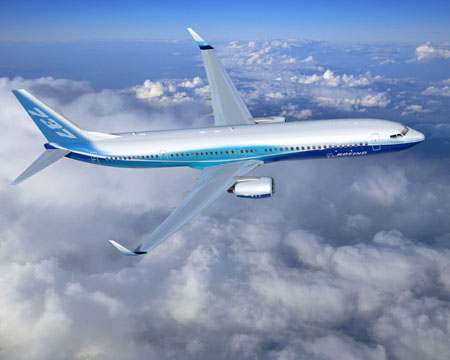
    Boeing Delivers Malaysia Airlines’ First Next-Generation 737-800 With New Livery

    SEATTLE, Nov. 9, 2010 — Boeing and Malaysia Airlines last week celebrated the delivery of the airline’s first Next-Generation 737 with the new, passenger-inspired Boeing Sky Interior.

    The national carrier of Malaysia is the first full-service airline to operate the 737-800 with the new Boeing Sky Interior.

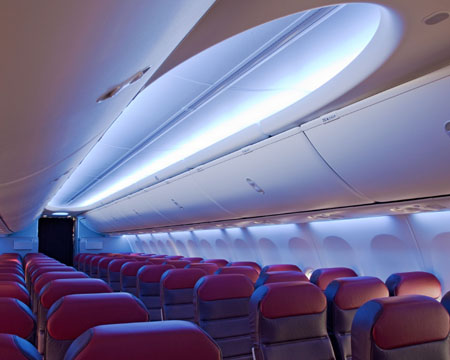
    The new 737 Boeing Sky Interior features sculpted sidewalls and window reveals, and new, larger stow bins that accommodate more bags while taking up less space in the cabin. Attendants can select from different LED lighting schemes from soft blue overhead sky simulation to a calm, relaxing, pallet of sunset colors. To date, 50 customers have ordered the new interior for 1,386 airplanes.

    Boeing Sky Interior is the latest in a series of improvements to the airplane. The next to come will be a package of performance improvements that will reduce fuel consumption and carbon emissions by 2 percent – making the airplane a full 7 percent more efficient than the first Next-Generation 737 delivered. The performance improvements to the airframe and engine are beginning certification test soon, and will be fully in service by early 2012.

    Malaysia Airlines is the second airline worldwide to take delivery of the new Boeing Sky Interior that offers an improved travel experience to passengers. Delivery of the airline’s initial Next-Generation 737 with the Boeing Sky Interior took place Oct. 29.
    Two flights are scheduled for Nov. 15; an inaugural flight from Kuala Lumpur to Kota Kinabalu followed by a commercial flight from Kota Kinabalu to Haneda, Tokyo.

  • | | | |

    Jazz Air Reschedules Flight

    What: Jazz Air/Air Canada CRJ en route from Washington to Montreal
    Where: Reagan National Airport, Washington
    When: Nov 9 2010, 10:45 am
    Who: 12 passengers, 3 crew
    Why: After takeoff, an odor developed in the rear cabin. The crew returned the plane to Washington as a precautionary measure. It seems a light and air vent unit was the source of the odor.

  • | | | |

    Drunk Delta Pilot Heads to UK Court

    What: Delta Boeing 737 London to Detroit
    Where: London
    When: Nov 1
    Who: 213 passengers plus pilot George LaPerle
    Why: Scotland Yard took Delta pilot George LaPerle from his plane.

    He was so drunk…(how drunk was he? Five times the pilots legal limit, that’s how drunk.) He was so drunk, he thought his Detroit flight was bound for New York. With him at the controls, he wouldn’t have gotten out of Heathrow much less across the Atlantic.

    LaPerle is suspended by Delta and will be going to court in the UK on Nov 16. Let’s hope for his sake he shows up sober, and already on his ten step plan.

    Filing this one under “pilot error.”

  • | |

    Helicopter Crashes in Nepal

    What: Fishtail Air Aérospatiale AS 350B Ecureuil en route from Lukla Airport to Mount Ama Dablam
    Where: near Mount Ama Dablam base camp
    When: Nov 7 2010
    Who: 2 aboard; 2 fatalities Captain Sabin Basnet and Engineer Purna Awale
    Why: After flying from Kathmandu to Lukla at 8 a.m, the helicopter was the rescue team who had flown to Mount Ama Dablam to rescue two stranded Japanese mountaineers. After taking off at Lukla, the helicopter lost contact.

    A Fishtail Air helicopter search found the remains.

  • | | |

    Smoke Diverts AirTran Flight


    Pictured: An AirTran Boeing 717 en route out of Memphis
    Click to view full size photo at Airliners.net
    Contact photographer Hartsfield Photography

    What: AirTran Airways Boeing 717 en route from New Orleans to Milwaukee
    Where: Memphis Tennessee
    When: Nov 6, 2010
    Who65 passengers
    Why: While en route, the plane developed smoke in the cabin. The flight diverted to Memphis where passengers were provided an alternative flight.

  • | | | |

    Ural Airbus Overruns Iced Runway


    Click to view full size photo at Airliners.net
    Contact photographer Tamas Vekony

    What: Ural Airlines Airbus A321-200 en route from Dubai (United Arab Emirates) to Ekaterinburg (Russia)
    Where: Ekaterinburg
    When: Nov 6 2010 at 4:25
    Who: 143 passengers and 8 crew
    Why: While landing at Ekaterinburg while the runway was covered in ice, and although ATC informed the “that the runway condition was good and permitted a safe landing,” the plane did not respond to proper braking and overran the runway.

    Russian investigators are investigating.

    George’s Point of View

    Apparently Russian airport crews don’t bother to salt, plow or otherwise make their runways more safe. Or maybe this was just a particularly lazy crew.

  • | | | | | |

    Belly Landing in Puerto Vallarta


    Click to view full size photo at Airliners.net
    Contact photographer Josh May

    What: Global Air Boeing 737-200 en route from from Mexico City to Puerto Vallarta
    Where: Puerto Vallarta
    When: Nov 4th 2010 1 p.m.
    Who: 99 passengers and 5 crew
    Why: While on approach to Puerto Vallarta, the plane’s nose gear would not extend, in spite of several flybys where the tower verified the nose gear was not extended.

    The plane eventually made a belly landing on foam with emergency services on standby. Pilot Jorge Luz Campos landed the plane with no injuries.

  • | | | | |

    Emergency landing in India


    Click to view full size photo at Airliners.net
    Contact photographer Dennis Löffler

    What: Delta Airlines Airbus A330-200, en route from Amsterdam to Mumbai
    Where: Chhatrapati Shivaji International Airport
    When: Nov 4 2010
    Who: 244 passengers
    Why: There are two versions: a call alerted authorities, or a suspicious object was found on the flight. Whatever happened, in any case, the plane made an emergency landing. Passengers were evacuated and a bomb squad searched the plane. Passengers luggage was also searched.

  • | | |

    Beech Crashes in Karachi

    The plane may be seen here.

    What: JS Air Beech 1900C en route from Karachi to Bhit Shah (Pakistan)
    Where: Gulistan-e-Jauhar Town, Karachi Pakistan
    When: Nov 5th 2010 7:13 a m
    Who: 19 passengers and 2 crew
    Why: THE JSAIR flight had been chartered by a US firm working on an oil field in Karachi. The destination was an oil field at Bhit Shah in the southern province of Sindh.

    Just after takeoff, the plane’s right engine failed. When the plane banked to head back to the airport, the other engine failed as well.The flight crashed less than 2 minutes after takeoff. Fifteen of the passengers were ENI (Italian oil and gas) employees:(Altaf Hussain Khalid, Hussain Sadaqat, Jamali Nisar Ahmed, Khan Noor, Moazzam Saeed, Nadeem Ahmed, Nizamani Muhammad Azam, Rafique Sajid, Rana Muhammad Alam, Raza Amir, Saleemuddin, Sasso Antonio (Italian), Shah Iqbal Hussain, Siddique Shahid, Syed Anwar Imran, Syed Irshad Ali and Tahir Muhammad.) Also killed in the crash were three crew members of JSAir, including Chief Pilot (and general manager operations) Captain Naeemul Haq (53-year-old chief pilot was a former squadron leader with the Pakistan Air Force), First Officer Captain Muhammad Nauman Shamsi, flight technician Tariq Mehmood, and inspector Zafar Iqbal.

    The black box has been recovered. An international team of investigators including reps for Beechcraft is expected.

    The plane operated 2 Pratt & Whitney Canada PT6A-65B engines, and had accrued 18545 total airframe hours since its first flight in 1991.

  • |

    Boeing Achieves Power On for New 747-8 Intercontinental

    EVERETT, Wash., Nov. 5, 2010 /PRNewswire/ — Boeing (NYSE: BA) has completed the power on sequence for the new 747-8 Intercontinental. This milestone enables the program to begin functional tests on the airplane.

    “This is a critical step in the assembly process for the new 747-8 Intercontinental,” said Elizabeth Lund, 747 deputy program manager, Boeing Commercial Airplanes. “The airplane’s systems are now live. This milestone is a reflection of the focus and hard work of our engineers, mechanics and suppliers.”

    Power on is a complex series of tasks that methodically energize and activate the airplane’s systems. In this critical stage of the assembly process, the electrical, hydraulic and pneumatic systems are brought on line.

    Mechanics connected the 747-8 to an external power cart to energize the flight-deck display and maintenance systems. The electricity coursing through the airplane’s 133 miles (214 km) of wire will be as high as 105 kilovoltampere (kVa).

    The program also activated the airplane’s hydraulic and pneumatic systems. Pressurized to 3,000 pounds per square inch (psi), the hydraulics power the flight control surfaces, landing gear, brakes and steering systems. The 160 psi applied to the pneumatic system enables the airplane to operate the environmental control systems and the leading-edge flaps.

    “We are very methodical in ensuring the integrity of the airplane’s systems,” said Todd Zarfos, vice president of 747 engineering, Boeing Commercial Airplanes. “This accomplishment is a key milestone in validating the design, installation and functionality of the electrical, hydraulic and pneumatic systems.”

    A video that gives you an inside look at the power on sequence is available at http://bit.ly/dlXgym.

    The program is expected to complete assembly of the 747-8 Intercontinental in the first quarter of 2011. The airplane is scheduled to enter service in late 2011 following the flight test program.

    The 747-8, which includes the 747-8 Intercontinental and the 747-8 Freighter, was launched in November 2005. Boeing has 109 orders for the 747-8 — 33 for the 747-8 Intercontinental and 76 for the 747-8 Freighter. The first 747-8 Intercontinental is scheduled to deliver in late 2011.

    The new 747-8 Intercontinental offers the lowest operating costs and best economics of any large passenger airplane, while providing enhanced environmental performance. The 747-8 provides new revenue opportunities that allow airlines to maximize profits. Eighteen feet longer than the 747-400, the 747-8 has 51 additional seats to accommodate 467 passengers in a typical three-class configuration, and it also offers 26 percent more cargo volume.

  • | | | | | |

    Cuban Flight Crashes; All aboard are Lost


    Click to view full size photo at Airliners.net
    Contact photographer Teemu Tuuri

    What: Aerocaribbean ATR-72-500 en route from Santiago to Havana
    Where: Guasimal, Sancti Spiritus Cuba
    When: Nov 4 2010
    Who: with 61 passengers and 7 crew
    Why: The last flight to leave Santiago before the airport closed due to tropical storm Tomas disappeared from radio contact at 5:42 pm while over Guasimal not far from the Zaza Reservoir. The crew made an emergency call at 5:42. 40 cubans were aboard and 28 non-cubans (9 Argentinian, 7 Mexican, 3 Dutch, 1 French, 2 German, 2 Austrian, 1 Italian, 1 Spanish, 1 Venezuelan, and 1 Japanese).

    A hospital worker said “The plane made several abrupt movements before crashing to the ground.” Rescuers hiked in through thick vegetation (using bulldozers to get through the vegetation to find the plane shattered and in flames and no survivors.

    Tropical storm Tomas developed into a hurricane. Cuba declared a state of alert.

    The ongoing investigation has not ruled that weather is the definitive factor because the storm had not reached Cuba at the time of the crash.

    Cuban state airline Cubana de Aviacion owns Aerocaribbean. The flight normally flies twice a week from Port-au-Prince, Haiti, to Santiago de Cuba to Havana

  • | | | | |

    Jetstar Airbus A330-200 Autopilot Fails


    Click to view full size photo at Airliners.net
    Contact photographer John Richard Thomson

    What: Jetstar Airways Airbus A330-200 en route from Phuket (Thailand) to Sydney,NS
    Where: Changi Airport, Singapore
    When: Nov 1 2010
    Who: 288 passengers
    Why: While en route, the autopilot failed. The pilots diverted to Singapore where they made a safe landing with emergency services on standby.

    Alternative arrangements have been made for the affected passengers, who were booked onto other flights and offered accommodation in Singapore.

  • |

    BOEING OFFERS EXCHANGE PROGRAM FOR 787 DREAMLINER PARTS

    SEATTLE, Nov. 3, 2010 / — Boeing today announced the availability of a rotable exchange services program, that will support the operation of the Boeing 787 Dreamliner. This program will help airline customers reduce inventory costs by providing access to a Boeing-managed inventory pool of parts that is available to ship within 24 hours of request.

    “The 787 Rotables Exchange Services Program will provide a dedicated pool of high-value, dispatch-critical parts for airlines, while helping them to improve operations support and cash flow,” said Dale Wilkinson, vice president, Material Services for Boeing Commercial Airplanes. “The program manages configuration, warranty and reliability for the covered parts, freeing the airline to focus on passengers and the operation of the airplane.”

    The exchange program is available to support initial entry into service for 787 operators – this is the first time that such a program has been developed in conjunction with entry into service of a new fleet type.

    With the Boeing 787 Rotable Exchange Program, the airline removes a part from the airplane and ships it for exchange with a new unit from Boeing’s exchange pool. Boeing plans to support up to 600 high-value rotable parts, including such items as the Auxiliary Power Unit and Variable Frequency Starter Generator. By providing coverage for parts typically priced in the hundreds of thousands of dollars, the exchange program can provide considerable inventory cost savings for airlines.

    The program provides a flight-hour cost basis that enables the customer to better forecast maintenance costs, while spreading out high-cost expenditures for rotable parts over the 10-year term of the agreement.

  • |

    Allegheny Energy Chopper Crash in WV, 1 killed, 3 injured

    What: MD HELICOPTERS INC registered to WINCO INC in a rural area of Tucker County
    Where: Thomas WV
    When: October 30 10:30 am
    WEATHER: 1551Z EKN 00000KT 10SM CLR 09/01 A3009
    Who: subcontractors of Allegheny Energy: fatality Gary Bland, 52, of Georgia. Injured identified as Robert Rogers, Ryan Lang and Jeffrey McCay
    Why: A pilot and three linemen were working on wiring on a transmission tower, when the helicopter came down, killing one, injuring 3. The injured were taken to Ruby Memorial Hospital.

  • | | | | |

    Lionair Overrun in Indonesia


    Click to view full size photo at Airliners.net
    Contact photographer M Radzi Desa

    What: Lionair Boeing 737-400 en route from Jakarta to Pontianak
    Where: West Kalimantan, Indonesia
    When: Nov 2 2010
    Who: 167 passengers, 7 crew
    Why: While landing at Pontianak’s Supadio Airport during a heavy rain, the plane overran the end of the runway. Its nose and main undercarriage collapsed and it stopped mired in a field beyond the end of the runway. There were no injuries.

    A passenger reported that the plane shook (or vibrated) about a quarter of an hour before landing; and no announcements were made by the pilot or crew during the vibration, or during the landing. The airline said no announcement was made because the seatbelt light was on.

    Passengers panicked and evacuated through an emergency exit. Military personnel at the airport assisted.

    Where were the crew while terrified passengers were jumping off the plane?

    They are saying the plane’s inability to stop was not due to weather, a wet runway, that the plane was well maintained and that it was a normal landing. So. If this is all true, why did it overrun?

  • | | | |

    Zurich Bird Strike


    Click to view full size photo at Airliners.net
    Contact photographer Gerry Stegmeier

    What: Swiss International Airlines Airbus A321 en route from Zurich to London
    Where: Zurich
    When: Oct 31st 2010
    Who: 194 passengers
    Why: After takeoff, the plane suffered a bird strike.

    The pilot returned to Zurich where they made a safe landing. The plane was taken out of service to be inspected for damage, and passengers were provided alternative transportation. No description of the amount of damage or the unfortunate bird has been provided.

  • | | | | |

    Delta Africa Flight Cut Short in NY


    Click to view full size photo at Airliners.net
    Contact photographer Mattia Vichi

    What: Delta Airlines Boeing 767-300 en route from New York JFK,NY to Accra
    Where: over the Atlantic
    When: Oct 29 2010
    Why: While en route 300 miles out of New York, the plane developed an internal leak in the right engine, and smoke collected in the cabin.

    The pilot descended to a lower altitude and made a safe landing at JFK with rescue services on standby. Passengers did not disembark for nearly two hours.

    Maintenance determined that the oil leak or smoke from an oil leak got into the air conditioning.

  • | | | | |

    Meridiana Emergency Landing


    Click to view full size photo at Airliners.net
    Contact photographer Federico Buonanno

    What: McDonnell Douglas MD-82 en route from Naples to Cagliari
    Where: Naples
    When: Oct 31 2010
    Who: 33 passenger
    Why: After takeoff, the plane developed problems in the right engine and had to shut it down. The pilot returned to Naples and made a safe landing with rescue services standing by.

    Passengers were provided accommodations until a replacement flight came in the next day.

  • | | | | | |

    Turkey: Galley Smokes Cabin


    Click to view full size photo at Airliners.net
    Contact photographer

    What: Azerbaijan Airlines Boeing 757-200 en route from Istanbul Turkey to Baku Azerbaijan
    Where: Istanbul
    When: October 30
    Who: 221 aboard
    Why: After takeoff, the cabin filled with smoke coming from a galley oven.

    The plane returned to the Istanbul airport and made a safe landing. No replacement was provided. The plane received maintenance, and continued some hours later.

  • |

    Boeing and State Corporation Rostechnology Finalize Order for Next-Generation 737s

    MOSCOW, Oct. 29 — Boeing and the State Corporation Rostechnology today announced the finalization of an order for 50 Next-Generation 737 airplanes. The order includes purchase rights for an additional 35 Next-Generation 737s. The State Corporation’s Supervisory Board approved the definitive agreement that was signed and announced on Sept. 17 during the Sochi Investment Forum in Russia. The order is valued at $3.7 billion at average list prices. Rostechnology’s order includes 15 Next-Generation 737-700s, 25 737-800s and 10 737-900ERs (extended range). 

    "The order of Next-Generation 737s by Rostechnology represents a substantial investment in our future and will accelerate the significant progress we are making in improving the global competitiveness and efficiency of our airline industry," said Roman Pakhomov, chief executive officer of Aviation Capital Services, aviation leasing division of Rostechnology. "This agreement continues to build upon the strategic partnership between Rostechnology and Boeing."

    The economic benefits, comfort and operating efficiencies consistently demonstrated by the Next-Generation 737 directly support Rostechnology’s plan to provide Russian airlines with efficient and reliable airplanes that will help them profitably grow domestic and international operations.

    "This is a great day in the history of our long and enduring partnership with Rostechnology," said Marlin Dailey, vice president of Sales, Boeing Commercial Airplanes. "Today’s order for 737-700s, 737-800s and 737-900ERs underscores Rostechnology’s confidence in the world’s most successful single-aisle airplane. The entire Next-Generation 737 family offers superior operating economics and the 737-900ER has the best seat mile cost of any single-aisle airplane and provides our Next-Generation 737 customers with a compelling low-risk growth opportunity."

    Rostechnology 737s will be delivered with the all-new 737 Boeing Sky Interior. Inspired by the passenger experience, it promises to redefine the 737 travel experience. In addition to the new design, Boeing also announced a performance improvement package offering a 2 percent reduction in fuel consumption through various airframe and engine improvements.

    Over the past 20 years, Boeing’s joint programs in Russia have resulted in almost $6 billion in highly successful joint projects with its Russian partners making Boeing the largest international aerospace investor in Russia.

    Boeing announced in September that its production rate for the Next-Generation 737 program will increase from the current rate of 31.5 airplanes per month to 35 in early 2012 and to 38 airplanes per month in the second quarter of 2013.

  • | | |

    French Researchers Lost Lives in Antarctica

    What: Institut Polaire Français Aérospatiale AS 350 Squirrel helicopter carrying supplies between the French research vessel and supply ship, l’Astrolabe and the country’s Dumont d’Urville research base in Adélie Land.
    Where: Antarctica
    When: October 28, 2010
    Who: 4 Fatalities
    Why: After taking off from the French research vessel L’Astrolabe which is icebound northeast of the Dumont-d’Urville station, the helicopter went down in bad weather. The helicopter was last seen flying at 29 feet. The helicopter normally supplied the research base. Initially there was hope of one survivor. A U.S. Air Force C-17 flew over; the distress beacon was activated off Adelie Land, but cloud cover prevented visibility; bad weather complicated rescue efforts. An Australian unit which spotted three bodies dropped supplies and survival equipment. A doctor flown in later confirmed that the pilot, the mechanic and two employees of the French Polar Institute who had been aboard the helicopter were dead. The remains were recovered and flown back in an Australian Hercules C-130 to a chapel at the base. (US) McMurdo base and AMSA’s rescue coordination centre are assisting the French recovery team.

    Two researchers were from l’Institut polaire Paul-Emile Victor, in Brest, Brittany, France.

  • | | | | | |

    Kochi: Air Arabia Bird Strike


    Click to view full size photo at Airliners.net
    Contact photographer Steve Brimley

    What: Air Arabia Airbus A320-200 en route from Kochi to Sharjah
    Where: Cochin International Airport
    When: October 29, 2010 8:15 pm
    Who: 154 passengers, 6 crew
    Why: After takeoff, the flight suffered a problem, and according to officials a bird strike “was not ruled out”. It took fifteen minutes to return to the airport to make a safe landing after the bird strike.