|

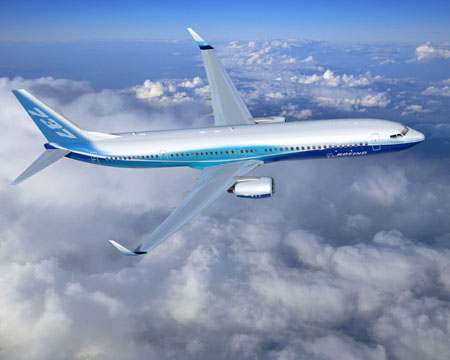
Boeing and State Corporation Rostechnology Finalize Order for Next-Generation 737s

Similar Posts

  • |

    FATAL MISSOURI HELICOPTER ACCIDENT WAS CAUSED BY FUEL EXHAUSTION,

    In George’s Point of View


    I usually say Maintenance, Maintenance Maintenance, but in this case, I think I’ll say Training, Training, Training. The pilots I meet who were trained in the military tell me they are drilled to the point that reactions are instinct. If only this pilot had chosen not to fly, fueled the helicopter ahead of time, done things a little differently.

    April 9, 2013
    WASHINGTON — A pilot’s decision to depart on a mission despite a critically low fuel level as well as his inability to perform a crucial flight maneuver following the engine flameout from fuel exhaustion was the probable cause of an emergency medical services helicopter accident that killed four in Missouri, the National Transportation Safety Board said today.

    “This accident, like so many others we’ve investigated, comes down to one of the most crucial and time-honored aspects of safe flight: good decision making,” said NTSB Chairman Deborah A.P. Hersman.

    On August 26, 2011, at about 6:41 pm CDT, a Eurocopter AS350 B2 helicopter operated by Air Methods on an EMS mission crashed following a loss of engine power as a result of fuel exhaustion a mile from an airport in Mosby, Missouri. The pilot, flight nurse, flight paramedic and patient were killed, and the helicopter was substantially damaged.

    At about 5:20 pm, the EMS operator, located in St. Joseph, Mo., accepted a mission to transport a patient from a hospital in Bethany, Mo., to a hospital 62 miles away in Liberty, Mo. The helicopter departed its base less than 10 minutes later to pick up the patient at the first hospital. Shortly after departing, the pilot reported back to the company that he had two hours’ worth of fuel onboard.

    After reaching the first hospital, the pilot called the company’s communication center and indicated that he actually had only about half the amount of fuel (Jet-A) that he had reported earlier, and that he would need to obtain fuel in order to complete the next flight leg to the destination hospital.

    Even though the helicopter had only about 30 minutes of fuel remaining and the closest fueling station along the route of flight was at an airport about 30 minutes away, the pilot elected to continue the mission. He departed the first hospital with crew members and a patient in an attempt to reach the airport to refuel.

    The helicopter ran out of fuel and the engine lost power within sight of the airport. The helicopter crashed after the pilot failed to make the flight control inputs necessary to enter an autorotation, an emergency flight maneuver that must be performed within about two seconds of the loss of engine power in order to execute a safe emergency landing. The investigation found that the autorotation training the pilot received was not representative of an actual engine failure at cruise speed, which likely contributed to his failure to successfully execute the maneuver.

    Further, a review of helicopter training resources suggested that the accident pilot may not have been aware of the specific control inputs needed to successfully enter an autorotation at cruise speed. The NTSB concluded that because of a lack of specific guidance in Federal Aviation Administration training materials, many other helicopter pilots may also be unaware of the specific actions required within seconds of losing engine power and recommended that FAA revise its training materials to convey this information.

    An examination of cell phone records showed that the pilot had made and received multiple personal calls and text messages throughout the afternoon while the helicopter was being inspected and prepared for flight, during the flight to the first hospital, while he was on the helipad at the hospital making mission-critical decisions about continuing or delaying the flight due to the fuel situation, and during the accident flight.

    While there was no evidence that the pilot was using his cell phone when the flameout occurred, the NTSB said that the texting and calls, including those that occurred before and between flights, were a source of distraction that likely contributed to errors and poor decision-making.

    “This investigation highlighted what is a growing concern across transportation – distraction and the myth of multi-tasking,” said Hersman. “When operating heavy machinery, whether it’s a personal vehicle or an emergency medical services helicopter, the focus must be on the task at hand: safe transportation.”

    The NTSB cited four factors as contributing to the accident: distracted attention due to texting, fatigue, the operator’s lack of policy requiring that a flight operations specialist be notified of abnormal fuel situations, and the lack of realistic training for entering an autorotation at cruise airspeed.

    The NTSB made a nine safety recommendations to the FAA and Air Methods Corporation and reiterated three previously issued recommendations to the FAA.

    To include the featured image in your Twitter Card, please tap or click their icon a second time.
  • | | | |

    United Airlines Plane Rejects Take-Off From Newark

    United Airlines flight UA-2001 had to reject take off from Newark, New Jersey, on March 17th.

    The Boeing 737-800 plane was accelerating to take off for O’Hare International Airport, Chicago, Illinois, when the crew noticed an engine problem and rejected take off.

    All 164 passengers and 6 crew members remained safe.

    The airline arranged a replacement plane for the passengers.

    To include the featured image in your Twitter Card, please tap or click their icon a second time.
  • | | | |

    Qantas Flight Diverts to Perth due to Fuel Pump Issue

    Qantas flight QF-64 had to divert and make an emergency landing in Perth, Australia, on October 6th.

    The Boeing 747-400 plane heading from Johannesburg, South Africa, to Sydney, Australia, was diverted due to an issue with a fuel pump.

    The plane landed safely. All passengers and crew members remained unharmed.

    To include the featured image in your Twitter Card, please tap or click their icon a second time.
  • | | | |

    Round of DNA Testing Begins in Ethiopia Crash


    Click to view full size photo at Airliners.net
    Contact photographer Alastair T. Gardiner

    What: Ethiopian Airlines Boeing 737 en route from Beirut to Addis Ababa
    Where: 2 miles west of the coastal village of Na’ameh.
    When: Jan 25 2010
    Who: 7 crew 83 passengers
    Why: Shortly after taking off in stormy weather and heavy lightning, Lebanese ATC lost contact. The plane disappeared from radar 45 minutes after leaving Beirut. Witnesses on the coast saw the plane as it crashed into the sea.

    Other than one British citizen and one Syrian, families of all of the victims have submitted DNA to help identify relatives remains although only a portion of the 90 aboard have been found since the crash on January 25 into the Mediterranean sea minutes after takeoff. The plane’s black box and main sections of the plane have not yet been located but a U.S. Navy ship, the USS Ramage, detected signals from the black box flight recorders at a depth of 4,265 feet

    The government of Lebanon has formally requested U.S. Odyssey Marine Explorations for submarine assistance in retrieval of victims, the black box and assorted wreckage.

    To include the featured image in your Twitter Card, please tap or click their icon a second time.
  • | | | |

    TAROM Plane makes Emergency Landing in Romania due to Loss of Cabin Pressure

    TAROM flight RO-306 made an emergency landing at Henri Coand International Airport, Romania, on May 26th.

    The Boeing 737-700 flying from Frankfurt, Germany, was mid-air when the captain decided for emergency landing due to loss of cabin pressure.

    The plane landed safely.

    All 91 people aboard remained safe.

    To include the featured image in your Twitter Card, please tap or click their icon a second time.
  • | | | |

    American Airlines Flight Diverts to Charlotte due to Cabin Pressure Problem

    American Airlines flight AA-376 made an emergency landing in Charlotte, North Carolina, on November 10th.

    The Boeing 767-300 plane heading from Miami, Florida, to Philadelphia, Pennsylvania, was diverted due to issues with the cabin pressure.

    The plane landed safely. All passengers and crew members remained unharmed.

    To include the featured image in your Twitter Card, please tap or click their icon a second time.