• | | | |

    CPR Fails on Infant on UA Detroit-Denver Flight


    Pictured: A United Airlines Boeing 767-322/ER
    Click to view full size photo at Airliners.net
    Contact photographer Andreas Fietz

    What: United Airlines en route from Detroit to Denver
    Where: Milwaukee
    When: Jan 21, 2010
    Who: infant
    Why: On board the flight, a 2-month-old boy who stopped breathing on board could not be revived. A passenger attempted CPR and on the ground in Milwaukee paramedics also attempted CPR but the revival attempts were unsuccessful.

    To include the featured image in your Twitter Card, please tap or click their icon a second time.
  • | |

    Aero Friedrichshafen


    Global Airshow for General Aviation
    April 8-11 2010

    Friedrichshafen, Germany –
    Over the past 30 years, AERO, a former aerial sports and leisure fair, has developed into an international communication platform for the businessoriented General Aviation industry.

    We would show more of the 2010 Press Releases but they aren’t up yet.

    This page will have the hall, exhibitors, products, aircraft, novelties and contact information “Starting in spring 2010.

    The show’s brochure will be available approx. 4 weeks prior to the show.

    To include the featured image in your Twitter Card, please tap or click their icon a second time.
  • | | |

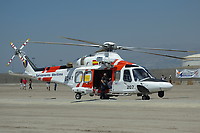
    Spain: Helimer 207 Crashes in Sea


    Click to view full size photo at jetphotos.net
    Contact photographer JUSTO-M. PRIETO

    What: “Salvamento Marítimo (Helisureste)” Agusta Westland AW.139 in a training mission out of LEAM (Almeria Airport, Spain)
    Where: In sea 4 nm of Almeria airport
    When: Jan 21, 2010
    Who: 3 fatalities, one severe injury
    Why: The marine search and rescue helicopter fell into the sea off Almería 4 miles from the runway. They were on approach to the airport and returning from aerial maneuvers with Névola (ship). Only one person was rescued, and he was in serious condition. Rescue services included four helicopters, two boats and a tugboat, as well as member of Marine Rescue, Civil Guard.

    Those who died were Commander Jose Luis Lopez Alcala, of Granada; copilot Kevin Holmes of New Zealand/Granada; and Iñigo Vallejo Garcia,of Seville.

    Suffering from hypothermia, rescued craneman Alberto Elvira Vallejo was taken to Torrecárdenas Hospital.

    To include the featured image in your Twitter Card, please tap or click their icon a second time.
  • | | | |

    Southwest Airlines Boeing 737 Struck by Lightning

    What: Southwest Airlines Boeing 737 en route from Oakland to Burbank
    Where: Burbank
    When: January 20, 2010 9:57
    Who: 81 passengers
    Why: While en route from Sacramento, the Boeing 737 was struck by lightning. The plane landed safely at Bob Hope Airport, and was examined for damage from the lightning strike.

    Two individuals aboard this flight were taken to Providence St. Joseph Medical Center for treatment.

    To include the featured image in your Twitter Card, please tap or click their icon a second time.
  • | | | |

    SouthWest Airlines Boeing Struck by lightning

    What: Southwest Airlines Boeing 737 en route from Sacramento to Burbank
    Where: Burbank
    When: January 20, 2010 9:38
    Who: 69 passengers
    Why: While en route from Sacramento, the Boeing 737 was struck by lightning. The plane landed safely at Bob Hope Airport, and was examined for damage from the lightning strike.

    To include the featured image in your Twitter Card, please tap or click their icon a second time.
  • | |

    Fatal Plane Crash in Ohio

    What: Mitts Corp Mitsubishi MU-2B-60 Marquise en route from Gainesville to Elyria.
    Where: Elyria, Ohio
    When: Jan 18, 2010 at 2:08 p.m.
    Who: Don Brown, 89, and his wife Shirley, 87, of Vermilion Township. Pilot Wesley Roemer, 30, of Gainesville, Fla., and co-pilot John Mengelson, 46, of Florahome, Fla.
    Why: The plane reportedly nose-dived into the ground near Lorain County Regional Airport in New Russia Township on approach to the runway. All victims were pronounced dead at the scene.

    The NTSB will be reporting.

    To include the featured image in your Twitter Card, please tap or click their icon a second time.
  • | | |

    Hawaii Plane Crash Kills Vet and Son

    What: single engine Piper Cherokee PA32
    Where: Koolau Mountains in East Oahu near the Lanipo Trail on WAIALAEIKI RIDGE, 10 MILES FROM HONOLULU, HI
    When: Jan 11, 2010
    Who: Pilot Dr. Nicolas Polumbo and passenger Timmy Polumbo
    Why: AIRCRAFT CRASHED UNDER UNKNOWN CIRCUMSTANCES, THERE WERE TWO PERSONS ON BOARD, ONE WAS FATALLY INJURED, ONE UNKNOWN INJURIES, WRECKAGE LOCATED ON WAIALAEIKI RIDGE, 10 MILES FROM HONOLULU, HI

    The pilot had been flying to his veterinary clinic and made no mayday call prior to the crash. Visibility may have been a factor as the weather was overcast.

    Crash crews rapelled from the helicopter due to the inaccessibility of the crash site.

    (Link to a recovery video. KITV has not released for embedding)

    To include the featured image in your Twitter Card, please tap or click their icon a second time.
  • |

    Airbus Loses Engine Cowling


    Click to view full size photo at Airliners.net
    Contact photographer Terry Wade

    What: Mexicana Airbus A318-100 en route from Cancun to Mexico City
    Where: Cancun
    When: Jan 19th 2010
    Who: 45 passengers
    Why: On takeoff, the left engine cowling separated, impacting the engine, wing and the rear fuselage. The flight crew returned the plane to the airport for a safe landing.
    No injuries were reported.

    To include the featured image in your Twitter Card, please tap or click their icon a second time.
  • | |

    Argentina: Helicopter Crash

    What: Prefectura Naval Argentina Schweizer 300C
    Where: Cerca Aeropuerto Internacional de San Fernando Argentina
    When: Jan 19 2010
    Who: 2 on board.
    Why: Flying from San Fernando International Airport, Argentina, during a test flight, an Argentinean Cost Guard helicopter fell out of the sky 50 meters from the main runway. The two individuals in the helicopter did not survive.

    To include the featured image in your Twitter Card, please tap or click their icon a second time.
  • NOTAM NOTICE Inbound Haiti

    The FAA issued a Notice to Airmen (NOTAM) for all fixed-wing aircraft inbound to Haiti in support of earthquake relief operations.
    The NOTAM establishes a process to obtain an arrival slot for Port-au-Prince International Airport.

    Please continue to check https://pilotweb.nas.faa.gov/ for updated NOTAM information.

    To include the featured image in your Twitter Card, please tap or click their icon a second time.
  • 3 EMS Staff Deployed with Relief Groups

    Two Boston EMS uniformed staff members, EMT Mike Vojak and Paramedic Greg Bond, and Senior EMS Fellow Dr. David Hirsch, all volunteers with disaster medical organizations, were deployed last night to help with emergency response efforts after Tuesday’s earthquake in Haiti and the surrounding area. Each has been asked to report back on the conditions so that information can be relayed to other authorities and supportive assistance can be provided as applicable.

    Both EMT Vojak and Dr. Hirsch are members of DMAT-1, the Disaster Medical Assistance Team based out of Boston. Vojak has been with Boston EMS since 1982 and Hirsch since 2008. Disaster Medical Assistance Teams are under the jurisdiction of the National Disaster Medical System (NDMS), Federal Emergency Management Agency (FEMA) and Department of Homeland Security (DHS).

    Paramedic Bond, a member of IMSuRT-East, the International Medical Surgical Response Team based out of Boston, has been with Boston EMS since 1997. IMSuRT is a specialized team of highly trained personnel and is equipped to establish a fully capable free-standing field surgical unit anywhere in the world.

    Deployments typically last two weeks with a rotation of staff but depend heavily on the conditions on the ground.

    To include the featured image in your Twitter Card, please tap or click their icon a second time.
  • Flight Advisory

    January 19 – The FAA will put airspace restrictions and procedures in place in northwest Washington State to complement Canadian restrictions during the Winter Olympic games in Vancouver, Canada on January 29-March 24, 2010.

    FEDERAL AVIATION ADMINISTRATION
    FLIGHT ADVISORY
    The Vancouver 2010 Winter Olympics
    and Paralympics Games
    The 2010 Winter Olympic and Paralympics Games will take place over an eight (8) week period during the months of February and March 2010. The FAA at the request of the Department of Homeland Security and Department of Defence as part of the airspace security measures will be placing restrictions and procedures in northwest Washington State to complement Canadian restrictions and procedures. The restrictions will coincide with the opening and closing of the Athlete Villages in Vancouver and Whistler, BC: January 29, 2010 to March 24, 2010. Additional NOTAMs may be issued and it is recommended that operators check NOTAMs frequently.
    Part 1. Restrictions
    Under the authority granted by 49 USC, the FAA may apply restrictions within
    airspace under its jurisdiction. Any person who knowingly and willingly violates
    these restrictions may be subject to certain criminal and/or civil penalties. Pilots
    who violate security TFRs or procedures may be intercepted, detained and
    interviewed by Law Enforcement/Security Personnel. They may also be subject
    to the following actions:
    a)
    The FAA may take administrative action, including imposing civil penalties and the suspension or revocation of airmen certificates; or
    b)
    The United States government may pursue criminal charges, including charges under Title 49 of the United States Code, Section 46307; or
    c)
    The United States government may use deadly force against the airborne aircraft, if it is determined that the aircraft poses an imminent security threat.
    All aircraft flight operations are prohibited from the surface to but not including 18,000 MSL, within an area bounded by 490008N/1222847W or the HUH029005.2, thence clockwise along the 491142N/1231055W or the YVR329007.2 30 NM ARC to 484151N/1231519W or the YYJ080009.3 thence northeast along the US/Canadian border to the point of beginning, except as specified below.
    a.
    All aircraft entering or exiting the TFR must be on an active IFR or VFR flight plan and must be assigned a discrete beacon code by an Air Traffic Control (ATC) facility and be squawking that code prior to departing within or entering the TFR.
    Released January 15, 2010 Chg 1
    b.
    Only aircraft that are arriving or departing a local airfield may operate in this TFR. Aircraft may not loiter.
    c.
    DUAT filed VFR flight plans will not be accepted.
    d.
    Emergency/life saving flight (air ambulance/law enforcement/firefighting), military operations and other approved operations must call the HQ DEN Air Traffic Coordinator at 202-493-5107 prior to operating within the TFR. No flight plan is required for these operations in the US portion of the Olympic Airspace.
    e.
    Aircraft operating within this TFR must remain in two-way communications with ATC at all times.
    VFR Operations to/from Meadow Mist Airport (WN35) and Waldronaire Airport (90WA):
    a.
    Pilots are not required to file a flight plan for arrivals or departures.
    b.
    The aircraft must squawk code 1201 for WN35 or 1204 for 90WA to indicate the pilot’s intent to arrive or depart the airport.
    c.
    Pilots must exit the TFR via the most direct route before proceeding on course or if arriving, enter the TFR and proceed to destination via the most direct and shortest route.
    d.
    Pilots need not contact ATC unless otherwise directed, but contact with ATC is recommended.
    e.
    To transit the TFR, all aircraft must be on an active IFR or VFR flight plan with a discrete code assigned by an Air Traffic Control (ATC) facility. Aircraft must be squawking the discrete code prior to departure and at all times while in the TFR and must remain in two-way radio communications with ATC.
    VFR Operations for the following airports: Horse Fly Airport (WA88), Stuart Island Airpark (7WA5), Stuart Island West Airport (2WA3), Lynden Airport (38W) and Orcas I Airport (KORS):
    a.
    Due to the proximity to the TFR boundary and to assist federal agencies in identifying aircraft and pilot intent, pilots arriving or departing WA88, 7WA5, 2WA3, 38W and KORS must squawk a specific airport code.
    b.
    Airport Codes area as follows: WA88 is 1202, 38W is 1203, 7WA5 is 1205, 2WA3 is 1206 and KORS is 1207.
    Pilots of VFR aircraft departing locations within the TFR (US portion of the Olympic airspace) must file a VFR flight plan with FAA FSS at least 2 hours prior to the proposed departure time. VFR route information is required and pilot must contact FSS with all flight plan changes. Pilots must contact the Vancouver ACC at 1-866-998-2010 at least 30 minutes prior to the proposed departure time to receive a transponder code.
    Additionally, Canadian procedures require that all VFR operators departing US airspace and entering CYR 186, CYR 187 and CYR 188 must have received a valid Flight Authorization (FA) from the 2010 Olympic Integrated Security Unit (ISU). This Flight Authorization must be included in the remarks on the flight plan. Flight Authorization is not a requirement for operations in CYR 185.
    Released January 15, 2010 Chg 1
    The following operations are not authorized within this TFR: flight training, practice instrument approaches, aerobatic flight, glider operations, parachute operations, ultralight, hang gliding, balloon operations, agriculture/crop dusting, animal population control flight operations, banner towing operations, sightseeing operations, model aircraft operations, model rocketry, and Unmanned Aircraft Systems (UAS).
    Published Canadian NOTAMs for the 2010 Winter Olympic and Paralympic Games have established portal/gateway procedures for accessing the Olympic airspace. To supplement the Canadian procedures, the United States has established gateways to allow pilots of US registered aircraft access to airports within CYR186, CYR187, or CYR188. While utilization of U.S. gateway airports is voluntary, U.S. Registered General Aviation Aircraft that are not cleared through U.S. gateways described below will be required to use Canadian portal procedures.
    1.
    Gateway Procedures
    a.
    U.S. Registered Aircraft may use established Canadian portals or US Gateway airports that have been designated at Bedford Hanscom Airport (BED), Boise Airport (BOI), Chicago Midway International Airport (MDW), Dallas Love Field (DAL), Long Beach Airport (LGB), Memphis International Airport (MEM), Minneapolis-St. Paul International/World Chamberlain Airport (MSP), Palm Beach International Airport (PBI), Port Columbus International Airport (CMH), Reno-Tahoe International Airport (RNO), Seattle Tacoma International Airport (SEA), Spokane International Airport (GEG), Teterboro Airport (TEB), William P. Hobby Airport (HOU), Westchester County Airport (HPN), and Washington Dulles International Airport (IAD) by DHS to accommodate aircraft arriving into airports within CYR186, CYR187, or CYR188 during the timeframe of February 1 – February 28, 2010. Screening at these Gateway airports will be conducted as authorized by law. During the remaining dates of the TFR, January 29-31 and March 1-3, pilots must use the established Canadian portals.
    b.
    Procedures for gaining approval from Canada for entering the Olympic airspace after undergoing screening at a US Gateways can be found at: http://www.v2010rfa.com.
    c.
    Please note that Canada requires that all applications must be submitted at least five days prior to the aircraft departure.
    During the Olympic timeframe it is recommended that operators of private aircraft submit eAPIS data to US Customs and Border Protection 24 hours prior to departure or at the time the provisional flight authorization is requested through the Vancouver 2010 Integrated Security Unit Registration & Flight Authorization web portal at http://www.v2010rfa.com . Early submission of eAPIS manifest data may assist in avoiding delays in gaining outbound clearance during this event.
    Released January 15, 2010 Chg 1
    WARNING
    This advisory contains an overview and preliminary information for the NOTAM to be published for the 2010 Olympics, see the published NOTAM for the exact procedures. For the latest information on Canadian airspace see the NAVCANADA website at http://www.navcanada.ca.
    It is recommended that all aircraft operators check NOTAMs frequently throughout this event for possible changes.
    Released January 15, 2010 Chg 1

    Released January 15, 2010 Chg 1
    Part 2. Resources
    1.
    Contact Flight Service for the latest NOTAMs relating to this event, 800-992-7433.
    2.
    For the latest information on Canadian airspace visit NAVCANADA at http://www.navcanada.ca or http://www.v2010rfa.com.
    3.
    The SOSC, System Operations Support Center, available 0700-1700 Easter M-F, phone 202-267-8276, is the coordination facility.

    To include the featured image in your Twitter Card, please tap or click their icon a second time.
  • | | |

    Plane Lands Sans One Engine at JFK


    Click to view full size photo at Airliners.net
    Contact photographer Stefan Heymanns

    What: Cargo Air Lines Boeing 747-200 en route from New York to Liege Belgium
    Where: Gander Canada
    When: Jan 17th 2010
    Why: While en route, the plane noticed an oil pressure problem developing and shut down the afflicted engine. The plane dropped to a lower altitude and returned to JFK where it landed safely. * A cargo flight, no passengers involved.

    To include the featured image in your Twitter Card, please tap or click their icon a second time.
  • | | | |

    American Airlines Emergency Landing in Toronto


    Click to view full size photo at Airliners.net
    Contact photographer Orlando G. Rivera

    What: American Airlines Boeing 737-800 en route from Toronto to Dallas
    Where: Toronto
    When: Jan 18th 2010
    Why: After takeoff, the American Airlines Boeing developed cabin pressure problems. The flight returned to Toronto where they made a safe landing.

    To include the featured image in your Twitter Card, please tap or click their icon a second time.
  • | | | | |

    Chautauqua Electricals Smoke Landing in Cleveland


    Click to view full size photo at Airliners.net
    Contact photographer DJ Reed

    What: Chautauqua Airlines Canadair CRJ-200 en route from Boston to Cleveland
    Where: Cleveland
    When: Jan 19th 2010
    Who: 55 passengers
    Why: Prior to landing, the jet suffered electrical problems resulting in smoke and a loss of power. The crew managed a safe landing. Passenger debarked on the runway and were bussed to the gate. The plane was taken out of commission for maintenance/observation/repairs.

    To include the featured image in your Twitter Card, please tap or click their icon a second time.
  • | | |

    Alitalia Tailstrike (or not)


    Click to view full size photo at Airliners.net
    Contact photographer Giovanni Verbeeck

    What: Alitalia Boeing 767-300 en route from New York JFK to Rome
    Where: New York
    When: Jan 15th 2010
    Who: 180 passengers
    Why: On take off, the Boeing apparently had a tail strike, but not one hard enough to damage the tail skid. The crew performed checks, but then decided to dump fuel and land. After circling, the flight landed safely approx. an hour and a half after initial takeoff. After two hours, the same aircraft took off again for Rome.

    To include the featured image in your Twitter Card, please tap or click their icon a second time.
  • | | | |

    Austrian Airlines Fokker Smokes Take-off


    Click to view full size photo at Airliners.net
    Contact photographer Radu Dobrescu

    What: Austrian Airlines Fokker 100 en route from Belgrade Serbia to Vienna Austria
    Where: Belgrade
    When: Jan 19th 2010
    Who: 83 passengers and 5 crew
    Why: After passengers had boarded but before they took off, the left hand engine began smoking. Passengers disembarked and the flight was cancelled. The flight was reported alternately as an aborted takeoff and engine fire, but in our opinion, the most credible report seems to be that the flight never actually attempted to get off the ground.

    To include the featured image in your Twitter Card, please tap or click their icon a second time.
  • | | | | |

    US Airways/PSA Airline Runway Overrun


    Click to view full size photo at Airliners.net
    Contact photographer Charin deSilva

    What: US Airways/PSA Airlines Canadair CRJ-200 en route from Charleston West Virginia to Charlotte, North Carolina
    Where: Charleston
    When: Jan 19th 2010
    Who: 30 passengers and 3 crew
    Why: During takeoff, the pilot overran runway 23. The takeoff was aborted as the pilot responded to a warning signal, coming to a stop before a steep drop at the runway’s end. We don’t know the extent of damage but it is expensive, especially to the EMAS (and the plane!), but apparently there were no reported injuries. EMAS is credited for saving the lives of the crew and passengers as when the pilot braked during take-off, the plane impacted the Engineered Material Arresting System.

    The Yeager Airport EMAS is a system of concrete blocks designed to collaps to bring a plane to a safe stop.

    To include the featured image in your Twitter Card, please tap or click their icon a second time.
  • | | | |

    Red Wing Emergency Landing


    Click to view full size photo at Airliners.net
    Contact photographer Ignatiy Savranskiy

    What: Red Wings Tupolev Tu-204 en route from Omsk to Moscow
    Where: Omsk
    When: Jan 19 2010 8:45 p.m. Moscow time
    Who: 207 passengers
    Why: After takeoff, the bay door of the front landing gear failed to close. The pilots made a successful return to Omsk, and landed safely, with emergency vehicles on standby.

    To include the featured image in your Twitter Card, please tap or click their icon a second time.
  • | |

    Cropduster Crashes in Kenya


    Pictured: Cropduster on the Farm Land Aviation Company website
    What: Farm Land Aviation Company Ayres S2R-T65 Turbo Thrush
    Where: Enaibelbel 24 km from Narok Kenya
    When: JAN 18 2010
    Who: Pilot and passenger
    Why: While en route, the plane crashed. Both individuals aboard suffered injuries.

    To include the featured image in your Twitter Card, please tap or click their icon a second time.
  • | | | | | |

    Air Slovakian Crew Diverts Plane in Protest. Passengers Hostage to unpaid Wages


    Click to view full size photo at Airliners.net
    Contact photographer Karl Nixon

    What: Albanian Airlines Boeing 737-300 en route from Tirana’s Mother Theresa International Airport in Albania to Bologna Italy
    Where: Bratislava
    When: Jan 17th 2010
    Who: 110 passengers
    Why: After boarding a flight from Tirana Albania to Bologna Italy, passengers were actually flown to Bratislava Slovakia. Disgruntled unpaid crew members flew their paying passengers to Bratislava (instead of Bologna) in protest for not receiving wages, or at least that is what the crew told the passengers.

    Albanian Airlines leases the plane from Air Slovakia, and the Czech pilots are employed by Air Slovakia. Air Slovakia denies owing wages, and claims that the diversion was due to technical problems. Albanian Airlines says they knew of nothing technical wrong with the plane (which is also technically grounded in repairs with Bratislavan maintenance.)

    Meanwhile, passengers alerted the media as soon as they arrived in Bratislava that the crew reported they had diverted (hijacked? passengernapped?) the plane because of unpaid wages. Passengers were put up in hotel accommodations in Bratislava (I’d have liked to see the accommodations!) and were supposed to have departed Monday. It is not reported whether or not the crew was put up with accommodations in jail.

    George’s Point of View

    Is this starting to sound like an episode of Wings, only with everyone in the cast speaking in a Tony Shalhoub version of a Bratislavan accent?

    And you can be very proud that not once did I make a snide, uncalled-for reference to “brat” and “slave” and “protesting” “unpaid” pilots. Well. Maybe once. We do believe in pilots getting paid–but we also tend to prefer pilots who take passengers to their expected destinations.

    To include the featured image in your Twitter Card, please tap or click their icon a second time.
  • | | | |

    Sao Paulo: Swiss International Airlines Airbus Cracks Windshield


    Click to view full size photo at Airliners.net
    Contact photographer Stefan Sonnenberg

    What: Swiss International Airlines Airbus A340-300 en route from Sao Paulo Brazil to Zurich Switzerland
    Where: Sao Paulo
    When: Jan 17th 2010
    Who: not available
    Why: On takeoff, the flight crew reported they had a cracked windshield. They entered a holding pattern, dumped fuel and landed safely under emergency overweight conditions.

    To include the featured image in your Twitter Card, please tap or click their icon a second time.
  • |

    JAL Fights going Belly Up

    The formerly state-owned Japan Airlines appears to be planning to file for bankruptcy protection in advance of a restructuring of debt. From April to September, JAL lost 1.5 billion dollars and is anticipating additional governmental assistance to the tune of several billion dollars, as well as JAL’s request for several hundred billions worth of loan forgiveness.

    Negotiations between Dutch KLM and US Delta indicate possible future alliances.

    Look for an official JAL announcement on Jan 19th.

    To include the featured image in your Twitter Card, please tap or click their icon a second time.
  • | | |

    Piper Crashes in Bahamas


    Pictured: A Piper PA-32-300 Cherokee Six at Nassau – Lynden Pindling International (Windsor Field)
    Click to view full size photo at Airliners.net
    Contact photographer Stephen B. Aranha

    What: Piper Saratoga enroute from Nassau Lynden Pindling International Airport to Fort Lauderdale Executive Airport
    Where: 10 miles northeast of Bimini Bahamas
    When: January 17, 2010 4:50 p.m
    Who: pilot and 2 passengers including Andrew Peterson and J.P. Antonmattei.
    Why: Pilot David Howell and two or three passengers departed Nassau for Fort Lauderdale at 2:49, and made no distress calls. Howell had been working on opening a bed and breakfast in the Bahamas, and his companions were investors. At 4:40 p.m. Sunday, the Bahamas Civil Aviation Department Air Traffic Services was notified that the Piper had ditched two miles off Bimini. Witnesses saw the plane going down just before 5 pm. The U S Coast Guard and the Royal Bahamas Police Force are searching the area for survivors. Reports conflict as to whether or not one body was recovered Sunday evening northeast of the Bimini Bay Resort, or whether divers saw remains in the plane Monday.

    The Bahamian FAA is the lead agency in the case.

    On the way to the Bahamas, there was also a couple aboard, but the couple elected to stay in the Nassau. Initial reports speculated that there was a fourth person aboard on the return flight.

    To include the featured image in your Twitter Card, please tap or click their icon a second time.
  • | |

    Microburst Diverts AA MD-80 to San Jose

    What: American Airlines McDonnell Douglas MD-80 en route from Texas to San Francisco
    Where: San Jose
    When: Jan 18, 2010
    Who: 132 passengers and 5 crew
    Why: While en route, the plane developed a throttle problem (left throttle stuck.) On approach to San Francisco, the plane encountered a microburst ( a short, intense gust of wind). Between the throttle problem and the microburst, the crew declared an emergency.

    The flight diverted to San Jose where it landed safely. Passengers were bussed to SF.

    To include the featured image in your Twitter Card, please tap or click their icon a second time.