|

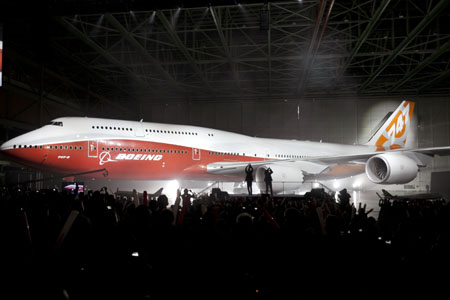
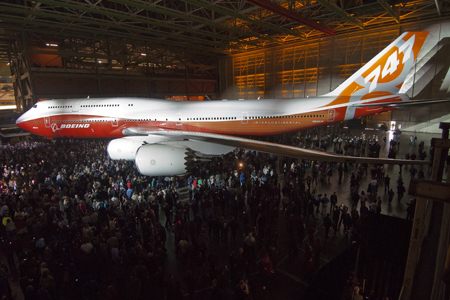
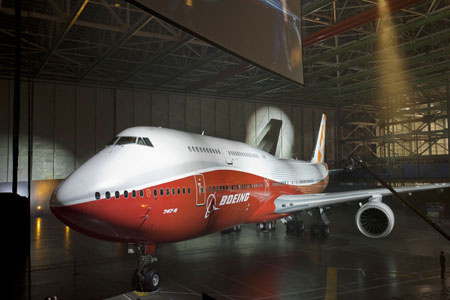
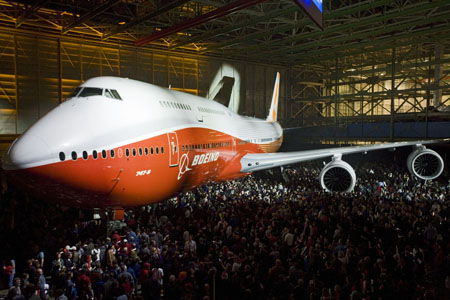
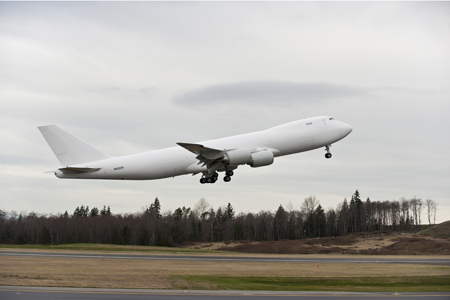
Fifth Boeing 747-8 Enters Flight-test Program

Similar Posts

  • | | | | |

    Southwest Airlines Makes Emergency Landing on Roatan Island

    Southwest Airlines flight WN-607 had to divert and make an emergency landing on Roatan Island, Honduras, on May 29th.

    The Boeing 737-700 was heading from San Jose, Costa Rica, to Baltimore, Maryland, when smoke was detected in the cabin, prompting the crew to divert to Roatan.

    The plane landed safely. There were 140 passengers and 8 crew members aboard at the time; all of them remained unhurt.

    The airline arranged a replacement plane for the passengers.

    To include the featured image in your Twitter Card, please tap or click their icon a second time.
  • | | | | |

    London-bound Cathay Pacific Flight Returns to India after Bird Strike

    Cathay PacificCathay Pacific flight CX-37 had to return and make an emergency landing at Indira Gandhi International Airport, Delhi, India, on October 30.

    The Boeing 747-400, en-route to Heathrow Airport, London, had to make an emergency landing due to bird strike.

    The plane landed uneventfully.

    Everyone aboard remained safe.

    To include the featured image in your Twitter Card, please tap or click their icon a second time.
  • FAA Proposes $1.45 Million Civil Penalty against Northwest Airlines

    For Immediate Release
    March 23, 2010

    FAA Proposes $1.45 Million Civil Penalty against Northwest Airlines

    WASHINGTON, D.C. – The Federal Aviation Administration (FAA) has proposed a $1.45 million civil penalty against Northwest Airlines for operating a number of its Boeing 757 aircraft without proper windshield wiring inspections.

    A 1990 FAA airworthiness directive on Boeing 757s required inspections for the presence of undersized wires in the heating system for both the captain’s and first officer’s windows, and replacement if needed. Left uncorrected, the problem could cause overheating, smoking and possibly a fire.

    Northwest wrote maintenance instructions for its mechanics in April 1990 that omitted the required inspection of the wires under the first officer’s window. As a result, 32 of the carrier’s 757s flew more than 90,000 passenger flights between December 1, 2005 and May 27, 2008, while not in compliance with the airworthiness directive.

    “Safety is the number one priority for the Department of Transportation,” said Transportation Secretary Ray LaHood. “The FAA has airworthiness directives for a reason and carriers cannot pick and choose when they want to comply.”

    On May 28, 2008, Northwest discovered it had not performed the proper inspections and revised its maintenance instructions. However, the instructions did not require the work be performed before further flight, but at the next planned overnight layover. As a result, 29 of the 32 aircraft flew 42 passenger-carrying flights while they were still out of compliance with the airworthiness directive.

    “When an air carrier realizes that an airworthiness directive is not being followed the problem must be corrected immediately,” said FAA Administrator Randy Babbitt. “Safety cannot wait for the next scheduled maintenance.”

    The airline has 30 days from the receipt of the FAA’s civil penalty letter to respond to the agency.

    ###

    To include the featured image in your Twitter Card, please tap or click their icon a second time.
  • | | | | | |

    Centurion Air Cargo Plane Drops Engine Cowl During Take off

    centurion-air-cargoCenturion Air Cargo flight GG-4852 had to return and make an emergency landing in Miami, Florida, on November 11th.

    The Boeing 747-400 plane departed for Amsterdam, Netherlands, but dropped an engine cowl during take off, prompting the crew to turn back.

    The plane landed uneventfully. Everyone aboard remained safe.

    To include the featured image in your Twitter Card, please tap or click their icon a second time.
  • |

    IATA Statement:Press release

    Date: 26 April 2009

    Swine Influenza

    IATA statement
    Geneva – The International Air Transport Association (IATA) is monitoring events concerning the recent cases of ‘swine influenza’ in Mexico and the United States. On 25 April 2009 the World Health Organization (WHO) convened a meeting of its Emergency Committee, and subsequently determined that the situation represented a ‘public health emergency of international concern’ under the terms of the International Health Regulation.

    WHO statement
    The World Health Organization has released a statement.

    WHO is not recommending any travel or trade restrictions.

    IATA goes on to say:
    “At the present time, IATA recommends that airlines review their preparedness plans for public health emergency and consider how they may be implemented in the event that the current situation becomes more widespread. No specific additional measures are currently advised. Recommendations will be reviewed in light of WHO evaluation of the evolving situation”

    To include the featured image in your Twitter Card, please tap or click their icon a second time.
  • |

    American Airlines Orders Two New Boeing 777-300ER Widebody Jets to Support Network Strategy and International Growth

    American Continues to Invest in Products to Enhance the Customer Experience

    FORT WORTH, Texas, Jan. 19, 2011 /PRNewswire/ — American Airlines, Inc., a wholly-owned subsidiary of AMR Corp., today announced it has entered into a purchase agreement with the Boeing Company under which American will acquire two Boeing 777-300ERs to support its global network strategy and to capitalize on international growth opportunities. The two aircraft are expected to be delivered in late 2012.

    “These additional widebody aircraft will bolster our network strategy, particularly the international growth opportunities we expect from our joint businesses with oneworld® partners in the trans-Atlantic and trans-Pacific markets,” said Tom Horton, President, AMR Corp., the parent company of American Airlines and American Eagle. “We value the combination of size, range and performance of the 777-300ER, as well as the extensive customer amenities it offers. The seating capability of the aircraft will give us growth flexibility in slot-constrained airports and provide us with greater ability to serve new long-haul markets.”

    “American Airlines is an industry leader whose vision and disciplined approach to growth has made it one of the largest airlines in the world,” said Boeing Commercial Airplanes President and CEO Jim Albaugh. “American is the first carrier in the United States to order the 777-300ER. These new airplanes will complement their large fleet of 777-200ERs by offering additional flexibility in serving nonstop routes while providing increased efficiency and reliability.”

    Additional terms of the commitment were not disclosed.

    “We hope that this positive step for our airline signals the beginning of a period of domestic and global expansion which will allow our airline to aggressively compete and prosper in the years to come,” said Captain David Bates, President of the Allied Pilots Association, the union that represents American’s 8,600 pilots.

    From 2007 through 2010, American has invested $4.2 billion in aircraft, cabin, and facility improvements to enhance the customer experience.

    International Growth Opportunities

    The 777-300ERS will expand international service, either incremental frequencies in markets American serves today, or new routes largely resulting from its alliance initiatives.

    As part of their recently launched trans-Atlantic business, oneworld members American, British Airways and Iberia announced service on five additional international routes, beginning in spring 2011. They are: New York JFK-Budapest and Chicago-Helsinki (operated by American Airlines), London Heathrow-San Diego (operated by British Airways), plus Madrid-Los Angeles and Barcelona-Miami (operated by Iberia). Also in spring 2011, American will add additional frequencies from New York JFK to Barcelona and Miami to Madrid.

    On Jan. 11, American Airlines and Japan Airlines announced the launch of their trans-Pacific joint business. Customers can expect to benefit from better flight schedules, expanded codesharing, more coordinated services, and greater access to a wider variety of fares. Additional consumer benefits over the coming months are anticipated as the cooperation level deepens between the two airlines. Additionally, American plans to start its new nonstop daily service between New York’s John F. Kennedy International Airport and Tokyo’s Haneda International Airport next month, and to launch service from Los Angeles to Shanghai, China, in April. Japan Airlines began service from Haneda to San Francisco in late October. The carriers have already begun, or plan, to codeshare on these flights.

    The trans-Atlantic joint business opportunity, initially representing approximately $7 billion in combined revenue between the carriers, will offer seamless service to 430 destinations in 105 countries, with nearly 5,200 daily departures worldwide. The trans-Pacific joint business, which represents more than $1.5 billion in combined revenue between the two airlines, represents significant growth opportunities for American long term as the Pacific region currently accounts for only about 4 percent of American’s total system capacity.

    American also continued to grow its service in Latin America in 2010. Last year, it began service from New York’s JFK to San Jose, Costa Rica, and to Rio de Janeiro, Brazil; Dallas/Fort Worth to San Salvador, El Salvador and Rio de Janeiro, Brazil. It also began service from Miami to Brazil’s capital, Brasilia. American is Latin America and Mexico’s premier airline with 43 destinations to 17 countries.

    “We believe it is important to grow but to do so sensibly, in the right places and, importantly, under the right economic circumstances,” Horton said. “Our purchase of additional 777s, our first growth aircraft since 2001, further demonstrates that philosophy and we will continue to look for growth opportunities that make the most sense for our customers, shareholders and employees.”

    To include the featured image in your Twitter Card, please tap or click their icon a second time.