| | | | |

Virgin Australia Fuel Imbalance Lands Team in Brisbane

Similar Posts

  • | | | |

    Russian Passenger jet Crashes in Igarka


    Click to view full size photo at Airliners.net
    Contact photographer Senior

    What: Katekavia Antonov 24RV passenger jet en route from Krasnoyarsk to Igarka
    Where: Eastern Siberia
    When: August 2 2010
    Who: 3 crew and 11 passengers (also listed as 5 crew 10 passengers)
    Why: 700 meters from the landing at Igarka, the plane the plane veered to right and crashed before the runway, in bad weather conditions. (Night time landing, thunderstorms, limited visibility) 11 fatalities have been reported. The plane shattered and caught fire.

    Three crew members and one passengers were hospitalized initially–the only ones pulled alive from the plane– but now only 3 crew members remain fighting for their lives.

    To include the featured image in your Twitter Card, please tap or click their icon a second time.
  • | | | | |

    Faulty Air-Conditioning System Prompts Qantas Jet to Make Priority Landing in Perth

    QantasQantas flight QF2 had to divert and make a priority landing at Perth Airport, Australia, on December 8.

    The Airbus A380 was on its way from Dubai to Sydney when a fault in its air-conditioning system was noticed. The pilot then quickly descended to 10,000 feet and sought permission for a priority landing in Perth.

    The plane landed safely and no one was hurt.

    An airline spokesperson said, “It was a fault with the air-conditioning so the engineers are having a look at that now.”

    To include the featured image in your Twitter Card, please tap or click their icon a second time.
  • | | | |

    Transavia Flight Makes Emergency Landing at Amsterdam Schiphol Airport

    Transavia flight HV-6757 had to divert and make an emergency landing at Amsterdam Schiphol Airport, Netherlands, on July 16th.

    The Boeing 737-800 plane heading from Groningen, Netherlands, to Palma, Majorca, Spain, was diverted due to a bird strike.

    The plane landed safely. All passengers and crew members remained unharmed.

    To include the featured image in your Twitter Card, please tap or click their icon a second time.
  • | | | | | |

    Hainan Airlines Plane Diverts to China due to Smoke Detector Indication

    Hainan AirlinesA Hainan Airlines flight HU-498 had to divert and make an emergency landing at Harbin Taiping International Airport, Harbin, China, on November 8.

    The Boeing 787-800 was en-route from Illinois, to Beijing, China, when the crew decided to divert to Harbin due to a smoke indication in passenger cabin.

    The plane landed safely. The smoke indication later turned out to be false.

    All passengers aboard remained unharmed.

    To include the featured image in your Twitter Card, please tap or click their icon a second time.
  • |

    Lajes Site of Oil Leak Diversion

    I was on a pilot talk forum and saw that a US Airways Flight 799, a B757 200 from AMS to PHL (that’s Amsterdam to Philadelphia) sprung a leak and diverted to Lajes on the 26th or 27th.

    Lajes in the Azores. Tourists there. Also an airbase.

    OF all the places in the world to get stranded, imagine getting stranded in Lajes.

    Apparently after the passengers were picked up the next day, their replacement flight was diverted too.
    I wonder how much the passengers will want the compensation package that will be offered to them (probably free tickets for more US Airways flights…)

    To include the featured image in your Twitter Card, please tap or click their icon a second time.
  • |

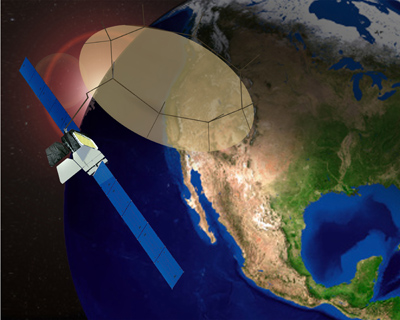
    Boeing to Build 3-Satellite System for Government of Mexico

    EL SEGUNDO, Calif., Dec. 20, 2010 — Boeing today announced that it has received a contract for approximately $1 billion from the government of Mexico to deliver an end-to-end satellite communications system. The system, known as MEXSAT, will consist of three satellites, two ground sites, associated network operations systems and reference user terminals. MEXSAT will provide secure communications for Mexico’s national security needs, as well as enhanced coverage for the country’s civil telecommunications.

    “MEXSAT is the fourth generation of satellites Boeing has provided to Mexico for government and civilian satellite communications,” said Craig Cooning, chief executive officer of Boeing Satellite Systems International. “MEXSAT builds on Boeing’s 13 years of experience in designing and delivering advanced geomobile systems.”

    Under the contract, Boeing will deliver a complete turnkey satellite system comprised of Boeing 702HP geomobile satellites MEXSAT-1 and MEXSAT-2 and one extended C- and Ku-band satellite, MEXSAT-3, which will provide fixed satellite services from geosynchronous orbit. MEXSAT-3 is scheduled to launch first, at the end of 2012.

    Each Boeing 702HP satellite will supply 14 kilowatts of power through five-panel solar array wings that use high-efficiency, ultra triple-junction gallium arsenide solar cells. Both satellites will carry a 22-meter L-band reflector for mobile satellite services, complemented by a 2-meter Ku-band antenna.

    Boeing will procure MEXSAT-3 and a spacecraft operations center from its supplier partner Orbital Sciences Corporation [NYSE: ORB]. MEXSAT-3, an Orbital Star 2.4 satellite, will provide full coverage of Mexico and its patrimonial seas and relay civil communications for socioeconomic development.

    Boeing also will develop two ground sites in Mexico with advanced beam-forming flexibility to direct mobile user spot beams to government agencies operating in Mexico and its patrimonial seas, including the Pacific Ocean and Gulf of Mexico.

    Boeing has previously provided five satellites that serve Mexico, beginning with Morelos 1 and Morelos 2, both launched in 1985; the Solidaridad 1 and Solidaridad 2 satellites, launched in 1993 and 1994; and Satmex 5, which was launched in 1998. Solidaridad 2, which has exceeded its contract life, is still in service, and Satmex 5 is expected to end its service life in 2012.

    A unit of The Boeing Company, Boeing Defense, Space & Security is one of the world’s largest defense, space and security businesses specializing in innovative and capabilities-driven customer solutions, and the world’s largest and most versatile manufacturer of military aircraft. Headquartered in St. Louis, Boeing Defense, Space & Security is a $34 billion business with 68,000 employees worldwide.

    To include the featured image in your Twitter Card, please tap or click their icon a second time.