|

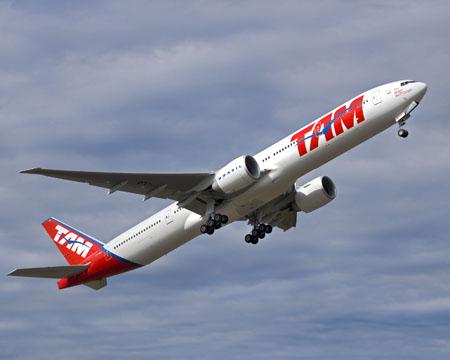
NTSB RELEASES 2009 AVIATION ACCIDENT STATISTICS

Similar Posts

  • FAA OKs Four More Portable Oxygen Concentrators

    WASHINGTON — The Federal Aviation Administration (FAA) announced today that passengers needing medical oxygen now have the option of using four additional portable oxygen concentrators while traveling, bringing the total number of approved units to 11.

    The newly authorized devices are DeVilbiss Healthcare’s iGo, International Biophysics Corporation’s LifeChoice, Inogen’s Inogen One G2 and Oxlife’s Independence Oxygen Concentrator.

    “This is our latest step toward making air travel more accessible for people who need medical oxygen,” said FAA Administrator Randy Babbitt. “We want these passengers to have as many options as possible while ensuring all of our safety guidelines are being met.”

    Portable oxygen concentrators are small, portable devices that separate oxygen from nitrogen and other gases in the air and provide oxygen to users at greater than 90 percent concentration. They do not use compressed or liquid oxygen, which the government classifies as hazardous material.

    The Department of Transportation requires that U.S. carriers allow passengers to use portable oxygen concentrators approved by the FAA during all phases of a flight – including taxiing, takeoff and landing – if the unit displays a manufacturer’s label that indicates it meets FAA requirements for portable medical electronic devices, is properly stowed, and meets certain other applicable safety-related conditions.

    For example, passengers must ensure the unit is in good working order and must be able to respond to the unit’s warning alarms. They must protect extra batteries in carry-on baggage from short circuits and physical damage. Carriers also must let passengers operate these FAA-approved concentrators while moving about the cabin whenever the captain turns off the “Fasten Seat Belt” sign.

    Carriers can legally refuse to allow inflight use of an FAA-approved portable oxygen concentrator that does not have a manufacturer’s label indicating that the device complies with FAA requirements. However, the Department encourages airlines to voluntarily allow the inflight use of such devices. Inflight use of an FAA-approved portable oxygen concentrator, whether labeled or not, poses no safety danger so long as carriage of the device is in accordance with instructions provided by the FAA.

    The FAA previously approved these portable oxygen concentrators for use:

    Delphi Medical Systems RS-00400
    Invacare XPO2
    AirSep Lifestyle
    AirSep Freestyle
    Inogen One
    SeQual Eclipse
    Respironics EverGo
    ###

    To include the featured image in your Twitter Card, please tap or click their icon a second time.
  • |

    NTSB FOR IMMEDIATE RELEASE: March 11, 2009 SB-09-11

    FOR IMMEDIATE RELEASE: March 11, 2009 SB-09-11

    NTSB ISSUES URGENT SAFETY RECOMMENDATION TO ADDRESS ENGINE THRUST ROLLBACK EVENTS ON B-777 AIRCRAFT

    Washington, DC – Following two engine thrust rollback events on Boeing 777 aircraft powered by Rolls-Royce engines, the National Transportation Safety Board issued an urgent safety recommendation today calling for the redesign of a Rolls- Royce engine component. The Safety Board also recommended that, after the redesign is completed, the new system be installed on all affected B-777 airplanes at the next maintenance check or within six months.

    These recommendations are being issued in response to the findings in two investigations – an accident and an incident – involving engine thrust rollbacks on Boeing 777-200ER airplanes powered by Rolls-Royce RB211 Trent 800 Series engines. In both cases a build-up of ice (from water normally present in all jet fuel) on the fuel/oil heat exchanger (FOHE) restricted the flow of fuel to the engine, resulting in an uncommanded engine rollback.

    The first event, which is still being investigated by the UK’s Air Accidents Investigation Branch (AAIB), occurred on January 17, 2008, when a Boeing 777 experienced a dual engine rollback on final approach and crashed short of the runway at London’s Heathrow International Airport. One passenger was seriously injured, eight passengers and four of the flight crew sustained minor injuries; the airplane was substantially damaged.

    The second event occurred on November 26, 2008, when a Delta Air Lines Boeing 777 experienced a single engine rollback during cruise flight over Montana while en route from Shanghai to Atlanta. Normal operations resumed after the flight crew followed Boeing’s published procedure to recover engine performance; the airplane landed safely in Atlanta.

    Testing in support of the UK accident investigation led Boeing to develop procedures to help prevent ice accumulation, and to recover thrust in cases of ice blockage. As more information from the Delta rollback event was developed, Boeing modified the procedures, which became the basis of an airworthiness directive issued by the Federal Aviation Administration.

    While the procedures may reduce the risk of a rollback in one or both engines due to FOHE ice blockage, they add complexity to flight crew operations, and the level of risk reduction is not well established. And because the recovery procedure requires a descent, the aircraft may be exposed to other risks such as rising terrain or hazardous weather, or the inability to achieve maximum thrust during a critical phase of flight, such as during a missed approach.

    Because of these hazards, the Safety Board has determined that the only acceptable solution to this safety vulnerability is a redesigned FOHE that would eliminate the potential of ice build-up. On February 23, 2009, Rolls-Royce indicated that a redesign of the FOHE was underway, and that they anticipated the redesign to be tested, certified and ready for installation within 12 months.

    “With two of these rollback events occurring within a year, we believe that there is a high probability of something similar happening again,” said NTSB Acting Chairman Mark V. Rosenker. “We are encouraged to see that Rolls-Royce is already working on a redesign, and we are confident that with the FAA and EASA (European Aviation Safety Agency) overseeing the process, this flight safety issue – even one as complex as this – will be successfully and expeditiously resolved.”

    The NTSB has made the following two recommendations to both the Federal Aviation Administration and the European Aviation Safety Agency:

    Require that Rolls-Royce redesign the RB211 Trent 800 series engine fuel/oil heat exchanger (FOHE) such that ice accumulation on the face of the FOHE will not restrict fuel flow to the extent that the ability to achieve commanded thrust is reduced.
    Once the fuel/oil heat exchanger (FOHE) is redesigned and approved by certification authorities, require that operators of Boeing 777-200 airplanes powered by Rolls Royce RB211 Trent 800 series engines install the redesigned FOHE at the next scheduled maintenance opportunity or within 6 months after the revised FOHE design has been certificated, whichever comes first.

    The NTSB and AAIB will continue to work together closely on both of the rollback events as each of the investigations move forward.

    src: http://www.ntsb.gov/Pressrel/2009/090311.html

    To include the featured image in your Twitter Card, please tap or click their icon a second time.
  • |

    Southwest Airlines Flight Attendants’ Union Ratifies Boeing 737-800 Tentative Agreement

    DALLAS, Nov. 18, 2010
    Southwest Airlines is pleased to announce that its Flight Attendants, represented by the Transport Workers Union (TWU) Local 556, voted to ratify a tentative agreement reached with the Company in September to add the Boeing 737-800 to the current collective bargaining agreement. With this positive vote, the Flight Attendants’ current contract will also be extended by one year, becoming amendable May 31, 2013, and will include the potential for wage rate increases based on the Company’s financial performance. TWU 556 is made up of more than 9,700 Flight Attendants.

    “Since we began evaluating the opportunity to introduce the Boeing 737-800 into our fleet, the TWU negotiating committee and Leadership Team quickly grasped the potential benefits along with the added operational complexities associated with this decision,” said Mike Van de Ven, Southwest Airlines Executive Vice President and Chief Operating Officer. “This was an important step in our due diligence process, and we are pleased that our hard working Flight Attendants recognize the long-term benefits of adding this new aircraft to our fleet.”

    The decision to add the -800 still isn’t final. The carrier is still waiting for a ratification vote with its Pilots’ Union, SWAPA, and is continuing to evaluate network and configuration options. Any details regarding firm orders with Boeing, timing, and quantity of deliveries are still to be determined. If the Company pursues the -800, a joint committee would meet to work on the logistical details related to scheduling and bidding procedures that adding a fourth Flight Attendant will require.

    After nearly 40 years of service, Southwest Airlines continues to differentiate itself from other low fare carriers–offering a reliable product with exemplary Customer Service. Southwest Airlines is the nation’s largest carrier in terms of originating domestic passengers boarded, now serving 69 cities in 35 states. Southwest also is one of the most honored airlines in the world known for its commitment to the triple bottom line of Performance, People, and Planet. To read more about how Southwest is doing its part to be a good citizen, visit southwest.com/cares to read the Southwest Airlines One ReportTM. Based in Dallas, Southwest currently operates more than 3,100 flights a day and has nearly 35,000 Employees systemwide.

    To include the featured image in your Twitter Card, please tap or click their icon a second time.
  • |

    President of Boeing Korea Announced

    CHICAGO, April 27, 2010 — The Boeing Company today named Pat Gaines as president of Boeing Korea, effective June 4.
    In a move designed to continue the company’s success in Korea, Gaines will succeed Bill Oberlin, who will retire in July after 25 years with Boeing.

    Gaines will lead Boeing’s enterprise-wide business in Korea, while strengthening the company’s local presence and finding new ways to pursue growth and productivity initiatives.

    “Pat’s leadership experience in global business and operations align directly with our ongoing efforts to increase our presence and collaboration with customers, partners, communities and employees in Korea. In this regard he will be able to build on the solid foundation established by the excellent work Bill Oberlin has done in Korea,” said Shep Hill, president of Boeing International and Senior Vice President, Business Development and Strategy.

    Gaines, a 23-year company veteran, joins Boeing Korea following a position in Boeing Commercial Airplanes in Seattle, where he served as vice president of Customer Support for Asia-Pacific. He has extensive experience in global operations and led the efforts that established the joint venture between FlightSafety International and Boeing, now known as Boeing Training and Flight Services.

    Oberlin came to Korea in 2002 as president of Boeing Korea. He joined Boeing in 1985 and was credited with sales of key Boeing products, such as CH-47 Chinook helicopters, F-15Ks and AEW&C Peace Eye aircraft, as well as commercial airplanes and related services to airline customers in Korea.

    Oberlin was recognized in Korea for his contributions to the local business community as chairman of the American Chamber of Commerce in Korea (2003-2004 and 2007-2008) and as an executive member of the U.S.-Korea Business Council. He was an active proponent of the Korea-U.S. Visa Waiver Program, which allows qualified Korean nationals to travel to the U.S. visa free. Oberlin also worked to support the pending Free Trade Agreement between Korea and the U.S. In 2008, he was appointed to serve on the National Competitiveness Improvement Committee under the President of the Republic of Korea.

    “Bill played a significant role in strengthening our presence and stakeholder relationships in the Republic of Korea. His representation of the company has been characterized by outstanding leadership, unquestioned integrity and demonstrated results,” added Hill. “Korea is an important market for Boeing and presents many opportunities for Boeing and Korea to work together in ways to advance our common interests. We have a solid business plan and a long-term view of the market, and we look forward to continuing the legacy of a true partnership between Boeing and our customers and partners in Korea.”

    Gaines served in the U.S. military as an airborne ranger and a warrant officer pilot. He attended the United States Military Academy at West Point and graduated with honors and a degree in Engineering.

    Boeing shares a successful 50-year relationship with Korea. In 1988, Boeing opened an office in Seoul to work closely with Korean customers and partners. Today, more than 160 Boeing employees work across the country.

    To include the featured image in your Twitter Card, please tap or click their icon a second time.
  • | | |

    FAA Delays Closure of 149 Air Traffic towers until June 15

    WASHINGTON – The U.S. Department of Transportation’s Federal Aviation Administration (FAA) announced today that it will delay the closures of all 149 federal contract air traffic control towers until June 15. Last month, the FAA announced it would eliminate funding for these towers as part of the agency’s required $637 million budget cuts under sequestration.

    This additional time will allow the agency to attempt to resolve multiple legal challenges to the closure decisions. As part of the tower closure implementation process, the agency continues to consult with airports and operators and review appropriate risk mitigations. Extending the transition deadline will give the FAA and airports more time to execute the changes to the National Airspace System.
    “This has been a complex process and we need to get this right,” said U.S. Transportation Secretary Ray LaHood. “Safety is our top priority. We will use this additional time to make sure communities and pilots understand the changes at their local airports.”

    As of today, approximately 50 airport authorities and other stakeholders have indicated they may join the FAA’s non-Federal Contract Tower program and fund the tower operations themselves. This additional time will allow the FAA to help facilitate that transition.

    “We will continue our outreach to the user community to answer any questions and address their concerns about these tower closures,” said FAA Administrator Michael Huerta.

    On March 22, the FAA announced that it would stop federal funding for 149 contract towers across the country. A phased, four-week closure process was scheduled to begin this Sunday, April 7. That phased closure process will no longer occur. Instead, the FAA will stop funding all 149 towers on June 15 and will close the facilities unless the airports decide to continue operations as a nonfederal contract tower.

    To include the featured image in your Twitter Card, please tap or click their icon a second time.
  • |

    Press Release – FAA Celebrates Recovery Act Funded First Responder Facility

    For Immediate Release
    January 24, 2011

    WASHINGTON, D.C. – The U.S. Department of Transportation’s Federal Aviation Administration (FAA) today celebrated the completion of an Aircraft Rescue and Firefighting building at St. Louis Downtown Airport, East St. Louis, Ill., paid for with $4.7 million in American Recovery and Reinvestment Act funds.

    “This new facility in East St. Louis is one of the many Recovery Act projects that are helping make important safety improvements at airports around the country,” said U.S. Transportation Secretary Ray LaHood.

    Recovery Act funds paid the full cost of building the structure, which will house employees and a fire and rescue vehicle. FAA regulations require airports with unscheduled passenger-carrying aircraft of at least 31 passenger seats to have a fire and rescue facility on airport property. St. Louis Downtown Airport now receives charter operations by unscheduled air carriers and commuter service about three times per week and was required to build this facility.

    “Airports need to be prepared for any emergency, and this facility will help ensure the safety of passengers and flight crews,” said FAA Administrator Randy Babbitt.

    The St. Louis Downtown Airport is the third-busiest Illinois airport in number of operations, behind only Chicago O’Hare International Airport and Chicago Midway Airport. In fiscal year 2010, the airport had more than 111,000 takeoffs and landings.

    Nationwide, $1.3 billion in Recovery Act money has been made available for both airport improvement projects and air traffic control facility and system upgrades. Because of low construction bids for projects, more Recovery Act dollars were available for additional facilities and equipment as well as airport projects. These Recovery Act grants have been distributed to airports that serve commercial passengers, cargo and general aviation.

    To include the featured image in your Twitter Card, please tap or click their icon a second time.