|

NTSB SENDING TEAM TO ASSIST IRELAND IN METROLINER INVESTIGATION

Similar Posts

  • |

    United Airlines Launches Paperless Flight Deck With iPad

    FIRST NETWORK CARRIER TO INTRODUCE PAPERLESS AERONAUTICAL NAVIGATION CHARTS; MOVE ENHANCES EFFICIENCY, SAVES FUEL, IMPROVES SAFETY

    CHICAGO, Aug. 23, 2011 — United Continental Holdings, Inc. (NYSE: UAL) today announced that it is converting to paperless flight decks and deploying 11,000 iPads to all United and Continental pilots. The electronic flight bags (EFB) replace paper flight manuals, and as a first for major network carriers, provide pilots with paperless aeronautical navigational charts through an iPad app. Distribution of iPads began earlier this month, and all pilots will have them by year end.  

    “The paperless flight deck represents the next generation of flying,” said Captain Fred Abbott, United’s senior vice president of flight operations. “The introduction of iPads ensures our pilots have essential and real-time information at their fingertips at all times throughout the flight.”

    Navigational Charting App Breaks New Ground

    The iPads are loaded with Jeppesen Mobile FliteDeck, the industry’s premier app featuring interactive, data-driven enroute navigation information and worldwide geo-referenced terminal charts. The enhanced full-color, high-quality information display ensures the right information is displayed at the right time.


    “We are proud to partner with United Airlines on a project of this magnitude with Jeppesen Mobile FliteDeck,” said Mark Van Tine, president and CEO of Jeppesen. “Jeppesen and United share a long and storied history that includes development of numerous innovations for the aviation industry. We look forward to continuing this partnership in integrating our digital mobile solutions that increase efficiency, reduce costs and optimize operations.”    


    Saving 16 Million Sheets of Paper and 326,000 Gallons of Jet Fuel a Year

    Each iPad, which weighs less than 1.5 pounds, will replace approximately 38 pounds of paper operating manuals, navigation charts, reference handbooks, flight checklists, logbooks and weather information in a pilot’s flight bag. A conventional flight bag full of paper materials contains an average of 12,000 sheets of paper per pilot. The green benefits of moving to EFBs are two-fold—it significantly reduces paper use and printing, and, in turn, reduces fuel consumption. The airline projects EFBs will save nearly 16 million sheets of paper a year which is equivalent to more than 1,900 trees not cut down. Saving 326,000 gallons of jet fuel a year reduces greenhouse gas emissions by 3,208 metric tons.


    iPad Improves Efficiency and Safety

    With iPad, pilots are able to quickly and efficiently access reference material without having to thumb through thousands of sheets of paper and reduce clutter on the flight deck. United and Continental pilots’ work will be streamlined as they can immediately download updates on iPad to their electronic flight materials, rather than waiting for paper updates to be printed and distributed. In addition, by eliminating bulky flight bags loaded with paper, pilots will have less to lift and carry through airports and onboard the aircraft, reducing the risk of injury while on duty.

    To include the featured image in your Twitter Card, please tap or click their icon a second time.
  • |

    NTSB CITES LACK OF BIRD STRIKE RESISTANT WINDSHIELD REQUIREMENTS IN FATAL CRASH OF HELICOPTER IN LOUISIANA

    FOR IMMEDIATE RELEASE: November 24, 2010
    SB-10-45

    NTSB CITES LACK OF BIRD STRIKE RESISTANT WINDSHIELD REQUIREMENTS IN FATAL CRASH OF HELICOPTER IN LOUISIANA

    The National Transportation Safety Board today released a final report on a fatal crash involving a transport-category helicopter caused by a bird strike. The Board said the lack of requirements for bird strike-resistant windshields contributed to the crash, and called on the FAA to develop such requirements.

    On January 4, 2009, a dual-engine Sikorsky S-76C++ helicopter (N748P), registered to and operated by PHI, Inc., crashed into marshy terrain near Morgan City, Louisiana approximately 7 minutes after takeoff from Amelie, Louisiana, on a charter flight to an oil rig in the Gulf of Mexico. Both pilots and 6 of the 7 passengers were killed in the crash.

    The aircraft had reached level cruise flight at 850 feet mean sea level and 135 knots when the cockpit voice recorder recorded a loud bang, followed by sounds consistent with rushing wind and a power reduction on both engines. The aircraft crashed several seconds later. Feathers and other bird debris were collected from the canopy and windshield of the aircraft. Laboratory analysis identified the remains as coming from a female red-tailed hawk; the average weight of such a bird is 2.4 pounds.

    The investigation revealed that the impact of the bird on the canopy just above the windshield near the engine control quadrant likely jarred the fire extinguisher T-handles out of their detents and moved them aft, pushing both engine control levers into or near the flight idle position, reducing fuel to both engines. The pilots were probably disoriented from the broken windshield and rushing air and were unable to react in time to maintain control of the helicopter.

    The helicopter was originally equipped with laminated glass windshields that complied with European bird-strike resistance standards. PHI replaced the windshields with lighter-weight, aftermarket cast acrylic windshields that did not have any bird-strike resistance standards.

    The NTSB determined that the helicopter crashed because of the sudden loss of power to both engines following the bird strike and the subsequent disorientation of the crewmembers. Contributing to the accident, the Board said, were the lack of FAA regulations and guidance requiring helicopter windshields to be resistant to bird strikes, the lack of protections that would prevent the T-handles from inadvertently dislodging out of their detents, and the lack of a master warning light and audible system to alert the flight crew of a low-rotor speed condition.

    Recommendations were issued to the FAA dealing with, among other things, the design of S-76C++ fire extinguisher T- handles and engine control quadrants, and similar designs of other helicopters, and of audible low-rotor alarm systems; certification standards for helicopter windshields; and simultaneous dual-engine power loss training for helicopter pilots.

    To include the featured image in your Twitter Card, please tap or click their icon a second time.
  • | |

    Lufthansa restructures passenger business organisation

    Stronger customer focus through more efficient structures / Divisionalisation strategy to be continued / Launch of “Future Berlin” project / Changes to take effect on 1 April 2011

    Lufthansa is restructuring its passenger business organisation to take account of the changing competitive landscape. The new, more customer-driven organisation will also allow the company to respond more effectively to market challenges. The aim is to sharpen the focus on customers and the competition while at the same simplifying and speeding up internal decision-making and management processes.
    Ongoing development of the organisation will strengthen and sustain Lufthansa’s passenger business divisions, which will in future benefit from more efficient structures that are tailored to changed customer requirements, tougher competition and also to the new Group structure. The changes will take effect on 1 April.

    The re-allocation of responsibilities and new appointments to the Lufthansa German Airlines Board announced on 7 December 2010 will also become effective on 1 April. Captain Kay Kratky will then be responsible for the Frankfurt and Flight Operations division, Thomas Klühr for Munich and Direct Services and Jens Bischof for Sales and Revenue Management. Dr. Roland Busch will remain in charge of the Finance and Human Resources division. Carsten Spohr took up his position as a member of the Lufthansa Executive Board and, simultaneously, CEO Lufthansa German Airlines on 1 January.

    In the Finance and Human Resources division, the Controlling, Human Resources, Procurement, Airport Relations, Information management functions and a Finance project will have a direct reporting line to Dr. Roland Busch. Antonio Schulthess, who is joining Lufthansa from Swiss International Air Lines, will be responsible for Human Resources. Management of the other functions remains unchanged.

    In the Sales and Revenue Management division, headed by Jens Bischof, greater emphasis will be placed on Lufthansa’s business and leisure travel sales activities. To that end, a new department responsible for the business travel segment will be set up and headed by Marcus Frank. Christian Tillmans, meanwhile, will be in charge of private customer sales and tourism in the leisure travel business segment. In future, Sales and Revenue Management will be merged under the management of Lars Redeligx. From April, a number of appointments will be taken up in area sales management. Uwe Müller will be responsible for Germany and the Lufthansa Airline Group markets (Switzerland and Austria), while European markets will remain the remit of Dr. Karsten Benz. Jürgen Siebenrock, who is joining Lufthansa from Lufthansa Cargo, will be responsible for managing markets in the Americas and Steffen Harbarth will be in charge of Asia/Pacific. Joachim Steinbach will remain responsible for Africa and the Middle East.

    The reorganisation of the Frankfurt and Flight Operations division will create four functions with a direct reporting line to Captain Kay Kratky. Dr. Alexis von Hoensbroech will be responsible for Commercial Management. Andreas Döpper will remain in charge of Station and Infrastructure Development at Frankfurt. Wolfgang Kolhagen, who is moving from Condor Flugdienst GmbH to Lufthansa, will assume responsibility for cabin crew at Frankfurt. The Operations department at Frankfurt, which will in future incorporate flight operations as well as specific ground processes, will be headed by Captain Werner Knorr.

    Following the creation of the new Munich and Direct Services division headed by Thomas Klühr, the strategy of divisionalisation will be carried forward and developed. The organisational structure of the operational units at Frankfurt will also be established in full at Munich under Helmut Wölfel as Commercial Manager. Captain Kai-Uwe Spannbauer will be in charge of Operations at MUC. In future, Munich cabin crews will be managed by Heike Birlenbach, while Burkhard Feuge will be responsible for Station and Infrastructure Development at Munich. Oliver Wagner will remain in charge of Direct Services, which will be responsible for all Lufthansa flights that are not routed through the Frankfurt or Munich hubs. Responsibility for Lufthansa’s activities in Italy will be bundled in a separate department and assigned to Michael Kraus, who will thus be responsible for Lufthansa Italia operations and Lufthansa’s sales organisation in Milan. In addition, he will remain Managing Director of Air Dolomiti.

    As part of the restructuring process, new cross-functions will also be created. In future, aside from strategy development, the Business Development unit will oversee network and corporate development as well as fleet dimensioning and allocation. This function will be headed by Armin Herzwurm. Product and Marketing Management will be bundled in another cross-divisional function, which will be managed from April by Dr. Reinhold Huber. The new “Future Berlin” project will be launched to look into ways of expanding Lufthansa’s market position in Berlin. The manager responsible for this new function will be Josef Bogdanski. Managers in charge of the cross-functions will report direct to the CEO of Lufthansa German Airlines, Carsten Spohr.

    Christian Tillmans’ move from the management of Lufthansa CityLine to Lufthansa will create a vacancy on the Board at Lufthansa’s regional subsidiary. Stephan Klar will therefore be proposed to the Lufthansa CityLine Supervisory Board as a new member of the airline’s Board of Directors.

    To include the featured image in your Twitter Card, please tap or click their icon a second time.
  • |

    Boeing to Build 3-Satellite System for Government of Mexico

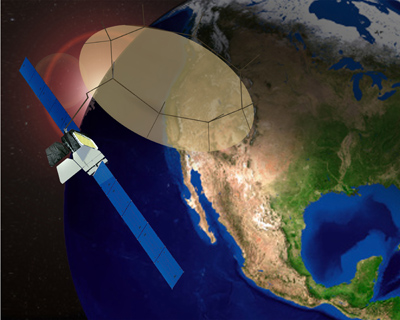
    EL SEGUNDO, Calif., Dec. 20, 2010 — Boeing today announced that it has received a contract for approximately $1 billion from the government of Mexico to deliver an end-to-end satellite communications system. The system, known as MEXSAT, will consist of three satellites, two ground sites, associated network operations systems and reference user terminals. MEXSAT will provide secure communications for Mexico’s national security needs, as well as enhanced coverage for the country’s civil telecommunications.

    “MEXSAT is the fourth generation of satellites Boeing has provided to Mexico for government and civilian satellite communications,” said Craig Cooning, chief executive officer of Boeing Satellite Systems International. “MEXSAT builds on Boeing’s 13 years of experience in designing and delivering advanced geomobile systems.”

    Under the contract, Boeing will deliver a complete turnkey satellite system comprised of Boeing 702HP geomobile satellites MEXSAT-1 and MEXSAT-2 and one extended C- and Ku-band satellite, MEXSAT-3, which will provide fixed satellite services from geosynchronous orbit. MEXSAT-3 is scheduled to launch first, at the end of 2012.

    Each Boeing 702HP satellite will supply 14 kilowatts of power through five-panel solar array wings that use high-efficiency, ultra triple-junction gallium arsenide solar cells. Both satellites will carry a 22-meter L-band reflector for mobile satellite services, complemented by a 2-meter Ku-band antenna.

    Boeing will procure MEXSAT-3 and a spacecraft operations center from its supplier partner Orbital Sciences Corporation [NYSE: ORB]. MEXSAT-3, an Orbital Star 2.4 satellite, will provide full coverage of Mexico and its patrimonial seas and relay civil communications for socioeconomic development.

    Boeing also will develop two ground sites in Mexico with advanced beam-forming flexibility to direct mobile user spot beams to government agencies operating in Mexico and its patrimonial seas, including the Pacific Ocean and Gulf of Mexico.

    Boeing has previously provided five satellites that serve Mexico, beginning with Morelos 1 and Morelos 2, both launched in 1985; the Solidaridad 1 and Solidaridad 2 satellites, launched in 1993 and 1994; and Satmex 5, which was launched in 1998. Solidaridad 2, which has exceeded its contract life, is still in service, and Satmex 5 is expected to end its service life in 2012.

    A unit of The Boeing Company, Boeing Defense, Space & Security is one of the world’s largest defense, space and security businesses specializing in innovative and capabilities-driven customer solutions, and the world’s largest and most versatile manufacturer of military aircraft. Headquartered in St. Louis, Boeing Defense, Space & Security is a $34 billion business with 68,000 employees worldwide.

    To include the featured image in your Twitter Card, please tap or click their icon a second time.
  • | |

    Delhi International Airport Partners with IBM to Create a Smarter Air Terminal

    NEW DELHI, Dec. 16, 2010 — Delhi International Airport (P) Limited (DIAL) has partnered with IBM (NYSE: IBM) India to establish a common-use infrastructure in New Delhi’s Passenger Terminal Building 3 that will automate its operations and improve customer satisfaction to give the airport a competitive edge through quality service. The unified network solution integrates all of the communications across Terminal 3 and its facilities so that airport operations, airlines and other tenants can better share and exchange key information across their related operations to more efficiently deploy their resources and meet the growing demands of the India aviation market.

    “IBM’s solution reflects the need of Delhi International Airport (P) Limited — a solution providing quality management of our internal systems and delivering greater service to the users of the airport while reducing issues pertaining to interoperability through this infrastructure,” said I. Prabhakara Rao, CEO Airport Project Development, DIAL. “We are happy to be working with IBM where they have placed us better in catering to our immediate business requirement.”

    DIAL chose IBM’s Managed Network Infrastructure (MNI) solution, which forms backbone for all the IT and non-IT systems in Terminal 3. It combines video, voice and data over a single network platform using Intelligent Cable Management System with high levels of redundancy and scalability. IBM designed and implemented this network to meet DIAL’s objective of achieving a world class common use IT infrastructure for its customers, thereby supporting and improving service quality levels due to its high available design. The MNI covers the length and breadth of Terminal 3 with wired and wireless network coverage providing common use but highly virtualized network services to airport core systems, IT and non-IT systems, corporate users, government offices, lounges and public facilities. All this has been done with well defined work methods statements, detailed working plans and test and integration plans.

    “DIAL wanted a partner who could understand the complexity of airport systems while being equipped with extensive experience in handling large-scale deployments at international airports,” said Sameer Batra, Vice President, Distribution Sector, IBM India/South Asia. “This project will help DIAL in addressing their requirement for a unified and secure solution that aims at improving the airport experience while positioning them for future growth.”

    With more than 50 years experience working with the world’s leading airlines and airports, IBM provides consulting services and information technology to top airlines and airports across the globe to enable them to deliver more highly differentiated customer experiences and improve their operational efficiency.

    To include the featured image in your Twitter Card, please tap or click their icon a second time.
  • |

    Boeing-built GOES-15 Weather Satellite Enters Service for NASA, NOAA

    EL SEGUNDO, Calif., Sept. 1, 2010 — Boeing [NYSE: BA] today announced that GOES-15, the company’s eighth Geostationary Operational Environmental Satellite, has completed on-orbit testing and has been accepted into service by NASA and the National Oceanic and Atmospheric Administration (NOAA).
    “GOES-15 completes the fleet of advanced meteorological satellites that Boeing designed, built and launched to provide enhanced weather monitoring over North America and refresh NOAA’s operational fleet,” said Craig Cooning, vice president and general manager of Boeing Space & Intelligence Systems. “The United States will have state-of-the-art satellite images on nightly weather telecasts, better weather monitoring and prediction, and more accurate data for climate studies because of these new GOES satellites. We thank our NASA and NOAA customers for the nearly 13 successful years of cooperative development that has enabled us to deliver the full GOES fleet.”

    “Clearly, this is a great day for NASA, NOAA and all of our team members,” said André Dress, GOES deputy project manager at NASA’s Goddard Space Flight Center, Greenbelt, Md. “We take great pride in knowing that all the years of hard work, late hours and diligence have paid off. Boeing, Lockheed Martin, ITT and United Launch Alliance have really shone on this mission, and it shows in the final product. GOES-15 will be a great addition to the constellation, and we look forward to seeing it in operation.”
    GOES-15 was launched on March 4 from Cape Canaveral Air Force Station, Fla. The satellite successfully completed five months of on-orbit testing and demonstrated operational readiness of its subsystems, spacecraft instruments and communications services. GOES-15 has already started to deliver high-resolution photos from space, including the first visible and infrared images of Earth taken by its imager instrument, and the first image of the sun taken by its solar X-ray imager instrument.

    The eight GOES satellites that Boeing has built for NASA and NOAA began with GOES-D, which launched in 1980. The on-orbit GOES constellation includes the three recently produced Boeing satellites known as GOES-13 (formerly GOES-N), GOES-14 (formerly GOES-O) and GOES-15 (formerly GOES-P). GOES-13 was activated as the operational GOES-East satellite on April 14, in time to monitor the 2010 hurricane season over the Atlantic Ocean. GOES-13 replaced GOES-12, which NOAA moved to 60 degrees west longitude to provide coverage for South America as part of the Global Earth Observing System of Systems. GOES-14 is currently in a storage orbit of 105 degrees west longitude, ready to become a primary operational satellite in the next two years. GOES-15 will be placed in an on-orbit storage location at 105 degrees west longitude.

    The mission of the GOES satellites is to provide space-based Earth observation and global environment-sensing activities, delivering enhanced weather forecasting that protects life and property. In addition to providing the familiar weather images seen on television newscasts every day, NASA and NOAA also recently released a six-minute video of the 2009 hurricane season. The video includes data and images supplied by the GOES satellites.
    In addition to the acceptance of GOES-15, Boeing also handed over a government satellite to the U.S. Air Force on Aug. 26. The delivery of two operational satellites to two customers in the same week marks only the second time this has occurred in Space & Intelligence Systems’ 47-year history, underscoring Boeing’s commitment to solid program execution.

    A unit of The Boeing Company, Boeing Defense, Space & Security is one of the world’s largest defense, space and security businesses specializing in innovative and capabilities-driven customer solutions, and the world’s largest and most versatile manufacturer of military aircraft. Headquartered in St. Louis, Boeing Defense, Space & Security is a $34 billion business with 68,000 employees worldwide.

    To include the featured image in your Twitter Card, please tap or click their icon a second time.