| | | | |

After Pressure Loss, Mayday, Diversion to Frankfurt

Similar Posts

  • | | | |

    United Airlines Flight Makes Emergency Landing in Newark

    United Airlines flight UA-1048 made an emergency landing in Newark, New Jersey, on December 8th.

    The Boeing 737-900 plane took off for Cancun, Mexico, but had to turn back due to smoke in the cockpit.

    The plane landed safely. There were one hundred and eighty-five people aboard at the time; all of them remained unharmed.

    To include the featured image in your Twitter Card, please tap or click their icon a second time.
  • | | | | |

    Airbus Emergency Diversion in Brussels


    Click to view full size photo at Airliners.net
    Contact photographer Jan Vet

    What: Iberia Airbus A320-200 en route from Brussels Belgium to Madrid, Spain
    Where: Bordeaux
    When: Nov 22nd 2009
    Who: 94 passengers and 6 crew
    Why: While en route from Brussels, the flight experienced a loss of cabin pressure. The plane performed an emergency descent, and diverted to Bordeaux, where it landed safely.

    Some passengers were treated for ear pain, but otherwise there were no medical issues reported. Passengers were booked on alternative flights.

    To include the featured image in your Twitter Card, please tap or click their icon a second time.
  • | |

    NTSB Still Investigating

    We should remember this auxiliary battery failed after the passengers had disembarked. As the experts explain it, the battery is an auxiliary. This particular failure wouldn’t be likely to happen in the air, which technically makes it non-life threatening, although a tech or firefighter who was injured when the fire was extinguished might feel differently. I’m not trying to minimize the problem, but passengers’ lives were not threatened.

    Nevertheless, I’m looking forward to Boeing’s solution to this. All the experts tell me this is what happens with new planes. Just a matter of getting the kinks out. While it’s not unexpected that new approaches (replacing the hydraulics with high powered electrics) need some ironing out, we’ll all sleep a lot better, and fly a lot easier when the situation is addressed.

    NTSB Provides Second Investigative Update on Boeing 787 Battery Fire in Boston

    January 14, 2013
    WASHINGTON – The National Transportation Safety Board today released a second update on its investigation into the Jan. 7 fire aboard a Japan Airlines Boeing 787 at Logan International Airport in Boston.

    The lithium-ion battery that powered the auxiliary power unit on the airplane was removed and transported back to the NTSB Materials Laboratory in Washington on Jan. 10. The battery is currently being examined by NTSB investigators, who plan to disassemble it this week.

    In advance of that work, under the direction of the NTSB, radiographic examinations of the incident battery and an exemplar battery were conducted this past weekend at an independent test facility. The digital radiographs and computed tomography scans generated from this examination allowed the team to document the internal condition of the battery prior to disassembling it.

    In addition, investigators took possession of burned wire bundles, the APU battery charger, and several memory modules. The maintenance and APU controller memory modules will be downloaded to obtain any available data. Investigators also documented the entire aft electronics bay including the APU battery and the nearby affected structure where components and wire bundles were located.

    The airplane’s two combined flight data recorder and cockpit voice recorder units were transported to NTSB headquarters and have been successfully downloaded. The information is currently being analyzed by the investigative team.

    The airport emergency response group documented the airport rescue and firefighting efforts to extinguish the fire, which included interviews with first responders. Fire and rescue personnel were able to contain the fire using a clean agent (Halotron), however, they reported experiencing difficulty accessing the battery for removal during extinguishing efforts. All fire and rescue personnel responding to the incident had previously received aircraft familiarization training on the Boeing 787.

    ntsb_photo
    NTSB photo of the burned auxiliary power unit battery from a JAL Boeing 787 that caught fire on Jan. 7 at Boston’s Logan International Airport. The dimensions are 19×13.2×10.2 inches and it weighs approximately 63 pounds (new).

    In accordance with international investigative treaties, the Japan Transport Safety Board and French Bureau d’Enquêtes et d’Analyses pour la sécurité de l’aviation civile have appointed accredited representatives to the investigation. The NTSB-led investigative team is comprised of subject matter groups in the areas of airplane systems, fire, airport emergency response, and data recorders and includes experts from the Federal Aviation Administration, The Boeing Company, US Naval Surface Warfare Center’s Carderock Division, Japan Airlines (aircraft operator), GS Yuasa (battery manufacturer), and Thales Avionics Electrical Systems (APU battery/charger system).

    To include the featured image in your Twitter Card, please tap or click their icon a second time.
  • |

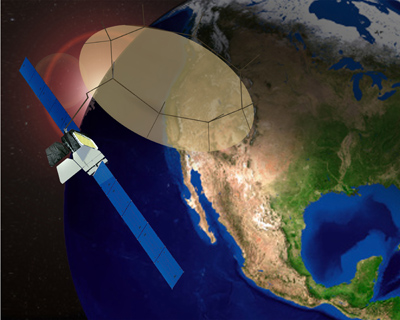
    Boeing to Build 3-Satellite System for Government of Mexico

    EL SEGUNDO, Calif., Dec. 20, 2010 — Boeing today announced that it has received a contract for approximately $1 billion from the government of Mexico to deliver an end-to-end satellite communications system. The system, known as MEXSAT, will consist of three satellites, two ground sites, associated network operations systems and reference user terminals. MEXSAT will provide secure communications for Mexico’s national security needs, as well as enhanced coverage for the country’s civil telecommunications.

    “MEXSAT is the fourth generation of satellites Boeing has provided to Mexico for government and civilian satellite communications,” said Craig Cooning, chief executive officer of Boeing Satellite Systems International. “MEXSAT builds on Boeing’s 13 years of experience in designing and delivering advanced geomobile systems.”

    Under the contract, Boeing will deliver a complete turnkey satellite system comprised of Boeing 702HP geomobile satellites MEXSAT-1 and MEXSAT-2 and one extended C- and Ku-band satellite, MEXSAT-3, which will provide fixed satellite services from geosynchronous orbit. MEXSAT-3 is scheduled to launch first, at the end of 2012.

    Each Boeing 702HP satellite will supply 14 kilowatts of power through five-panel solar array wings that use high-efficiency, ultra triple-junction gallium arsenide solar cells. Both satellites will carry a 22-meter L-band reflector for mobile satellite services, complemented by a 2-meter Ku-band antenna.

    Boeing will procure MEXSAT-3 and a spacecraft operations center from its supplier partner Orbital Sciences Corporation [NYSE: ORB]. MEXSAT-3, an Orbital Star 2.4 satellite, will provide full coverage of Mexico and its patrimonial seas and relay civil communications for socioeconomic development.

    Boeing also will develop two ground sites in Mexico with advanced beam-forming flexibility to direct mobile user spot beams to government agencies operating in Mexico and its patrimonial seas, including the Pacific Ocean and Gulf of Mexico.

    Boeing has previously provided five satellites that serve Mexico, beginning with Morelos 1 and Morelos 2, both launched in 1985; the Solidaridad 1 and Solidaridad 2 satellites, launched in 1993 and 1994; and Satmex 5, which was launched in 1998. Solidaridad 2, which has exceeded its contract life, is still in service, and Satmex 5 is expected to end its service life in 2012.

    A unit of The Boeing Company, Boeing Defense, Space & Security is one of the world’s largest defense, space and security businesses specializing in innovative and capabilities-driven customer solutions, and the world’s largest and most versatile manufacturer of military aircraft. Headquartered in St. Louis, Boeing Defense, Space & Security is a $34 billion business with 68,000 employees worldwide.

    To include the featured image in your Twitter Card, please tap or click their icon a second time.
  • | | | | |

    Sunwing Airlines Dumps Unruly Family in Bermuda for (Alleged) Smoking And Disobeying Flight Attendants

    After unruly behavior on a Sunwing Airlines flight from Halifax Canada to the Dominican Republic, a family was arrested, and appeared in Bermuda court Monday.

    Sunwing may bring charges against the family for the cost of diverting the plane. ($50,000) The plane was examined in Bermuda after landing and continued to the Dominican Republic a day late. Sunwing is banning the family from every flying their airline again.

    The son allegedly smoked in the bathroom, then a disagreement between his family and flight attendants ensued. Pilots landed in Bermuda and the family was arrested.

    David McNeil Jr denied smoking on the plane and the charge was dropped, but the father, David McNeil Sr. pleaded guilty to disorderly conduct and the mother, Donna McNeil pleaded guilty to disobeying a lawful order from a flight attendant. The parents were sentenced to either a $500 fine or 10 days in prison. The son was free to go.
    Raw Video below

    To include the featured image in your Twitter Card, please tap or click their icon a second time.
  • | | | | |

    Cape Air Cessna Lands in Boston on One Engine


    Pictured: A Cape Air Cessna 402C Utililiner
    Click to view full size photo at Airliners.net
    Contact photographer Orlando G. Rivera Rivera – SJU Aviation Photography

    What: Cape Air Cessna 402 en route from Lebanon to Boston
    Where: Manchester-Boston Regional Airport
    When: 6:30 a.m.
    Who: 5 passengers
    Why: After the plane developed low oil pressure in the right engine, the pilot shut it down and made a safe landing at Manchester Boston Regional Airport.

    To include the featured image in your Twitter Card, please tap or click their icon a second time.