| |

DOT Press Release: Travel Agency Fined

Similar Posts

  • |

    Boeing and State Corporation Rostechnology Finalize Order for Next-Generation 737s

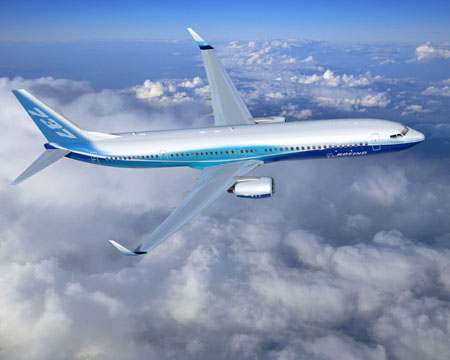
    MOSCOW, Oct. 29 — Boeing and the State Corporation Rostechnology today announced the finalization of an order for 50 Next-Generation 737 airplanes. The order includes purchase rights for an additional 35 Next-Generation 737s. The State Corporation’s Supervisory Board approved the definitive agreement that was signed and announced on Sept. 17 during the Sochi Investment Forum in Russia. The order is valued at $3.7 billion at average list prices. Rostechnology’s order includes 15 Next-Generation 737-700s, 25 737-800s and 10 737-900ERs (extended range). 

    "The order of Next-Generation 737s by Rostechnology represents a substantial investment in our future and will accelerate the significant progress we are making in improving the global competitiveness and efficiency of our airline industry," said Roman Pakhomov, chief executive officer of Aviation Capital Services, aviation leasing division of Rostechnology. "This agreement continues to build upon the strategic partnership between Rostechnology and Boeing."

    The economic benefits, comfort and operating efficiencies consistently demonstrated by the Next-Generation 737 directly support Rostechnology’s plan to provide Russian airlines with efficient and reliable airplanes that will help them profitably grow domestic and international operations.

    "This is a great day in the history of our long and enduring partnership with Rostechnology," said Marlin Dailey, vice president of Sales, Boeing Commercial Airplanes. "Today’s order for 737-700s, 737-800s and 737-900ERs underscores Rostechnology’s confidence in the world’s most successful single-aisle airplane. The entire Next-Generation 737 family offers superior operating economics and the 737-900ER has the best seat mile cost of any single-aisle airplane and provides our Next-Generation 737 customers with a compelling low-risk growth opportunity."

    Rostechnology 737s will be delivered with the all-new 737 Boeing Sky Interior. Inspired by the passenger experience, it promises to redefine the 737 travel experience. In addition to the new design, Boeing also announced a performance improvement package offering a 2 percent reduction in fuel consumption through various airframe and engine improvements.

    Over the past 20 years, Boeing’s joint programs in Russia have resulted in almost $6 billion in highly successful joint projects with its Russian partners making Boeing the largest international aerospace investor in Russia.

    Boeing announced in September that its production rate for the Next-Generation 737 program will increase from the current rate of 31.5 airplanes per month to 35 in early 2012 and to 38 airplanes per month in the second quarter of 2013.

    To include the featured image in your Twitter Card, please tap or click their icon a second time.
  • |

    Boeing Receives Florida Governor’s Business Expansion Award

    TALLAHASSEE, Fla., Sept. 22, 2010 — The Boeing Company [NYSE: BA] today received the Governor’s Business Expansion Award from Enterprise Florida at the Governor’s 2010 Business Diversification Awards ceremony in Tallahassee. The Boeing operation at Cecil Field in Jacksonville, Fla., won the award after the site received the consolidated U.S. Navy F/A-18 work and the U.S. Air Force QF-16 contract. The consolidation and contract win will add approximately 75 jobs to the Cecil Field facility.

    “This expansion to our work scope will allow us to be even more responsive to our customers by colocating related programs in one spot,” said Gary Phillips, Cecil Field site executive for Boeing. “We’re honored that the governor’s office has recognized our expansion as a significant contribution to the community of Jacksonville and the Duval County area.”
    “Florida’s entrepreneurs and business leaders are major contributors to the state’s economic growth,” said Enterprise Florida President and CEO John Adams Jr. “Today, we recognized some of their exemplary accomplishments in creating marketable products and services, which are increasing Florida’s competitiveness and building a future economy that will serve all segments of our population very well.”
    With the addition of the F/A-18 Structural Repair Facility, Cecil Field’s capabilities now include avionics repairs and upgrades; aircraft modification and maintenance; structural and composite component repair; and full nondestructive inspection. The Boeing team at Cecil Field draws on a decade of experience to support Navy and Marine Corps F/A-18A-F aircraft service, repair and modification programs. The facility, located at Cecil Commerce Center, includes 479,000 square feet of maintenance, manufacturing, warehousing and office space.
    “Boeing is proud to be part of the Jacksonville community,” Phillips said. “With our growth now and in the future, we look forward to making a positive impact here for many years to come.”
    A unit of The Boeing Company, Boeing Defense, Space & Security is one of the world’s largest defense, space and security businesses specializing in innovative and capabilities-driven customer solutions, and the world’s largest and most versatile manufacturer of military aircraft. Headquartered in St. Louis, Boeing Defense, Space & Security is a $34 billion business with 68,000 employees worldwide.

    To include the featured image in your Twitter Card, please tap or click their icon a second time.
  • |

    Boeing PR: NewGen Tanker Win Would Bring 230 Jobs, $10 Million to Oklahoma

    OKLAHOMA CITY, Nov. 12, 2010 — The Boeing Company [NYSE: BA] today announced that Oklahoma will benefit from an estimated 230 total jobs and generate an estimated $10 million in annual economic impact if the NewGen Tanker is selected as the U.S. Air Force’s next aerial refueling aircraft.

    Boeing submitted its proposal July 9 to replace 179 of the Air Force’s 400 Eisenhower-era KC-135 aircraft. The Air Force is expected to award a contract in the next few months.

    "We welcome the high-paying, skilled jobs that the Boeing tanker project will support," said Oklahoma Gov. Brad Henry. "Oklahomans will be very proud to contribute to the mission of our country’s brave military men and women, who need just the kind of state-of-the-art, American-made tanker that Boeing has proposed."

    "Oklahoma’s aerospace workers will play an integral role on Boeing’s tanker team," said Mark DeVoss, Supplier Management director, Boeing Tanker Programs. "Along with the rest of the United States Tanker Team, our suppliers in Oklahoma will be focused on building a NewGen Tanker that best meets America’s military needs at the greatest value to American taxpayers."

    Oklahoma manufacturers ready to produce critical components on the NewGen Tanker include:

    • Boeing, Oklahoma City
    • Cinch Connectors, Vinita
    • Limco Manufacturing, Tulsa
    • Precise Machining & Manufacturing, Tulsa.

    Currently, Boeing has 964 employees in Oklahoma and works with nearly 247 suppliers/vendors, delivering a total $531 million in annual economic impact.

    The NewGen Tanker is a widebody, multi-mission aircraft based on the proven Boeing 767 commercial airplane and updated with the latest and most advanced technology. Capable of fulfilling the Air Force’s needs for transport of fuel, cargo, passengers and patients, the combat-ready NewGen Tanker will meet or exceed the 372 mandatory requirements described in the service’s final KC-X Request for Proposal released Feb. 24.

    The NewGen Tanker will be made with a low-risk approach to manufacturing that relies on existing Boeing facilities in Washington state and Kansas as well as U.S. suppliers throughout the nation, with decades of experience delivering dependable military tanker and derivative aircraft. Nationwide, the NewGen Tanker program will support approximately 50,000 total U.S. jobs with Boeing and more than 800 suppliers in more than 40 states.

    The Boeing NewGen Tanker also will be more cost-effective to own and operate than a larger, heavier tanker. It will save American taxpayers more than $10 billion in fuel costs over its 40-year service life because it burns 24 percent less fuel than the competitor’s airplane.

    Boeing has been designing, building, modifying and supporting tankers for decades. These include the KC-135 that will be replaced in the KC-X competition, and the KC-10 fleet. The company also has delivered four KC-767Js to the Japan Air Self-Defense Force and is on contract to deliver four KC-767As to the Italian Air Force.

    To include the featured image in your Twitter Card, please tap or click their icon a second time.
  • |

    FAA Proposes $227,500 Civil Penalty Against Dover Chemical

    ATLANTA– The Federal Aviation Administration is proposing a $227,500 civil penalty against Dover Chemical Corporation of Dover, Ohio, for alleged violations of federal hazardous materials regulations.

    The FAA alleges that Dover Chemical offered sulfur monochloride, a hazardous material, to United Parcel Service for transportation by air from Hammond, Ind., to Dover on June 15, 2010. The hazardous materials regulations prohibit carriage of sulfur monochloride aboard any type of aircraft. The chemical’s vapors are poisonous if they are inhaled.
    Dover Chemical allegedly offered the material when it was not packaged, marked, classed, described, labeled or in condition for shipment as required by regulations. UPS workers at the carrier’s sorting hub in Louisville discovered the shipment because it had leaked.

    Dover Chemical has 30 days from receipt of the FAA’s enforcement letter to respond to the agency.

    To include the featured image in your Twitter Card, please tap or click their icon a second time.
  • |

    Boeing NewGen Tanker Win Would Bring 370 Jobs, $17 Million to Georgia

    ST. LOUIS, Nov. 18, 2010 — The Boeing Company [NYSE: BA] today announced that Georgia will benefit from an estimated 370 total jobs and generate an estimated $17 million in annual economic impact if the Boeing NewGen Tanker is selected as the U.S. Air Force’s next aerial refueling aircraft.

    Boeing submitted its proposal July 9 to replace 179 of the Air Force’s 400 Eisenhower-era KC-135 aircraft. The Air Force is expected to award a contract in the next few months.

    "The Boeing NewGen Tanker program will contribute to economic recovery in Georgia by supporting jobs in the aerospace industry — jobs for Georgia workers who will help America’s warfighters complete their missions and return home safely," said Mark DeVoss, Supplier Management director, Boeing Tanker Programs.

    Georgia manufacturers ready to produce critical components on the NewGen Tanker include TIGHITCO in Atlanta.

    Currently, Boeing has 654 employees in Georgia and works with nearly 413 suppliers/vendors, delivering a total $204 million in annual economic impact.

    The NewGen Tanker is a widebody, multi-mission aircraft based on the proven Boeing 767 commercial airplane and updated with the latest and most advanced technology. Capable of fulfilling the Air Force’s needs for transport of fuel, cargo, passengers and patients, the combat-ready NewGen Tanker will meet or exceed the 372 mandatory requirements described in the service’s final KC-X Request for Proposal released Feb. 24.

    The NewGen Tanker will be made with a low-risk approach to manufacturing that relies on existing Boeing facilities in Washington state and Kansas as well as U.S. suppliers throughout the nation, with decades of experience delivering dependable military tanker and derivative aircraft. Nationwide, the NewGen Tanker program will support approximately 50,000 total U.S. jobs with Boeing and more than 800 suppliers in more than 40 states.

    The Boeing NewGen Tanker also will be more cost-effective to own and operate than a larger, heavier tanker. It will save American taxpayers more than $10 billion in fuel costs over its 40-year service life because it burns 24 percent less fuel than the competitor’s airplane.

    Boeing has been designing, building, modifying and supporting tankers for decades. These include the KC-135 that will be replaced in the KC-X competition, and the KC-10 fleet. The company also has delivered four KC-767Js to the Japan Air Self-Defense Force and is on contract to deliver four KC-767As to the Italian Air Force.

    More information on Boeing’s NewGen Tanker, including video clips and an interactive tour of the aircraft, is available at www.UnitedStatesTanker.com. For more information on joining the company’s efforts, visit www.RealAmericanTankers.com.

    A unit of The Boeing Company, Boeing Defense, Space & Security is one of the world’s largest defense, space and security businesses specializing in innovative and capabilities-driven customer solutions, and the world’s largest and most versatile manufacturer of military aircraft. Headquartered in St. Louis, Boeing Defense, Space & Security is a $34 billion business with 68,000 employees worldwide. Follow us on Twitter: @BoeingDefense.

    To include the featured image in your Twitter Card, please tap or click their icon a second time.
  • |

    OAG Reports Air Travel Growth, Over 285 Million Seats Offered Worldwide

    WASHINGTON, Feb. 10, 2011 /PRNewswire/ — OAG (www.oag.com), the global leader in aviation intelligence reports that worldwide scheduled airline capacity increased 5% in February, year-on-year, to a total of 285.7 million seats. The number of flights increased 4%, to 2.3 million departures worldwide during the month.

    In its monthly Frequency and Capacity Trend Statistics (FACTS) report, OAG finds all regional markets recorded year-on-year growth in February, with the exception of capacity to and from Central and South America. This region lost 3% of its seat capacity, when compared to the same month last year, feeling the impact again this month of the loss of Mexicana services.

    Although capacity fell in Central and South America, overall; within Lower South America, scheduled capacity increased 12% year-on-year. The Brazilian market is showing the strongest growth in the region, with a 14% increase in domestic capacity in February compared to the same time last year.
    “The current expansion in some South American markets may be at the height of a growth period. The impending rationalization of carriers in the region, and the development of larger alliances such as that proposed by the LAN Group and TAM, could lead to capacity consolidation as network rationalization occurs,” said Peter von Moltke, Chief Executive Officer, UBM Aviation.

    Year-on-year, the two fastest growing markets in the world are those to and from the Middle East, and to and from Asia Pacific, in terms of frequency of service. The total number of flights offered to and from the Middle East grew 13% to a total of 49,014; flights to and from Asia Pacific increased 13% to a total of 55,965.

    Scheduled frequency and capacity to and from Europe was the second fastest growing region among the largest markets with scheduled capacity increasing by 11%, to a total of 21.3 million seats; frequencies increased 10%, to a total of 93,558. Growth within Europe, however, increased a modest 2% in both seat capacity and the total number of flights to a total of 59.5 million seats and 493,150 flights.

    “Medium to long haul carriers continue to build their presence in European markets, with the objective of securing greater shares of the longer haul markets, which traditionally deliver higher yields,” continued von Moltke. “Carriers such as Emirates, Etihad and Qatar Airways will continue to increase flights and open new markets as their development progresses, and increased frequencies to a number of European destinations are expected by these airlines throughout the year.”

    The number of scheduled services both within and to and from North America remained constant year-on-year, although a slight increase in average capacity per flight resulted in more seats being offered. Total capacity to and from this region increased 3%, to a total of 15.5 million.

    This data comes from the February 2011 edition of OAG FACTS (Frequency And Capacity Trend Statistics), a monthly report with interactive graphs to display performance trends of specific airports, routes, countries or regions, sourced from OAG’s consolidated database of global airline schedules. A more detailed review of this month’s OAG FACTS statistics – including information about specific regions, routes and airports – is available to download at: (http://www.oagaviation.com/OAG-FACTS-February-2011-EXECUTIVE-SUMMARY

    To include the featured image in your Twitter Card, please tap or click their icon a second time.