|

Press Release – FAA Dedicates Recovery Act Funded Fire Station at LAX

Similar Posts

  • |

    NASA RESCHEDULES NEWS CONFERENCE ON STARDUST-NEXT COMET FLYBY

    PASADENA, Calif. — NASA has rescheduled the news conference about the Stardust-NExT comet flyby for 12:30 p.m. PST (3:30 p.m. EST) today.

    The briefing will release images and early data from the comet encounter and will be carried live on NASA Television and the agency’s website.

    The participants are:

    -Ed Weiler, NASA’s associate administrator, Science Mission Directorate, Washington
    -Joe Veverka, Stardust-NExT principal investigator, Cornell University

    -Tim Larson, Stardust-NExT project manager, NASA’s Jet Propulsion Laboratory, Pasadena, Calif.
    -Don Brownlee, Stardust-NExT co-investigator, University of Washington, Seattle
    -Pete Schultz, Stardust-NExT co-investigator, Brown University

    The news conference was originally scheduled for 10 a.m. PST (1 p.m. EST). The additional time will allow scientists to process and analyze data and images gathered when the spacecraft flew past comet Tempel 1, with closest approach at a distance of 112 miles. The mission team had expected the closest-approach images to be sent first. Instead, the images were downlinked in chronological order, starting with the most distant approach views.

    To include the featured image in your Twitter Card, please tap or click their icon a second time.
  • |

    Electrical & Electronics Engineers Honor Boeing


    ST. LOUIS, Feb. 25, 2011 – Boeing today received an IEEE Milestone award in Electrical Engineering and Computing from the Institute of Electrical & Electronics Engineers (IEEE) in recognition of the company’s work on the Mercury spacecraft. IEEE is the world’s largest technical professional association.

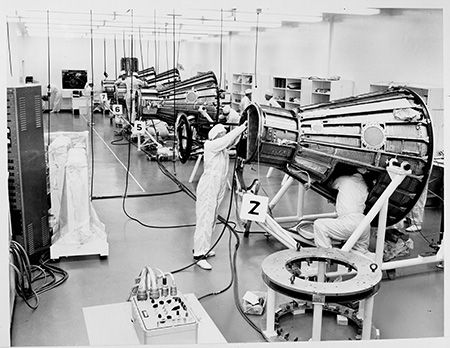
    The Mercury spacecraft, America’s first manned space vehicle, was designed, developed and built by McDonnell Douglas Aircraft (a Boeing heritage company) in St. Louis. A total of 20 Mercury spacecraft were delivered to NASA, six of which carried astronauts into space between 1961 and 1963. John Glenn piloted Friendship 7 in the first U.S. human orbital flight on Feb. 20, 1962.
    “We are truly honored to receive this recognition and pay tribute to the engineers who worked on the Mercury spacecraft,” said Dennis Muilenburg, president and CEO, Boeing Defense, Space & Security. “They helped set a strong foundation on which America’s space program continues to grow and thrive. Boeing and our heritage companies have supported human space exploration from the beginning, and our talented, innovative engineers and other employees will continue to build upon this legacy for many years to come.”
    The award cites electrical and electronic systems invented by McDonnell Douglas Aircraft engineers that made the Mercury flights and future space flights possible. Among the engineers’ key contributions were navigation and control instruments, autopilot, rate stabilization and control, and fly-by-wire systems.

    The IEEE Milestones in Electrical Engineering and Computing program honors significant technical achievements that occurred at least 25 years ago in technology areas associated with IEEE. To date, more than 100 Milestones have been approved and dedicated around the world. This award also recognizes technological innovation and excellence for the benefit of humanity.
    Home to Boeing Defense, Space & Security headquarters, the Boeing St. Louis site employs approximately 15,600 employees and is Missouri’s largest manufacturer and second-largest employer. Key products manufactured at the site include F/A-18E/Fs, F-15s, C-17s and weapons.

    To include the featured image in your Twitter Card, please tap or click their icon a second time.
  • | | |

    FAA and Singapore Sign Aviation Safety Agreement

    FAA and Singapore Sign Aviation Safety Agreement

    SINGAPORE—The Federal Aviation Administration (FAA) signed a milestone Maintenance Agreement Guidance (MAG) yesterday with the Civil Aviation Authority of Singapore (CAAS). The agreement allows for mutual surveillance conducted on certified repair stations located abroad for each of the agreement partners.

    It provides guidance for the implementation of the previously agreed-upon. In cases where there are sufficient certificated facilities in both partner countries, MIPs may reduce the number of surveillance activities, free up inspector resources for the authorities, and reduce the regulatory burden on industry. There are 58 FAA-approved repair stations located in Singapore.

    The MAG furthers the Maintenance Implementation Procedures (MIP) agreement signed by FAA Administrator Michael Huerta and CAAS on February 16, 2016. That agreement was the first of its kind in Asia and reduces costs by allowing the reciprocal acceptance of Singapore and the United States’ surveillance of maintenance work.

    The MIP and MAG permits reliance on each other’s surveillance systems to the greatest extent possible while maintaining safety. Agreements such as the MIP allow for greater efficiency and ultimately save valuable industry and authority resources. The FAA and the CAAS have agreed to conduct surveillance on each other’s behalf to ensure compliance with the respective regulatory requirements for maintenance and the applicable Special Conditions. Both agreements build on the 2004 U.S-Singapore Bilateral Safety Agreement (BASA) which has benefitted both countries by saving time and reducing costs in aircraft design and manufacturing.

    FAA Assistant Administrator for NextGen James Eck and Executive Director for International Affairs Carey Fagan are participating in the World Civil Aviation Chief Executives Forum this week in Singapore as part of the agency’s continued collaboration with Association of Southeast Asian Nations (ASEAN) member states.

    As part of the strong U.S.-Singapore bilateral relationship, the FAA and the CAAS also partner under Singapore’s Air Traffic Management Center of Excellence to expand understanding and build Air Traffic Management capacity in the region.

    To include the featured image in your Twitter Card, please tap or click their icon a second time.
  • |

    NTSB SAFETY RECOMMENDATION

    The National Transportation Safety Board recommends that the Federal Aviation Administration:

    Require that the hover performance charts published by helicopter manufacturers reflect the true performance of the helicopter in all conditions for which the charts are applicable, including light and variable wind conditions. (A-10-148)

    Develop and implement a surveillance program specifically for 14 Code of Federal Regulations (CFR) Part 135 operators with aircraft that can operate both as public aircraft and as civil aircraft to maintain continual oversight ensuring compliance with 14 CFR Part 135 requirements. (A-10-149)

    Take appropriate actions to clarify Federal Aviation Administration (FAA) authority over public aircraft, as well as identify and document where such oversight responsibilities reside in the absence of FAA authority. (A-10-150)

    Require the installation of fuel tanks that meet the requirements of 14 Code of Federal Regulations 29.952 on S-61 helicopters that are used for passenger transport. (A-10-151) Require that S-61 helicopters that are used for passenger transport be equipped with passenger seats and seat mounting structures that provide substantial improvement over the requirements of Civil Air Regulations 7.260, such as complying with portions of 14 Code of Federal Regulations 29.561 and 29.562. (A-10-152)

    Require operators of transport-category helicopters to equip all passenger seats with restraints that have an appropriate release mechanism that can be released with minimal difficulty under emergency conditions. (A-10-153)

    Require that Advisory Circular 21-34 be used to evaluate all shoulder harness retrofit installations and to determine that the installations reduce the risk of occupant injury. (A-10-154)

    Require operators of Sikorsky S-61 helicopters with General Electric model CT58-140 engines to install 10-micron airframe fuel filters. (A-10-155)

    Require Carson Helicopters, Inc., to put a conspicuous notification on the title page of the Instructions for Continuing Airworthiness that accompany its supplemental type certificate for installing side-mounted seats indicating that the installation does not provide enhanced occupant protection over that provided by the originally installed seats and meets Civil Air Regulations 7.260 standards. (A-10-156)

    Require all applicants for supplemental type certificate (STC) seat installations in any type of aircraft to put a conspicuous notification on the title page of the Instructions for Continuing Airworthiness that accompany the STC indicating whether the installation provides enhanced occupant protection over that provided by the originally installed seats and the certification standard level met by the seating system. (A-10-157)

    Require supplemental type certificate (STC) applicants to improve the crashworthiness design of the seating system, such as complying with portions of 14 Code of Federal Regulations 29.561 and 29.562, when granting STC approval for older transport-category rotorcraft certificated to Civil Air Regulations 7.260 standards. (A-10-158)

    Also, the National Transportation Safety Board reiterates the following previously issued recommendation to the Federal Aviation Administration:

    Do not permit exemptions or exceptions to the flight recorder regulations that allow transport-category rotorcraft to operate without flight recorders, and withdraw the current exemptions and exceptions that allow transport-category rotorcraft to operate without flight recorders. (A-06-18)

    To include the featured image in your Twitter Card, please tap or click their icon a second time.
  • EASA publishes rules for harmonised pilot licensing

    The European Aviation Safety Agency (EASA) today published a proposal to the European Commission for a harmonised regulation on Flight Crew Licensing (Part-FCL) in the form of an ‘Opinion’. This new regulation will ensure that the same pilot licensing requirements and related high safety levels apply in all Member States.

    This ‘Opinion’ covers requirements for pilot licensing for aeroplanes, helicopters, airships, powered-lift aircraft, sailplanes and balloons. Measures to ensure a smooth transition to the new rules are also provided.

    As requested by the European Parliament in its Agenda for Sustainable General and Business Aviation, the newly developed Light Aircraft Pilot Licence, which is part of the new regulation, will facilitate the access to aviation for a broader public while maintaining a high level of safety.

    EASA’s proposal was initially open to public consultation from June 2008 to February 2009. Over 8,000 comments were received from a wide range of stakeholders and this feedback was taken into account and integrated in this ‘Opinion’.

    The new regulation on Flight Crew Licensing will be adopted by the European Commission and enter info force as Community law by April 2012.

    The ‘Opinion’ can be accessed by clicking here.

  • |

    Press Release – FAA Celebrates Recovery Act Funded Airfield Upgrades at Kentucky’s Georgetown-Scott County Regional Airport

    For Immediate Release
    September 23, 2010

    WASHINGTON, D.C. — The U.S. Department of Transportation’s Federal Aviation Administration celebrated the completion of an airfield upgrade at Georgetown-Scott County Regional Airport in Kentucky, paid for with $3 million in American Recovery and Reinvestment Act funds.

    “Airport Recovery Act projects are helping boost local economies all across the country,” said U.S. Transportation Secretary Ray LaHood. “The Recovery Act is helping us keep our runways safe and well maintained."

    Recovery Act funds provided the full cost of repaving Georgetown-Scott County Regional Airport’s 5,500 foot-long runway. The runway had deteriorated and had not been fully repaved in nearly 17 years. The construction also included the widening of the ends of the parallel taxiway, which will now be able to accommodate larger aircraft turning on and off the runway.

    “General aviation is incredibly important to local communities nationwide and the Recovery Act is funding necessary safety improvements and upgrades that otherwise might not get done,” said FAA Administrator Randy Babbitt.

    Nationwide, $1.3 billion in Recovery Act money has been made available for both airport improvement projects and air traffic control facility and system upgrades. Because of low construction bids for projects, more Recovery Act dollars were available for additional facilities and equipment as well as airport projects. These Recovery Act grants have been distributed to airports that serve commercial passengers, cargo and general aviation.

    To include the featured image in your Twitter Card, please tap or click their icon a second time.