• | | |

    HiFly Airbus No fly in Lisbon


    Click to view full size photo at Airliners.net
    Contact photographer Tiago Palla

    What: Hifly Airbus A310-300 en route from Lisbon to Berlin
    Where: Lisbon
    When: Dec 15th 2009
    Who: not available
    Why: After takeoff, the plane developed a non-disclosed technical problem and returned to the airport. A replacement flight transported the passengers four hours later.

    To include the featured image in your Twitter Card, please tap or click their icon a second time.
  • Press Release: Premier Turbines Named Designated Repair Center in Americas for M601 and H80 Engines

    December 8, 2009 — RENO, NEVADA — GE Aviation has selected Premier Turbines as its Designated Repair Center in North and South Americas for M601 and H80 turboprop engines.

    As part of this exclusive agreement, Premier Turbines will offer heavy repair services, exchange engines and rentals, line replacement unit rotable pools and field service support to all existing and future M601 and H80 engines in the Americas region. GE Aviation will provide the necessary OEM parts to meet Premier Turbines’ needs. Premier Turbines will be ready to accept M601 engines for repair in the first quarter of 2010.

    “GE chose Premier Turbines based on its strong commitment to customer support and quality as well as its extensive experience providing repair services for turbine engines,” said Brad Mottier, vice president and general manager of Business & General Aviation at GE Aviation. “This designation will further expand GE’s service and support offerings for M601 operators and future H80 engine operators.”

    Located in Neosho, Missouri, Premier Turbines is a leading provider of repair and overhaul services for commercial, government and military turbine engines, components and accessories with more than 40 years experience. Premier Turbines is dedicated to providing precision service, on-time performance and the expertise that comes from decades of experience on thousands of turbine engines. The company was acquired by BBA Aviation in 2003.

    Last year, GE Aviation began offering M601 operators around-the-clock customer support through its Business Jet Operations Center. The Business Jet Operations Center is staffed with customer product technicians who can provide a rapid response to needs, such as parts availability, trouble-shooting and field issues. M601 engines are overhauled at GE Aviation Czech’s facility in Prague.

    GE Aviation, an operating unit of General Electric Company (NYSE: GE), is a world-leading provider of commercial and military jet engines and components as well as avionics, electric power, and mechanical systems for aircraft. GE Aviation also has a global service network to support these offerings. For more information, visit us at www.ge.com/aviation.

    GE AVIATION EXPANDING OPERATIONS IN BATESVILLE

    Governor Haley Barbour announced today that GE Aviation is expanding its operation in Batesville. The company’s Batesville plant produces composite components for the GEnx jet engine, which will power Boeing’s new 787 and 747-8 aircraft. The GEnx engine is the world’s only jet engine with composite fan blades, composite fan platforms and a composite fan case.

    With the expansion, GE Aviation will add an additional 350 jobs over the next few years. The facility currently employs more than 100 employees.

    “I am delighted that GE Aviation is expanding its operations in Mississippi and is adding 350 jobs at its Batesville facility,” Governor Barbour said. “This premier aviation company has become a valued corporate citizen in Mississippi, and I commend it for its continued commitment to the state and for creating additional high-wage, high-skill jobs for Mississippians.”

    The opportunity to expand these operations stems from the growth of advanced composites in jet engines, which can provide greater durability and weight savings over more traditional metal materials. GE Aviation is pursuing advanced technologies, materials and processes that will result in more efficient jet engines.

    “Our Batesville operation is involved in some of the most advanced manufacturing processes in the aviation industry,” said Jeanne Edwards, GE’s plant leader in Batesville. “Also, GE is very fortunate to have a strong order book for its new GEnx engine. Many of the technology advantages inherent in the GEnx engine are linked directly to the components produced in Batesville.”

    The expansion will represent a company investment of approximately $85 million. The Mississippi Development Authority provided $8.6 million in Momentum Mississippi incentives to assist with this project. In addition, Panola County provided $4 million to assist with the expansion.

    GE Aviation partnered with Mississippi State University’s Raspet Flight Research Laboratory to demonstrate the capabilities necessary for producing composite fan platforms in 2006. In 2007, the company announced it would locate a new manufacturing facility in the state. After its Batesville facility was completed in 2008, the company began production of these components there.

    In June of this year, GE Aviation announced a new research partnership with the University of Southern Mississippi in which researchers from both the company and the university are working together on technologies related to composite panels, which will also be produced in Batesville.

    “Mississippi is rapidly becoming known as a center for composite materials and technologies,” said Gray Swoope, executive director of the Mississippi Development Authority. “I am proud that GE Aviation is utilizing our available resources and developing these materials and processes here in Mississippi, and I am pleased the company is working with Mississippi universities to further refine these technologies. GE Aviation’s decision to further invest in its Mississippi operations demonstrates its continued confidence in the state and in our workforce.”

    To include the featured image in your Twitter Card, please tap or click their icon a second time.
  • | | |

    Businessman in Fatal Oklahoma Crash


    Pictured: A Cessna 310 photographed at the Avalon Airshow 2009 (not the one involved in the incident)
    Click to view full size photo at Airliners.net
    Contact photographer Andrei Bezmylov

    What: Cessna 310R en route from Sundance Airpark to Alva
    Where: Alva Regional Airport, Oklahoma
    When: Dec 13, 2009. 12:00 a.m.
    Who: pilot Darin Dean Moser
    Why: Returning from a business trip to Oklahoma City, the pilot made a pass over the airport and aborted his initial attempted landing. The family, who was waiting at the airport, heard the vehicle crash.

    There were foggy flight conditions at the time.

    To include the featured image in your Twitter Card, please tap or click their icon a second time.
  • | |

    Edelsten Crashes Helicopter

    What: Robinson R44
    Where: Moorabbin Airport, Australia
    When: Dec 15, 2009, 10am
    Who: pilot
    Why: Pilot Geoffrey Edelsten was on his first solo, when the helicopter yawed quite violently to the left, to the right and into the ground. He sustained minor cuts.

    To include the featured image in your Twitter Card, please tap or click their icon a second time.
  • | | |

    Avianca: Chemical Odor Aboard


    Click to view full size photo at Airliners.net
    Contact photographer Andres Dallimonti

    What: Avianca Fokker 100 en route from Cucuta to Bogota Colombia
    Where: Bucaramanga
    When: Dec 14th
    Who: 70 passengers
    Why: While en route, the interior of the plane began to smell of a strange chemical odor. The flight diverted to Bucaramanga, where a couple of gallons of a chemical brought by a passenger was discovered. The chemical was removed. No one was injured.

    To include the featured image in your Twitter Card, please tap or click their icon a second time.
  • | | | | | | | | |

    Colgan Air Reports Lack of Speed Warning

    Colgan’s Dec. 7 report to the U.S. National Transportation Safety Board said last February’s crash was probably caused by pilots’ “loss of situational awareness,” failure to follow the training and procedures, but pointed out contributing factors:

    • the cockpit warning system failed to adequately advise pilots when the speed is set below the calculated stall warning speed.
    • the lack of an adequate warning in the turboprop’s flight and operating manual regarding the effect of setting a non-ice reference speed during approach and landing
    • the crew’s failure to follow procedures regarding the proper response to a “stick shaker”
    • the crew’s failure to follow procedures regarding “non-pertinent conversation” by the flight crew during the descent and approach.

    Although Bombardier is withholding comment until the NTSB completes its investigation, a spokesman pointed out that the existing avionics are reliable and certified; and there are currently no requirements for systems to report abnormally low air speed.


    Click to view large photo at Airliners.net
    Contact Photographer Frank Robitaille

    What: Continental Airlines Flight 3407, Bombardier Q400 turboprop operated by regional carrier Colgan Air en route from Newark, New Jersey to Buffalo Niagara International Airport
    Where: Clarence Center, New York.
    When: Thursday Feb 12 struck a house at 10: 10 pm. Two homes were affected.
    Who: 44 passengers and four crew members, 1 off-duty pilot, 1 person on the ground, all fatalities. The passenger manifest has not officially been released.
    Why: The New Jersey-to-Buffalo flight was cleared to land on a runway pointing to the southwest. But the plane crashed with its nose pointed to the northeast. Seconds after two automatic warnings to the pilots that the plane was not moving fast enough to stay aloft, the twin turboprop aircraft went through a “severe pitch and roll” after positioning its flaps for a landing. It did not dive into the house, as initially thought, but landed flat on the house. Icing is emerging as the possible cause for why flight 3047 fell from the sky. The flight data recorder has been collected and is currently being examined.


    View Larger Map

    To include the featured image in your Twitter Card, please tap or click their icon a second time.
  • British Airways Strike

    Strike dates will be from 22 December to 2 January.

    The airline plans to cancel domestic UK flights first and keep as many international services flying as possible.

    Customers who have tickets for flights during the strike period can exchange for other calendar dates. (Options are to refund, rebook or reroute.)

    Under contest are new staff contracts which include a single on-board management grade, no seniority, promotion on merit, and pay set at market rate plus 10%. British Airways is under pressure to restructure and permanently reduce its costs.

    To include the featured image in your Twitter Card, please tap or click their icon a second time.
  • | | |

    Dangerous and negligent Use of a Helicopter

    Sean O’Brien of the Island, Ballycumber, Co Offaly, was convicted on ten charges( relating to landing on the roof at the Parkrite Texas Centre, Athlone, Co Westmeath on 7 July 2007 to collect a set of keys) has been given a six month suspended sentence and fined €5,000.

    The most significant charge applied is dangerous and negligent use of a Helicopter.

    Failure to use common sense is not a charge.

    The defendant holds a US pilots’ license but is a man of ‘no means’ who did not own the helicopter and is on disability.

    The judge said, “You are telling me in Florida there are no regulations in relation to landing a helicopter on top of a supermarket?”

    It is illegal under aviation law to land an aircraft of this kind on any elevated helipad in Athlone.

    To include the featured image in your Twitter Card, please tap or click their icon a second time.
  • | |

    Rio: Light Poles, Trees and Power Box Taken out by Plane Maintenance


    Pictured: An Air Transat Airbus A310-308
    Click to view full size photo at Airliners.net
    Contact photographer Peter Tsagaris

    What: Canadian Air Transat Airbus A310-300
    Where: Tom Jobim International Airport, Rio de Janeiro
    When: Dec 13, 2009
    Who: Maintenance
    Why: During a maintenance check, the plane jumped “chocks,” crossed the tarmac, crashed into two light poles, trees and a power box next to Tom Jobim International Airport maintenance hangar.

    Damage was limited to the leading edge slats of both wings, and engine nose cowls.

    The plane was undergoing tests by the Tap Maintenance and Engineering.

    Do you think it passed?
    Is this like the infamous “operation was a success but the patient died?” At least there were no reported injuries.

    To include the featured image in your Twitter Card, please tap or click their icon a second time.
  • | | | |

    Air Dolomiti Survives Loss of Landing Gear


    Click to view full size photo at Airliners.net
    Contact photographer Maciej Nowak

    What: Air Dolomiti Embraer ERJ-195 en route from Turin to Frankfurt
    Where: Frankfurt
    When: Dec 11th 2009
    Who: not available
    Why: On approach to Frankfort, the plane developed an electronic problems with the landing gear. The crew managed a safe landing, and a replacement plane was provided for passengers, while the original plane moved to maintenance.

    The plane sustained tire damage.

    To include the featured image in your Twitter Card, please tap or click their icon a second time.
  • | | |

    Ethiopian Airlines: Aborts Takeoff


    PicturedL An Ethiopian Airlines Boeing 767-3BG/ER
    Click to view full size photo at Airliners.net
    Contact photographer Tommy Desmet

    What: Ethiopian Airlines Boeing 767-300 en route from Nairobi to Addis Ababa
    Where: Nairobi
    When: Dec 11th 2009
    Who: not available
    Why: The flight aborted takeoff and was rescheduled 4 hours later, when it successfully departed Nairobi.
    Details are not available.

    To include the featured image in your Twitter Card, please tap or click their icon a second time.
  • | | | | | |

    Condor Engine Stall


    Click to view full size photo at Airliners.net
    Contact photographer Ralf Meyermann

    What: Condor Boeing 757-300 en route from Tenerife Sur Reina,CI Spain to Dusseldorf Germany
    Where: Las Palmas
    When: Dec 13th 2009
    Who: not available
    Why: While en route, an engine stalled. The plane diverted to Las Palmas, where a replacement plane was sent.

    The plane landed safely in Las Palmas, and the replacement plane delivered the passengers safely 9 hours later.

    To include the featured image in your Twitter Card, please tap or click their icon a second time.
  • | | | |

    Nigeria: ATC Down


    Pictured: An Ethiopian Airlines Boeing 767-3BG/ER
    Click to view full size photo at Airliners.net
    Contact photographer Pieter-Jan Van De Vijver

    What: Ethiopian Airlines Boeing 767-300 en route from Addis Ababa to Lagos
    Where: Lagos Nigeria
    When: Dec 13th 2009
    Who: 180 passengers
    Why: On approach, ATC communication failed. With air traffic control’s radar and communication radio out of service, the flight circled, and after two hours in a holding pattern, landed after declaring a fuel emergency.

    Other flights also had the same experience.

    Nigeria’s Airspace Management Agency NAMA was unavailable for two hours.

    To include the featured image in your Twitter Card, please tap or click their icon a second time.
  • |

    Press Release-A400M, world’s most advanced airlifter, completes first flight

    11 December 2009The first Airbus Military A400M military airlifter has landed back in Seville, Spain today at 14:02 local time (13:02 UTC) after completing a successful maiden flight lasting 3h 47min following its take-off at 10:15 local time.

    Chief Test Pilot Military, Edward “Ed” Strongman, captained the flight supported by Experimental Test Pilot Ignacio “Nacho” Lombo. The engineering team on board included: Senior Flight Test Engineer Jean-Philippe Cottet who had responsibility for the powerplants; Senior Flight Test Engineer Eric Isorce with responsibility for the aircraft systems and performance; Senior Flight Test Engineer Didier Ronceray with responsibility for the handling qualities of the aircraft; and Test Flight Engineer Gerard Leskerpit.

    The crew confirmed that the aircraft, known as MSN 1 and its four Europrop International TP400D turboprop engines performed as expected.

    Ed Strongman said: “We have had a very successful first flight – the take-off performance was impressive, we explored a lot of the operational flight envelope, and it was a delight to operate in such a well-designed cockpit with its easy interface to all the normal and military systems. I’m sure our customer pilots are really going to like it – we certainly did.”

    Nacho Lombo added: “From the very beginning of the flight we were impressed by the ease of handling of the aircraft which was in line with what we experienced in the simulator. The aircraft, systems and engine performance were highly satisfactory. We sense the great potential of this magnificent machine. It has been an honour for all the crew to fly the A400M on its maiden flight, representing all the people involved in the programme.”

    Chief Executive Officer Airbus Military, Domingo Urena-Raso, said: “I would like to congratulate Ed Strongman, Nacho Lombo and all of the flight-test team for completing the first flight of the A400M with great success. I am also deeply grateful to everyone in the design, manufacturing and early operations of this programme for their enormously hard work and dedication that have made this aircraft a reality. And I want to thank all those people in our industrial partners and suppliers, as well as our customers, who have contributed so much to the definition and creation of an outstanding product.”

    Airbus CEO Tom Enders said: “I hope we can soon provide certainty that we are able to continue the A400M programme. This is expected by those at Airbus, our partners and suppliers worldwide who contributed so strongly to today’s success as well as by the air forces who wait for their plane.”

    For its first flight the aircraft took off at a weight of 127 tonnes, carrying 15 tonnes of test equipment including two tonnes of water ballast, compared with its maximum take-off weight of 141 tonnes. As planned, the six-man crew extensively explored the aircraft’s flight envelope in direct law, including a wide speed-range, and tested lowering and raising of the landing gear and high-lift devices at altitude. After checking the aircraft’s performance in the landing configuration the crew landed back at Seville.

    In the first half of 2010 MSN 1 will be joined by two sister aircraft, MSN 2 and MSN 3, followed by MSN 4 by the end of the year. A fifth aircraft will join the programme during 2011. This fleet will be used for some 3,700 hours of test-flying between now and first delivery to the French Air Force at the end of 2012. This will be followed by additional military development flying. The type will be certificated by both the civil and military authorities.

    A total of 184 aircraft have so far been ordered by Belgium, France, Germany, Luxembourg, Malaysia, Spain, Turkey and the United Kingdom,

    Airbus Military

    Airbus Military is the only military and civil transport aircraft manufacturer to develop, produce, sell and support a comprehensive family of airlifters ranging from three to 37 tonnes of payload. Within Airbus, Airbus Military is responsible for the A400M programme, as well as for military tanker transport derivatives based on Airbus civil aircraft, with the integration of the state-of-the-art flight-refuelling boom (ARBS) which is unique in its class. With the C-295, CN-235 and C-212, Airbus Military is the global leader in the market segments for light and medium-sized military transport aircraft. Altogether Airbus Military has sold more than 1,000 aircraft with over 650 flying with more than 100 operators worldwide.

    To include the featured image in your Twitter Card, please tap or click their icon a second time.
  • | | |

    Durban Bird Strike


    Pictured: A South African Airways Airbus A319-131
    Click to view full size photo at Airliners.net
    Contact photographer Gary Shephard

    What: South African Airways Airbus A319-100 en route from Durban to Cape Town
    Where: Durban
    When: Dec 11th 2009
    Who: not available
    Why: On takeoff, the flight had a bird strike, and made an immediate emergency landing. Passengers debarked and were provided alternative transport.

    The bird ingested was reportedly a “Yellow-billed Kite.”

    To include the featured image in your Twitter Card, please tap or click their icon a second time.
  • | | | |

    Russia: Parachute Venture Fatal


    Click to view full size photo at Airliners.net
    Contact photographer Anton Harisov

    What: Technoavia SM-92T Turbo Finist
    Where: Korkino, 12km from Chelyabinsk Russia
    When: Dec 13 2009, 11:02 am
    Who: 8 on board
    Why: The SM-92T plane was carrying one pilot and seven parachutists. According to the MOE, the aircraft performed a U-turn, then began to lose altitude and crashed into the ground in Chelyabinsk. The crash occurred immediately after takeoff from Kalacheva Airport.

    All were fatalities.

    The GU Emergency Operations Group were on site in the recovery operation.

    1. Nikolay Dudkin, born in 1958, pilot
    2. Bakgof Sergey, 1957, Instructor
    3. Oleg Mashkin, born in 1962,
    4. Alexander Pushkarev, born 1967,
    5. Nabokina Denis, born in 1971,
    6. Saitov Eugene, born in 1976,
    7. Lomov Anastasia, born in 1984,
    8. Litvinova Natalia, born in 1988

    The investigation will focus on pilot error, equipment failure and weather conditions.

    To include the featured image in your Twitter Card, please tap or click their icon a second time.
  • | | |

    Cessna Down in Yaracuy


    Pictured: A Cessna T210F Turbo Centurion landing in Africa
    Click to view full size photo at Airliners.net
    Contact photographer Sven De Bevere

    What: Cessna 210F
    Where: Pueblo Nuevo, municipio Veroes, Yaracuy, Venezuela
    When: Dec 11, 2009
    Who: 4 on board
    Why: Friday, the Cessna had been seen flying low over a clandestine airstrip, allegedly used for drug trafficking. The Yaracuy state Special Action Squad discovered the plane whose identification numbers had been tampered with. The area was cordoned off and a gun battle occurred. Four or five individuals were in the plane, and drums of chemicals which are currently being analyzed.

    To include the featured image in your Twitter Card, please tap or click their icon a second time.
  • | | | |

    Olympic Air Ooops


    Click to view full size photo
    Contact photographer Kostas D. Pantios

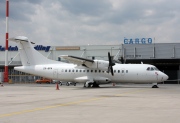
    What: Olympic Air Aerospatiale ATR-42-300 en route from Athens to Naxos
    Where: Paros
    When: Dec 12th 2009
    Who: not available
    Why: On approach to Naxos, the crew made a final approach to Paros (situated on side by side islands.)

    On advice from ATC, the pilots performed another go around, finding and landing on their planned destination.


    View Naxos in a larger map

    To include the featured image in your Twitter Card, please tap or click their icon a second time.
  • | |

    Air West Cargo: Illegal Cargo


    Pictured: Air West Cargo Ilyushin Il-76TD
    Click to view full size photo at Airliners.net
    Contact photographer Alexander Jonsson

    What: Air West Georgia Ilyushin IL-76 en route from Pyongyang North Korea to Colombo Sri Lanka
    Where: Bangkok
    When: Dec 12th
    Who: 5 crew
    Why: When the plane diverted to Bangkok for refueling, 35 tons of weapons (rocket propelled grenades and anti-aircraft Surface to Air Missiles) were discovered on board.

    The crew was detained on charges of arms trafficking.

    The destination could have been anywhere.

    To include the featured image in your Twitter Card, please tap or click their icon a second time.
  • | | |

    Sumatra: Lion Air Skid


    Pictured: Lion Airlines Boeing 737-46B
    Click to view full size photo at Airliners.net
    Contact photographer JKSC

    What: Lion Air Boeing 737-400
    Where: Pekanbaru airport, Sumatra
    When: December 14, 2009
    Who: 165 passengers
    Why: On landing, the flight skidded off the runway. It took an hour to evacuate the panicked passengers via mobile stairway.

    After a maintenance check, a replacement crew resumed the flight hours later.

    To include the featured image in your Twitter Card, please tap or click their icon a second time.
  • |

    Boeing Press Release: Boeing Completes 787 Dreamliner High-Speed Taxi Test

    EVERETT, Wash., Dec. 12 — Boeing (NYSE: BA) completed high-speed taxi tests on the first 787 Dreamliner today. This is the last in a series of functional tests planned in preparation for first flight.

    “Our pilots told me the airplane performed beautifully,” said Mike Delaney, vice president and chief project engineer for the 787. “We’re going through and analyzing the data to ensure we’re ready for first flight. From evaluations we’ve done so far, everything looks good.”

    During the testing, the airplane reached a top speed of approximately 130 knots (150 mph, 240 kph), and the pilots lifted the nose gear from the pavement. Video highlights of the taxi testing will be available by the end of the day Monday at www.boeing.com and www.newairplane.com.

    Taxi test is the last testing planned before first flight.

    To include the featured image in your Twitter Card, please tap or click their icon a second time.
  • | | |

    NJ: Safe Landing w/o Nose Gear


    Photo: A French-Army Socata TBM-700
    Of course this French Military craft is not the exact TBM-700 as in the incident in New Jersey, but who could resist Mick Bajcar gorgeous photograph?

    Click to view full size photo at Airliners.net
    Contact photographer Mick Bajcar

    What: TBM-700 single engine turboprop en route from Nantucket Island in Massachusetts to Essex County
    Where: Essex County Airport
    When: 12/12/2009 6:00 pm
    Who: 4 passengers
    Why: While on approach to Essex County Airport, the turboprop developed a nose gear problem. The plane made several passes so that ATC could see the landing gear.

    Emergency crews were standing by.

    The plane landed without the gear extended, minimal damage
    and no human injury.

    To include the featured image in your Twitter Card, please tap or click their icon a second time.
  • | | |

    Air India Airbus AC


    Pictured: An Air India Airbus A320-231
    Click to view full size photo at Airliners.net
    Contact photographer Wim Callaert

    What: Air India Airbus A320-200 en route from Kolkata to Chennai (India)
    Where: Kolkata
    When: Dec 11th 2009
    Who: 139 passengers
    Why: The flight had a successful take-off, but while en route, air conditioning problems developed. (This can also mean pressurization issues. Specifics were not indicated.)

    The flight returned to Kolkata and made a safe landing. A replacement plane was provided.

    To include the featured image in your Twitter Card, please tap or click their icon a second time.
  • | |

    18 Survive Ditched Helicopter


    Pictured: A Bristow Helicopters Nigeria Sikorsky S-92A Helibus
    Click to view full size photo at Airliners.net
    Contact photographer Ken Iwelumo

    What: helicopter en route to SeaBird Exploration’s seismic vessel Kondor Explorer
    Where: Agbami field offshore Nigeria
    When: Dec 11, 2009
    Who: 18 on board (16 crew, 2 pilots)
    Why: After the helicopter made a controlled “landing” and ditched into the sea, all 18 crew members aboard were rescued.

    No word has been released about why the helicopter ditched.

    The Agbami seismic project is run by Chevron.

    To include the featured image in your Twitter Card, please tap or click their icon a second time.
  • | | |

    Flapless Landing in Montreal


    Click to view full size photo at Airliners.net
    Contact photographer Darryl Myers

    What: American Eagle Embraer ERJ-135 en route from New York La to Montreal
    Where: Montreal
    When: Dec 10th 2009
    Who: 30 aboard
    Why: Prior to landing, the plane developed flap failure; the flight made a safe landing without flaps, the second such flap failure on that plane (Toronto) in a five day period.

    To include the featured image in your Twitter Card, please tap or click their icon a second time.