NTSB Advisory
National Transportation Safety Board
Washington, DC 20594
December 31, 2010
In its continuing investigation of the runway overrun of a jetliner in Jackson Hole, Wyo., the National Transportation Safety Board has developed the following factual information:
At about 11:38 am MT on Wednesday, December 29, American Airlines flight 2253, a B-757-200 (N668AA) inbound from Chicago O’Hare International Airport, ran off the end of runway 19 in snowy conditions while landing at Jackson Hole Airport. No injuries were reported among the 181 passengers and crew on board.
The aircraft came to rest in hard packed snow about 350 feet beyond the runway overrun area. An initial inspection did not reveal any structural damage to the aircraft. Shortly after the aircraft came to a stop, in accordance with American Airlines’ procedures, the pilots pulled the circuit breaker to the cockpit voice recorder (CVR) to preserve all of the recorded information for investigators.
The CVR and DFDR (digital flight data recorder) arrived at the Safety Board’s recorder laboratory on Thursday evening, Dec. 30, where investigators were standing by to download the contents of both recorders. The CVR provided a two-hour recording of excellent quality audio; the voices of each of the pilots on the flight deck were clearly audible. The DFDR provided 1200 recorded parameters of flight data and captured the entire incident.
The crew, who were interviewed on Thursday evening, indicated that they saw the runway prior to reaching the minimum descent altitude before touchdown. Both crewmembers characterized the flight and approach to landing as uneventful prior to the runway overrun. The first officer was the flying pilot.
The accident docket, which will contain additional factual information, is expected to be opened in 60-90 days. It will be available on the docket section of the NTSB website at http://go.usa.gov/rjR
PROTOCALS FOR TRANSPORTING AIRCRAFT RECORDERS IN INCIDENT INVESTIGATIONS
The Safety Board has long-established protocols for the handling and transportation of CVRs and DFDRs that contain recorded information from a commercial aviation incident, which by definition is one where no serious injuries or substantial damage to the aircraft or other property has occurred.
In such incident investigations, the Safety Board frequently asks the airline involved to transport the recorders on their own aircraft as such an arrangement often provides the most expeditious means of conveying the devices to Safety Board labs in Washington. The airline is instructed to transport the recorders without delay and without accessing the information contained within them by any means. This practice has worked efficiently and without complication for more than 40 years.
During this incident investigation, the Safety Board learned that the recorders were flown to Tulsa, Okla., where American Airlines technicians downloaded information from the DFDR; the CVR was not accessed by American.
“Although a thorough examination by our investigators determined that no information from the DFDR was missing or altered in any way, the breach of protocol by American Airlines personnel violates the Safety Board’s standards of conduct for any organization granted party status in an NTSB investigation,” said NTSB Chairman Deborah A.P. Hersman. “Because maintaining and enforcing strict investigative protocols and procedures is vital to the integrity of our investigative processes, we have revoked the party status of American Airlines and excused them from further participation in this incident investigation.”
American Airlines has assured the Safety Board that a full review of proper procedures and internal controls would be undertaken to ensure that such an occurrence is not repeated.
Despite their removal from party standing, the NTSB will provide American Airlines with any and all information needed to ensure a timely response to operational safety deficiencies identified in the course of the investigation.
To include the featured image in your Twitter Card, please tap or click their icon a second time.

 British Midland Airways is looking at losing 600 positions, possibly even more. Redundancies are being eliminated, and the number of international planes are being reduced by 9. Tel Aviv, Kiev, Aleppo and Amsterdam flights are scheduled for suspension and 2010 seasonal flights to Palma and Venice will not be reinstated.
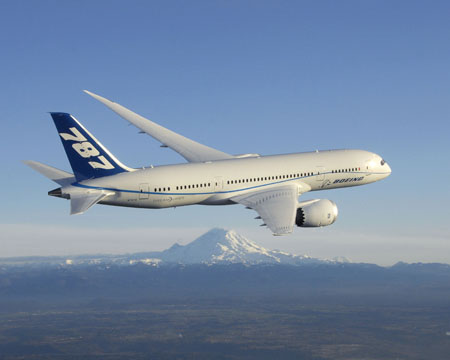 EVERETT, Wash., Feb. 24, 2011 /PRNewswire/ — The Boeing 787 Dreamliner made its 1,000th flight yesterday, marking another milestone in the flight test program. There are seven airplanes participating in flight testing. The landing of 787 flight test airplane ZA004, just after 1 p.m. MST at Yuma International Airport in Arizona, counted as the official 1,000th flight.