
|

Fill your pockets, only not too much.

Similar Posts

  • | | |

    Air India cataloguing yellow metal/gold of Mangalore crash victims

    July 15, 2010
    The Angels of Air India have handed over identified personal items of the victims to the families as provided by M/s. Kenyon International, the agency appointed by Air India to identify the personal effects recovered from the crash site.

    The unassociated / unidentified items including yellow metal/gold recovered from the crash site by the police have been handed over to Air India. The catalogue for the same is under preparation by M/s Kenyon International. Once the catalogue is ready, the families of the victims will be contacted and requested to provide the details of yellow metal/gold items so that they can be matched with the catalogue. After proper identification, the same will be handed over to the families concerned in the presence of the police and Custom authorities. Air India would also request members of the Mangalore Air Crash Victims Families Association to help in identification of the yellow metal/gold items.

    To include the featured image in your Twitter Card, please tap or click their icon a second time.
  • |

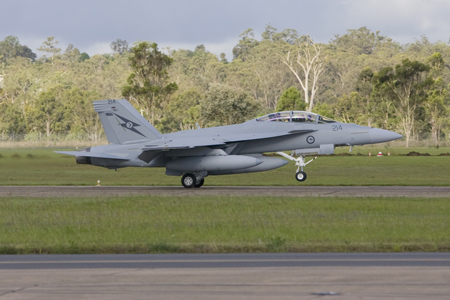
    Boeing Delivers 4 More Super Hornets to Australia Ahead of Schedule

    Milestone Reached as RAAF F/A-18Fs Achieve Initial Operating Capability

    AMBERLEY, Queensland, Jan. 6, 2011 — Boeing [NYSE: BA] delivered four new F/A-18F Super Hornets to Royal Australian Air Force (RAAF) Base Amberley in December, expanding the RAAF’s fleet of the advanced multirole fighters to 15. The delivery enabled the RAAF’s achievement of Initial Operating Capability (IOC) with its first Super Hornet squadron, the Amberley-based No. 1.

    Boeing has delivered all 15 Super Hornets to Australia ahead of schedule.

    “Early delivery of our new Super Hornets at Amberley has been a vital part of our path toward IOC for our first Super Hornet squadron, which we have now achieved ahead of schedule,” said RAAF Group Capt. Steve Roberton, Officer Commanding 82 Wing, which operates the Super Hornet. “As we’ve continued to hit our marks on time — or early, in many instances — with the Super Hornet program, we’ve enabled the RAAF to ensure Australia’s regional air superiority as we transition from the F-111 and classic Hornet.”

    The December arrival was the third Super Hornet delivery to the base during 2010. Three aircraft in the latest delivery were prewired for potential conversion to electronic attack capability during production at Boeing facilities in St. Louis; the remaining nine aircraft in the contract will be prewired in the same way before delivery to the RAAF’s No. 6 Squadron.

    “The Boeing Super Hornet team has surpassed expectations by delivering 15 aircraft to the RAAF in 2010 instead of the 12 originally scheduled,” said Carolyn Nichols, Australian Super Hornet program manager for Boeing. “Additionally, each aircraft has been delivered within budget. We are fully committed to ensuring the same delivery success and budget excellence throughout 2011. We congratulate the men and women of the RAAF on the outstanding achievement of reaching No. 1 Squadron’s Super Hornet IOC ahead of schedule.”

    The Australian government announced in March 2007 that it would acquire 24 of the advanced Block II versions of the Super Hornet, all of which are equipped with the Raytheon-built APG-79 Active Electronically Scanned Array (AESA) radar.

    The Boeing Super Hornet is a multirole aircraft, able to perform virtually every mission in the tactical spectrum, including air superiority, day/night strike with precision-guided weapons, fighter escort, close air support, suppression of enemy air defenses, maritime strike, reconnaissance, forward air control and tanker missions. Boeing has delivered more than 440 F/A-18E/Fs to the U.S. Navy. Every Super Hornet produced has been delivered on or ahead of schedule and on budget.

    To include the featured image in your Twitter Card, please tap or click their icon a second time.
  • |

    Boeing to Continue Providing F/A-18 Engineering Services to Royal Australian Air Force


    WILLIAMTOWN, New South Wales, Feb. 8, 2010 — Boeing Defence Australia, a wholly owned subsidiary of The Boeing Company [NYSE: BA], has been awarded a $1.5 million contract for the provision of engineering support services for the Royal Australian Air Force’s (RAAF) fleet of F/A-18A/B Hornet aircraft.

    The 30-month contract, managed by the Tactical Fighter Systems Program Office (TFSPO) at RAAF Base Williamtown, requires Boeing Defence Australia to deliver repair plans for faults uncovered during F/A-18A/B Hornet maintenance.

    “This contract maintains our F/A-18 engineering capability as it increases our overall business on the platform,” said Brad Hume, Boeing Defence Australia F/A-18 program manager.

    Boeing Defence Australia has delivered engineering support services to the TFSPO for the past six years. It also continues to perform Hornet Upgrade Phase 2.3, which involves upgrading the Electronic Warfare Self Protection Suite on 68 aircraft and modifying 76 wing pylons. Phase 2.3 is expected to be completed in 2012.

    “The RAAF’s decision to award this contract to us demonstrates their faith in Boeing’s ability to support the F/A-18 platform,” Hume said. “We will continue working closely with our customer to maintain the Hornet’s air combat capability.”

    Under the new contract, engineering services will now be delivered under Boeing Defence Australia’s Authorised Engineering Organisation (AEO) certificate.

    Boeing Defence Australia, a wholly owned subsidiary of The Boeing Company and a business unit of Boeing Defense, Space & Security, is a leading Australian aerospace enterprise. With a world-class team of nearly 2,000 employees at 13 locations throughout Australia and two international sites, Boeing Defence Australia supports some of the largest and most complex defense projects in Australia.

    A unit of The Boeing Company, Boeing Defense, Space & Security is one of the world’s largest defense, space and security businesses specializing in innovative and capabilities-driven customer solutions, and the world’s largest and most versatile manufacturer of military aircraft. Headquartered in St. Louis, Boeing Defense, Space & Security is a $34 billion business with 68,000 employees worldwide.
    # # #
    Contact:
    Sarah Wills
    Boeing Defence Australia
    +61 7 3306 3132
    sarah.e.wills@boeing.com

    To include the featured image in your Twitter Card, please tap or click their icon a second time.
  • |

    DOT Confirmation

    FOR IMMEDIATE RELEASE:
    DEPARTMENT OF TRANSPORTATION SUBSTANTIATES WHISTLEBLOWER’S SAFETY CONCERNS ABOUT UNITED AIRLINES5 EMERGENCY DOOR BATTERIES AND OVERHEAD BINS

    WASHINGTON, D.C. – Press Release: The U.S. Office of Special Counsel (OSC)transmitted to the President and Congress the Department of Transportation’s (DOT) response towhistleblower allegations that Federal Aviation Administration (FAA) employees compromised thesafety of the flying public by failing in their oversight and regulatory responsibilities.

    The whistleblower, Cheryl Henderson, Aviation Safety Inspector, DOT, FAA, United AirlinesCertificate Management Office, Daly City, California, specifically disclosed concerns about the lackof proper FAA oversight of United Airlines’ compliance with an Airworthiness Directive (AD)concerning emergency door batteries on United’s Boeing 777s and the improper self-disclosure ofdefective overhead bins on its Boeing 767s.

    The August 2009 report from Secretary of Transportation Ray LaHood to OSC found that two FAAsenior supervisory inspectors had improperly permitted United Airlines to self-disclosenoncompliance with an AD about the installation of overhead bins in violation of FAA’s VoluntaryDisclosure Reporting Program (VDRP). The AD had been issued to prevent the failure of tie rods tothe center overhead stowage bin modules, which could result in a collapse of the bins and,consequently, injuries to passengers and crew.

    The investigation also found that the then-FAA Principal Avionics Inspector for United Airlines inDaly City, California, failed to adequately address the expiration of emergency door batteries andthe reliability of battery restoration equipment. DOT substantiated that the battery restorationequipment was not properly calibrated and, therefore, inadequate for measuring accurately thequality of the batteries. The investigation found that while United Airlines eventually replaced allthe emergency door batteries in question, FAA improperly delayed by 18 months a decision aboutUnited Airlines’ use of non-calibrated equipment. In addition to addressing the safety concernsidentified in the investigation, FAA also proposed suspensions for the senior managers for theirmismanagement and failure of oversight.

    OSC determined that the agency’s report contains all the information required by statute and thefindings appear reasonable.

    To include the featured image in your Twitter Card, please tap or click their icon a second time.
  • |

    Boeing, Copa Airlines Complete Order for 22 Next-Generation 737s

    WASHINGTON, Nov. 30, 2010–Boeing (NYSE: BA) and Copa Airlines today announced an order for 22 Next-Generation 737-800s at a signing ceremony at the U.S. Department of Commerce in Washington, D.C. The order previously was attributed to an unidentified customer on Boeing’s orders and deliveries website.

    “We thank Copa Airlines for this significant order and are very proud to partner with one of the most successful airlines in the industry,” said Jim Albaugh, president and CEO of Boeing Commercial Airplanes. “Copa’s exceptional business model, ideal geographic position and modern and efficient fleet will continue to drive its leadership in the Latin American aviation market.”

    “These 22 firm aircraft plus 10 options, which deliver between 2015 and 2018, are an integral part of our medium term growth plan,” said Pedro Heilbron, CEO of Copa Airlines. “This is the largest aircraft order in Copa’s history, which is a reflection not only of our confidence in the future of Latin America and Panama, but also of our successful business model, which has made our Hub of the America’s the best connecting point for intra-Latin America travel.”

    The 22 firm airplanes are valued at approximately $1.7 billion at list prices and nearly double Copa’s existing Next-Generation 737 fleet. The order is the largest new aircraft order in Copa Airlines’ history and is part of the airlines’ plan to continue to grow its fleet to meet market demands for new-generation, more fuel-efficient airplanes.

    “Today’s signing not only celebrates the strong relationship between Boeing and Copa Airlines, but also symbolizes the strong political and commercial ties between the United States and Panama,” Albaugh said.

    The new airplanes will be outfitted with the 737 Boeing Sky Interior featuring new modern sculpted sidewalls and window reveals that provide passengers with a greater connection to the flying experience. They also will benefit from performance improvements expected to result in a 2 percent reduction in fuel consumption through a combination of airframe and engine improvements. The performance improvements will be delivered beginning in mid-2011 through early 2012.

    Operating out of the “Hub of the Americas” in Panama City, Copa provides service to 46 destinations in 24 countries.

    In the past two years, Copa has purchased 37 Next-Generation 737-800s new from Boeing and entered into leasing agreements for an additional 10.

    To include the featured image in your Twitter Card, please tap or click their icon a second time.
  • |

    Press Release – FAA Proposes $585,725 Civil Penalty Against Corporate Air

    For Immediate Release
    SEATTLE – The Federal Aviation Administration (FAA) is proposing a $585,725 civil penalty against Corporate Air of Billings, Mont., for allegedly operating a Shorts SD-3-30 twin-turboprop cargo aircraft when it was not in compliance with Federal Aviation Regulations.

    The FAA alleges Corporate Air failed to maintain the aircraft under the company’s general maintenance manual, which requires daily post-flight inspections that include examining the exterior skin for corrosion. In addition, the maintenance manual requires structural inspections on the basis of flight hours or flights.
    The FAA alleges that Corporate Air operated the aircraft in violation of regulations on at least 81 revenue flights between Dec. 21, 2009 and Feb. 4, 2010 with corrosion that had not been detected during the post-flight inspections. The FAA also alleges that structural inspections were not conducted at the required intervals, between Mar. 16, 2006 and Feb. 3, 2010, in violation of federal regulations.

    Corporate Air operates charter and air taxi service under Part 135 of the Federal Aviation Regulations and makes daily feeder cargo flights under contract to a major next-day air package airline.

    “Keeping aircraft well-maintained and in good condition must be a top priority for any operator,” said FAA Administrator Randy Babbitt. “All operators must comply with maintenance requirements.”

    Corporate Air has 30 days from the receipt of the FAA’s enforcement letter to respond to the agency.
    ###

    To include the featured image in your Twitter Card, please tap or click their icon a second time.