Boeing

  • | | | | | | |

    Engine Failure; Delta Boeing Diverts to Ireland


    Click to view full size photo at Airliners.net
    Contact photographer Paul Markman

    What: Delta Airlines Boeing 757-200 Philadelphia to Paris
    Where: Shannon Ireland
    When: November 20, 2010, 6:30 am
    Who: 152 passengers 7 crew
    Why: While over the Atlantic, the right engine developed problems. Pilots shut it down, and diverted to Shannon where they made a safe landing. Passengers were provided an alternative flight.

    George’s Point of View

    I usually try just to get the facts. But when people read these alerts, it is not just the plane. Like on this flight. Can you imagine being aboard this flight, over the Atlantic—as on the infamous Air France Flight 447—and losing an engine? Can you picture your feelings at the moment you realize the failure, and every moment thereafter, until you were safely on the ground? Even with a capable functioning plane, and competent crew. Even with the knowledge that the plane could afford to shut down an engine. Having to sit politely in your row, and believing on some level, that you were placidly waiting to die while strapped in like a trapped like a Chilean Miner in a snow globe hurtling through space toward who knows what fate? Even if I do not write it, behind these lines, there is always a human element.

  • | | |

    Delta Flight Diverts to Dallas over Windshield Cracks

    What: Delta Airlines Boeing 737-800 en route from Atlanta to Santa Ana
    Where: Dallas
    When: November 18, 2010
    Why: While en route, the copilot’s windshield developed cracks. The pilots informed passengers that they were making an emergency landing in Dallas; and passengers were able to see the crack for themselves before they left the plane. A replacement Boeing 737 was provided.

  • | | | | |

    British Airways Cargo Fire


    Click to view full size photo at Airliners.net
    Contact photographer Wayne Campbell-CYYZ Aviation Photography

    What: British Airways Boeing 777-200 en route from London to Tel Aviv
    Where: Brussels
    When: Nov 18th 2010
    Why: While en route, the crew received a fire alert. The flight diverted to Brussels a quarter of an hour after the alert occurred. A package was removed from the plane, and later returned to London where the cargo was transferred onto an alternative flight.

  • | | | |

    Melbourne Emergency Landing

    What: Virgin Blue Boeing 737 en route from Melbourne to Sydney
    Where: Melbourne
    When: Nov 19 2010 7:16 a.m.
    Who: 122 passengers, 6 crew
    Why: Just after takeoff, the pilot noted a peculiar odor described as burning plastic (originally reported as smoke in the cockpit.) After being aloft for less than 30 minutes, the plane was met by 11 fire trucks on the landing which was safe; and the plane seemed to be operating as usual. Passengers were provided alternate flights as maintenance checked over the plane for the source of the smell, which may have been the new engine.

    George’s Point of View

    An electrical fire? or Old Spice? Avon? Brut? Body odor? Old Spice ON body odor?

  • |

    Boeing NewGen Tanker Win Would Bring 370 Jobs, $17 Million to Georgia

    ST. LOUIS, Nov. 18, 2010 — The Boeing Company [NYSE: BA] today announced that Georgia will benefit from an estimated 370 total jobs and generate an estimated $17 million in annual economic impact if the Boeing NewGen Tanker is selected as the U.S. Air Force’s next aerial refueling aircraft.

    Boeing submitted its proposal July 9 to replace 179 of the Air Force’s 400 Eisenhower-era KC-135 aircraft. The Air Force is expected to award a contract in the next few months.

    "The Boeing NewGen Tanker program will contribute to economic recovery in Georgia by supporting jobs in the aerospace industry — jobs for Georgia workers who will help America’s warfighters complete their missions and return home safely," said Mark DeVoss, Supplier Management director, Boeing Tanker Programs.

    Georgia manufacturers ready to produce critical components on the NewGen Tanker include TIGHITCO in Atlanta.

    Currently, Boeing has 654 employees in Georgia and works with nearly 413 suppliers/vendors, delivering a total $204 million in annual economic impact.

    The NewGen Tanker is a widebody, multi-mission aircraft based on the proven Boeing 767 commercial airplane and updated with the latest and most advanced technology. Capable of fulfilling the Air Force’s needs for transport of fuel, cargo, passengers and patients, the combat-ready NewGen Tanker will meet or exceed the 372 mandatory requirements described in the service’s final KC-X Request for Proposal released Feb. 24.

    The NewGen Tanker will be made with a low-risk approach to manufacturing that relies on existing Boeing facilities in Washington state and Kansas as well as U.S. suppliers throughout the nation, with decades of experience delivering dependable military tanker and derivative aircraft. Nationwide, the NewGen Tanker program will support approximately 50,000 total U.S. jobs with Boeing and more than 800 suppliers in more than 40 states.

    The Boeing NewGen Tanker also will be more cost-effective to own and operate than a larger, heavier tanker. It will save American taxpayers more than $10 billion in fuel costs over its 40-year service life because it burns 24 percent less fuel than the competitor’s airplane.

    Boeing has been designing, building, modifying and supporting tankers for decades. These include the KC-135 that will be replaced in the KC-X competition, and the KC-10 fleet. The company also has delivered four KC-767Js to the Japan Air Self-Defense Force and is on contract to deliver four KC-767As to the Italian Air Force.

    More information on Boeing’s NewGen Tanker, including video clips and an interactive tour of the aircraft, is available at www.UnitedStatesTanker.com. For more information on joining the company’s efforts, visit www.RealAmericanTankers.com.

    A unit of The Boeing Company, Boeing Defense, Space & Security is one of the world’s largest defense, space and security businesses specializing in innovative and capabilities-driven customer solutions, and the world’s largest and most versatile manufacturer of military aircraft. Headquartered in St. Louis, Boeing Defense, Space & Security is a $34 billion business with 68,000 employees worldwide. Follow us on Twitter: @BoeingDefense.

  • |

    Boeing Delivers Its 900th 777 Airplane to Ethiopian Airlines

    EVERETT, Wash., Nov. 17, 2010 /PRNewswire/ — Boeing (NYSE: BA) delivered its 900th 777 airplane today to Ethiopian Airlines. The airplane is the ultra-long-range Boeing 777-200LR (long range) Worldliner, and is the first of five 777s the airline ordered in 2009.
    “With the delivery of its first 777-200LR, Ethiopian is the first airline in Africa to operate the world’s most technologically advanced and longest-range airplane,” said Ethiopian Airlines Chief Executive Officer Ato Girma Wake. “This further reaffirms our commitment to be the leader of aviation in Africa.”

    Based in Addis Ababa, Ethiopia, the carrier is investing in additional airplanes to broaden its network. The carrier will use the 777-200LRs on new, nonstop service from Washington, D.C., to Addis Ababa and new long-haul, nonstop routes like Beijing.
    “The 777-200LR is the only airplane that provides the range and efficiency that Ethiopian needs to service its long-haul routes,” said Larry Loftis, vice president and general manager, 777 program. “And it’s our pleasure to deliver this airplane, our 900th, to a first-time 777 customer.”

    The 777 program reached the 900-airplane milestone faster than any other twin-aisle airplane in history. The 777’s performance and passenger-preferred interior have made it the world’s most popular twin-engine long-haul commercial jetliner, with 1,165 orders from 61 customers.

    “Today we celebrate a very important historical milestone with our longstanding customer Ethiopian Airlines,” said Marlin Dailey, vice president of Sales & Marketing, Boeing Commercial Airplanes. “Ethiopian’s order, along with this 900th 777 delivery, confirms both the leadership role and market preference for the 777 – the flagship of the world’s premiere airlines.”

    The 777-200LR carries more passengers and more revenue cargo farther than any other jetliner, and is capable of connecting virtually any two cities in the world nonstop. It also can carry a full cargo load on routes where other airplanes are payload limited – giving airlines the ability to carry the same number of passengers farther and with additional revenue-generating cargo.

    Provisions for up to three optional fuel tanks have been added in the aft cargo area of the 777-200LR to be able to fly a range of 9,395 nautical miles (17,395 km) with full passenger payload (301 passengers).

    “As one of the premier airlines in Africa and around the world, Ethiopian has long used Boeing airplanes as a tool for achieving our business goals,” Wake said. “The strategic long-range feature of the 777-200LR will again help Ethiopian expand our network and is a perfect complement to the 787s that are on order.

    “The Boeing 777 will help us bring our business to the next level,” said Wake. “Boeing has been an important and valued partner to Ethiopian for many, many years. This order reinforces the deep ties between our two companies.”

    Boeing’s partnership with Ethiopian Airlines dates back some 60 years. Today, it operates an all-Boeing fleet of 737, 757, and 767 airplanes in passenger service and 757, MD11 and 747 in cargo operations.

  • |

    Boeing Begins Certification Testing on 737 Performance Improvements

    SEATTLE, Nov. 16, 2010 /PRNewswire/ — A Boeing (NYSE: BA) Next-Generation 737-800 in the new United Airlines livery successfully completed its first test flight late last week, signifying the start of certification for a package of 737 performance improvements. Testing and certification will continue through April 2011. Aerodynamic and engine changes included in the package will reduce fuel consumption by 2 percent. Boeing is phasing the changes into production mid-2011 through early 2012.

    One percent of the savings comes from reducing resistance as air flows around the airplane. The upper and lower anti-collision lights change from round to a more aerodynamic, elongated teardrop shape. Wheel-well fairings are re-contoured to smooth the air flow near the main landing gear. A redesign of the environmental control system, exhaust vent and streamlined wing slat and spoiler trailing edges round out the aerodynamic changes.

    CFM is introducing the new CFM56-7BE engine enhancement program to coincide with Boeing’s airframe changes. Low- and high-pressure turbine modifications will result in a 1 percent reduction in fuel consumption. In addition, Boeing is optimizing the engine’s primary nozzle and plug. Together, the changes result in cooler-running engines that may provide up to 4 percent lower maintenance costs.

    Watch video of the first certification test flight and learn how engineers came up with the design improvements here: http://bit.ly/a8T9oM.

    Boeing’s continuous efforts to improve the Next-Generation 737 family have resulted in an accumulated 5 percent gain in fuel efficiency since the first airplane was delivered in 1998. The new improvements will give operators an airplane that is 7 percent more efficient than the first Next-Generation 737s delivered.

    In late October, Boeing delivered its first two Next-Generation 737-800s with the new Boeing Sky Interior. The interior features new cove lighting and curving architecture that create a more open feel in the cabin. Updated sidewalls and window reveals add a modern feel, and larger stowage bins enable passengers to store more luggage while giving them more headroom. Deliveries to new operators continue each month.

  • | | | |

    Qantas no.2 Engine Chomps Bird


    Click to view full size photo at Airliners.net
    Contact photographer Mark H

    What: Qantas Boeing 747 en route from Johannesburg to Australia
    Where: Johannesburg
    When: Nov 16, 2010, 7:20 p.m.
    Who: 171 passengers
    Why: After takeoff around 6pm, the Qantas jet—reportedly the same plane which turned back from Sydney to Buenos Aires on Nov 15 2010_ingested a bird into the number 2 engine,which caused a drop in power. The pilot made an emergency landing (80 minutes after takeoff) in Johannesburg with emergency vehicles on standby.

    Passengers will be provided hotel accommodations and are expected to have flight accommodations on one of three options within 24 hours.

    The damage to the number 2 engine is said to be limited to a turbine blade.

    George’s Point of View

    While it is no doubt that the media is overreacting to the current series of Qantas incidents, the airline’s reputation of being the world’s safest airline should be untarnished. Consider how their fleet is being squeezed by having to pull six A380 superjumbos because of the engine problem that Rolls Royce admits is their problem.

    The rest of Qantas fleet must be scrambling to make up for the temporary loss of the A380s. Such is the perfect scenario-pushing the remaining fleet to the max-that will inevitably stress the “weakest links,” should there be any.

    But a bird strike is a routine event, routine in the sense of being an inevitable phenomenon. Bird strikes happen. And when they do, so far, the Qantas pilots have been able to handle every contingency.

  • | | |

    Alice Australia: Qantas Lightning Strike

    What: Qantaslink Boeing 717-200 en route from Alice Springs to Darwin
    Where: Alice Springs
    When: Nov 16th 2010, 2:10 pm
    Who:115 passengers
    Why: Just after takeoff, the plane was struck by lightning. The plane returned to Alice Springs and made a safe landing. Operations were unaffected but here was minor damage to the plane’s exterior. Passengers were scheduled on an alternative flight with a six hour delay.

  • | | | |

    British Airways Engine Surge Cancels London Flight


    Click to view full size photo at Airliners.net
    Contact photographer Neil Guinea

    What: British Airways Boeing 747-400 en route from Vancouver,BC to London
    Where: Vancouver
    When: Nov 13th 2010, 2:00 a.m.
    Who: 262 on board
    Why: While underway, the left engine surged and the temperature exceeded normal. The standard protocol is to shut down the surging engine and land. The crew returned to Vancouver where they made a safe landing with Richmond Fire and Rescue Services, BC Ambulance and emergency airfield services on standby. The plane safely taxied to the gate. Passengers were delayed overnight, accommodated in hotels and alternative flights.

  • |

    Two Boeing 787 Dreamliners to Return to Seattle; Laredo Investigation Continues

    Nov. 16, 2010 /PRNewswire/ — While the investigation into the incident onboard 787 Dreamliner ZA002 continues, Boeing has established a plan to fly two other aircraft, ZA001 and ZA005, back to Seattle from Rapid City, S.D., and Victorville, Calif. The U.S. Federal Aviation Administration has reviewed and approved the plans.

    ZA001 was undergoing refueling in South Dakota when the incident on ZA002 occurred and the company decided to forgo additional flights. ZA005 was on remote deployment for testing in California.

    The flights follow a series of inspections on the airplanes’ aft electronics bays. No testing will be performed on the flights.

    The team investigating the incident in Laredo has developed a detailed understanding of the ZA002 incident, though more work remains to complete the investigation. In addition to the information already released about the incident, data show that:

    • The total duration of the incident was less than 90 seconds.
    • The fire lasted less than 30 seconds.
    • The airplane concluded the event in a configuration that could have been sustained for the time required to return to an airport suitable for landing from any point in a typical 787 mission profile.  

    The team in Texas has completed inspection of ZA002 and has begun to prepare to install a new power panel and new insulation material. The team also is repairing minor structural damage that occurred during the event. This damage will be addressed with standard repair techniques in the airplane structural repair manual. The team is currently evaluating the timeline for completion of the repair work.

    The incident on ZA002 demonstrated many aspects of the safety and redundancy in the 787 design, which ensure that if events such as these occur, the airplane can continue safe flight and landing.

    No decision has been reached on when flight testing of the 787 will resume. Before that decision can be made, we must complete the investigation and assess whether any design changes are necessary. Until that time, Boeing cannot comment on the potential impact of this incident on the overall program schedule.

  • | | | |

    Cargo Fire Alert Diverts Flight to Dulles


    Click to view full size photo at Airliners.net
    Contact photographer Fei Weng

    What: American Airlines Boeing 737-800 en route from Washington DC to Dallas /Ft. Worth
    Where: Dulles International Airpor
    When: Nov 12th 2010
    Why: After takeoff, a cargo fire alert convinced the pilots to divert to Dulles, where they made a safe landing; and passengers disembarked on to the tarmac. The passengers were transported to the terminal and provided alternative transportation. No actual fire was found.

  • | | | | | |

    Qantas Smoking Flight Display Shortens Flight


    Click to view full size photo at Airliners.net
    Contact photographer Mark H

    What: Qantas Boeing 747-400 en route from Sydney Australia to Buenos Aires, Argentina
    Where: Sydney
    When: Nov 15th 2010
    Who: 199 passengers, 21 crew
    Why: While en route, the plane developed smoke in the cockpit, according to Qantas, originating in the cockpit electronic display. The crew donned oxygen masks, and decided to return to Sydney. They dumped fuel, and landed safely–described by a passenger as a perfect landing.

    The video interview of a passenger has his account of when the event, including when entertainment systems switched off, the second officer came through the cabin with an explanation; the captain explained later too, once they were on the ground. The passenger also makes a significant point about how the crew must be feeling about Qantas maintenance, and that possibly too many Qantas maintenance resources are being diverted to the A380 problem.

    Passengers were scheduled on a flight with a 6 hour delay.

    The interviewer says “The Qantas A380s are now being called 180s. They take off, go for ten minutes, make a 180 and go back where they started from.”

    Rolls-Royce announced it will replace the A380 superjumbo engines with oil leaks in Qantas’s fleet.

    Read more: http://www.mirror.co.uk/news/top-stories/2010/11/16/qantas-plane-makes-emergency-landing-after-cockpit-fills-with-smoke-115875-22720244/#ixzz15TQgHSrI
    Go Camping for 95p! Vouchers collectable in the Daily and Sunday Mirror until 11th August . Click here for more information


    Click video to isten to passenger’s account

    Qantas Statement on QF17

    Sydney, 15 November 2010
    Qantas Flight 17 from Sydney to Buenos Aires today, operated by a Boeing 747, returned to Sydney after experiencing an issue with the aircraft’s electrical system.
    The aircraft departed at 11:11am and landed safely back at Sydney Airport at 1:22pm. Priority clearance to land was gained from air traffic control, following procedure. There were 199 passengers, three flight crew and 18 cabin crew on board.

    Engineers are inspecting the aircraft to determine the cause of the issue. Passengers have disembarked into the terminal building.

    Reports that the aircraft lost pressure in the main cabin are incorrect. Oxygen supply to the cabin was unaffected.

    The incident has been reported to the Civil Aviation Safety Authority and the Air Transport Safety Bureau.

    The flight crew operating the service acted appropriately in line with their training and with Qantas’ safety-first approach. Qantas regrets the inconvenience to passengers and will seek to make contingency arrangements for those affected.

    Further details will be released as they become available.

    Issued by Qantas Corporate Communication

  • | | | | | |

    Qantas (GE) Engine Vibration Turnback


    Click to view full size photo at Airliners.net
    Contact photographer Ken Chen

    What: Qantas Boeing 767-300 en route from Perth to Melbourne
    Where: Perth
    When: Nov 12th 2010 3.15 pm
    Who: 234 passengers
    Why: After takeoff, while still near Perth, the left engine (GE) began emitting abnormal vibrations. The engine was not shut down, but the pilots decided on a a routine turnback, and returned to Perth and made a safe landing. Passengers were booked on to alternative flights with up to a five hour delay. This Qantas Boeing incident has nothing to do with the Qantas incidents related to a flaw in Airbus A380 engines.

  • |

    Updated Boeing Statement on 787 Dreamliner ZA002 Incident

    EVERETT, Wash., Nov. 11, 2010 Boeing continues to investigate Monday’s incident on ZA002. We have determined that a failure in the P100 panel led to a fire involving an insulation blanket. The insulation self-extinguished once the fault in the P100 panel cleared. The P100 panel on ZA002 has been removed and a replacement unit is being shipped to Laredo. The insulation material near the unit also has been removed.

    Damage to the ZA002 P100 panel is significant. Initial inspections, however, do not show extensive damage to the surrounding structure or other systems. We have not completed our inspections of that area of the airplane.

    The P100 panel is one of several power panels in the aft electronics bay. It receives power from the left engine and distributes it to an array of systems. In the event of a failure of the P100 panel, backup power sources – including power from the right engine, the Ram Air Turbine, the auxiliary power unit or the battery – are designed to automatically engage to ensure that those systems needed for continued safe operation of the airplane are powered.

    The backup systems engaged during the incident and the crew retained positive control of the airplane at all times and had the information it needed to perform a safe landing.

    Molten metal has been observed near the P100 panel, which is not unexpected in the presence of high heat. The presence of this material does not reveal anything meaningful to the investigation.

    Inspection of the surrounding area will take several days and is ongoing. It is too early to determine if there is significant damage to any structure or adjacent systems.

    As part of our investigation, we will conduct a detailed inspection of the panel and insulation material to determine if they enhance our understanding of the incident.

    We continue to evaluate data to understand this incident. At the same time, we are working through a repair plan. In addition, we are determining the appropriate steps required to return the rest of the flight test fleet to flying status.

    Boeing will continue to provide updates as new understanding is gained.

  • |

    Boeing PR: NewGen Tanker Win Would Bring 230 Jobs, $10 Million to Oklahoma

    OKLAHOMA CITY, Nov. 12, 2010 — The Boeing Company [NYSE: BA] today announced that Oklahoma will benefit from an estimated 230 total jobs and generate an estimated $10 million in annual economic impact if the NewGen Tanker is selected as the U.S. Air Force’s next aerial refueling aircraft.

    Boeing submitted its proposal July 9 to replace 179 of the Air Force’s 400 Eisenhower-era KC-135 aircraft. The Air Force is expected to award a contract in the next few months.

    "We welcome the high-paying, skilled jobs that the Boeing tanker project will support," said Oklahoma Gov. Brad Henry. "Oklahomans will be very proud to contribute to the mission of our country’s brave military men and women, who need just the kind of state-of-the-art, American-made tanker that Boeing has proposed."

    "Oklahoma’s aerospace workers will play an integral role on Boeing’s tanker team," said Mark DeVoss, Supplier Management director, Boeing Tanker Programs. "Along with the rest of the United States Tanker Team, our suppliers in Oklahoma will be focused on building a NewGen Tanker that best meets America’s military needs at the greatest value to American taxpayers."

    Oklahoma manufacturers ready to produce critical components on the NewGen Tanker include:

    • Boeing, Oklahoma City
    • Cinch Connectors, Vinita
    • Limco Manufacturing, Tulsa
    • Precise Machining & Manufacturing, Tulsa.

    Currently, Boeing has 964 employees in Oklahoma and works with nearly 247 suppliers/vendors, delivering a total $531 million in annual economic impact.

    The NewGen Tanker is a widebody, multi-mission aircraft based on the proven Boeing 767 commercial airplane and updated with the latest and most advanced technology. Capable of fulfilling the Air Force’s needs for transport of fuel, cargo, passengers and patients, the combat-ready NewGen Tanker will meet or exceed the 372 mandatory requirements described in the service’s final KC-X Request for Proposal released Feb. 24.

    The NewGen Tanker will be made with a low-risk approach to manufacturing that relies on existing Boeing facilities in Washington state and Kansas as well as U.S. suppliers throughout the nation, with decades of experience delivering dependable military tanker and derivative aircraft. Nationwide, the NewGen Tanker program will support approximately 50,000 total U.S. jobs with Boeing and more than 800 suppliers in more than 40 states.

    The Boeing NewGen Tanker also will be more cost-effective to own and operate than a larger, heavier tanker. It will save American taxpayers more than $10 billion in fuel costs over its 40-year service life because it burns 24 percent less fuel than the competitor’s airplane.

    Boeing has been designing, building, modifying and supporting tankers for decades. These include the KC-135 that will be replaced in the KC-X competition, and the KC-10 fleet. The company also has delivered four KC-767Js to the Japan Air Self-Defense Force and is on contract to deliver four KC-767As to the Italian Air Force.

  • | | | |

    Deflated Freight Flight Shuts Down Runway


    Click to view full size photo at Airliners.net
    Contact photographer Marcelo Magalhaes

    What: Varig Logistica Boeing 757-200 freighter en route from Manaus to Sao Paulo
    Where: Manaus
    When: Nov 10th 2010
    Who: 2 crew
    Why: While lining up for departure, a freighter loaded with 30 tons of goods to Sao Paulo got stuck on the runway when two main gear tires deflated. Rain and the beached plane effectively disabled most of the runway for several hours.

    George’s Point of View

    Maintenance, Maintenance, Maintenance
    I find the timing of this incident extremely ironic, when noticing that today we have also received and published a press release highlighting how the “Goodyear Expert Cites Tips for Proper Aircraft Tire Maintenance,” a press release showcasing a Goodyear Tires Product Support Manager’s Tire maintenance manual. It even has photo sections for aviation “tire whisperers” who want to recognize what happened to a tire by the visible damage.

    You would think that we would know tires get flat by now, if only from our experience of all the cars on the road.

  • | | | | |

    Singapore Airlines Flight Cancelled Due to Faulty Landing Gear


    Click to view full size photo at Airliners.net
    Contact photographer TonySilgrim

    What: Singapore Airlines Boeing 777-300 en route from Houston,TX (USA) to Moscow Domodedovo (Russia)
    Where: Houston
    When: Nov 8th 2010
    Why: After takeoff, the plane could not fully retract the landing gear . As a result, the flight circled Houston attempting a fix, with the right hand main gear door open until they landed safely an hour after taking off. Passengers were booked on alternative flights.

  • | | | |

    American Airlines Reschedules Santiago Flight


    Click to view full size photo at Airliners.net
    Contact photographer

    What: American Airlines Boeing 767-300 en route from Santiago Chile to Miami, Florida
    Where: Santiago
    When: Nov 10th 2010
    Who: 120 passengers and 12 crew
    Why: Shortly after takeoff, the plane experienced a hydraulic failure in the landing gear. The pilot returned to Santiago and made a safe landing. The flight was rescheduled.

  • |

    Update on Boeing 787 Dreamliner ZA002 Incident

    EVERETT, Wash., Nov. 10, 2010 /PRNewswire/ — During approach to Laredo, Texas, yesterday, airplane ZA002 lost primary electrical power as a result of an onboard electrical fire. Backup systems, including the deployment of the Ram Air Turbine (RAT), functioned as expected and allowed the crew to complete a safe landing. The cause of the fire is still under investigation by Boeing.

    The pilots executed a safe landing and at all times had positive control of the airplane and all of the information necessary to perform that safe landing.

    Initial inspection appears to indicate that a power control panel in the aft electronics bay will need to be replaced on ZA002. We are inspecting the power panel and surrounding area near that panel to determine if other repairs will be necessary.

    We have retrieved flight data from the airplane and are analyzing it in Seattle. This process will take several days. We are committed to finding the cause quickly but will not rush the technical team in its efforts.

    The team was conducting monitoring of the Nitrogen Generation System at the time of the incident but there is no reason to suspect that the monitoring or earlier testing of that system had anything to do with the incident.

    Consistent with our internal processes, until we better understand the cause of the incident on ZA002, we have decided to postpone flight test activities on other airplanes. Ground test activities will be conducted until flight test resumes.

    Likewise, we cannot determine the impact of this event on the overall program schedule until we have worked our way through the data. Teams have been working through the night and will continue to work until analysis is complete and a path forward is determined.

    See More on Dreamliner Test Flight Emergency Landing

  • | | | | |

    Jetlite Diverts due to Engine trouble.


    Pictured: An eleven year old JetLite Boeing 737-81Q
    Click to view full size photo at Airliners.net
    Contact photographer Vinish DSouza

    What: Jetlite Boeing 737-800 en route from Port Blair to Delhi
    Where: NSC Bose international airport in Kolkata
    When: 2.55 pm
    Who: 187 passengers
    Why: While en route, the Jetlite plane developed problems with its right engine, and diverted to the NSC Bose International Airport. The plane made a safe landing.

    Jetlite defined the problem as “technical trouble” and said that the plane was being repaired in a parking bay.

    * Kolkata was a scheduled stop. Passengers who were planning to continue on to Delhi were booked on other planes.

  • | | |

    Dreamliner Test Emergency Landing


    Click to view full size photo at Airliners.net
    Contact photographer Royal S King

    What: Boeing 787 Dreamliner test flight
    Where: Laredo, Texas
    When: Nov 9, 2010 at 2:54 pm
    Who: 42 person crew on board
    Why: Boeing is performing flight tests with Rolls-Royce and with General Electric engines.

    During the test flight, the pilots made an emergency landing. This was sue to smoke in the cabin attributed to electrical problems in the aft electronics bay; and this disabled the primary flight displays in the cockpit.

    The crew disembarked via slides on to the runway with one injury.
    Click below to see video

  • | | |

    Cayman Airways Bird Strike


    Click to view full size photo at Airliners.net
    Contact photographer Art Brett

    What: Cayman Airways Boeing 737-300 en route from Tampa,FL to Grand Cayman Island
    Where: Tampa
    When: Nov 8th 2010, 3 pm
    Who: Cayman Airways Captain Perry Panton, and Captain Leon Missick
    Why: Taking off from Tampa, the plane suffered a bird strike in the right engine. The crew returned to Tampa and made a safe landing. The plane suffered minor damage, and was taken out of service. Passengers were rerouted.

  • |

    Boeing Delivers Malaysia Airlines’ First Next-Generation 737-800 With New Livery

    SEATTLE, Nov. 9, 2010 — Boeing and Malaysia Airlines last week celebrated the delivery of the airline’s first Next-Generation 737 with the new, passenger-inspired Boeing Sky Interior.
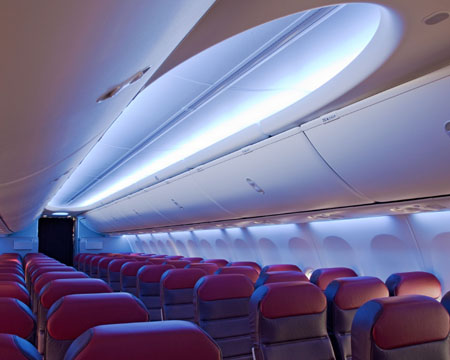
    The national carrier of Malaysia is the first full-service airline to operate the 737-800 with the new Boeing Sky Interior.

    The new 737 Boeing Sky Interior features sculpted sidewalls and window reveals, and new, larger stow bins that accommodate more bags while taking up less space in the cabin. Attendants can select from different LED lighting schemes from soft blue overhead sky simulation to a calm, relaxing, pallet of sunset colors. To date, 50 customers have ordered the new interior for 1,386 airplanes.

    Boeing Sky Interior is the latest in a series of improvements to the airplane. The next to come will be a package of performance improvements that will reduce fuel consumption and carbon emissions by 2 percent – making the airplane a full 7 percent more efficient than the first Next-Generation 737 delivered. The performance improvements to the airframe and engine are beginning certification test soon, and will be fully in service by early 2012.

    Malaysia Airlines is the second airline worldwide to take delivery of the new Boeing Sky Interior that offers an improved travel experience to passengers. Delivery of the airline’s initial Next-Generation 737 with the Boeing Sky Interior took place Oct. 29.
    Two flights are scheduled for Nov. 15; an inaugural flight from Kuala Lumpur to Kota Kinabalu followed by a commercial flight from Kota Kinabalu to Haneda, Tokyo.