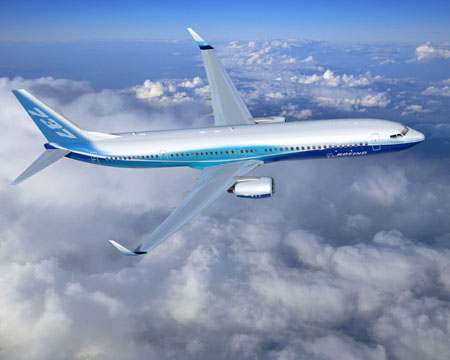
Boeing

  • | | | |

    Drunk Delta Pilot Heads to UK Court

    What: Delta Boeing 737 London to Detroit
    Where: London
    When: Nov 1
    Who: 213 passengers plus pilot George LaPerle
    Why: Scotland Yard took Delta pilot George LaPerle from his plane.

    He was so drunk…(how drunk was he? Five times the pilots legal limit, that’s how drunk.) He was so drunk, he thought his Detroit flight was bound for New York. With him at the controls, he wouldn’t have gotten out of Heathrow much less across the Atlantic.

    LaPerle is suspended by Delta and will be going to court in the UK on Nov 16. Let’s hope for his sake he shows up sober, and already on his ten step plan.

    Filing this one under “pilot error.”

  • | | |

    Smoke Diverts AirTran Flight


    Pictured: An AirTran Boeing 717 en route out of Memphis
    Click to view full size photo at Airliners.net
    Contact photographer Hartsfield Photography

    What: AirTran Airways Boeing 717 en route from New Orleans to Milwaukee
    Where: Memphis Tennessee
    When: Nov 6, 2010
    Who65 passengers
    Why: While en route, the plane developed smoke in the cabin. The flight diverted to Memphis where passengers were provided an alternative flight.

  • | | | | | |

    Belly Landing in Puerto Vallarta


    Click to view full size photo at Airliners.net
    Contact photographer Josh May

    What: Global Air Boeing 737-200 en route from from Mexico City to Puerto Vallarta
    Where: Puerto Vallarta
    When: Nov 4th 2010 1 p.m.
    Who: 99 passengers and 5 crew
    Why: While on approach to Puerto Vallarta, the plane’s nose gear would not extend, in spite of several flybys where the tower verified the nose gear was not extended.

    The plane eventually made a belly landing on foam with emergency services on standby. Pilot Jorge Luz Campos landed the plane with no injuries.

  • |

    Boeing Achieves Power On for New 747-8 Intercontinental

    EVERETT, Wash., Nov. 5, 2010 /PRNewswire/ — Boeing (NYSE: BA) has completed the power on sequence for the new 747-8 Intercontinental. This milestone enables the program to begin functional tests on the airplane.

    “This is a critical step in the assembly process for the new 747-8 Intercontinental,” said Elizabeth Lund, 747 deputy program manager, Boeing Commercial Airplanes. “The airplane’s systems are now live. This milestone is a reflection of the focus and hard work of our engineers, mechanics and suppliers.”

    Power on is a complex series of tasks that methodically energize and activate the airplane’s systems. In this critical stage of the assembly process, the electrical, hydraulic and pneumatic systems are brought on line.

    Mechanics connected the 747-8 to an external power cart to energize the flight-deck display and maintenance systems. The electricity coursing through the airplane’s 133 miles (214 km) of wire will be as high as 105 kilovoltampere (kVa).

    The program also activated the airplane’s hydraulic and pneumatic systems. Pressurized to 3,000 pounds per square inch (psi), the hydraulics power the flight control surfaces, landing gear, brakes and steering systems. The 160 psi applied to the pneumatic system enables the airplane to operate the environmental control systems and the leading-edge flaps.

    “We are very methodical in ensuring the integrity of the airplane’s systems,” said Todd Zarfos, vice president of 747 engineering, Boeing Commercial Airplanes. “This accomplishment is a key milestone in validating the design, installation and functionality of the electrical, hydraulic and pneumatic systems.”

    A video that gives you an inside look at the power on sequence is available at http://bit.ly/dlXgym.

    The program is expected to complete assembly of the 747-8 Intercontinental in the first quarter of 2011. The airplane is scheduled to enter service in late 2011 following the flight test program.

    The 747-8, which includes the 747-8 Intercontinental and the 747-8 Freighter, was launched in November 2005. Boeing has 109 orders for the 747-8 — 33 for the 747-8 Intercontinental and 76 for the 747-8 Freighter. The first 747-8 Intercontinental is scheduled to deliver in late 2011.

    The new 747-8 Intercontinental offers the lowest operating costs and best economics of any large passenger airplane, while providing enhanced environmental performance. The 747-8 provides new revenue opportunities that allow airlines to maximize profits. Eighteen feet longer than the 747-400, the 747-8 has 51 additional seats to accommodate 467 passengers in a typical three-class configuration, and it also offers 26 percent more cargo volume.

  • |

    BOEING OFFERS EXCHANGE PROGRAM FOR 787 DREAMLINER PARTS

    SEATTLE, Nov. 3, 2010 / — Boeing today announced the availability of a rotable exchange services program, that will support the operation of the Boeing 787 Dreamliner. This program will help airline customers reduce inventory costs by providing access to a Boeing-managed inventory pool of parts that is available to ship within 24 hours of request.

    “The 787 Rotables Exchange Services Program will provide a dedicated pool of high-value, dispatch-critical parts for airlines, while helping them to improve operations support and cash flow,” said Dale Wilkinson, vice president, Material Services for Boeing Commercial Airplanes. “The program manages configuration, warranty and reliability for the covered parts, freeing the airline to focus on passengers and the operation of the airplane.”

    The exchange program is available to support initial entry into service for 787 operators – this is the first time that such a program has been developed in conjunction with entry into service of a new fleet type.

    With the Boeing 787 Rotable Exchange Program, the airline removes a part from the airplane and ships it for exchange with a new unit from Boeing’s exchange pool. Boeing plans to support up to 600 high-value rotable parts, including such items as the Auxiliary Power Unit and Variable Frequency Starter Generator. By providing coverage for parts typically priced in the hundreds of thousands of dollars, the exchange program can provide considerable inventory cost savings for airlines.

    The program provides a flight-hour cost basis that enables the customer to better forecast maintenance costs, while spreading out high-cost expenditures for rotable parts over the 10-year term of the agreement.

  • | | | | |

    Lionair Overrun in Indonesia


    Click to view full size photo at Airliners.net
    Contact photographer M Radzi Desa

    What: Lionair Boeing 737-400 en route from Jakarta to Pontianak
    Where: West Kalimantan, Indonesia
    When: Nov 2 2010
    Who: 167 passengers, 7 crew
    Why: While landing at Pontianak’s Supadio Airport during a heavy rain, the plane overran the end of the runway. Its nose and main undercarriage collapsed and it stopped mired in a field beyond the end of the runway. There were no injuries.

    A passenger reported that the plane shook (or vibrated) about a quarter of an hour before landing; and no announcements were made by the pilot or crew during the vibration, or during the landing. The airline said no announcement was made because the seatbelt light was on.

    Passengers panicked and evacuated through an emergency exit. Military personnel at the airport assisted.

    Where were the crew while terrified passengers were jumping off the plane?

    They are saying the plane’s inability to stop was not due to weather, a wet runway, that the plane was well maintained and that it was a normal landing. So. If this is all true, why did it overrun?

  • | | | | |

    Delta Africa Flight Cut Short in NY


    Click to view full size photo at Airliners.net
    Contact photographer Mattia Vichi

    What: Delta Airlines Boeing 767-300 en route from New York JFK,NY to Accra
    Where: over the Atlantic
    When: Oct 29 2010
    Why: While en route 300 miles out of New York, the plane developed an internal leak in the right engine, and smoke collected in the cabin.

    The pilot descended to a lower altitude and made a safe landing at JFK with rescue services on standby. Passengers did not disembark for nearly two hours.

    Maintenance determined that the oil leak or smoke from an oil leak got into the air conditioning.

  • | | | | | |

    Turkey: Galley Smokes Cabin


    Click to view full size photo at Airliners.net
    Contact photographer

    What: Azerbaijan Airlines Boeing 757-200 en route from Istanbul Turkey to Baku Azerbaijan
    Where: Istanbul
    When: October 30
    Who: 221 aboard
    Why: After takeoff, the cabin filled with smoke coming from a galley oven.

    The plane returned to the Istanbul airport and made a safe landing. No replacement was provided. The plane received maintenance, and continued some hours later.

  • |

    Boeing and State Corporation Rostechnology Finalize Order for Next-Generation 737s

    MOSCOW, Oct. 29 — Boeing and the State Corporation Rostechnology today announced the finalization of an order for 50 Next-Generation 737 airplanes. The order includes purchase rights for an additional 35 Next-Generation 737s. The State Corporation’s Supervisory Board approved the definitive agreement that was signed and announced on Sept. 17 during the Sochi Investment Forum in Russia. The order is valued at $3.7 billion at average list prices. Rostechnology’s order includes 15 Next-Generation 737-700s, 25 737-800s and 10 737-900ERs (extended range). 

    "The order of Next-Generation 737s by Rostechnology represents a substantial investment in our future and will accelerate the significant progress we are making in improving the global competitiveness and efficiency of our airline industry," said Roman Pakhomov, chief executive officer of Aviation Capital Services, aviation leasing division of Rostechnology. "This agreement continues to build upon the strategic partnership between Rostechnology and Boeing."

    The economic benefits, comfort and operating efficiencies consistently demonstrated by the Next-Generation 737 directly support Rostechnology’s plan to provide Russian airlines with efficient and reliable airplanes that will help them profitably grow domestic and international operations.

    "This is a great day in the history of our long and enduring partnership with Rostechnology," said Marlin Dailey, vice president of Sales, Boeing Commercial Airplanes. "Today’s order for 737-700s, 737-800s and 737-900ERs underscores Rostechnology’s confidence in the world’s most successful single-aisle airplane. The entire Next-Generation 737 family offers superior operating economics and the 737-900ER has the best seat mile cost of any single-aisle airplane and provides our Next-Generation 737 customers with a compelling low-risk growth opportunity."

    Rostechnology 737s will be delivered with the all-new 737 Boeing Sky Interior. Inspired by the passenger experience, it promises to redefine the 737 travel experience. In addition to the new design, Boeing also announced a performance improvement package offering a 2 percent reduction in fuel consumption through various airframe and engine improvements.

    Over the past 20 years, Boeing’s joint programs in Russia have resulted in almost $6 billion in highly successful joint projects with its Russian partners making Boeing the largest international aerospace investor in Russia.

    Boeing announced in September that its production rate for the Next-Generation 737 program will increase from the current rate of 31.5 airplanes per month to 35 in early 2012 and to 38 airplanes per month in the second quarter of 2013.

  • | | | |

    Air Nippon Receives Ground Clearance Warning over Mountain Range


    Click to view full size photo at Airliners.net
    Contact photographer Kaoru Kojima

    What: Air Nippon Boeing 737-800 en route from Nagoya to Asahikawa
    Where: Asahikaw
    When: Oct 26 2010
    Why: 16 nautical miles east of the airport, the flight received a ground proximity warning system warning. The pilot climbed to a safe height in the mountainous area, and continued to make a safe landing at the Asahikawa Airport.

  • | | | | | |

    Hull Breach in American Airlines Flight


    Click to view full size photo at Airliners.net
    Contact photographer

    What: American Airlines Boeing 757-200 from Miami,FL to Boston,MA
    Where: Miami
    When: Oct 26th 2010
    Who: 154 passengers and 6 crew
    Why: A half hour after takeoff, the plane developed rapid decompression at 31,000 feet requiring oxygen masks, an emergency descent and a return to Miami.

    Maintenance found a one by two foot hole in the hull.

    George’s Point of View

    Maintenance, Maintenance, Maintenance!

    Even with AD Directives issued, this was still missed. Was there telltale evidence prior to this event that could have prevented endangering 154 passengers and six crew?

    The hole in the hull is not unprecedented. Sixteen months prior to flight AA-1640, Southwest Airlines (SWA) flight 2294, (another Boeing suffering a hole in the hull in July 13, 2009), the FAA has already issued Airworthiness Directive 2010-01-09 mandating inspection requirements. At that time, they ascribed the hull failure to a design fault: Fuselage skin failure due to preexisting fatigue at a chemically milled step.

    It’s an easy enough thing to visualize-picture slightly squeezing an empty cola can, then blowing into it; and repeating the process, over and over. In a soda can, it would not take the 20 years this plane has been flying for the stressed areas to develop a crease, and eventually crack.

    Not that a soda can is expected to sustain the significant pressures at 10,000+ feet, nor does it have the design flaw of chemical milling, nor is its skin made of single and double bonded layers. If it were, one could theoretically presume and anticipate metal fatigue to occur at the weakest location–the edges of where the metal is double-bonded.

    In the Southwest Airlines event, it was observed that the progression of metal fatigue tends to be higher at the borders between chemically milled and non-chemically milled bays.

    The inspection requirements in SB 737-53A1301 require inspections to detect cracks in the vulnerable areas (the chem-mill step) to avoid sudden fracture and failure of the fuselage skin panels.

    Did this plane undergo “repetitive external non-destructive inspections to detect cracks in the fuselage skin“?

    Carriers out there, when there are directives which indicate potential problems, pay attention!

    If not for the stellar performance of this flight crew, this plane would have been a statistic.

    Thank you, John D King for sending the links.

  • | | |

    Injury Delays Flight


    Click to view full size photo at Airliners.net
    Contact photographer Bruce Leibowitz

    What: Delta Airlines Boeing 757-200 en route from Orlando to Salt Lake City
    Where: Orlando
    When: Oct 27 2010
    Who: 1 injury
    Why: Before takeoff, the plane made a sharp stop while taxiing, injuring one.

    The injury did not prevent takeoff, although there was a short delay while the injured party received treatment.

  • |

    Dubai-based flydubai receives first interior on Next-Generation 737-800

    SEATTLE, Oct. 27 — Boeing and Dubai-based flydubai today celebrated delivery of the first Next-Generation 737 with the new, passenger-inspired Boeing Sky Interior.

    “The superior passenger experience of this exciting new interior is the result of many years’ work by Boeing employees and suppliers,” said Beverly Wyse, 737 vice president and general manager. “Our airline customers will draw value from the many practical improvements we have made in the new design.”

    Since the Next-Generation 737 was introduced in 1997, customers have taken advantage of continuous improvements to this best-selling airplane that have made it ever more efficient, reliable and passenger-friendly. Boeing Sky Interior is the latest in a series of improvements to the airplane. The next to come will be a package of performance improvements that will reduce fuel consumption and carbon emissions by 2 percent – making the airplane a full 7 percent more efficient than the first Next-Generation 737 delivered. The performance improvements to the airframe and engine are beginning certification test soon, and will be fully in service by early 2012.

    With the new 737 Boeing Sky Interior, airlines will welcome their passengers into a cabin featuring modern, sculpted sidewalls and window reveals. The ingenious design of the new, larger stow bins allows them to accommodate even more bags than before, while taking up less space in the cabin. The innovative assist mechanism of the new bins gives easy access, and as they pivot up and out of the way, there is much more headroom around the aisle seats and a greater sense of space in the cabin.

    Airlines will select from different lighting schemes that range from a welcoming, soft blue overhead sky simulation to a calm, relaxing, pallet of sunset colors.

    LEDs (light emitting diodes) are brighter and replace incandescent signage, attendant and halogen reading lights. With an estimated 40,000 hours between replacements, LEDs last 10 times longer than the previous standard of lights.

    Other features that passengers particularly will appreciate are a quieter cabin, intuitive placement of switches and call buttons, and improved sound quality and clarity through new speakers in each passenger row.

    “We are very proud to be the first to offer our passengers an enhanced onboard experience with the brand new Boeing Sky Interior,” said Ghaith Al Ghaith, CEO, flydubai. “We have achieved much in our first 16 months of service and will continue to bring our passengers the best product offerings on one of the newest 737 fleets in service.” The airplane, a Next-Generation 737-800, will enter service in November.

    A total of 46 airlines and leasing companies have ordered the 737 Boeing Sky Interior for more than 1,200 of their airplanes. flydubai is the first of five airlines that will receive Next-Generation 737s with the new interior this year.

  • | | | | |

    Maintenance, Smoke Grounds UA Flight to Shanghai

    What: United Airlines Boeing 777 en route from Chicago to Shanghai
    Where: Winnipeg
    When: Oct 25, 2010 1:40 pm
    Who: 194 passengers
    Why: While en route, the plane developed smoke in the cabin. The nearest place to land a 777 (requiring a long runway) was Winnipeg, so the pilot diverted to Winnipeg and made a safe landing with emergency crews on standby on the tarmac. Monday afternoon, a UA crew was assessing the plane; but a replacement plan is scheduled to arrive Tuesday to take the passengers to Shanghai.

    George’s Point of View

    Sometimes it seems as if it takes an emergency for a plane to get maintenance.

    Airliners never stop; they land, unload passengers, cleanup, fuel up, load more passengers and they are off again.

    When do planes get maintenance? After they see smoke?

    It’s not just United.

    Look at our posts: Engine failures, engine fires, cracked windshields, no oil pressure, low air pressure, breaking landing gear, non-working nose gear, shredding tires, smokey cabins…

    When do they stop a plane long enough for it to truly get a little TLC?

    I knew a former navy mechanic who said he would never fly on a commercial plane. Before AND After every flight, the crew checks every plane from nose to tail, ensuring everything is in perfect working order. It seems like a commercial plane only gets a good once over once it’s too late.

    We don’t do that with our cars. You know once the car’s warning light comes on, it’s already too late, and damage has already happened. So we get timely oil changes, and basic care because every dollar spent on maintenance is a hundred dollars not spent on repair.

    Sure, flight 835 plane is getting a once over now, but for that to happen, a plane full of passengers had to be put at risk.

  • | | | | | | |

    Chaos on Aero Contractors in Lagos


    Not the 500. Pictured: Boeing 737-322 exAero Contractors Nigeria lease
    Click to view full size photo at Airliners.net
    Contact photographer JayDeeKay

    What: Aero Contractors Boeing 737-500 en route from Port Harcourt to Lagos
    Where: Nigeria
    When: Oct 24 2010
    Who: 84 passengers, 15 injuries
    Why: Passengers were complaining of pressure problems resulting in ear pain. Passengers reportedly “ran amuck” in the cabin when they saw smoke, apparently resulting in injury.

    Officially, ten minutes before arrival in Lagos, a smoke problem in the cabin was reported to ATC. The crew reported the smoke, and made a safe landing at Murtala Muhammed International Airport with emergency on standby at 6:30 pm. Passengers evacuated, resulting in fifteen injuries. Passenger’s luggage was not released until 8:30 pm

    According to maintenance, the smoke problem was mist and condensation from the air conditioning which had been switched to manual.

  • | | | |

    Aero Emergency Pandemonium Causes Evacuation Injuries

    What: Aero B737-500 en route from Yenagoa to Abuja
    Where: Murtala Muhammed Airport Lagos, Nigeria
    When: Oct 24 2010
    Who: 84 passengers
    Why: On approach to lagos, the plane made a reportedly “terrifying” noise and began emitting smoke in the cabin. The pilot managed the landing and directed the crew to assist with evacuations. The passengers panicked, causing a number of injuries as they jumped out of the emergency exits.

  • |

    Boeing Statement Regarding USDA-FAA Partnership on Aviation Biofuels

    CHICAGO, Oct. 21 Boeing Vice President, Environment and Aviation Policy, Billy M Glover, issued the following statement in the wake of today’s announcement by the U.S. Department of Agriculture and the Federal Aviation Administration that the two agencies have agreed to work together to bring sustainable biofuels into production for the aviation industry.

    “Today’s announcement is welcome news for the commercial aviation industry, which sees sustainable biofuels as a key element of its plan to lower its carbon emissions. Through test flights with a number of our customers, we have proven that fuels made from plant matter and algae can power jet aircraft safely and efficiently, and we look forward in the months ahead to the approval of these fuels for commercial use. The challenge then will be to prime the production pump, and bring biofuels to an attractive price point for airlines.

    Boeing is currently working with the USDA and the Air Transport Association on the Farm-to-Fly initiative, which seeks to encourage the production of sustainable aviation biofuels through U.S. agricultural policy. The USDA-FAA partnership will further help in that regard. We applaud their efforts and look forward to working with them to commercialize biofuels that can help the aviation industry meet its aggressive carbon reduction goals.”

  • | | | | |

    Unruly Passenger Hauled off by Mounties and Fined $28,000 Canadian


    Click to view full size photo at Airliners.net
    Contact photographer

    What: Virgin Atlantic Boeing 747-400 en route from Orlando,FL (USA) to Manchester
    Where: Gander
    When: Oct 21 2010
    Who: 451 passengers and 17 crew
    Why: While underway, a drunken passenger got into a brawl with his wife and father in law. The pilot diverted to Gander where the disruptive passenger, UK citizen Roy Anthony Heaps, was escorted out of the airport by Mounties.

    The court ordered Heaps to pay a fine of $15,000 for charges of assault, uttering threats, mischief and interfering with an air crew; and restitution to the airline along the lines of 13,000 Canadian Dollars.

  • | | | |

    LA: Virgin Australia Towing Accident Strands Passengers


    Click to view full size photo at Airliners.net
    Contact photographer Thanat W.

    What: Virgin Australia Boeing 777-300 en route from Los Angeles to Brisbane
    Where: Los Angeles
    When: Oct 15th 2010
    Why: While being towed to the gate, the plane’s wing struck a hangar which cause substantial damage to the wing.

    Passengers were left without a flight and have experienced a delay in returning to Australia.

  • |

    Boeing Press Release: High-Speed Broadband System Certified on Boeing Business Jet

    ATLANTA, Oct. 20 — Boeing Business Jets today announced the first certification and installation of Panasonic Avionics Corporation’s in-flight wireless high-speed broadband service, eXConnect, on a Boeing Business Jet (BBJ) 737 aircraft.

    As part of the installation agreement, Panasonic will use the privately owned BBJ for ongoing testing and validation, as well as for live demonstrations. The system supports a wide range of passenger and crew applications including very high-speed internet access to passengers anywhere in the world at speeds of up to 50 Mbps to the aircraft. That’s about 100 times the speed of the fastest Internet currently available on airplanes.

    “The eXConnect system installed on the Boeing 737 continues to exceed our expectations, and we are very excited to show customers, OEMs and other groups the true broadband experience made possible by our Ku solution,” said Paul Margis, Chief Executive Officer, Panasonic Avionics Corporation.

    The fuselage-mounted antenna communicates through a global network of satellites and provides higher data rates than tail-mounted antennas traditionally used on business aviation aircraft. The BBJ is ideally suited for carrying a larger and more capable antenna than traditional sized business jets so global coverage is possible.

    “Since its introduction to the market, the Boeing Business Jet has always provided something more than the traditional corporate jet manufacturers have been able to provide – more space, more comfort, more productivity and more utility,” said Boeing Business Jets president Steve Taylor.

    “Panasonic’s new high-speed data system opens up a new capability to our customers that will help satisfy the growing need for passengers to be connected all the time, including in the air,” said Taylor.

  • | | | |

    Turbulence injures 30 Passengers


    Click to view full size photo at Airliners.net
    Contact photographer Allen Zhao

    What: Vietnam Airlines Boeing 777-200 from Hanoi to Paris
    Where: Russia
    When: Oct 20th 2010
    Who: 30 injured
    Why: During the flight, while over Russia, the plane encountered “severe” turbulence which injured thirty passengers. A total of 33 injuries were reported. Eighteen passengers and 3 crew were given first aid on the plane. After making a safe landing in Paris, only 6 passengers and 3 crew were hospitalized.

  • | | | | |

    Seattle: Korean Air Flight Electrical Fire


    Click to view full size photo at Airliners.net
    Contact photographer Felix Chon

    What: Korean Air Boeing 747-400 en route from Seoul to Dallas
    Where: Seattle
    When: Oct 16th 2010
    Why: While en route, the crew noticed the scent of something burning. The pilot diverted to Seattle where they made a safe landing. An inspection ensued, and the problem was found to be an electrical short. The plane was back in service within four hours.

  • |

    FAA Certifies Enhanced Vision System on Boeing Business Jet

    ATLANTA, Oct. 18 /PRNewswire/ — Boeing (NYSE: BA) Business Jets today announced that the Rockwell Collins Enhanced Vision System (EVS) was certified last week by the Federal Aviation Administration on a Boeing Business Jet (BBJ), an Air National Guard C-40. The Rockwell Collins EVS is available to current and future BBJ operators as a post-production modification.

    The EVS capability enhances situational awareness for pilots during approach, landing, taxi and takeoff by presenting an image of the external environment on the Head-up Guidance System (HGS) and head-down displays.

    The system uses an infrared sensor to improve the pilots’ view of the runway in various conditions including bad weather. This aids pilots to avoid terrain and clearly identify the runway, including any obstructions, early in the approach. It also assists pilots with “black hole” approaches to airports not equipped with precision landing aids and with landing and maneuvering at unfamiliar airports.

    “I had the pleasure of flying several of the flights during the EVS development flight-test program with the Air National Guard and the Rockwell Collins team. That experience gave me the chance to see the EVS advantages first hand,” said Steve Taylor, Boeing Business Jets president.

    “Given the variety of destinations visited by most BBJ operators, the improved situational awareness that EVS provides can be a great advantage,” said Taylor.

    “The truly collaborative effort between Rockwell Collins, Boeing, the Air National Guard and the entire development team has made EVS a reality for BBJ owners and operators who have been eagerly awaiting this capability,” said David Austin, senior director, HGS for Rockwell Collins.

    Installation of the EVS system on BBJs requires that the airplanes receive an upgrade to the HGS 4000, a modified radome, and the infrared camera.

    The EVS system will be demonstrated on the Air National Guard BBJ at DeKalb Peachtree Airport during the National Business Aviation Association convention, Oct. 19-22, 2010.

  • |

    Boeing PR: Boeing Joins Fuselage Sections for First 747-8 Intercontinental

    EVERETT, Wash., Oct. 15 — Boeing moved closer this week toward completing assembly of the first 747-8 Intercontinental as mechanics in Everett, Wash., loaded the forward and aft fuselage sections to join with the wing and center section.

    The 747-8 fuselage is 250 feet 2 inches (76.3 meters) long, which is 18 feet 4 inches (5.6 meters) longer than the 747-400. The stretch provides space for 51 additional seats to accommodate 467 passengers in a typical three-class configuration and offers 26 percent more cargo volume.

    "Final body join is an important milestone for the 747 program," said Pat Shanahan, vice president and general manager of Airplane Programs in Boeing Commercial Airplanes. "It is a major step toward completing the structural integration and building out our all-new interior. We now have the first real look at the size and distinctive shape of the 747-8 Intercontinental. This is going to be a superb airplane for our customers both from an aesthetic and a performance perspective."

    The 747-8 is the new high-capacity 747 that will give airlines the lowest operating costs and best economics of any large airplane while providing enhanced environmental performance. The airplane also features a 787 Dreamliner-inspired interior that will offer passengers a greater feeling of space and comfort.

    The 747 program has orders for 109 747-8 Freighter and Intercontinental airplanes. Thirty-three of those are for the 747-8 Intercontinental, with orders coming from Lufthansa, Korean Air and eight VIP customers. The first 747-8 Intercontinental delivery is scheduled for late 2011 to a VIP customer.

  • | | | | | |

    Boeing: Engine Shut Down in Caracas


    Click to view full size photo at Airliners.net
    Contact photographer Orlando Suárez

    What: Venezolana Boeing 737-200 en route from Caracas to Maracaibo
    Where: Caracas
    When: Oct 13 2010
    Who: 88 passengers
    Why: After takeoff, the plane developed problems with the left engine requiring him to shut it down.

    The pilot returned to Caracas and made a safe landing minus the left engine. Passengers were provided an alternative flight.