Boeing

  • | | | |

    Islamabad: Emergency Landing


    Pictured: A USA – Air Force Boeing C-17A Globemaster III dropping off evacuees from Haiti
    Click to view full size photo at Airliners.net
    Contact photographer Andre Klass

    What: US C-17 en route from Skardu to Peshawar
    Where: Benazir International Airport
    When: Sept 17
    Who: 176 passengers
    Why: A US plane airlifting flood refugees from the northern city of Skardu was struck by an unidentified technical problem, and made an emergency landing. There were no injuries

  • | | | |

    US Airways Cockpit Smoke over Pacific


    Click to view full size photo at Airliners.net
    Contact photographer Peter Van Dyke

    What: US Airways Boeing 757-200 en route from Phoenix,AZ to Kahului,HI
    Where: en route
    When: Sep 17 2010
    Who: 175 passengers and 6 crew
    Why: 1200 miles from Hawaii, smoke was observed in the cockpit. The crew diverted to San Francisco where they landed safely.

    A replacement jet was provided.

  • | |

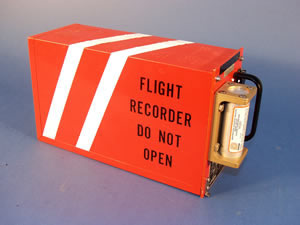
    Dubai: UPS Boeing Black Boxes Sent to US


    The NTSB has received the data and voice recorders from the UPS Boeing 747-400 that crashed in Dubai on Sept 3 2010.

    Two crew members died in the cargo plane crash after an on board fire that made viewing flight gauges impossible.

  • |

    Previously announced increase to 35 per month to be extended to 38 per month in second quarter 2013

    SEATTLE, Sept. 16 — Boeing announced today its production rate for the Next-Generation 737 program will increase to 38 airplanes per month in the second quarter of 2013. This decision comes just months after announcing a rate increase on the company’s best-selling commercial jetliner from 31.5 to 35 airplanes per month in early 2012.

    "Increasing production is in response to customer demand for this airplane," said Boeing Commercial Airplanes President and CEO Jim Albaugh. "Airlines want this innovative airplane sooner to renew their fleets to serve their customers. We made this decision after careful evaluation by Boeing and our supplier partners."

    Key factors to the rate decision include the company’s current backlog of more than 2,000 Next-Generation 737s, current options that customers are expected to exercise and ongoing sales campaigns. The rate increase is not expected to have a material impact on 2010 financial results.

    Next-Generation 737 customers have benefited from continuous innovation of the airplane since its introduction in 1997. The first five airlines will receive the new 737 Boeing Sky Interior by the end of this year. Customers will gain from a two percent reduction in the airplane’s fuel consumption by early 2012, through a combination of airframe and engine improvements.

    The 2010 Current Market Outlook, Boeing’s long-term forecast of air traffic volumes and commercial airplane demand, projects a market of over 21,000 single-aisle airplanes over the next 20 years, accounting for an anticipated 69 percent of the airplanes delivered and an estimated 47 percent of the $3.6 trillion total market value.

    Forward-Looking Statements

    Certain statements in this report may be "forward-looking" within the meaning of the Private Securities Litigation Reform Act of 1995. Words such as "expects," "intends," "plans," "projects," "believes," "estimates," "targets," "anticipates," and similar expressions are used to identify these forward-looking statements. Forward-looking statements are based upon assumptions about future events that may not prove to be accurate. These statements are not guarantees of future performance and involve risks, uncertainties and assumptions that are difficult to predict. Actual outcomes and results may differ materially from what is expressed or forecasted in these forward-looking statements. As a result, these statements speak to events only as of the date they are made and we undertake no obligation to publicly update or revise any forward-looking statements, whether as a result of new information, future events or otherwise, except as required by federal securities laws. Specific factors that could cause actual results to differ materially from forward-looking statements include, but are not limited to, statements we make regarding our guidance relating to future financial and operating performance, the effect of economic conditions in the United States and globally, and general industry conditions as they may impact us or our customers, as well as the other important factors disclosed previously and from time to time in our other filings with the Securities and Exchange Commission.

  • |

    Boeing Press Release: Changes needed in training methodologies to engage next generation

    SINGAPORE, Sept. 15 — The commercial aviation industry will require 466,650 pilots and 596,500 maintenance personnel over the next 20 years to accommodate the strong demand for new and replacement aircraft, according to a crew assessment forecast from Boeing. Airlines will need an average of 23,300 new pilots and 30,000 new maintenance personnel per year from 2010 to 2029.

    The crew assessment forecast is based on Boeing’s Current Market Outlook, widely regarded as the most comprehensive and respected analysis of the commercial aviation market. “When you add up all the numbers, you quickly understand the issues facing this industry,” said Roei Ganzarski, chief customer officer, Boeing Training & Flight Services. “Our challenge is adapting our training to engage the future generation of people who will fly and maintain the more than 30,000 airplanes that will be delivered by 2029.”

    The largest growth in both pilots and maintenance workers will be in the Asia-Pacific region with a requirement for 180,600 and 220,000 respectively. Within Asia, China will experience the greatest need for pilots and maintenance personnel — 70,600 and 96,400 respectively.

    North America will need 97,350 pilots and 137,000 maintenance workers; Europe will need 94,800 pilots and 122,000 maintenance personnel; Africa will need 13,200 pilots and 15,000 maintenance personnel; the Middle East will need 32,700 pilots and 44,500 maintenance personnel; Latin America will need 37,000 pilots and 44,000 maintenance personnel; and the CIS will need 11,000 pilots and 14,000 maintenance personnel.

    “To accommodate this growing demand, it will be vital to match training with the learning styles of students to come,” Ganzarski said. During the recent Asia Pacific Aviation Training Symposium in Kuala Lumpur, Ganzarski called for changes to current training methodologies. “As an industry, we need to adapt to the learning styles of tomorrow’s technologically savvy pilots and mechanics, and ensuring that training is globally accessible, adaptable to individual needs and competency-based.”

  • | | |

    Southwest Emergency Landing in Fort Myers


    Click to view full size photo at Airliners.net
    Contact photographer Finn Yannick Piskol

    What: Southwest Airlines Boeing 737-700 en route from Fort Lauderdale (1: 42 to Austin,TX
    Where: Fort Myers,FL (@ 2:23
    When: Sep 14th 2010
    Who: 92 passengers
    Why: While en route north of Fort Myers, the crew reported a cabin altitude alert, and loss of cabin pressure and diverted to Fort Myers where they made a safe landing. Several passengers sought medical assistance for problems such as headaches and ear aches. 10 were injured, 3 went to the hospital.

    A replacement flight was provided.

  • | | | | | |

    Smoking Phone Diverts International Flight

    What: American Airlines Boeing 767-300 flight AA199 en route from Milan to New York
    Where: Shannon
    When: Sept 13 2010
    Who: 167 passengers
    Why: While the plane was en route, a passenger was charging his cell phone, which started overheating, which set off the fire alarm in the lavatory. The flight diverted to Shannon, where it made a safe landing.

    Fire crews at Shannon were on standby during the emergency landing. Airport aircraft maintenance company engineers examined the plane and discovered the melted phone.

  • |

    Press Release: Boeing Assembles First 747-8 Intercontinental Forward Fuselage

    EVERETT, Wash., Sept. 14 — Boeing achieved another significant milestone for the first 747-8 Intercontinental Sunday night with the assembly of the airplane’s forward fuselage. The 89-foot, 2-inch (27.2 meters) fuselage section, featuring the airplane’s signature upper deck, was moved from the assembly tool for sealing and testing before beginning systems installation.
    The 747-8 features a stretched fuselage compared to that of the 747-400. It is 18 feet, 4 inches (5.6 meters) longer than its predecessor. Much of the stretch — 13 feet, 4 inches (4.1 meters) — is located in the forward fuselage. The remaining additional 5 feet (1.5 meters) are located aft of the wing. The 747-8’s stretched fuselage provides for 51 additional seats to accommodate 467 passengers in a typical three-class configuration and 26 percent more cargo volume.

    The Boeing 747-8 Intercontinental is the new, high-capacity 747 that offers the lowest operating costs and best economics of any large passenger airplane, while providing enhanced environmental performance.

  • | | |

    PIA Karachi Emergency Landing

    What: PIA Pakistan International Airlines Boeing 747-300 en route from Karachi to Lahore
    Where: Karachi
    When: Sep 10th 2010
    Who: 480 passengers
    Why: While en route, the plane’s engine ingested a bird.

    The pilot returned the plane to Karachi where it made a safe landing. Passengers were provided an alternative flight at 8 pm

  • |

    Boeing to Highlight Affordable, Low-Risk Solutions at AFA Air & Space Conference

    WASHINGTON, Sept. 9, 2010 — The Boeing Company at next week’s U.S. Air Force Association (AFA) Air & Space Conference and Technology Exposition, will highlight a range of affordable, low-risk solutions that enable the Air Force to fly, fight and win in air, space and cyberspace. The conference takes place Sept. 13-15 at the Gaylord National Resort and Convention Center, National Harbor, Md.
    “Events such as the annual AFA conference give us the opportunity to listen to our valued Air Force customers, gain a better understanding of their needs and challenges, and discuss what we can do to deliver more capable and affordable products and services to the warfighter,” said Jack Catton, Boeing Government Operations vice president of Combat Air Force Systems. “As a trusted industry partner, Boeing is committed to keeping America’s Air Force capable, relevant and mission-ready.”
    Some of the solutions that Boeing will highlight at its exhibits and in its media engagements are the NewGen Tanker; the P-8 Aerial Ground Sensor aircraft; the C-17 Globemaster III airlifter; the Advanced F-15E fighter; the Phantom Eye and Phantom Ray unmanned airborne systems; the C-130 Avionics Modernization Program and Air Force support and logistics services; cybersecurity; and military space programs such as GPS and Wideband Global SATCOM.

    Boeing’s exhibits at this year’s AFA conference will feature more interactivity for customers and other conference attendees.

    “The best way to showcase the capabilities of Boeing’s innovative products and services is to offer hands-on, interactive experiences,” Catton said. “In addition to the NewGen Tanker and 737 Family of Systems technology demonstration trailers and their advanced flight simulators, we’ll offer a sneak preview of the upcoming 3-D IMAX film ‘Rescue.’ This Boeing-sponsored film includes compelling C-17 and CH-47 footage from humanitarian relief operations around the world.”

    The following media briefing will be held in Maryland Briefing Room 4 at the Gaylord National Resort and Convention Center:
    TUESDAY, Sept. 14
    1330 – 1430: Filling the U.S. Government’s Satellite Capacity Gap
    Jim Simpson, vice president of Business Development, Space & Intelligence Systems, and Bill Reiner, assistant director of Satellite Communications and Cyber Security for Government Operations, discuss military and commercial satellites, hosted payloads and what Boeing is doing to help the U.S. government fill its satellite capacity needs.
    A unit of The Boeing Company, Boeing Defense, Space & Security is one of the world’s largest defense, space and security businesses specializing in innovative and capabilities-driven customer solutions, and the world’s largest and most versatile manufacturer of military aircraft. Headquartered in St. Louis, Boeing Defense, Space & Security is a $34 billion business with 68,000 employees worldwide.

  • | | | |

    Ryanair Turbulence Sends FA to Hospital


    Click to view full size photo at Airliners.net
    Contact photographer Alan Lebeda

    What: Ryanair Boeing 737-800 en route from Malta to Venice
    Where: Elba
    When: Sep 8 2010
    Who: 170 people aboard, five injuries
    Why: While en route, the plane encountered serious turbulence, which knocked all unbuckled individuals and a trolley into the roof of the plane; the turbulence injured two flight attendants and several passengers. The pilot diverted the flight to Bologna, where they landed safely; one flight attendant was hospitalized. The other injuries were treated at the airport.

  • | | |

    Gimpy Plane Delays Spicejet Flight 2x

    What: Spicejet Boeing 737-800 en route from Kolkata to Delhi
    Where: Kolkata
    When: Sep 8th 2010
    Who: 136 passengers
    Why: On taxi (or during takeoff) which was already an hour late, the Spicejet’s left engine was smoking.

    The pilot noticed the smoke, aborted the flight and returned the plane to the gate where maintenance worked on repairing the problem.

    After another delayed departure, the Spicejet was again en route. When the cabin did not pressurize a quarter of an hour later into the flight, the pilot turned back and made an emergency landing in Kolkata.

    At 10:20pm, passengers were flown out in a replacement plane.

  • |

    Boeing Begins Assembly of 1,000th 767

    Commercial Airplanes, begins production of the 1,000th 767 with spar load in the Everett, Wash., factory.”]

    EVERETT, Wash., Sept. 7 /PRNewswire-FirstCall/ — Boeing (NYSE: BA) has begun assembly of the 1,000th 767 airplane at the factory in Everett, Wash. Mechanics took the first step in major assembly by loading the wing spar into the assembly tool. The spar is the internal support structure that runs through the full length of the wing.

    “This is an important milestone for the 767, which has continued to evolve and improve since entering service nearly 30 years ago,” said Kim Pastega, vice president and general manager of the 767 program, Boeing Commercial Airplanes. “The 767 is a high-performing twin-aisle airplane that delivers nearly 99 percent dispatch reliability every day for more than 90 operators around the world.”

    The 1,000th airplane, a 767-300ER (extended range) passenger model, is scheduled for delivery in February 2011 to long-time customer ANA (All Nippon Airways). ANA ordered its first 767 in 1979 and has taken delivery of 89 767s to date.

    Boeing will use the 767 as the platform for its NewGen Tanker if it wins the U.S. Air Force KC-X Tanker competition. Contract award currently is scheduled for mid-November.

    The Boeing 767 family is a family of clean, quiet, fuel-efficient airplanes that provide maximum market versatility in the 200- to 300-seat market. The Boeing 767 family includes three passenger models — the 767-200ER, 767-300ER and 767-400ER — and a medium-widebody freighter, which is based on the 767-300ER fuselage.

  • | | | |

    Air Canada Boeing Diverts to Russia


    Click to view full size photo at Airliners.net
    Contact photographer Erezms

    What: Air Canada’s Boeing-767 en route from Vancouver to Shanghai
    Where: Yelizovo airport
    When: Sept 5 2010 5:32 Moscow time
    Who: 152 passengers and 10 crew
    Why: While en route, flight attendants smelled a burning odor coming from the lavatory. The crew decided to divert and make an emergency landing at the Petropavlovsk-Kamchatsky airport. The plane was investigated by maintenance and no fire was found, and after a four hour delay, the flight resumed.

  • | | |

    Qantas Emergency En Route to Manila

    What: Qantas Boeing 767-300 en route from Sydney to Manila
    Where: Sydney
    When: Sep 6th 2010
    Who: 158 passengers
    Why: After receiving an “anti-skid fault emergency message” the flight returned to Sydney. Passengers had to wait for a replacement flight.

  • | | | | |

    Engine Fire Leads to Emergency Landing in Kos


    Click to view full size photo at Airliners.net
    Contact photographer Cees de Krijger

    What: AirExplore Boeing 737-400 en route from Verona to Kos
    Where: Kos, Greece
    When: September 4, 2010
    Who: 7 crew, 169 passengers
    Why: After the left engine caught on fire, the plane made an emergency landing on Kos. Passengers disembarked via emergency slides. No injuries were reported.

  • |

    Boeing Statement on Proposed Agreement Regarding Santa Susana Cleanup

    SIMI VALLEY, CALIF., Sept. 3, 2010 – In response to today’s announcement of an agreement in principle between the California Department of Toxic Substances Control, the U.S. Department of Energy and NASA regarding the potential cleanup of Santa Susana Field Laboratory in California, Boeing issued the following statement:
    “We are reviewing the framework of the proposed agreement between the U.S. Department of Energy, NASA and the State of California. While we don’t have specific details about the proposed agreement, we are hopeful that it moves the cleanup forward while preserving the biological, historical and cultural resources at Santa Susana.

    “Boeing remains committed to a cleanup that fully protects human health and the environment and preserves Santa Susana as open space for future generations. We remain open to continued dialogue with the State and will continue our environmental investigations, interim soil and groundwater cleanups and storm water quality improvements.”

  • | | | |

    UPS Boeing Crashes in Dubai


    Click to view full size photo at Airliners.net
    Contact photographer Timo Jäger

    What: United Parcel Service Boeing 747-400 cargo plane en route from Dubai to Cologne
    Where: Dubai inside an Emirati air base between Dubai’s Emirates Highway and nearby Al-Ain Road 10 miles southeast of Dubai’s international airport
    When: September 3 2010, noon New York time
    Who: Two pilots
    Why: After takeoff, the pilots declared an emergency over Bahrain airspace, with a cockpit fire. The pilots dumped fuel and immediately attempted to return to the airport, unable to see their instruments due to the smoke. The plane crashed, and both pilots were killed. The crew reported fire on board as they were approaching the airport. Witnesses report hearing a boom, and seeing fire and smoke.

    Statement on Aircraft Incident
    Atlanta, September 03, 2010

    Atlanta, September 03, 2010
    A UPS cargo plane has been involved in an accident in Dubai.
    Updated 6:30 PM EDT

    At approximately noon EDT on Friday, Sept. 3, UPS received a report that one of its cargo aircraft had crashed in Dubai, United Arab Emirates. UPS can confirm that Flight 6, a 747-400, took off from Dubai at approximately 1500 Zulu, bound for Cologne, Germany. UPS records indicate that two UPS employees were aboard. There are no known survivors.

    “This is a terrible tragedy and all of us at UPS extend our deepest sympathies to the families and friends of the victims,” said Scott Davis, UPS’s chairman and CEO. “We are doing our best to learn exactly what happened.”
    UPS is aware of news reports concerning possible events that led to the incident, but we are unable to confirm these reports. UPS Airlines is cooperating with government authorities on the scene, and we have dispatched our own investigation team to the site to assist.

    The safety and security of our employees and our customers and the public are our highest priorities. We will not rest until a determination has been made concerning the causes and implications of this tragedy.
    We will release more information as it becomes available, in cooperation with government authorities. Until then, we ask for your patience in this difficult time.

    Updates on the situation will be provided to the news media and via the Internet at pressroom.ups.com.

    A media information hotline has been established at (502) 329-0110. A recorded message will provide any updates; the system also will allow reporters to leave messages if they would like a return call.

    About UPS UPS (NYSE: UPS) is the world’s largest package delivery company and a global leader in supply chain and freight services. With more than a century of experience in transportation and logistics, UPS is a leading global trade expert equipped with a broad portfolio of solutions. Headquartered in Atlanta, Ga., UPS serves more than 215 countries and territories worldwide. The company can be found on the Web at UPS.com and its corporate blog can be found at blog.ups.com. To get UPS news direct, visit pressroom.ups.com/RSS.
    # # #

    For More Information Contact:

    UPS Public Relations
    404-828-7123

    UPS Airlines Media Hotline
    502-329-0110

  • |

    Boeing Projects $700 Billion Commercial Airplanes Market in North America

    – Strong demand seen for new, more fuel efficient single-aisle airplanes
    – Modest growth predicted for region’s passenger traffic
    MONTREAL, Sept. 2 /PRNewswire/ — Boeing (NYSE: BA) forecasts that air carriers in North America will take delivery of about 7,200 new airplanes over the next 20 years at an investment of $700 billion.

    New airplane deliveries in Canada and the United States will be driven largely by the need to retire older, less fuel-efficient single-aisle airplanes and regional jets, as airlines replace them with new-generation, more fuel-efficient models. (For the purposes of the Boeing forecast, the North America market consists of the U.S. and Canada. Mexico is included in Boeing’s forecast for Latin America.)
    “North America is a large, mature market, and we expect passenger traffic for the region to grow at a modest rate of 3.4 percent,” said Randy Tinseth, vice president of Marketing, Boeing Commercial Airplanes, who released Boeing’s 2010 North America market outlook today in Montreal. “The fast-paced lifestyles in Canada and the U.S. require rapid, frequent and reliable coast-to-coast and interregional transportation. Driven by this demand, nearly three-quarters of the new deliveries over the next 20 years will be single-aisle airplanes.”

    Taking retirements of airplanes into account, the North America fleet will grow from 6,590 airplanes today to about 9,000 airplanes by 2029.

    Boeing forecasts that single-aisle airplanes will grow from 56 percent of the total North America fleet today to 71 percent of the fleet by 2029. Airlines are increasingly focusing on airplane age as fuel-thirsty, older airplanes weigh increasingly on earnings. Increased attention to aviation’s impact on global climate change also will be a factor in selecting airplanes that produce lower carbon emissions.

    Newer airplane types such as the Next-Generation 737 offer significant advantages in environmental performance as well as improved capabilities, fuel efficiency and maintenance costs.

    “After several years of losses among the region’s air carriers, we’re seeing signs of improvement and airlines are beginning to implement fleet renewal plans as they look to the future,” Tinseth said. “To help meet this demand, Boeing Commercial Airplanes will continue to work closely with our more than 500 suppliers and partners in Canada. Boeing imports parts and services from Canada amounting to more than a billion U.S. dollars a year, more than $625 million of which is associated with Boeing Commercial Airplanes.”

    Twin-aisle fleets will evolve in the region as airlines continue to expand international point-to-point services to a wider range of airport pairs and frequencies. Small- and mid-sized twin-aisle airplanes will grow to represent 19 percent of the North America fleet by 2029.

    Within the North America market, Boeing sees a demand for 1,180 new, efficient twin-aisle airplanes such as the 787 Dreamliner. Twin-aisles will account for only 16 percent of total airplane demand in the region over 20 years but will have a proportionally higher share of delivery cost, at 37 percent of the overall investment.

    Large airplanes (747-size and larger) will not see significant demand in North America, with only about 40 units (all freighters), or one percent of the total investment.

    Boeing also forecasts declining demand for regional jets in North America as airlines shift to more fuel-efficient turboprops or larger jetliner models. High fuel prices, intensified competition and the superior efficiencies of larger single-aisles will take a toll on the economics of small regional jets. This category will account for just 4 percent of the total investment for new airplanes, with only 800 new regional jet deliveries over the next 20 years, nearly all for replacement.

  • | | | |

    American Airlines Flight Struck by Lightning

    What: American Airlines Boeing 737-800 en route from Chicago to Reno
    Where: Chicago
    When: Sept 2, 2010
    Who: One-hundred-sixty passengers and five crew members
    Why: After being struck by lightning, American Airlines Flight 1487 returned to Chicago where it was examined by maintenance.

    Passengers were provided an alternative plane that had not been struck by lightning.

  • | | |

    American Airlines Emergency Landing in Madrid


    Click to view full size photo at Airliners.net
    Contact photographer Gareth harvey

    What: American Airlines Boeing 757-200 en route from New York to Madrid
    Where: Madrid
    When: Aug 31 2010 6.58 a.m.
    Why: Prior to arriving in Madrid, the plane indicated problems with the braking system. The pilot “raised the alert” so that emergency crews were on standby. However, flight 94 landed safely. (No indication yet on what the brake problem was.)