|

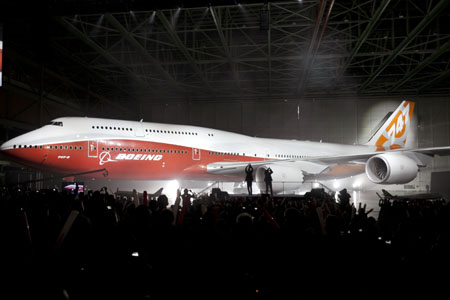
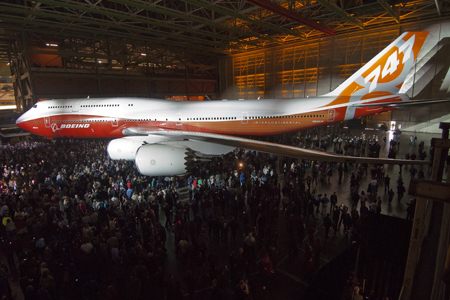
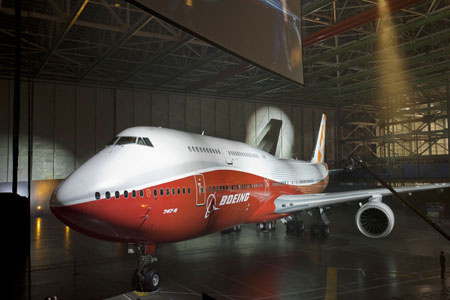
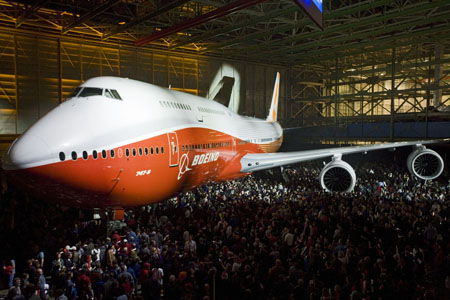
Boeing Celebrates Premiere of New 747-8 Intercontinental

Similar Posts

  • |

    Fatigue Understanding between NATCA and FAA

    The Federal Aviation Administration (FAA) and the National Air Traffic Controllers Association (NATCA) announced agreement on important fatigue recommendations that were developed by a joint FAA-NATCA working group which was established under the 2009 collective bargaining agreement.

    “The American public must have confidence that our nation’s air traffic controllers are rested and ready to work,” said Transportation Secretary Ray LaHood. “We have the safest air transportation system in the world but we needed to make changes and we are doing that.”

    The agreement reinforces existing FAA policy that prohibits air traffic controllers from sleeping while they are performing assigned duties. The FAA will continue to provide air traffic controllers breaks on the midnight shift based on staffing and workload. While on break, air traffic controllers are expected to conduct themselves professionally and be available for recall at all times.

    The FAA and NATCA also agreed that all air traffic controllers must report for work well-rested and mentally alert. It is the employee’s responsibility to notify their supervisor if they are too fatigued to perform their air traffic control duties. As a result of this agreement, air traffic controllers can now request to take leave if they are too fatigued to work air traffic.

    This agreement marks the completion of the tasks required by this joint FAA-NATCA fatigue working group. The FAA and NATCA will continue to collaborate to reduce the risk of fatigue in the workplace.

    “Air traffic controllers have the responsibility to report rested and ready to work so they can safely perform their operational duties,” said FAA Administrator Randy Babbitt. “But we also need to make sure we have the right policies in place to reduce the possibility of fatigue in the workplace.”

    “We are pleased that the efforts of the joint NATCA-FAA fatigue workgroup that produced these science-based recommendations have resulted in an agreement and their implementation into the schedules and work environments of our nation’s dedicated and highly professional air traffic controller workforce,” said NATCA President Paul Rinaldi.

    “We supported the FAA’s action to enhance aviation safety by eliminating single staffing on the midnight shift and we fully support these recommendations that address fatigue. They are common sense solutions to a safety problem that NATCA and fatigue experts have consistently raised for many years.”
    Air traffic controllers will also now be allowed to listen to the radio and read appropriate printed material while on duty during the hours of 10PM and 6AM as traffic permits.

    The FAA had previously adjusted work schedules to give air traffic controllers a minimum of nine hours off between shifts. The FAA and NATCA will develop new watch schedule principles that incorporate fatigue science for schedules beginning no later than September 1, 2012. The FAA and NATCA are already beginning to work with local facilities on watch schedules that reduce the possibility of fatigue in the transition from the day shift to the midnight shift.

    The FAA has also agreed to develop policies that will encourage air traffic controllers to seek medical help for sleep apnea. Currently, air traffic controllers lose their medical qualification if they are diagnosed with sleep apnea. The FAA will work to develop a process for most air traffic controllers with sleep apnea to regain their medical qualification once they receive proper medical treatment. The FAA’s Office of Aerospace Medicine will also develop educational material to raise awareness of the symptoms and the physical effects of sleep apnea.

    As a result of this agreement, the FAA will develop a Fatigue Risk Management System for air traffic operations by January of next year. This management system will be designed to collect and analyze data associated with work schedules, including work intensity, to ensure that the schedules are not increasing the possibility of fatigue. Systems like these are commonly used in other areas of aviation to evaluate levels of risk. The FAA is also designing a comprehensive fatigue awareness and education training program for employees.

    Read the agreement pdf here.

    To include the featured image in your Twitter Card, please tap or click their icon a second time.
  • | | | | | | |

    Dead, Unconscious Pilot Landing

    One
    While Flight 5461 London to Crete was en route, the pilot passed out. The copilot took the correct measures and made an emergency landing at Marco Polo airport in Venice. The unconscious captain was hospitalized, and passengers were obliged to disembark in order to board an alternate flight to Crete. The Titan Airways Airbus was flying for Easyjet. The plane was an Airbus, and there were 170 aboard. EasyJet confirmed that… “flight EZY5461 from London Gatwick to Heraklion, which was being operated by a wet leased Titan aircraft diverted to Venice as a result of the Captain requiring medical assistance. The First Officer performed a routine landing in line with procedures. The aircraft landed safely and was met by emergency services on arrival. The safety and wellbeing of its passengers and crew is easyJet’s highest priority.
    easyJet sent a replacement aircraft and crew from London Gatwick to Venice to operate the flight to Heraklion. This flight has now arrived into Heraklion. Passengers were communicated with throughout and were provided with refreshment vouchers.
    We apologise for any inconvenience experienced due to the diversion and resulting delay.”

    .HT_United_Airlines1_MEM_151006_12x5_1600

    Two
    On October 6, the pilot of a United Airlines Boeing 787 Dreamliner between Houston, Texas and San Francisco, California diverted to Albuquerque NM when the co-pilot fell ill and lost consciousness. The pilot landed safety at Albuquerque International Sunport at 8:20 a.m.. A replacement crew completed the flight on the Boeing 787.

    Three
    Is this an epidemic? What about American Airlines pilot Capt. Michael Johnston, 57, who died mid-flight after experiencing a medical emergency the morning of October 5? His copilot made an emergency landing of the Airbus A320 in Syracuse, New York and taxied to a gate where paramedics quickly arrived in the cockpit. A replacement crew completed the flight. 147 pax, 5 crew.

    To include the featured image in your Twitter Card, please tap or click their icon a second time.
  • |

    IATA Blasts Europe’s Handling of the Volcanic Ash Crisis

    Geneva – The International Air Transport Association (IATA) called on European governments and air navigation service providers to urgently develop more precise procedures to identify ash contaminated air space and allow more flights. The call came in the wake of 1,000 flight cancellations on Monday (17 May) as a result of the continued volcanic eruptions in Iceland.

    “This problem is not going away any time soon. The current European-wide system to decide on airspace closures is not working. We welcome the operational refinements made by the Volcanic Ash Advisory Centre (VAAC) in their theoretical model but we are still basically relying on one-dimensional information to make decisions on a four-dimensional problem. The result is the unnecessary closure of airspace. Safety is always our number one priority. But we must make decisions based on facts, not on uncorroborated theoretical models,” said Giovanni Bisignani, IATA’s Director General and CEO.

    Bisignani noted some successful exceptions which provide examples to follow. “France has been able to safely keep its airspace open by enhancing the VAAC data with operational expertise to more precisely determine safe fly zones. Today, the UK Civil Aviation, working with the UK NATS (the air navigation service provider), announced another step forward by working with airlines and manufacturers to more accurately define tolerance levels while taking into account special operational procedures. Both are examples for other European governments to follow,” said Bisignani.

    Bisignani called for (1) more robust data collection and analysis (2) a change in the decision making process and (3) urgency in addressing the issues.

    Data Collection and Analysis
    “Numbers show that the current system is flawed. Over 200,000 flights have operated in European airspace identified by the VAAC as having the potential presence of ash. Not one aircraft has reported significant ash presence and this is verified by post-flight aircraft and engine inspections. We must back the theory with facts gathered by aircraft to test ash concentration. France and the UK are showing that this is possible. If European civil aviation does not have the resources, it should look to borrow the test aircraft from other countries or military sources,” said Bisignani.

    Changing the Decision-making Process
    “We have lost confidence in the ability of Europe’s governments to make effective and consistent decisions. Using the same data, different countries have come to different conclusions on opening or closing airspace,” said Bisignani.

    “Ultimately the industry needs a decision-making process for ash clouds similar to the one used for all other operational disruptions. Every day airlines make decisions whether to fly or not to fly in various weather conditions. Airlines collate the information available and make informed decisions placing safety first and with full access to all the latest weather reporting. Why should volcanic ash be any different?” said Bisignani.

    In the US, which has a lot of experience with volcanic activity, the government identifies a no-fly zone where ash concentration is the highest. For all other areas, it is the responsibility of the airline to decide to fly or not based on the various data sources available. “The US has well-established, safe and effective procedures for tracking the hazards of volcanic ash. In recent years, the industry had no recorded safety incidents from volcanic activity in US airspace. Europe has a lot to learn,” said Bisignani.

    Urgency
    “Volcanic ash is a new challenge for European aviation. We can understand that systems need to be developed to cope. But what is absolutely inexcusable is the failure of Europe’s governments to act urgently and collectively to provide real leadership in a crisis. We have vast amounts of data from over 200,000 safe flights ready for analysis to support an urgent review of the current processes. The UK is finally moving in the right direction. But what about the other affected European governments? The next transport ministers meeting is scheduled for June 24. What kind of leadership waits more than a month to make crisis decisions? European businesses are dependant on air travel and passengers certainly cannot wait that long for initiatives like the UK’s to be implemented continent-wide,” said Bisignani.

    To enhance the industry’s long-term ability to address volcanic ash issues, Bisignani is traveling to Montreal for urgent meetings with the International Civil Aviation Organization (ICAO). “IATA and ICAO have been working intensely on this issue since the crisis first struck in April. IATA is strongly supporting the ICAO task force which is reviewing ash tolerance thresholds with states, operators, manufacturers and the scientific community. The responsibility of manufacturers is critical in providing performance information to back decisions,” said Bisignani.

    Tomorrow Bisignani will meet Roberto Kobeh-Gonzales, President of the ICAO Council and Raymond Benjamin, ICAO Secretary-General. “It is important that we act urgently and globally to better deal with this crisis and to lay a solid foundation for better decision making in future eruptions. Even as Europe stumbles with its fragmented approach, IATA is working with the global community through ICAO and by tapping into the experience of leading regulators like the US FAA to facilitate harmonized solutions,” said Bisignani.

    To include the featured image in your Twitter Card, please tap or click their icon a second time.
  • |

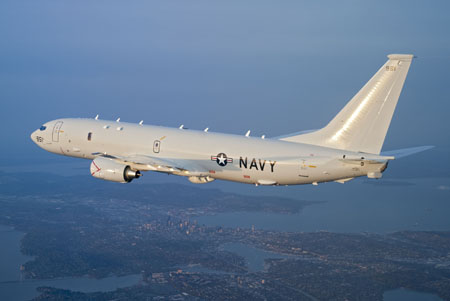
    Boeing Receives $1.6B Contract for P-8A Poseidon Low-Rate Initial Production


    SEATTLE, Jan. 25, 2011 — Boeing [NYSE: BA] on Jan. 21 received a $1.6 billion contract from the U.S. Navy for low-rate initial production (LRIP) of the P-8A Poseidon aircraft. The LRIP 1 contract is for six P-8A aircraft, spares, logistics and training devices.

    The Navy plans to purchase 117 of the Boeing 737-based P-8A anti-submarine warfare, anti-surface warfare, intelligence, surveillance and reconnaissance aircraft to replace its P-3 fleet. Initial operational capability is planned for 2013.

    “Providing these production aircraft to the Navy fleet on schedule is our No. 1 goal,” said Chuck Dabundo, Boeing vice president and P-8 program manager. “This is an exciting day for Boeing and the Navy and a testament to the P-8 team’s hard work and determination.”

    “This first production contract represents a significant commitment by the U.S. Navy to recapitalize its force of long-range maritime patrol and reconnaissance aircraft,” said Capt. Leon Bacon, P-8A deputy program manager for the Navy. “Ensuring that this capability arrives on schedule and within budget remains our primary objective.”

    Boeing will begin final assembly of the first LRIP aircraft at its Renton, Wash., facility this summer. The Poseidon team is using a first-in-industry in-line production process that draws on Boeing’s Next-Generation 737 production system. All P-8A-unique aircraft modifications will be made in sequence during fabrication and assembly.

    “The in-line approach we’ve incorporated on this military derivative aircraft is already paying the dividends we expected by helping us improve efficiency and reduce costs,” said John Pricco, Boeing Commercial Airplanes P-8 program manager.

    As part of the U.S. Navy System Development and Demonstration contract awarded to Boeing in 2004, the team is building and testing six flight-test and two ground-test aircraft. The first three flight-test planes, T1, T2 and T3, are completing testing at Naval Air Station Patuxent River, Md. The program’s static test plane, S1, recently completed its test program, which began in May 2009; S2, the fatigue test plane, will begin testing later this year.

    A derivative of the Next-Generation 737-800, the Poseidon is built by a Boeing-led industry team that includes CFM International, Northrop Grumman, Raytheon, Spirit AeroSystems, BAE Systems and GE Aviation.

    To include the featured image in your Twitter Card, please tap or click their icon a second time.
  • |

    UPS Expands Boeing Airplane Health Management to MD-11 Fleet

    SEATTLE, Feb. 15, 2011 /PRNewswire/ — Boeing (NYSE: BA) today announced that UPS will expand its Boeing’s Airplane Health Management (AHM) coverage to include its MD-11 Freighter fleet, in addition to the 747-400 Freighter fleet, which already utilizes AHM. AHM is an information-driven system that helps airlines better prepare and manage unscheduled maintenance events.

    The expanded agreement covers 38 MD-11 Freighters and 13 747-400 Freighter and Boeing Converted Freighter airplanes.

    “AHM allows aircraft maintenance personnel to be prepared to work unexpected aircraft exceptions when the aircraft arrives and will greatly streamline our operation,” said Warren Johnson, vice president, Maintenance and Engineering, UPS Airlines.
    “This will help increase the fleet’s on-time performance which is a great benefit to our customers,” said Mitch Nichols, UPS Airlines president.

    The large UPS freighters will feature the AHM Real Time Fault Management Module, which communicates in-flight information to ground stations for diagnosis and real-time operational decisions, using troubleshooting and historical fix success data. The airline uses this information to organize any needed maintenance operations and position the necessary people, parts and equipment.

    “Airlines need to have their aircraft generating revenue, so maintenance efficiency is an important initiative,” said Dennis Floyd, vice president of Fleet Services for Commercial Aviation Services, Boeing Commercial Airplanes. “AHM delivers relevant information whenever and wherever it is needed while the airplane is still en route.”
    Airplane Health Management works through the MyBoeingFleet.com portal. Alerts and notifications are delivered to airline personnel through the Internet, fax, personal digital assistants, e-mail and pager services.

    Airplane Health Management is a key component in Boeing’s larger vision of the e-enabled airline, where information technology, connectivity and strategic integration promise greater efficiency and improved airline operations.

    UPS is the world’s largest package delivery company and a global leader in supply chain and freight services. With more than a century of experience in transportation and logistics, UPS is a leading global trade expert equipped with a broad portfolio of solutions. The company is headquartered in Atlanta, Ga., and can be found on the Web at UPS.com.

    To include the featured image in your Twitter Card, please tap or click their icon a second time.
  • | | | | |

    Turkish Airlines Flight Returns to Istanbul due to Lightning Strike

    Turkish Airlines flight TK-1899 suffered a lightning strike near Sabiha Gokçen International Airport in Istanbul, Turkey, on December 6th.

    The incident happened shortly after the Boeing 737-800 plane departed for Vienna, Austria.

    The crew subsequently returned to Sabiha Gokçen Airport. Everyone aboard remained safe.

    To include the featured image in your Twitter Card, please tap or click their icon a second time.