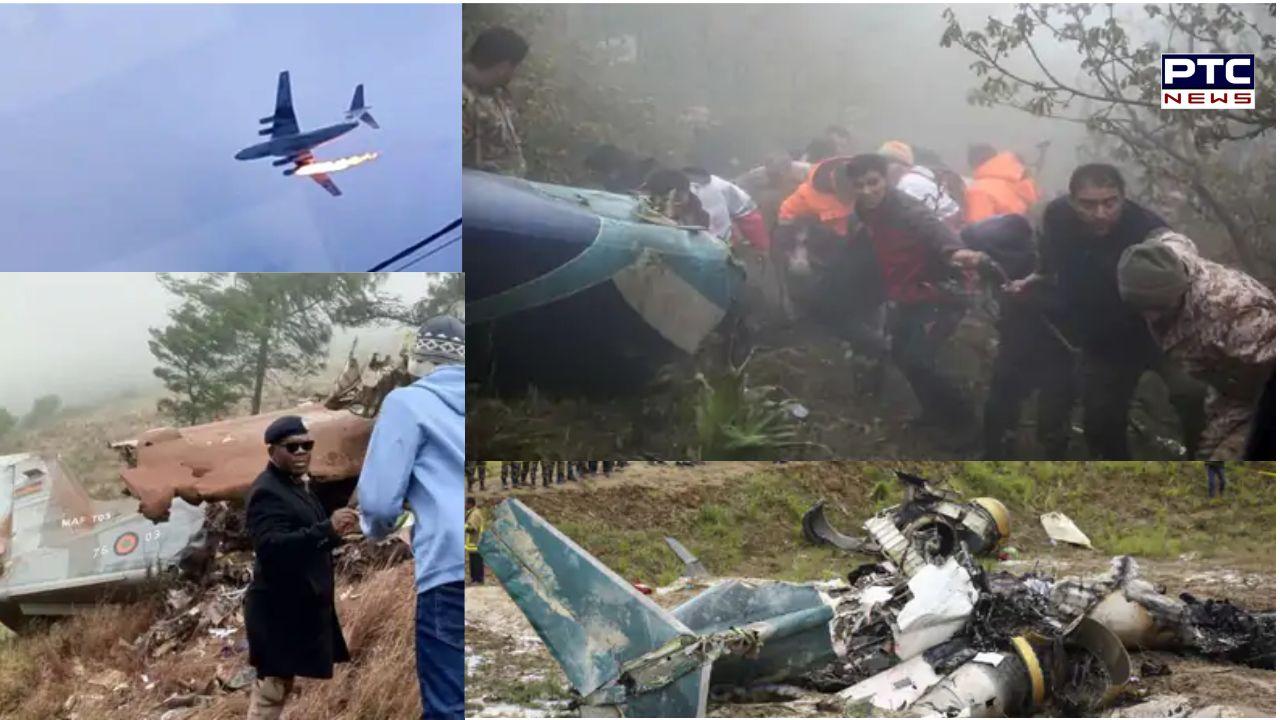
In 2024, eight major plane crashes have been reported | Most accidents were caused by bad weather or engine malfunctions

In 2024, eight major plane crashes have been reported | Most accidents were caused by bad weather or engine malfunctions
ven though France is putting $6.5 billion euros into banks with the sole intent of financing Airbus purchases, this plan is not being called a bailout.
Airbus is owned by the European aerospace group. In fact, the French state owns 15% of EADS. At the same time, EADS is cutting 10,000 jobs because of cost over-runs to the A380 super-jumbo project.
This is the first time that the French government has directed this much funding into the aviation/aeronautics industry, apparently a diversionary tactic to allay damage to their hard-hit automobile/tourism industry. This funding is in addition to a prior pledge of smaller scale assistance to aeronautical suppliers and researchers.
Expect protests from Boeing over the controversial nature of state aid.

WASHINGTON – The National Transportation Safety Board is launching a full Go-Team to investigate this morning’s crash of a United Parcel Service Airbus A300. The crash occurred while on approach to Runway 18 at Birmingham International Airport in Birmingham, Ala.
Senior Aviation Investigator Dan Bower will serve as investigator-in-charge. NTSB Board Member Robert Sumwalt is accompanying the team and will serve as the principal spokesman during the on-scene phase of the investigation.
Public Affairs Specialists Eric Weiss and Keith Holloway will also be in Alabama to coordinate media related activities. Eric can be reached by mobile phone at 202-557-1350.

Three people were taken to local hospitals after a small plane crashed near Baptist East in St. Matthews around 6 p.m. near Breckenridge Lane and Kresge Way.

DOT 199-09
Monday, December 21, 2009
Contact: Olivia Alair
Tel.: (202) 366-4570
New DOT Consumer Rule Limits Airline Tarmac Delays, Provides Other Passenger Protections
U.S. Transportation Secretary Ray LaHood today announced a new rule that significantly strengthens protections afforded to consumers by, among other things, establishing a hard time limit after which U.S. airlines must allow passengers to deplane from domestic flights.
“Airline passengers have rights, and these new rules will require airlines to live up to their obligation to treat their customers fairly,” Secretary LaHood said.
The new rule prohibits U.S. airlines operating domestic flights from permitting an aircraft to remain on the tarmac for more than three hours without deplaning passengers, with exceptions allowed only for safety or security or if air traffic control advises the pilot in command that returning to the terminal would disrupt airport operations. U.S. carriers operating international flights departing from or arriving in the United States must specify, in advance, their own time limits for deplaning passengers, with the same exceptions applicable.
Carriers are required to provide adequate food and potable drinking water for passengers within two hours of the aircraft being delayed on the tarmac and to maintain operable lavatories and, if necessary, provide medical attention.
This rule was adopted in response to a series of incidents in which passengers were stranded on the ground aboard aircraft for lengthy periods and also in response to the high incidence of flight delays and other consumer problems. In one of the most recent tarmac delay incidents, the Department fined Continental Airlines, ExpressJet Airlines and Mesaba Airlines a total of $175,000 for their roles in a nearly six-hour ground delay at Rochester, MN.
The rule also:
• Prohibits airlines from scheduling chronically delayed flights, subjecting those who do to DOT enforcement action for unfair and deceptive practices;
• Requires airlines to designate an airline employee to monitor the effects of flight delays and cancellations, respond in a timely and substantive fashion to consumer complaints and provide information to consumers on where to file complaints;
• Requires airlines to display on their website flight delay information for each domestic flight they operate;
• Requires airlines to adopt customer service plans and audit their own compliance with their plans; and
• Prohibits airlines from retroactively applying material changes to their contracts of carriage that could have a negative impact on consumers who already have purchased tickets.
Today’s final rule was adopted following a review of public comments on a proposal issued in November 2008. The Department also plans to begin another rulemaking designed to further strengthen protections for air travelers. Among the areas under consideration are: a requirement that airlines submit to the Department for review and approval their contingency plans for lengthy tarmac delays; reporting of additional tarmac delay data; disclosure of baggage fees; and strengthening requirements that airline ads disclose the full fare consumers must pay for tickets.
The rule goes into effect 120 days after date of publication in the Federal Register. The rule may be obtained on the Internet at www.regulations.gov, docket DOT-OST-2007-0022.

In addition, 69 Kazakh citizens, including local residents, medical specialists, firefighters, and other rescuers, had previously received gratitude and state a
A letter written by Jet Airway’s Society for Welfare of Indian Pilots complains that the new limits for pilots flight time are set at 10 hours (compared to US’s 8) and the Director of Operations can extend that time an hour and a half. The letter points out that the committee selectively adopted from various schemes/studies whatever limits that suited them, extending the time well beyond what would be considered safe.
In the US, the maximum time pilots can be scheduled to fly is limited to eight or nine hours. US Pilots must get a minimum of 10 hours to rest between duty periods, a two-hour increase over the old rules; and pilots who fly overnight are allocated fewer hours than day flying pilots. In the US, these rules are based on the science of human biology.
The changes in US fatigue rules are aimed at preventing airline pilots from flying while dangerously fatigued. Notably, by comparison, the maximum hours of work prescribed for Indian pilots is about 25% more. The Nasim Zaidi Committee rules either completely disregarded the science, and furthermore, incorrectly defineterms pertaining to night-time operations, further opening up the pilots to further exploitation.