|

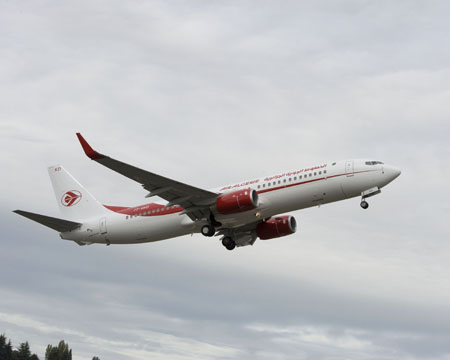
Southwest Airlines Flight Attendants’ Union Ratifies Boeing 737-800 Tentative Agreement

Similar Posts

  • |

    NTSB SAFETY RECOMMENDATION

    National Transportation Safety Board
    Washington, DC 20594
    July 30, 2010

    The National Transportation Safety Board makes the following recommendations to the Federal Aviation Administration:

    Conduct research into and document the effects of mountain wave and downslope conditions at airports, such as Denver International Airport, that are located downwind of
    mountainous terrain (including, for example, airports in or near Colorado Springs, Colorado; Anchorage, Alaska; Salt Lake City, Utah; and Reno, Nevada), identify potential
    mountain-wave-related hazards to ground operations at those airports, and disseminate the results to pilots and airport air traffic control personnel to allow for more informed
    runway selection decisions. (A-10-105)

    Archive all low-level windshear alert system (LLWAS) data obtained from Denver International Airport and other airports that experience similar wind conditions and make these data available for additional research and the potential future development of an improved LLWAS algorithm for crosswind and gusty wind alerts on air traffic control tower ribbon display terminals. (A-10-106)

    Modify Federal Aviation Administration Order 7110.65 to require air traffic controllers at airports with multiple sources of wind information to provide pilots with the maximum wind component, including gusts, that the flight could encounter. (A-10-107)

    Review the required documentation for all low-level windshear alert system (LLWAS)-equipped air traffic control towers to ensure that a letter to airmen has been published
    and is easily accessible describing the location and designation of the remote sensors, the capabilities and limitations of the system, and the availability of current LLWAS remote sensor wind information on the request of a pilot, in compliance with Federal Aviation Administration Order 7210.3. (A-10-108)

    Require air traffic control towers to locally develop and implement written runway selection programs that proactively consider current and developing wind conditions and include clearly defined crosswind components, including wind gusts, when considering operational advantage with respect to runway selection. (A-10-109)

    Gather data on surface winds at a sample of major U.S. airports (including Denver International Airport) when high wind conditions and significant gusts are present and use these data to develop realistic, gusty crosswind profiles for use in pilot simulator training programs. (A-10-110)

    Require 14 Code of Federal Regulations Part 121, 135, and 91K operators to incorporate the realistic, gusty crosswind profiles developed as a result of Safety Recommendation A- 10-110 into their pilot simulator training programs. (A-10-111)

    Once realistic, gusty crosswind profiles as asked for in Safety Recommendation A-10-110 are developed, develop a standard methodology, including pilot-in-the-loop testing, for transport-category airplane manufacturers to establish empirically based, type-specific maximum-gusting-crosswind limitations for transport-category airplanes that account for wind gusts. (A-10-112)

    Once a methodology as asked for in Safety Recommendation A- 10-112 has been developed, require manufacturers of transport-category airplanes to develop type-specific, maximum-crosswind takeoff limitations that account for wind gusts. (A-10-113)

    Until the actions described in Safety Recommendation A-10-113 are accomplished, require manufacturers of transport- category airplanes to provide operators with interim crosswind takeoff guidelines that account for wind gusts. (A-10-114)

    Work with U.S. airline operators to review and analyze operational flight data to identify factors that contribute to encounters with excessive winds and use this information to develop and implement additional strategies for reducing the likelihood of wind-related runway excursions. (A-10-115)

    Require cockpit crew seats installed in newly manufactured airplanes that were type certificated before 1988 to meet the crashworthiness standards contained in 14 Code of Federal Regulations 25.562. (A-10-116)

    Require operators to perform periodic inspections on the Burns Aerospace model 2501-5 jumpseats for fatigue cracks within the jumpseat structure and replace the jumpseat if fatigue cracks are found. (A-10-117)

    Require that operators of transport-category airplanes that use galley latches or latch plates secured solely by adhesives that may degrade over time modify the latches to include mechanical fasteners. (A-10-118)

    To include the featured image in your Twitter Card, please tap or click their icon a second time.
  • |

    Southwest Airlines and Its Stock Clerks Announce New Tentative Agreement

    Southwest Airlines (NYSE: LUV) and the International Brotherhood of Teamsters (IBT) Airlines Division, representing the carrier’s Stock Clerks, announced today that the two parties have reached a tentative agreement. The tentative agreement is for a new, five-year contract through August 16, 2013. The current contract became amendable on August 16, 2008. One year ago, Southwest and the Teamsters agreed to seek assistance from the National Mediation Board through the mediation process as defined by the Railway Labor Act.

    “Hard work and persistence have definitely paid off during this mediation process,” said Mike Van de Ven, Southwest Airlines Executive Vice President and Chief Operating Officer. “The negotiation teams worked together to address several work rule changes in reaching this mutually beneficial, forward thinking tentative agreement, which delivers wage and benefit enhancements in exchange for work rule improvements and contract flexibility.”
    In the upcoming weeks, the IBT membership will be given the full details of the agreement and have the opportunity to vote on ratification. IBT represents more than 170 Southwest Airlines Employees.

    In its 40th year of service, Southwest Airlines continues to differentiate itself from other low-fare carriers–offering a reliable product with exemplary Customer Service. Southwest Airlines serves Milwaukee with 12 daily departures and is the nation’s largest carrier in terms of originating domestic passengers boarded, now serving 69 cities in 35 states. Beginning March 13, 2011, Southwest will initiate service to Charleston and Greenville/Spartanburg, South Carolina, and on March 27, 2011, service will begin to Newark Liberty International Airport. Southwest also is one of the most honored airlines in the world known for its commitment to the triple bottom line of Performance, People, and Planet. To read more about how Southwest is doing its part to be a good citizen, visit southwest.com/cares to read the Southwest Airlines One Report(TM). Based in Dallas, Southwest currently operates more than 3,200 flights a day and has nearly 35,000 Employees systemwide.

    To include the featured image in your Twitter Card, please tap or click their icon a second time.
  • | | | |

    Southwest Airlines Emergency Landing

    December 25, 2012, a Southwest Airlines Boeing 737 en route from Denver to Kansas City International diverted to Omaha and made a safe landing at Omaha’s Eppley Airfield. None of the 109 passengers and five crew members were injured.

    The plane developed a fuel valve problem while en route.

    Passengers were provided an alternative vehicle.

    To include the featured image in your Twitter Card, please tap or click their icon a second time.
  • |

    Jean-Paul Ebanga Named New CFM President

    -West Chester, Ohio– Jean-Paul Ebanga has assumed the role of president and chief executive officer of CFM International.

    CFM International (CFM), the 50/50 joint company between Snecma (Safran group) and General Electric Company, is headquartered in West Chester, Ohio, near Cincinnati. The two parent companies have extended the 36-year-old partnership agreement to the year 2040.

    Mr. Ebanga is replacing Eric Bachelet, who had served as CFM president and CEO since September 2005. Mr. Bachelet has accepted the position of Safran executive vice president of Research and Technology.

    Mr. Ebanga joined Snecma in 1988 after leaving Royal Philips. His assignments at Snecma have included leadership positions in electronics, systems and aircraft engines.

    In 2001, Mr. Ebanga was named vice president and general manager of Snecma Control Systems. He was subsequently appointed vice president of Snecma’s Commercial Engine Division.

    Most recently, Mr. Ebanga served as chairman and CEO of PowerJet, a joint company between Snecma and Saturn (Russia). He had held that position since 2007.

    Mr. Ebanga is a graduate of the ENSEM Graduate School of Engineering in France

    CFM has delivered a total of more than 21,600 CFM56 engines to date, making it one of the most successful aircraft engine suppliers in history. Through December 2010, the company had received firm orders for a total of 27,500 engines.

    To include the featured image in your Twitter Card, please tap or click their icon a second time.
  • | |

    Boeing, American Airlines Complete Order for 35 Next-Generation 737s

    SEATTLE, July 21 — Boeing and American Airlines, Inc., a wholly-owned subsidiary of AMR Corp., today announced the airline has exercised options for an additional 35 Next-Generation 737-800s.

    The order is part of American Airlines’ ongoing fleet renewal plan, replacing MD-80s with fuel-efficient Next-Generation 737s. The 737-800 is 35 percent more fuel efficient on a seat-mile basis than the MD-80s it will replace.

    “American Airlines is leveraging all the performance benefits of the Next-Generation 737 to enhance the airline’s competitive position, while providing an enhanced passenger travel experience,” said Marlin Dailey, vice president of Sales for Boeing Commercial Airplanes. “American’s investment in additional 737s demonstrates real confidence in the 737’s technology and economics. In addition, the new interiors on its existing 737 fleet and the new 737 Boeing Sky Interior on deliveries starting in 2011 will ensure American’s customers continue to enjoy an exceptional flying experience.”

    “The 737-800 provides additional amenities for our customers while helping to reduce our operating and fuel costs and lessen our impact on the environment,” said Virasb Vahidi, chief commercial officer for American Airlines. “The 737 is a product that benefits all of American’s stakeholders and is a good fit for our current fleet renewal plans.”

    Famous for its extremely efficient operation, high dispatch reliability and leading performance on coast-to-coast flights, the 737-800 remains the airplane of choice for airlines wanting to take advantage of new opportunities in the market.

    Today’s 35 new orders build on an order for 84 737s that began arriving in 2009. American currently expects to have a total of 195 737-800s in its single-aisle fleet by the end of 2012.

    To include the featured image in your Twitter Card, please tap or click their icon a second time.
  • | | |

    Southwest Airlines Flight Makes Emergency Landing due to Mechanical Issue

    Southwest Airlines flight 2095 made an emergency landing in Milwaukee, Wisconsin, on June 29th.

    The plane heading from Chicago, Illinois, to Dallas, Texas, was diverted due to a mechanical issue.

    The plane landed safely. All passengers and crew members remained unharmed.

    To include the featured image in your Twitter Card, please tap or click their icon a second time.