NASA and Industry Join Forces for Virginia Aerospace Day

Similar Posts

  • |

    Boeing NewGen Tanker Win Would Bring 800 Jobs, $400 Million to Iowa

    DAVENPORT, Iowa, May 12, 2010 — The Boeing Company [NYSE: BA] today announced that Iowa will benefit from approximately 800 jobs and an estimated $40 million in annual economic impact if the Boeing NewGen Tanker is selected as the U.S. Air Force’s next aerial refueling aircraft.

    Rockwell Collins, based in Cedar Rapids and a Boeing first-tier supplier in Iowa, will provide the same advanced-flight-deck technology that is being supplied to the most advanced commercial airliner in existence — the Boeing 787 Dreamliner. In addition to the flight deck, Rockwell Collins also will provide Communication, Navigation, Surveillance/Air Traffic Management (CNS/ATM) software, aircraft networks and situational-awareness capability to support the tanker’s mission.

    “In keeping with my jobs strategy of attracting high-paying jobs with benefits to Iowa, I am very encouraged with Boeing’s plan and will remain engaged in this process as we move closer to a better future for every hardworking Iowa family,” said Gov. Chet Culver.

    “This project could have enormous impact on job creation in Iowa,” said U.S. Congressman David Loebsack. “The aerial refueling fleet is the foundation of every mission undertaken by our men and women in uniform and is a critical component of our national security. Iowa workers are among the best in the country, and I am proud of the role that they play in providing our brave troops with the equipment and resources they need to complete their missions safely. I would be proud for the next-generation tankers to be built by highly skilled Iowan innovators.”

    Boeing currently works with 57 suppliers/vendors across Iowa, resulting in an estimated $459 million in annual economic impact.

    The NewGen Tanker is a widebody, multi-mission aircraft based on the proven Boeing 767 commercial airplane and updated with the latest and most advanced technology. Capable of fulfilling the Air Force’s needs for transport of fuel, cargo, passengers and patients, the combat-ready NewGen Tanker is being offered as a replacement for 179 KC-135 aircraft. Boeing is writing a proposal to meet or exceed the 372 mandatory requirements described in the service’s final KC-X Request for Proposal released on Feb. 24. The Air Force is expected to award a contract later this year.

    The NewGen Tanker will be made with a low-risk approach to manufacturing that relies on existing Boeing facilities in Washington state and Kansas as well as U.S. suppliers throughout the nation, with decades of experience delivering dependable military tanker and derivative aircraft. Nationwide, the NewGen Tanker program will support approximately 50,000 total U.S. jobs with Boeing and more than 800 suppliers in more than 40 states.

    The Boeing NewGen Tanker also will be more cost-effective to own and operate than a larger, heavier tanker. It will save American taxpayers more than $10 billion in fuel costs over its 40-year service life because it burns 24 percent less fuel than the competitor’s airplane.

    Boeing has been designing, building, modifying and supporting tankers for decades. These include the KC-135 that will be replaced in the KC-X competition, and the KC-10 fleet. The company also has delivered four KC-767Js to the Japan Air Self-Defense Force and is on contract to deliver four KC-767s to the Italian Air Force. Three of the four Italian tankers are in flight test, with the fourth airplane in production.

    More information on Boeing’s NewGen Tanker, including video clips and an interactive tour of the aircraft, is available at www.UnitedStatesTanker.com. For more information on joining the company’s efforts, visit www.RealAmericanTankers.com.

    To include the featured image in your Twitter Card, please tap or click their icon a second time.
  • |

    FAA Proposes $170,000 Civil Penalty For Pemco World Air Services

    For Immediate Release
    January 21, 2011

    WASHINGTON – The Federal Aviation Administration (FAA) is proposing a $170,000 civil penalty against Pemco World Air Services of Dothan, Ala., for allegedly failing to administer pre-employment drug tests to two individuals the company hired for safety-sensitive positions.

    The FAA also cited Pemco for failing to carry out required follow-up drug or alcohol testing on eight individuals reinstated after completing return-to-duty training during 2008. In all, the company failed to carry out 24 required follow-up tests. Failing to administer the pre-employment and reinstatement tests are violations of Federal Aviation Regulations.

    The FAA inspected Pemco’s pre-employment test program three times, and each time the FAA determined it had not complied with the requirements. These findings resulted in proposed civil penalties.

    Pemco has 30 days from receipt of the FAA’s enforcement letter to respond to the agency.

    To include the featured image in your Twitter Card, please tap or click their icon a second time.
  • | | | | | |

    David Disiere Southlake Aviation Awarded $32-Million Damages in Congo Gold Smuggling Case

    In a civil trial that sounded like a real life James Bond spy novel, a Dallas County Jury awarded Southlake Aviation, owned by Dallas business executive David Disiere, $32.4 million in damages against Houston based oil company, CAMAC International, its subsidiary CAMAC Aviation, and Mickey Lawal CAMAC’s Vice President of African Operations.
    The case stemmed from a scheme in which CAMAC International and its officers used a Gulfstream V jet leased from David Disiere’s Southlake Aviation to try to spirit more than ten thousands pounds of gold bullion out of the Democratic Republic of the Congo with help from General Bosco Ntaganda, a notorious Congolese warlord.

    Following the verdict, Southlake Aviation’s President, David Disiere praised the jury’s decision, “twelve citizens saw through a smoke-and- mirrors defense put on by the CAMAC’s attorneys and clearly found that CAMAC caused my company to loose a $43 million dollar aircraft in a greedy scheme that violated the U.S. Trading With The Enemy Act.”
    The jury heard riveting testimony from a diamond trader involved in the scheme describing how CAMAC executives Kase Lawal, Mickey Lawal, and Kamoru Lawal arranged to exchange two-oversized suitcases stuffed with six-and-half million dollars in cash for ten boxes of gold delivered by General Bosco Ntaganda’s armed forces.

    An investigation of the smuggling incident by the United Nations Security Council found that CAMAC and its three top executives, Kase Lawal, Mickey Lawal, and Kamoru Lawal were dealing with “individuals operating in the Democratic Republic of the Congo and committing serious violations of international law involving the targeting of children or women in situations of armed conflict.”

    Kase Lawal, Mickey Lawal, and Kamoru Lawal who are Nigerian American brothers invoked their Fifth Amendment right against self-incrimination hundreds of times during their testimony in the case.

    Houston energy executive, Kase Lawal the former CEO of CAMAC International and the current CEO of the publically traded CAMAC Energy Inc. was appointed to a White House Trade Advisory position by President Obama and serves on the boards of the Houston Port and Airport Authorities.

    David Disiere, the Dallas business executive and owner of Southlake Aviation, told the jury how he was shocked to get a call in the dead of night informing him that his company’s 43-million dollar Gulfstream V jet aircraft loaded with ten boxes of gold had been confiscated in Goma by authorities in the Democratic Republic of the Congo on February 5, 2011. The jury’s verdict also included compensation of more than 535-thousand dollars for repairing damage done the to the aircraft’s interior passenger compartment during the loading of the gold.

    Because Southlake Aviation’s aircraft was confiscated in the Congo, VFS Financing a subsidiary of General Electric, automatically placed Southlake Aviation’s loan to purchase the Gulfstream V in default, accelerated the entire balance, and repossessed the aircraft.

    Testimony in the case and the investigation by the United Nations also indicated that former Houston Rocket’s basketball star Dikembe Mutombo acted as an intermediary in the gold smuggling scheme.

    Testimony in the case showed that David Disiere had never met the Lawal brothers. Disiere testified that CAMAC had signed a three-year lease for Southlake’s Gulfstream V jet and claiming it would use the jet was to travel between its Houston headquarters and oil operations in Nigeria.

    The jury agreed with David Disiere’s testimony that CAMAC and its officers violated the terms of the aircraft’s lease by using it in an outlaw region of Africa.

    To include the featured image in your Twitter Card, please tap or click their icon a second time.
  • |

    Boeing Celebrates Premiere of New 747-8 Intercontinental

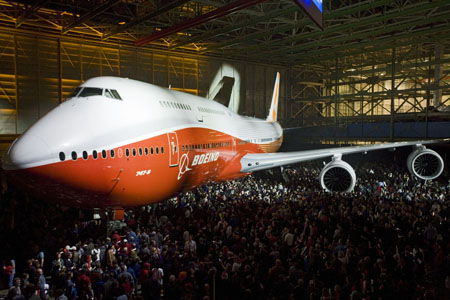
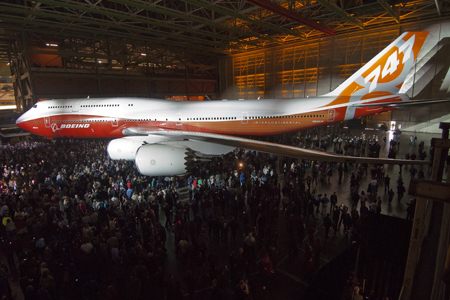
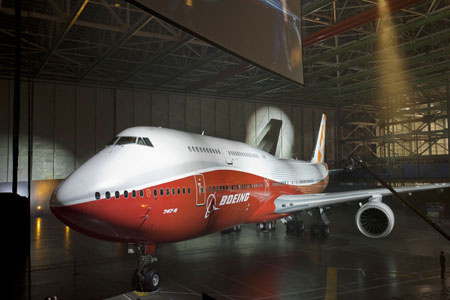
    EVERETT, Wash., Feb. 13, 2011 /PRNewswire/ — Boeing (NYSE: BA) today unveiled its new 747-8 Intercontinental, the new high-capacity passenger airplane that offers airlines the lowest operating costs and best economics of any large passenger airplane while providing enhanced environmental performance.
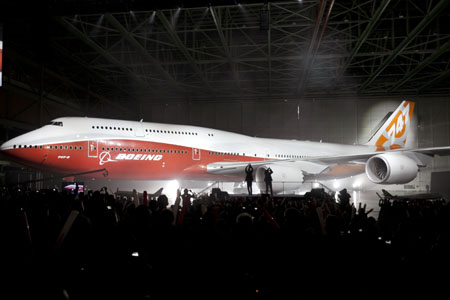
    Approximately 10,000 guests, including customers, Boeing employees, government officials, partners and suppliers, gathered in the factory in Everett, Wash., to witness the premiere of the Intercontinental at an event themed “Incredible, Again.” Boeing Commercial Airplanes President and Chief Executive Officer Jim Albaugh said the newest 747 incorporates technological advancements that make it an extremely productive airplane for customers.
    “The new 747-8 Intercontinental features the latest in innovative technologies — applying many of the breakthroughs also found on the 787 Dreamliner,” said Albaugh. “We think our customers will value the low operating costs and passengers will enjoy the comfort of the striking new interior.”

    “The 747-8 Intercontinental will be a great complement to our fleet, fitting nicely into the 400-seat category, improving our fleet’s eco-efficiency even further,” said Nico Buchholz, executive vice president, Lufthansa Group Fleet Management. “As launch customer, we are looking forward to welcoming this new aircraft to our fleet next year as it adds to our ongoing fleet modernization and environmental efforts.”

    Korean Air and VIP customers have joined launch customer Lufthansa in ordering a total of 33 747-8 Intercontinentals. First delivery of the 747-8 Intercontinental is scheduled for the fourth quarter.

    “As the only airplane in the 400 to 500-seat market, the 747-8 Intercontinental will give operators an airplane perfectly suited for long, heavily traveled routes around the world,” said Pat Shanahan, vice president and general manager, Airplane Programs, Boeing Commercial Airplanes. “The new 747-8 Intercontinental will set a new standard in economic and environmental performance, while providing a world-class passenger experience.”

    The 747-8 Intercontinental will have the lowest seat-mile cost of any large commercial jetliner, with 12 percent lower costs than its predecessor, the 747-400. The airplane provides 16 percent better fuel economy, 16 percent less carbon emissions per passenger and generates a 30 percent smaller noise footprint than the 747-400. The 747-8 Intercontinental applies interior features from the 787 Dreamliner that includes a new curved, upswept architecture giving passengers a greater feeling of space and comfort, while adding more room for personal belongings.
    The airplane unveiled today is painted in a new Sunrise livery of red-orange that only will appear on the first 747-8 Intercontinental and is a significant departure from Boeing’s standard blue. The new color palette honors many key Boeing customers whose cultures recognize these colors as symbols of prosperity and good luck.

    To include the featured image in your Twitter Card, please tap or click their icon a second time.
  • |

    Delta Adding New ‘Economy Comfort’ Section on Long-Haul International Flights

    Investment builds on plans to install full flat-bed seats in BusinessElite, enhanced in-flight entertainment on all international widebody aircraft

    ATLANTA, Feb. 7, 2011 / — Delta Air Lines today announced a major investment in its international fleet with plans to introduce a premium economy section – “Economy Comfort” – on all long-haul international flights in summer 2011. The new seats will feature up to four additional inches of legroom and 50 percent more recline than Delta’s standard international Economy class seats.

    The product, which is similar to upgraded Economy services currently available on flights operated by Delta’s joint venture partner Air France-KLM, will be installed in the first few rows of the Economy cabin on more than 160 Boeing 747, 757, 767, 777 and Airbus A330 aircraft by this summer.

    Customers who have purchased an international Economy ticket on Delta will be able to choose Economy Comfort seats for an additional fee of $80-$160 one-way through delta.com, kiosks and Delta reservations beginning in May for travel this summer. Complimentary access to Economy Comfort seats will be available to all SkyMiles Diamond and Platinum Medallions; up to eight companions traveling in the same reservation with Diamond and Platinum Medallions; and customers purchasing full-fare Economy class tickets. Gold and Silver Medallions will enjoy 50 and 25 percent discounts on the Economy Comfort seat fees, respectively.

    “Just as Delta is investing in BusinessElite, which is among the industry’s most competitive premium products, it makes sense to offer enhancements to our Economy Class service that provide additional comfort,” said Glen Hauenstein, Delta’s executive vice president – Network Planning, Revenue Management and Marketing. “Economy Comfort is one of many elements Delta is committed to delivering to our customers as part of a more than $2 billion investment we are making in the air and on the ground to improve the customer experience and position Delta as a leader in customer service.”

    In addition to more leg room and recline, customers seated in Economy Comfort will board early and enjoy complimentary spirits throughout the flight. These benefits are in addition to Delta’s standard international Economy class amenities, including complimentary meals, beer, wine, entertainment, blankets and pillows. In-seat power will also be available on aircraft equipped with personal entertainment systems which come with free HBO programming and other for-fee content(1). The seats will be designated with a specially designed seat cover.

    Full flat-bed seats on all international widebodies by 2013

    In addition to investing in the international Economy cabin, Delta today announced it now plans to install 34 horizontal flat-bed BusinessElite seats with direct aisle access in each of its 32 Airbus A330 aircraft by 2013. With this announcement, Delta now plans to offer full flat-bed seating in BusinessElite on all international widebody flights, or more than 150 aircraft, by 2013.

    Business Elite
    The new A330 seat, manufactured by Weber Aircraft LLC, will be 81.7 inches in length and 20.5 inches wide, similar to the flat-bed product currently offered on Delta’s 777 fleet. It also will feature a 120-volt universal power outlet, USB port, personal LED reading lamp and a 15.4 inch personal video monitor with instant access to 250 new and classic movies, premium programming from HBO and Showtime, other television programming, video games and more than 4,000 digital music tracks.

    Today’s announcements are the latest in Delta’s previously announced plan to invest more than $2 billion in enhanced global products, services and airport facilities through 2013. In addition to adding the Economy Comfort product and offering full-flat bed seats on its entire international widebody fleet, Delta is upgrading its domestic fleet with more First Class seats and in-seat entertainment; adding personal, in-seat entertainment for both BusinessElite and Economy class customers on all long-haul international flights; adding in-flight Wi-Fi service to all domestic aircraft with a First and Economy class cabin; and building new terminal facilities for international customers at its two largest global gateways – Atlanta and New York-JFK.

    Delta Air Lines serves more than 160 million customers each year. With an industry-leading global network, Delta and the Delta Connection carriers offer service to 357 destinations in 66 countries on six continents. Headquartered in Atlanta, Delta employs more than 75,000 employees worldwide and operates a mainline fleet of more than 700 aircraft. A founding member of the SkyTeam global alliance, Delta participates in the industry’s leading trans-Atlantic joint venture with Air France-KLM and Alitalia. Including its worldwide alliance partners, Delta offers customers more than 13,000 daily flights, with hubs in Amsterdam, Atlanta, Cincinnati, Detroit, Memphis, Minneapolis-St. Paul, New York-JFK, Paris-Charles de Gaulle, Salt Lake City and Tokyo-Narita. The airline’s service includes the SkyMiles frequent flier program, the world’s largest airline loyalty program; the award-winning BusinessElite service; and more than 50 Delta Sky Clubs in airports worldwide. Delta is investing more than $2 billion through 2013 in airport facilities and global products, services and technology to enhance the customer experience in the air and on the ground. Customers can check in for flights, print boarding passes, check bags and review flight status at delta.com.

    (1) HBO programming to begin in July 2011 on select aircraft with personal video-screens; In-seat power and personal entertainment being installed through 2013

    Economy Comfort seating will be offered on Delta’s Boeing 747, 757, 767 777 and Airbus A330 aircraft flying long-haul intercontinental routes between the U.S. and Europe, Asia, Africa, Australia, the Middle East and South America (Lima, Brasilia, Rio de Janeiro, São Paulo, Buenos Aires and Santiago only). Economy Comfort seating is limited and may not be available on all flights. The Economy Comfort Medallion travel companion benefit is applicable for up to eight companions traveling on the same reservation as the Medallion member. Group reservations are not applicable. For companions of Gold Medallion members, fees apply per seat. All SkyMiles program rules apply to SkyMiles program membership, miles, offers, mile accrual, mile redemption and travel benefits, respectively. To review the rules, please visit Membership Guide & Program Rules.

    To include the featured image in your Twitter Card, please tap or click their icon a second time.
  • |

    Tarmac Delays in August Show Steep Drop

    Tuesday, October 12, 2010 – The nation’s largest airlines reported only one flight in August with a tarmac
    delay of more than three hours, compared to 66 flights in August 2009, with no
    change in the rate of canceled flights, according to the Air Travel Consumer
    Report released today by the U.S. Department of Transportation (DOT).

    Data filed with
    the Bureau of Transportation Statistics (BTS) showed the only tarmac delay
    longer than three hours reported in August by the 18 airlines that file on-time
    performance with DOT involved a United Airlines flight departing the San Juan
    airport on Aug. 5 that was diverted.  August was the fourth full month of
    data since the new aviation consumer rule went into effect on April 29. 
    There were only eight total tarmac delays of more than three hours from May
    through August this year, compared to 529 during the same four-month period of
    2009.  BTS is a part of DOT’s Research and Innovative Technology
    Administration (RITA).

    The largest
    carriers canceled 1.0 percent of their scheduled domestic flights in August,
    matching the 1.0 percent cancellation rate of August 2009.  They posted a
    1.4 percent cancellation rate in July 2010.

    See the DOT press release press release
    for Secretary Ray LaHood’s statement.

    The new tarmac
    delay rule prohibits U.S. airlines operating domestic flights from permitting
    an aircraft to remain on the tarmac for more than three hours without deplaning
    passengers, with exceptions allowed only for safety or security or if air traffic
    control advises the pilot in command that returning to the terminal would
    disrupt airport operations.  The Department will investigate tarmac delays
    that exceed this limit.

    The monthly
    report also includes data on on-time performance, chronically delayed flights,
    flight cancellations and the causes of flight delays filed with the Department by
    the reporting carriers.  In addition, it has information on airline
    bumping, reports of mishandled baggage filed by consumers with the carriers,
    and consumer service, disability and discrimination complaints received by
    DOT’s Aviation Consumer Protection Division.  This report also includes
    reports of incidents involving pets traveling by air, as required to be filed
    by U.S. carriers.

    On-time
    Performance

    The reporting carriers recorded an overall on-time arrival
    rate of 81.7 percent in August, up from both the 79.7 percent on-time rate of August
    2009 and July 2010’s 76.7 percent. 

    Tarmac Delays

    In August, the carriers filing
    on-time performance data reported that .0400 percent of their scheduled flights
    had tarmac delays of two hours or more, down from .1030 percent in July. 
    There was one flight with a tarmac delay of more than three hours in August. 

    Chronically Delayed Flights

    At the end of August, there were four flights that were
    chronically delayed – more than 30 minutes late more than 50 percent of the
    time – for three consecutive months.  There were an additional 41 flights
    that were chronically delayed for two consecutive months.  There were no
    chronically delayed flights for four consecutive months or more.  A list
    of flights that were chronically delayed for a single month is available from BTS (www.bts.gov).

    Causes of Flight Delays

    In August, the carriers filing
    on-time performance data reported that 5.07 percent of their flights were
    delayed by aviation system delays, compared to 6.21 percent in July; 6.42
    percent by late-arriving aircraft, compared to 8.13 percent in July; 5.16 percent
    by factors within the airline’s control, such as maintenance or crew problems, compared
    to 6.37 percent in July; 0.46 percent by extreme weather, compared to 0.79
    percent in July; and 0.04 percent for security reasons, compared to 0.05
    percent in July. Weather is a factor in
    both the extreme-weather category and the aviation-system category. This
    includes delays due to the re-routing of flights by DOT’s Federal Aviation
    Administration in consultation with the carriers involved. Weather is also a factor in delays attributed
    to late-arriving aircraft, although airlines do not report specific causes in
    that category.

    Data
    collected by BTS also shows the percentage of late flights delayed by weather,
    including those reported in either the category of extreme weather or included
    in National Aviation System delays. In August, 35.07 percent of late flights
    were delayed by weather, down 10.70 percent from August 2009, when 39.27
    percent of late flights were delayed by weather, and down 6.75 percent from
    July when 37.61 percent of late flights were delayed by weather.

    Detailed information on flight
    delays and their causes is available on the BTS site on the World Wide Web at http://www.bts.gov.

    Mishandled Baggage

    The U.S.
    carriers reporting flight delays and mishandled baggage data posted a
    mishandled baggage rate of 3.50 reports per 1,000 passengers in August, an
    improvement over both August 2009’s rate of 4.11 and July 2010’s 3.79 rate.

    Incidents Involving
    Pets

    In August, carriers reported one incident
    involving the loss, death or injury of pets while traveling by air, down from
    both the three reports filed in August 2009 and eight in July 2010. August’s incident involved the injury of a
    pet.

    Complaints
    About Airline Service

    In August, the Department received 1,200
    complaints about airline service from consumers, up 34.7 percent from the 891
    complaints filed in August 2009 and up 9.7 percent from the 1,094 received in July
    2010.

    Complaints About Treatment of Disabled
    Passengers

    The report also
    contains a tabulation of complaints filed with DOT in August against airlines
    regarding the treatment of passengers with disabilities. The Department received a total of 71
    disability-related complaints in August, up from the total of 50 filed in
    August 2009 and the 56 complaints received in July 2010.

    Complaints
    About Discrimination

    In
    August, the Department received 17 complaints alleging discrimination by
    airlines due to factors other than disability – such as race, religion,
    national origin or sex – up from the total of 16 recorded in August 2009 and 12
    recorded in July 2010.

    Consumers may
    file their complaints in writing with the Aviation Consumer Protection
    Division, U.S. Department of Transportation, C-75, W96-432,


    1200 New Jersey Ave. SE,

    Washington,

    DC

    20590;
    by voice mail at (202) 366-2220 or by TTY at (202) 366-0511; or on the web at http://airconsumer.dot.gov.

    Consumers who
    want on-time performance data for specific flights should call their airline’s reservation
    number or their travel agent. This
    information is available on the computerized reservation systems used by these
    agents.

    The Air Travel
    Consumer Report can be found on DOT’s World Wide Web site at http://airconsumer.dot.gov. It is available in "pdf" and Microsoft Word
    format.

    Air Travel Consumer Report August 2010
    Key On-Time Performance and Flight Cancellation Statistics

    Based on Data Filed with the Bureau of Transportation Statistics by the 18 Reporting Carriers

    81.7 percent on-time arrivals

    Highest On-Time
    Arrival Rates

    1. Hawaiian
    Airlines – 95.6 percent

    2. Alaska
    Airlines – 88.7 percent

    3. Continental
    Airlines – 87.1 percent

    Lowest On-Time
    Arrival Rates

    1. Comair
    – 76.4 percent

    2. JetBlue
    Airways – 77.1 percent

    3. Delta
    Air Lines – 77.4 percent

    Flights with Longest Tarmac
    Delays

    1. United
    Airlines flight 700 from San Juan to Washington Dulles, 8/5/10 – delayed
    on tarmac 200 minutes

    (There was only one flight with a tarmac delay of more than
    three hours in August)

    Highest Rates of
    Canceled Flights

    1. Pinnacle
    Airlines – 2.5 percent

    2. Comair
    – 2.1 percent

    3. Delta
    Air Lines – 1.6 percent

    Lowest Rates of Canceled Flights

    1. Hawaiian
    Airlines – 0.1 percent

    2. Frontier
    Airlines – 0.1 percent

    3. Continental
    Airlines – 0.1 percent

    SRC: http://www.bts.gov/press_releases/2010/dot186_10/html/dot186_10.html

    To include the featured image in your Twitter Card, please tap or click their icon a second time.