Hughes and Tachyon Join Forces to Develop Advanced Airborne Networking Solutions for Military & Government

Similar Posts

  • ICAO Press Release: PASSENGER TRAFFIC TO REBOUND IN 2010 AFTER DISASTROUS 2009

    July 14, 2010 —

    MONTREAL, 13 July 2010 – Scheduled traffic of airlines of ICAO Member States should grow by 6.4% this year in terms of passenger-kilometers performed (PKPs) compared to a decline of 2% in 2009, according to consolidated figures collected by the Organization.

    The substantial projected increase reflects positive economic prospects worldwide, based on a 4.5% growth in the world Gross Domestic Product (GDP) as forecast by Global Insight, a major economic forecasting organization.

    Traffic for Asia/Pacific airlines should grow considerably faster than the global average, due to better economic prospects in States such as China and India, where aviation activity is expected to expand more rapidly.

    Middle East, Africa and Latin America regions will also enjoy higher traffic growth as economic conditions improve. North American airlines will grow slower than the world average because of lingering economic weaknesses.

    With expectations of more than 4% annual growth of the world economy for the next three years, world traffic should grow at 4.7% and 4.9% for 2011 and 2012, respectively.

    2009 Revisited

    In 2009, PKPs of the world airlines fell by 2% from the already depressed levels of 2008, the steepest drop in air traffic since 2002. Similarly, on the cargo side, freight?tonne kilometres (FTKs) performed fell by 10.6 % from 2008, representing also the largest decline since 2002.

    Total world international passenger traffic fell by 3.4%. With a decline of 6.5%, the Asia/Pacific region registered the largest drop, followed by North America with a 5% drop, while traffic for Europe, Africa and the Latin America fell by 3.4%, 3.0% and 2.5%, respectively. Only the Middle Eastern airlines posted an increase in international traffic, with a gain of 9.1%, allowing them to raise their share of total international PKPs from 8.2% in 2008 to 9.3% in 2009.

    The world’s domestic markets grew by a modest 0.4% over 2008. The large decreases of 5.4%, 7.4% and 3.4% registered in Africa, Europe and North America respectively, were offset by a robust 8.7% expansion in the Middle East, a continued 5.2% expansion in Latin America and a strong 9.6% growth in Asia/Pacific. Asia/Pacific domestic volumes benefitted from an impressive increase of more than 20% in the domestic Chinese market.

    A common pattern throughout the world was the growth of low cost carriers (LCCs) at the expense of legacy airlines.

    Airline Finances

    Despite the 2009 economic depression, air carriers were able to narrow their losses last year thanks to drastic capacity reductions which helped cut costs and halt yield dilution.

    In 2009, world airlines generated an estimated operating loss of US$ 4.1 billion. This performance marked a partial recovery from 2008 operating losses of US$ 8.9 billion, but still far from the record US$ 19.9 billion operating profit generated by the airline industry in 2007.

    The 2008 and 2009 losses resulted from a weak global economic environment that has led to high unemployment and a severe decline in household wealth. Air travel demand continued to be very weak in 2009, with most airlines of the world experiencing reduced traffic and poor yields.

    The 2008 and 2009 traffic decline prompted the industry to bring capacity more in line with demand, which reduced losses, despite an increase in oil prices ranging from US$ 35/barrel to more than US$ 80/barrel, without showing the extreme volatility of 2008. World airlines emerged from a difficult 2009 well positioned to benefit from a recovery.

    The financial performance of the world’s airlines is expected to improve in 2010 as traffic rebounds.

    To include the featured image in your Twitter Card, please tap or click their icon a second time.
  • |

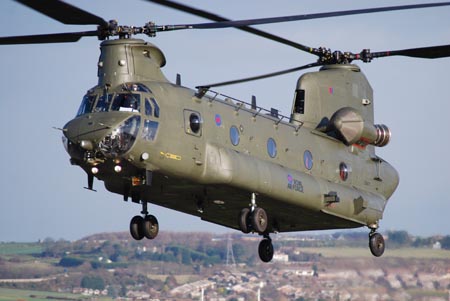
    Boeing Begins Flight Testing UK Chinook Mk4

    LONDON, Jan. 24, 2011 — Boeing and its Boeing Defence UK subsidiary today announced that the Boeing UK Rotorcraft Support team has begun flight testing the first Chinook Mk4 helicopter for the Royal Air Force (RAF). The first flight took place on Dec. 9 in Hampshire, England.

    “Project JULIUS, as the Mk4 program is known, will modernize the current Royal Air Force Chinook fleet – essentially giving us new aircraft,” said Chris White-Horne, Mk4 project team leader for the United Kingdom Ministry of Defence.
    Project JULIUS will modify 38 Mk2/2A Chinooks into the Mk4/4A configuration and eight Mk3 Chinooks into the Mk5 configuration. All the aircraft will be delivered to RAF Odiham in Hampshire.

    A major part of the modification for both the Mk4/4A and Mk5 aircraft is the Thales TopDeck cockpit. Thales UK is under contract with Boeing to supply its Cockpit Display System/Mission Avionic System, which will provide improved situational awareness, increased safety and options for capability enhancement. The upgraded and integrated cockpit display includes four multifunction displays, two stand-by flight displays, updated communications interfaces, and two new air data computers.
    “The first of the modified JULIUS Chinook helicopters is expected to be available to commanders before the end of 2011,” said David Pitchforth, managing director, Boeing UK Rotorcraft Support. “The entire Mk2 fleet will be fitted with the JULIUS cockpit by early 2015, followed by Mk2A and Mk3 modifications by 2015 and 2016, respectively.”

    The modifications also include the addition of a third crew-member seat and an update of Airworthiness & Safety Certification and Qualification for the modernized Chinook. The aircraft are being modified at the Gosport Fleetlands facility operated by Vector Aerospace, Boeing’s principal subcontractor for deep support of the RAF Chinook fleet. Vector Aerospace has established a dedicated production line at Fleetlands to support the JULIUS program, with specialist component manufacture provided from its Almondbank facility near Perth, Scotland.

    “Vector Aerospace is delighted to be associated with this significant milestone. It is a testimony to the skill and dedication of our teams in Fleetlands and Almondbank, who have worked in a spirit of true partnership with our customer Boeing and the key equipment suppliers,” said Tim Rice, managing director, Vector Aerospace UK.

    To include the featured image in your Twitter Card, please tap or click their icon a second time.
  • |

    Press Release: O’Hare

    Chicago Department of Aviation will be shortly initiating the demolition of structures on city-owned properties in Bensenville after acquiring the remaining Bensenville-owned properties and rights-of-way. Some of the acquisition area will be de-annexed from Bensenville and annexed to Chicago as the result of a recent law suit that had been blocking the “O’Hare Modernization Program.”

  • |

    NTSB SAFETY RECOMMENDATION

    National Transportation Safety Board
    Washington, DC 20594
    July 30, 2010

    The National Transportation Safety Board makes the following recommendations to the Federal Aviation Administration:

    Conduct research into and document the effects of mountain wave and downslope conditions at airports, such as Denver International Airport, that are located downwind of
    mountainous terrain (including, for example, airports in or near Colorado Springs, Colorado; Anchorage, Alaska; Salt Lake City, Utah; and Reno, Nevada), identify potential
    mountain-wave-related hazards to ground operations at those airports, and disseminate the results to pilots and airport air traffic control personnel to allow for more informed
    runway selection decisions. (A-10-105)

    Archive all low-level windshear alert system (LLWAS) data obtained from Denver International Airport and other airports that experience similar wind conditions and make these data available for additional research and the potential future development of an improved LLWAS algorithm for crosswind and gusty wind alerts on air traffic control tower ribbon display terminals. (A-10-106)

    Modify Federal Aviation Administration Order 7110.65 to require air traffic controllers at airports with multiple sources of wind information to provide pilots with the maximum wind component, including gusts, that the flight could encounter. (A-10-107)

    Review the required documentation for all low-level windshear alert system (LLWAS)-equipped air traffic control towers to ensure that a letter to airmen has been published
    and is easily accessible describing the location and designation of the remote sensors, the capabilities and limitations of the system, and the availability of current LLWAS remote sensor wind information on the request of a pilot, in compliance with Federal Aviation Administration Order 7210.3. (A-10-108)

    Require air traffic control towers to locally develop and implement written runway selection programs that proactively consider current and developing wind conditions and include clearly defined crosswind components, including wind gusts, when considering operational advantage with respect to runway selection. (A-10-109)

    Gather data on surface winds at a sample of major U.S. airports (including Denver International Airport) when high wind conditions and significant gusts are present and use these data to develop realistic, gusty crosswind profiles for use in pilot simulator training programs. (A-10-110)

    Require 14 Code of Federal Regulations Part 121, 135, and 91K operators to incorporate the realistic, gusty crosswind profiles developed as a result of Safety Recommendation A- 10-110 into their pilot simulator training programs. (A-10-111)

    Once realistic, gusty crosswind profiles as asked for in Safety Recommendation A-10-110 are developed, develop a standard methodology, including pilot-in-the-loop testing, for transport-category airplane manufacturers to establish empirically based, type-specific maximum-gusting-crosswind limitations for transport-category airplanes that account for wind gusts. (A-10-112)

    Once a methodology as asked for in Safety Recommendation A- 10-112 has been developed, require manufacturers of transport-category airplanes to develop type-specific, maximum-crosswind takeoff limitations that account for wind gusts. (A-10-113)

    Until the actions described in Safety Recommendation A-10-113 are accomplished, require manufacturers of transport- category airplanes to provide operators with interim crosswind takeoff guidelines that account for wind gusts. (A-10-114)

    Work with U.S. airline operators to review and analyze operational flight data to identify factors that contribute to encounters with excessive winds and use this information to develop and implement additional strategies for reducing the likelihood of wind-related runway excursions. (A-10-115)

    Require cockpit crew seats installed in newly manufactured airplanes that were type certificated before 1988 to meet the crashworthiness standards contained in 14 Code of Federal Regulations 25.562. (A-10-116)

    Require operators to perform periodic inspections on the Burns Aerospace model 2501-5 jumpseats for fatigue cracks within the jumpseat structure and replace the jumpseat if fatigue cracks are found. (A-10-117)

    Require that operators of transport-category airplanes that use galley latches or latch plates secured solely by adhesives that may degrade over time modify the latches to include mechanical fasteners. (A-10-118)

    To include the featured image in your Twitter Card, please tap or click their icon a second time.
  • |

    Air T, Inc. Announces Award of $10.5 Million Contract from the City of Charlotte

    MAIDEN, N.C., Nov. 9, 2010 /PRNewswire-FirstCall/ — Air T, Inc. (Nasdaq: AIRT) announced today that its wholly owned subsidiary, Global Ground Support, LLC, has been awarded a $10.5 million contract to supply deicer trucks and training simulators to the City of Charlotte. Global expects to deliver the first units under the contract in the current fiscal quarter ending December 31.

    Walter Clark, Air T’s CEO, stated that, “We are excited to have been selected by the City of Charlotte and look forward to working with them. Our equipment will be utilized to ensure that departing flights during inclement winter weather at Charlotte Douglas International Airport continue to operate safely and reliably. This contract was the result of a competitive process which we won due in part to the quality of product and the high level of service that Global Ground Support provides to all of its customers.”

    Air T, through its subsidiaries, provides overnight air freight service to the express delivery industry, manufactures and sells aircraft deicers and other special purpose industrial equipment, and provides ground support equipment and facilities maintenance to airlines. Air T is one of the largest, small-aircraft air cargo operators in the United States. Air T’s Mountain Air Cargo and CSA Air subsidiaries currently operate a fleet of single and twin-engine turbo-prop aircraft daily in the eastern half of the United States, Puerto Rico and the Caribbean Islands. Air T’s Global Ground Support subsidiary manufactures deicing and other specialized military and industrial equipment and is one of the largest providers of deicers in the world. The Global Aviation Services subsidiary provides ground support equipment and facilities maintenance to domestic airline customers.

    To include the featured image in your Twitter Card, please tap or click their icon a second time.
  • | |

    NTSB TO ASSIST AFGHAN AUTHORITIES WITH INVESTIGATION INTO BAGRAM CARGO PLANE CRASH


    The National Transportation Safety Board will lead a team to assist the Afghanistan Ministry of Transportation and Commercial Aviation in the investigation of a cargo plane crash at Bagram Air Base in Afghanistan.

    NTSB Senior Air Safety Investigator Tim LeBaron will be the U.S. accredited representative. He will lead a team of three additional investigators from the NTSB as well as representatives from the Federal Aviation Administration and The Boeing Company.

    The private cargo plane, a Boeing 747-400 operated by National Air Cargo, crashed just after takeoff from the U.S.-operated air base at 11:20 a.m. local time Monday. All seven crewmembers onboard were killed and the airplane destroyed. The seven crew members were all American citizens. The accident site is within the perimeter of Bagram Air Base.

    The international cargo flight was destined for Dubai World Central – Al Maktoum International Airport, Dubai, United Arab Emirates.

    The Afghanistan Ministry of Transportation and Commercial Aviation is leading the investigation and will be the sole source of information regarding the investigation. According to the International Civil Aviation Organization, they can be reached at (873) 68 2341450 / 49 or by fax at (873) 68 1280784.

    To include the featured image in your Twitter Card, please tap or click their icon a second time.