Boeing

  • | | | | | |

    Virgin Australia Boeing Engine Flames On LA Runway


    Click to view full size photo at Airliners.net
    Contact photographer Nathan Zalcman

    What: Virgin Australia Boeing 777-300 en route from Los Angeles to Sydney
    Where: Los Angeles
    When: April 12, 2011
    Who: 305 passengers
    Why: On making its takeoff run from Los Angeles, the plane emitted a loud “bang!” and stopped on the runway, they believed for a nose gear. It turned out to be the fireball erupting from engine one. Needless to say, the jet was pulled for inspection, and the passengers were given hotel accommodations for the night. They were provided an alternative flight the next day.

  • |

    Airworthiness Directive issued by Civil Aviation Administration of China

    Fortunately for Chinese passengers, aged Boeing 737s have drawn the attention of the CAAC. (These are the types of planes which demonstrated fatigue when a hole blew in the fuselage of a Southwest Airlines Boeing 737 on April 1.) Planes with 35,000 total flight cycles or more will be inspected within 4 days; and those with between 30,000 and 35,000 will be inspected within twenty days. The CAAC says that most of the Boeings are new.

  • | | | | | | |

    Emirates Emergency


    Click to view full size photo at Airliners.net
    Contact photographer Xu Zheng

    What: Emirates en route from Kuala Lumpur to Dubai
    Where: Chennai
    When: April 10, 2011
    Who: 465 passengers
    Why: While en route, the plane had a technical failure resulting in smoke in the cockpit. The crew diverted to Chennai where they made a safe landing. Passengers were provided alternative transportation to Dubai. However, the passengers overnighted in Chennai as the problem could not be solved within the crews “max duty time.”

  • | | | | | | |

    Saudi Arabian Airlines Engine Shut Down


    Click to view full size photo at Airliners.net
    Contact photographer Mirko Krogmann

    What: Saudi Arabian Airlines Boeing 777-200 en route from London to Jeddah Saudi Arabia
    Where: Rome
    When: Apr 6th 2011
    Who: 232 passengers
    Why: While en route, an engine developed problems and was shut down. The pilots diverted to Rome and made a safe landing. The engine indicated that it was overheated; but the mechanism was faulty. Repairs were performed, after which the flight was continued.

  • | | | |

    Alaska Airlines Bird Strike

    What: Alaska Airlines Boeing 737-800 en route from Sacramento to Kahului
    Where: Sacramento
    When: April 9, 2011, 10:20am
    Who: 169 passengers
    Why: After takeoff from Sacramento, a bird was ingested into the plane’s engine, causing engine trouble. The flight returned to Sacramento where it made a safe landing. A replacement flight was scheduled for the afternoon.


    Courtesy of FlightAware

    Recent bird include the Skywest/Delta Canadair CRJ 700 (Portland-Salt Lake City) strike on April 6 2011, the GOL Linhas Aereas Boeing 737-800 (Salvador-Aracaju) strike on April 3, and the Air France Boeing 777 strike in Paris (Paris-HongKong) on Mar 24.

  • | | |

    Slat Problem in Boeing 737

    What: Southwest Airlines Boeing 737-700 en route from Oakland,CA to Denver,CO
    Where: Oakland
    When: Apr 5th 2011
    Who: 103 passengers
    Why: After take-off, the plane indicated a slat problem. The crew returned to Oakland and made a safe landing. It was replaced by another 737, which flew passengers to Denver.

  • | | | | |

    Southwest Holey Terror Just the Beginning

    What: Southwest Airlines Boeing 737-3H4 en route from Phoenix to Sacramento
    Where: Yuma International Airport, AZ
    When: 01 APR 2011
    Who: 118 aboard
    Why: A hole burst through the top of this Boeing while en route. The plane suffered decompression, descended to a safe level (when an attendant was injured) and made an emergency landing in Yuma.

    The hole has opened a witch hunt on aging Boeings in search of the kind of metal fatigue that would result in a hole during operations now that the aluminum skin has been known to separate at the lap joints, where panels are spliced together. Although the incident did not result in death, it is being taken as a “warning.” 175 Boeing 737 are slated for examination, and maintenance programs (Southwest, FAA, Boeing) are being re-evaluated to take this into account.

    Discussion of lap joint and the 3 rows of rivets. The skin separated at the lower rivet line. Pre-existing fatigue existed on the fracture surface. (Multi site damage.) The decompression happened 18.5 minutes after take-off, and no pre-indications. The flight crew immediately declared emergency.

  • | | | |

    American Airlines Emergency Landing in NYC

    What: American Airlines Boeing 757-200 en route from Boston,MA to Saint Thomas US Virgin Islands
    Where: Atlantic
    When: Apr 3rd 2011
    Who: 157 aboard
    Why: While en route, the flight developed a problem with cabin pressure. The flight was 150nm southeast of New York City at the time. They descended to 10,000 feet for the sake of the pressure.

    Then the pilots diverted to jfk to make a safe landing.

  • | | | | |

    American Airlines Flight Cancelled Due to Tail Strike


    Click to view full size photo at Airliners.net
    Contact photographer Rodrigo Carvalho

    What: American Airlines Boeing 767-300 en route from Dallas to Santiago Chile
    Where: Dallas
    When: Apr 1st 2011
    Who: 170 passengers 12 crew
    Why: After taking off from Dallas/ft Worth, the crew returned to the airport because of a tail strike. They made a safe landing 30 minutes after takeoff. The flight was cancelled.

  • | | |

    Tenerife Tail Strike

    What: TUIFly Boeing 737-800 en route from Tenerife Sur Reina Sofia, Spain to Frankfurt Germany
    Where: Tenerife
    When: Mar 27th 2011
    Why: On the runway, the Boeing and struck its tail and rejected takeoff. There was substantial damage to the plane. Passengers disembarked after the pilot told them there was a fault in the instruments. We can only speculate: There is some disagreement whether this was due to instrumentation, poorly balanced load or human error.

  • | | | |

    Controller Suspended by FAA

    The single-engine, four-seat Cirrus SR22 was on course for Kissimmee, Fla., and maintaining altitude at 11,000 feet, but had not responded to repeated contact attempts from controllers; at the same time, ten miles behind the Cirrus at 12,000 feet was Southwest Flight 821, a Boeing 737. Rather than following the protocol for unresponsive aircraft, the supervisor asked the Boeing to visually check the Cirrus cockpit. The Boeing did so, reporting 2 people in the cockpit. Both planes landed safely.

    But the planes violated proximity guidelines. The Boeing could have caused air turbulence upsetting the Cirrus. They flew too close. As a consequence, the FAA suspending the FAA controller, and they are reviewing procedures, and training practices.

  • | | |

    US Airways Boeing Mystery Puncture

    What: US Airways 737
    Where: Charlotte-Douglas International Airport
    When: March 28, 2011
    Who: pilot
    Why: Prior to takeoff, a small hole was discovered in the fuselage toward the back of the aircraft on the left side. The flight was cancelled, and the plane was taken out of service. The last flight had been Philadelphia to Charlotte. The cause of the hole has not been determined but the FBI is investigating if it might be a bullet hole that extends from the exterior into the cabin

  • | | | |

    Southwest Flight Diverts to Louisville

    What: Southwest Airlines Boeing 737-300, en route from Orlando to Chicago
    Where: Louisville Kentucky
    When: Mar 28 2011 3:00 pm
    Who: 101 passengers 5 crew
    Why: While en route, the cockpit began to fill with smoke. A pilot saw a problem with the windshield defroster wiring, and turned off the defroster.

    The pilots diverted the flight to Louisville where they made a safe landing. Passengers were provided an alternative Boeing flight to Chicago arriving two and a half hours later.

  • | | | | |

    Washington National: Act I


    Click to view full size photo at Airliners.net
    Contact photographer Rudy Chiarello

    What: American Airlines Boeing 737-800 en route from Miami,FL to Washington National,DC
    Where: Washington
    When: Mar 22nd 2011
    Who: 97 people on board
    Why: On approach to Washington National, the crew found themselves without feedback from ATC. They declared the airport uncontrolled. The tower frequency was declared an advisory frequency and landed safely without clearance.

  • | | | | |

    Delta Boeing Engine Emergency


    What: Delta Boeing 737-800 en route from Fort Lauderdale to Minneapolis
    Where: Fort Lauderdale-Hollywood International Airport
    Who: 119 passengers 6 crew
    Why: After takeoff from Fort Lauderdale-Hollywood International Airport, the Boeing suffered engine failure and had to turn back to the airport, sprinkling bits and pieces of the damaged engine over Florida. The plane made a safe landing. Passengers disembarked and transferred to an alternative flight which reached Minneapolis with considerable delay but no further trouble.

  • | | | |

    Diligent Kudos to AeroMexico for Averting a Disaster

    What: Aeromexico Boeing 737-700 scheduled from Costa Rica to Mexico City
    Where: Costa Rica
    When: Mar 12, 2011
    Who: 2 (drunk) Mexican pilots, 101 passengers
    Why: Saturday on arrival at the airport in Costa Rica for their shift, these two AeroMexico pilots complained of nausea. They probably had big heads too, since they had attended some kind of drunken revelry 7 hours before in San Jose, which is not long enough for the alcohol to be metabolized out of their systems. They were apparently intending to fly their shifts, but some eagle-eyed AeroMexico personnel correctly evaluated their condition. One of them refused the alcohol test, but not the other. Neither was allowed to fly, and both were suspended. The flight was delayed until replacement pilots (sober ones) were found to take the cockpit. Passengers were compensated for the delay.

    In George’s Point of View

    Is March the month for drinking? A case was just brought to our attention yesterday, and though it is not aviation, it is frighteningly similar, though I could argue they were completely different. But then, I could argue anything even if I’m not a lawyer.

    The case I’m talking about is that of the BOLT Driver Arrested for DUI. Bolt is not an airline, but a bus division. So what is the similarity? There it was bussing (trucking) down the road when it was pulled over and the driver cited for tailgating, and driving in the wrong lane before he got his driving under the influence AND his license taken away. He was caught, sadly, not before his shift, and not by crew, but by passengers who clearly feared for their lives and called 911 from inside the bus, as the driver was either weaving, or napping or drinking, or all of the above. Someone had seen his pocket flask.

    Okay, the obvious similarities are drunks at the wheel of communal transit. Both were caught before serious damage occurred. The difference—and this is crucial—are that the BOLT bus driver was allowed to take his shift, regardless of his condition. He put everyone aboard that bus at serious risk.

    So kudos to AeroMexico. Even though all you’re going to hear about it is grousing from individuals complaining of the delay, your diligence probably saved the lives of 110 passengers.

  • | | | | |

    Delta: Whacked Tail at JFK

    What: Delta Airlines Boeing 767-300 from New York JFK,NY to Sao Paulo
    Where: New York
    When: Mar 6th 2011
    Why: The Delta Boeing encountered heavy wind on takeoff and suffered a tail strike. The pilot returned to JFK and made a safe landing. According to Flight Aware, the duration of the flight was 49 minutes.

  • |

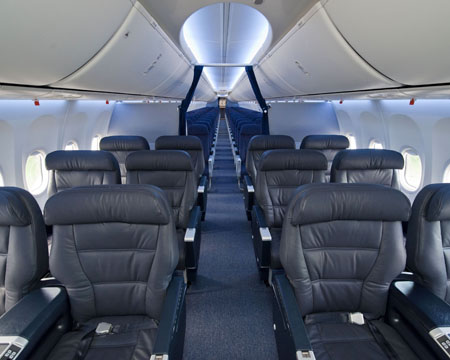
    Boeing Delivers Copa Air 1st 737 BoeingSky Interior

    Copa becomes first Latin America carrier to fly with the new cutting-edge interior

    SEATTLE, March 3, 2011 /PRNewswire/ — Boeing (NYSE: BA) today delivered a Next-Generation 737 with the new Boeing Sky Interior to Copa Airlines – the first Latin American carrier to take delivery of Boeing’s innovative interior.

    “We are proud to bring this state-of-the art technology and unmatched passenger experience to our valued customers,” said Pedro Heilbron, CEO of Copa Airlines. “This new interior represents yet another example of our progressive leadership in the Americas and will enhance the world-class service for which Copa Airlines has become known.”

    The Boeing Sky Interior introduces new cove lighting and curving architecture that create a distinctive entry way. Passengers will enjoy a more open cabin and a soft blue sky overhead simulated by light-emitting diode (LED) lighting. The new interior also brings new, modern, sculpted sidewalls and window reveals to draw passengers’ eyes to the view outside the window as well as larger stowage bins allowing passengers the ability to store their luggage closer to their seats.

    The 737 Boeing Sky Interior is the latest in a series of enhancements designed to improve the Next-Generation 737 for both airlines and passengers. The next to come will be a package of performance improvements that will reduce fuel consumption and carbon emissions by 2 percent – making the airplane a full 7 percent more efficient than the first Next-Generation 737s delivered. The performance improvements to the airframe and engine are in certification test, and will be phased into production between mid-2011 and early 2012.

  • | |

    Boeing, Thales to Pursue Helicopter Aircrew Training Opportunity

    MELBOURNE, Victoria, March 3, 2011 — Boeing [NYSE: BA] subsidiary Boeing Defence Australia and Thales Australia signed a Memorandum of Understanding today at the 2011 Australian International Airshow to pursue Project Air 9000 Phase 7 – Helicopter Aircrew Training System (HATS) for the Australian Defence Force.

    The companies will work together to design a fully integrated HATS solution for the Australian Army and Navy that makes maximum use of instructors, flight simulators, computer-based instruction and training aircraft. The HATS request for proposal is expected to be issued later this year.
    “Boeing and Thales have been partners in defense flight training and simulation for more than 15 years,” said John Duddy, Boeing Defence Australia vice president and managing director. “Both companies have proven track records in delivering training courses on time and producing mission-ready pilots. Our combined strengths offer the best team to support HATS.”

    The companies’ partnership began on the F-111 program in the mid-1990s. Thales operated the F-111 simulator and training programs and Rockwell, a Boeing heritage company, held the F-111 avionics upgrade contract. The partnership continued with Boeing subcontracting Thales to provide simulator support for the Boeing 737 Airborne Early Warning & Control Wedgetail Operational Flight Trainer and for in-country Boeing C-17 Globemaster III aircrew training simulators.

    “Our long-term partnership with Boeing provides customers with a highly effective combination of local and global expertise,” said Chris Jenkins, Thales Australia’s chief executive officer. “We will offer an integrated approach that will result in cost-effective solutions for helicopter aircrew training, improving Australian Defence Force capabilities over the years ahead.”

    Boeing also provides helicopter pilot, aircrew and technician training for the Australian Army under the Army Aviation Training and Training Support (AATTS) contract. The company trains aircrews on S-70A-9 Black Hawks and Bell 206-B1 Kiowa helicopters at Oakey Army Aviation Centre, southeast Queensland, and on Boeing CH-47D Chinooks at 5th Aviation Regiment in Townsville, north Queensland.
    Since 2007, Boeing has completed 100 percent of training courses and aircrew graduations on time; flown 7,000 training sorties while logging 8,000 flying hours; and performed 4,000 services on Black Hawk and Kiowa training aircraft. Boeing employs more than 200 Australians across its AATTS operations and has one of the largest military instructional aircrew teams in Australia.

    “The excellent support we have delivered to the Australian Army is underpinned by our proven performance on AATTS and The Boeing Company’s experience supporting training on 24 different defense aircraft and 150 associated trainers worldwide,” Duddy added.

    The Boeing and Thales team will hold an open, competitive tender for helicopter manufacturers over the coming months to select a training aircraft to meet the Australian Defence Force’s requirements.

  • | | | | | |

    SAS Boeing Emergency Diversion-1 Engine Down


    Click to view full size photo at Airliners.net
    Contact photographer Joost de Wit

    What: SAS Scandinavian Airlines Boeing 737-700 en route from Bergen to Oslo (Norway)
    Where: Bergen
    When: Mar 2nd 2011
    Who: 89 passengers
    Why: After takeoff, the right engine started misbehaving, making rude noises and sparking. The pilots had to return to Bergen to get the engine’s attitude adjusted.

  • | | | |

    American Airlines Time to Bring out the Duct Tape


    Click to view full size photo at Airliners.net
    Contact photographer Joe M Hill

    What: Airlines Boeing 757-200 en route from San Juan Puerto Rico to Miami,FL
    Where: San Juan
    When: Mar 1st 2011
    Why: After takeoff, the side panels in the cabin began to quiver, and passenger windows were cracking. The crew returned to San Juan and the plane made a safe landing.

    You know, when I’m on plane with a twenty-one year old frame and the interior walls start moving, and the windows are cracking (separate issues, by the way), I can’t help but worry about things like frame fatigue. 21 years worth of stress is plenty of years for a plane. I’m glad the flight made it down safely. Maybe it is time for American to let this bird roost.

  • |

    Boeing Leaders to Address Bio-Fuels, Growth, Emerging Issues at Asian Aerospace 2011

    HONG KONG, Mar. 2, 2011 – Experts from Boeing, the world’s largest aerospace company, will present key trends at Asian Aerospace 2011 and discuss their implications for commercial aviation. Asian Aerospace takes place March 8-10, at AsiaWorld-Expo in Hong Kong.

    Boeing also will provide the latest information about its commercial business, including updates on recent improvements to its existing family of airplanes and the company’s single- and twin-aisle development programs.

    Boeing executives will speak at conference sessions that address sustainable aviation bio-fuels and explore developments in the cargo sector. The company also will conduct a media briefing to share the company’s market outlook for the next 20 years. All Boeing speakers and executives will be available for exclusive interviews prior to and during Asian Aerospace 2011 on a first-come, first-served basis.

    Asia continues to be a growth region for Boeing Business Jets (BBJ) which now has airplanes certified and available for charter in both Hong Kong and mainland China. Media are invited to tour a BBJ, managed by Hong Kong based Metrojet, on static display March 8 and 9 at the Hong Kong Business Aviation Centre (HKBAC). Transportation will be provided from AsiaWorld Expo to HKBAC during show business hours, 10:00am – 4:00pm, by Asian Aerospace organizers.
    “Asian Aerospace is a great venue for Boeing to work with Asian customers, partners and suppliers, to share ideas and identify opportunities in technologies, products and services that present the best value,” said Rob Laird, vice president of Sales for India, East and South Asia, Boeing Commercial Airplanes. “Asia leads the world in terms of growth and the return to profitability. Boeing’s strategy is to provide the right mix of products and services that enable our customers provide a great customer experience, generate more revenue and reduce operating expenses.”

    With the commercial aviation sector growing ever more conscious of environmental issues, Al Bryant, vice president of Boeing Research and Technology, plans to share Boeing’s experience in promoting the development of sustainable aviation biofuels. The presentation will take place during “The Future of Aviation-Emerging Issues & Solutions” conference as part of the Asian Aerospace Congress.

    Randy Tinseth, vice president of Marketing, and Jim Edgar, regional director, Cargo Marketing, both of Boeing Commercial Airplanes, will provide a commercial airplane and air cargo market update for media, with a focus on the Asia Pacific region. In addition to providing the company’s market projections for the next 20 years, the media briefing also will include product updates.
    Edgar also will participate on a panel at the “Air Freight Asia Conference” on the growth of the air cargo industry in countries neighboring China.

  • | |

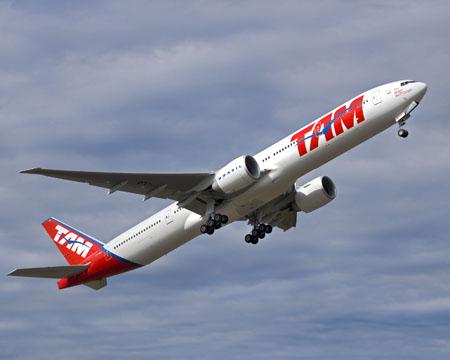
    Boeing, TAM Complete Contract for Two 777-300ERs

    TAM 777-300ER fleet will now consist of 12

    SEATTLE, Feb. 28, 2011 /PRNewswire/ — Boeing and TAM Linhas Aereas today announced the Brazilian carrier ordered two additional 777-300ERs (extended range) with two purchase rights. Today’s order, valued at approximately $568 million at current list prices, brings the total number of 777s TAM has on order to 12.

    “TAM continues to position itself as one of the world’s leading airlines,” said Marlin Dailey, vice president of Sales & Marketing for Boeing Commercial Airplanes. “We are pleased TAM continues to choose Boeing’s 777-300ER for its long-haul fleet needs and look forward to working together with TAM as they grow their international network.”

    The Boeing 777 is the market leader in the 300 to 400 seat market. It is the world’s most successful twin-engine, long-haul airplane.

    “These additional airplanes will help us expand our long-haul service capability to meet the growing market demand in Brazil and beyond,” said Marco Antonio Bologna, chief executive officer, TAM Holdings.

    The 777 delivers exceptional value to the airlines that fly it and is consistently ranked at the top of operator and investor polls.

    “The Brazilian aviation market continues to grow at a rapid pace. The 777-300ER provides us the performance and versatility we need to develop our network competitively and capitalize on robust international traffic growth,” added Libano Barroso, chief executive officer, TAM Airlines.

    The Boeing 777-300ER is 19 percent lighter than its closest competitor. It produces 22 percent less carbon dioxide per seat and costs 20 percent less to operate per seat. The airplane can seat up to 365 passengers in a three-class configuration and has a maximum range of 7,930 nautical miles (14,685 km).

  • |

    Boeing Names Jeffrey Johnson New Leader for Middle East

    CHICAGO, March 1, 2011 — The Boeing Company today named Jeffrey Johnson as president of Boeing Middle East. Johnson succeeds Paul Kinscherff, who has been appointed chief financial officer for international finance.

    Johnson will be based in Dubai, United Arab Emirates (UAE) and report to Shep Hill, president of Boeing International and senior vice president of Business Development and Strategy. Johnson will be responsible for Boeing’s growth and productivity plans across the Middle East region, working closely with Boeing Saudi Arabia president Ahmed Jazzar.

    Johnson will lead company-wide activities that include government affairs and the development and implementation of the Boeing Middle East strategy focused on new business and industrial partnership opportunities, corporate citizenship projects, expanding the Boeing presence and strengthening company relationships with customers and other stakeholders.

    “Jeff’s leadership skills, business development experience and detailed customer knowledge will strengthen our efforts to grow our business in the Middle East,” said Shep Hill. “In this regard, Jeff will continue to build on the solid foundation established by Paul and what he has accomplished across the region.”
    Prior to this appointment, Johnson was a senior director of business development for Boeing Defense, Space & Security (BDS). Before that, he served as the Middle East and Africa business development director for BDS. Johnson joined Boeing in 1982 and has managed programs in more than 40 countries during his career. Johnson also worked in Design Engineering, Electronics Design and Manufacturing, System Engineering, Program Management and Flight Test Engineering.

    Kinscherff served as president of Boeing Middle East from March 2008. During his tenure, the company has doubled its presence across the region, expanded its defense and aviation business and forged closer customer relationships. In his new role, Kinscherff will be based at the company’s headquarters in Chicago.
    “Paul was instrumental in expanding our business and strengthening Boeing’s image in the Middle East. Under his leadership, Boeing implemented a robust strategy to grow its business and develop long-term relationships critical to the company’s success,” added Hill.

    Boeing’s relationship with the Middle East dates back more than 60 years. Its first office was established in Riyadh, Kingdom of Saudi Arabia, in 1982. Since then, the company has expanded its presence and relationships across the region. Boeing opened an office in Abu Dhabi, UAE, in 1999, a regional office

  • |

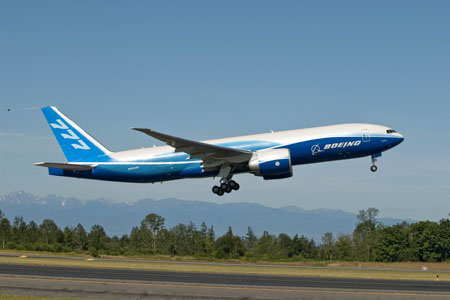
    Boeing 777 Freighter Completes 2 Years in Service

    EVERETT, Wash., Feb. 28, 2011 /PRNewswire/ — Hauling everything from giant panda bears to high-performance race cars the Boeing 777 freighter in its first two years in service is earning the reputation as the work horse of the industry.

    The growing fleet of 777 freighters has flown approximately 120,000 hours and boasts a daily utilization rate of 11.34 hours. Fleet schedule reliability is at 99.37 percent, which means the freighter has a near-perfect record of on-time takeoff and landings. Eighty-three have been ordered, and 39 freighters now are in service with nine airlines.

    FedEx Express is the largest 777 freighter operator with a fleet of 11 currently in operation, and another airplane just delivered. An additional 13 777 freighters remain in Boeing’s backlog for FedEx.

    “The world’s longest range twin-engine freighter is elevating our high level of service to customers around the world,” said James R. Parker, executive vice president of FedEx Express Air Operations. “Our customers are enjoying the nonstop 777 flights that offer them the latest cutoff times in key manufacturing centers in China, an advantage unmatched by the competition.”

    Emirates SkyCargo, the freight division of Emirates airline, now operates two 777 freighters. The airplane is playing an integral role in Emirates’ freighter fleet due to the airplane’s long-range capability.

    “Emirates has opted for these brand new, super-efficient aircraft to ensure we are best placed to serve the industry’s requirements in the long term,” said Emirates Divisional Senior Vice President Cargo Ram Menen. “We are absolutely delighted with this airplane!”

    The 777 freighter is the world’s longest-range, twin-engine freighter and features the lowest trip cost of any large freighter, with high-cargo density and 10-foot (3.1-meter) interior height capability that complements the popular 747 freighter family.

    Providing cargo capacity normally associated with larger airplanes, the 777 freighter can fly 4,900 nautical miles (9,070 kilometers) with a full payload of 225,200 pounds (102 metric tons). The 777 freighter is powered by General Electric’s GE90-110B1L and meets QC2 noise standards.

    “The 777 freighter is a great example of how Boeing is committed to continuously improving the 777 family to deliver top value to owners and operators,” said Larry Loftis, vice president and general manager of the 777 program.

    Boeing is the air cargo industry leader, using its expertise to support customers in their success and to promote the industry. The company also offers the most complete family of freighters, which provide superior efficiency and operational economics in support of airline profitability.