What: Air Austral Boeing 737-800 from Saint Denis to Johannesburg Where: Saint Denis When: Feb 27th 2011 Why: After take-off from Saint Denis, the plane developed an electrical problem and had to return to the airport. An alternative plane was flown in to make the replacement flight.
Air Austral Boeing was delivered in December 2010.
What: Continental Airlines Boeing 737-800 en route from Washington DC to Houston Where: Washington’s International Airport When: Feb 28th 2011, 7:45 a.m Who: 44 passengers Why: On takeoff, the plane’s engines digested birds. Following the bird strike, the plane diverted to Washington’s International Airport and made a safe landing. Passengers were booked on alternative flights.
What: British Airways Boeing 747-40 en route from Lagos Nigeria to London Where: Tamanrasset Algeria When: Feb 27th 2011 Who: 301 passengers, 16 crewmembers Why: While en route, the plane developed engine trouble with an air bleed valve.
The crew shut down an engine and diverted to Tamanrasset Algeria where they made a safe landing.
A maintenance crew was dispatched to Tamanrasset. The replacement jet and the repaired plane were both in London less than 24 hours later.
What: Ryanair Boeing 737-800 en route from Seville to Barcelona Where: Seville When: Oct 27th 2010 Who: 1 passenger Why: A boarding passenger fell and fractured his arm. The fall was allegedly caused by the force from another engine’s exhaust.
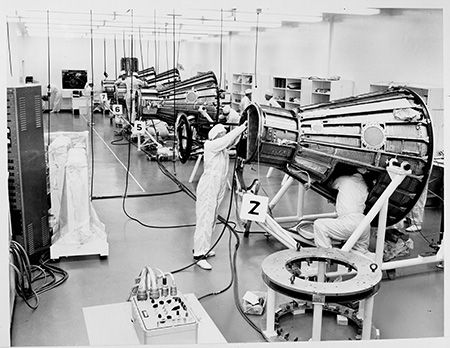
ST. LOUIS, Feb. 25, 2011 – Boeing today received an IEEE Milestone award in Electrical Engineering and Computing from the Institute of Electrical & Electronics Engineers (IEEE) in recognition of the company’s work on the Mercury spacecraft. IEEE is the world’s largest technical professional association.
The Mercury spacecraft, America’s first manned space vehicle, was designed, developed and built by McDonnell Douglas Aircraft (a Boeing heritage company) in St. Louis. A total of 20 Mercury spacecraft were delivered to NASA, six of which carried astronauts into space between 1961 and 1963. John Glenn piloted Friendship 7 in the first U.S. human orbital flight on Feb. 20, 1962.
“We are truly honored to receive this recognition and pay tribute to the engineers who worked on the Mercury spacecraft,” said Dennis Muilenburg, president and CEO, Boeing Defense, Space & Security. “They helped set a strong foundation on which America’s space program continues to grow and thrive. Boeing and our heritage companies have supported human space exploration from the beginning, and our talented, innovative engineers and other employees will continue to build upon this legacy for many years to come.”
The award cites electrical and electronic systems invented by McDonnell Douglas Aircraft engineers that made the Mercury flights and future space flights possible. Among the engineers’ key contributions were navigation and control instruments, autopilot, rate stabilization and control, and fly-by-wire systems.
The IEEE Milestones in Electrical Engineering and Computing program honors significant technical achievements that occurred at least 25 years ago in technology areas associated with IEEE. To date, more than 100 Milestones have been approved and dedicated around the world. This award also recognizes technological innovation and excellence for the benefit of humanity.
Home to Boeing Defense, Space & Security headquarters, the Boeing St. Louis site employs approximately 15,600 employees and is Missouri’s largest manufacturer and second-largest employer. Key products manufactured at the site include F/A-18E/Fs, F-15s, C-17s and weapons.
What: JAL Japan Airlines Boeing 767-300 en route from Tokyo Narita (Japan) to Honolulu,HI Where: Honolulu When: Feb 10th 2011 Who: 239 passengers, 4 injured Why: 25 minutes before landing in Honolulu, the flight encountered severe turbulence, injuring 4 on board. One passenger was severely injured with a broken bone, and one crew member was severely injured with a fractured elbow.
ST. LOUIS, Feb. 24, 2011 — The Boeing Company [NYSE: BA] has received a contract from the U.S. Air Force to build the next-generation aerial refueling tanker aircraft that will replace 179 of the service’s 400 KC-135 tankers.
The contract calls for Boeing to design, develop, manufacture and deliver 18 initial combat-ready tankers by 2017.
“We’re honored to be given the opportunity to build the Air Force’s next tanker and provide a vital capability to the men and women of our armed forces,” said Jim McNerney, Boeing chairman, president and CEO. “Our team is ready now to apply our 60 years of tanker experience to develop and build an airplane that will serve the nation for decades to come.”
In selecting the Boeing NewGen Tanker after a lengthy and rigorous proposal process, the Air Force has chosen an American-built, multi-mission tanker that is based on the proven Boeing 767 commercial airplane and meets all requirements at the lowest risk for the warfighter and the best value for taxpayers. The Boeing proposal was created by an integrated “One Boeing” team from various sites across the company, including employees from the Commercial Airplanes; Defense, Space & Security; and Engineering, Operations & Technology organizations.
“This contract award would not have been possible without the hundreds of Boeing employees across the entire company, and the thousands of our industry teammates, who remained laser-focused on our commitment to offer a solution that is first in capability and best in value,” said Dennis Muilenburg, president and CEO of Boeing Defense, Space & Security. “This award is also a tribute to the Air Force and Defense Department officials who worked so tirelessly to make this procurement process fair, ultimately resulting in the selection of the right plane for the mission. We look forward to working with our Air Force customer to deliver this much needed capability to the servicemen and women we are honored to serve.”
The KC-46A tankers will be built using a low-risk approach to manufacturing by a trained and experienced U.S. work force at existing Boeing facilities. The KC-46A tanker also will fuel the economy as it supports approximately 50,000 total U.S. jobs with Boeing and more than 800 suppliers in more than 40 states.
“Boeing has always been committed to the integrity of the competitive process, and the men and women across our Boeing commercial and defense teams and our entire supplier network are ready to extend that commitment to delivering these tankers on time and on budget,” said Jim Albaugh, president and CEO of Boeing Commercial Airplanes.
Based on the proven Boeing 767 commercial airplane, the KC-46A Tanker is a widebody, multi-mission aircraft updated with the latest and most advanced technology and capable of meeting or exceeding the Air Force’s needs for transport of fuel, cargo, passengers and patients. It includes state-of-the-art systems to meet the demanding mission requirements of the future, including a digital flight deck featuring Boeing 787 Dreamliner electronic displays and a flight control design philosophy that places aircrews in command rather than allowing computer software to limit combat maneuverability. The NewGen Tanker also features an advanced KC-10 boom with an expanded refueling envelope, increased fuel offload rate and fly-by-wire control system.
EVERETT, Wash., Feb. 24, 2011 /PRNewswire/ — The Boeing 787 Dreamliner made its 1,000th flight yesterday, marking another milestone in the flight test program. There are seven airplanes participating in flight testing. The landing of 787 flight test airplane ZA004, just after 1 p.m. MST at Yuma International Airport in Arizona, counted as the official 1,000th flight.
The program is near its 3,000th hour of flying and 787s have flown a total of more than one million miles.
“The team is making great progress,” said Scott Fancher, vice president and general manager of the 787 program. “We are getting through the test conditions needed to certify this airplane with nearly 80 percent of the conditions for the first model, with Rolls-Royce engines, already complete. And, we’re more than 60 percent of the way through the test conditions for the 787s with General Electric engines.”
Capt. Mike Carriker, chief pilot for the 787, Boeing Test & Evaluation, said the airplane continues to behave well in testing.
“We’re really eager to get this airplane through its flight testing so our customers can see for themselves this airplane’s excellent performance,” said Carriker.
Pictured here, ZA004 frames Mt. Rainier in Western Washington during a test flight earlier this year.
SEATTLE, Feb. 23, 2011 – Boeing [NYSE: BA] is pleased that Turkish Airlines has reinforced its trust in the Next-Generation 737 program by announcing its intention to exercise options for additional Boeing 737s. Boeing looks forward to finalizing the contractual details of Turkish Airlines’ selection.
EL SEGUNDO, Calif., Feb. 22, 2011 — Boeing [NYSE: BA] announced today that it has established Boeing Commercial Satellite Services to market commercial satellite telecommunications services to the U.S. government and other satellite users. Headquartered in El Segundo, the group is a part of Boeing Space & Intelligence Systems.
“Boeing has received orders for five hosted payloads in the past 18 months,” said Craig Cooning, CEO of Boeing Satellite Systems International and vice president and general manager of Boeing Space & Intelligence Systems. “The market response to hosted payloads as a creative solution to limited military bandwidth availability has been extremely positive, and we believe that the Boeing Commercial Satellite Services unit will perform a valuable service both for the military and for commercial users of satellite services to meet mission needs.”
Hosted payloads represent an important move Boeing is making to respond to the global demand for more communications bandwidth. Hosted payloads can be designed in a variety of configurations based on customer needs and can be a more affordable and timely option than procuring a complete satellite. A commercial satellite carrying a hosted payload can generally be delivered in less than three years.
Boeing Commercial Satellite Services will work with the owners of satellite systems to market available bandwidth on active systems as well as to include hosted payloads on their future spacecraft. The new division will market the payloads to prospective customers in cooperation with the host satellites’ owners.
“The demand for satellite communications continues to be greater than the supply, and in 2010 we entered into an agreement with Inmarsat to assist them in leasing Ka-band services to the U.S. government and others,” said Cooning. “This business model can be applied to a commercial satellite operator interested in leasing service to governments.”
Boeing’s history of hosted payloads dates back to 1993, when the company helped the U.S. Navy upgrade its ultra-high frequency (UHF) satellite communications system by augmenting several vehicles to host an extremely high frequency (EHF) payload as well as the first military Ka-band payload, which has provided Global Broadcast Service capabilities since 1998. Boeing has also built L-band, X-band and Ka-band hosted payloads that have served foreign governments through spacecraft owned by commercial satellite operators.
In July 2009, Boeing announced a four-satellite contract from Intelsat; two of these satellites incorporate hosted payloads in the UHF band. In August 2010, Inmarsat ordered three Boeing 702HP satellites, each of which will carry a hosted payload operating in the Ka-band. Boeing also is pursuing opportunities to expand this concept to cover other types of communications capacity.
MELBOURNE, Victoria, Feb. 22, 2011 — The Boeing Company [NYSE: BA] will highlight the products and services that the Australian Defence Force (ADF) depends on every day during this year’s Avalon 2011 Australian International Airshow. The show begins March 1 at Avalon Airport near Melbourne and coincides with the 90th anniversary of the Royal Australian Air Force (RAAF).
“Boeing is committed to providing products and services that allow the ADF to carry out vital operations in-country and overseas,” said Bill Profilet, Boeing Defense, Space & Security vice president, Australia Business Development. “We’re proud of our 85-year relationship with the RAAF and look forward to furthering this partnership for years to come.”
Boeing products on display during the show include the RAAF’s F/A-18F Super Hornet, F/A-18A Hornet, C-17 Globemaster III and 737 Wedgetail Airborne Early Warning & Control (AEW&C) aircraft and the Insitu ScanEagle unmanned aircraft system. Boeing-manufactured aircraft displayed by other countries will include a U.S. Air Force KC-135 Stratotanker and C-17 Globemaster III, and a Royal New Zealand Air Force Boeing 757.
The Boeing-sponsored Afternoon Airshow and Night Alight Finale on March 4 will feature the RAAF’s new advanced, multirole Boeing F/A-18F Super Hornets. Boeing will hold a series of briefings on key products and programs throughout the show. Each day, media can check the briefing schedule at the media center and Boeing chalet for updates.
What: Delta Airlines Boeing 737-800 en route from Fort Lauderdale, FL to Minneapolis Where: Fort Lauderdale When: Feb 20th 2011 Who: 140 passengers Why: After taking off from Fort Lauderdale, the engine made an explosive noise, and pieces of the plane started falling off. A search made of the runway revealed nothing. However, after a left engine failed and the Boeing returned to make a safe landing, it was discovered that the falling parts were turbine blades which had exited through the engine exhaust.
Passengers exited normally on the runway. They also entered an alternative plane provided for them, reaching Minneapolis four hours later.
Parts were found at Port Everglades Cargo Entry Point.
What: Estonian Air Boeing 737-500 en route from Tallinn (Estonia) to Stockholm (Sweden) Where: Tallinn When: Feb 20th 2011 Who: not available Why: With the right engine operating with low power, the flight rejected takeoff. The flight returned to be handled by maintenance.
Passengers disembarked and were provided alternative transportation.
What: Lufthansa Boeing 747-400 en route from Buenos Aires Ezeiza,BA (Argentina) to Frankfurt/Main Where: Buenos Aires When: Feb 21st 2011 Who: 289 passengers Why: After taking off from Buenos Aires, one engine ingested a bird or birds, and developed engine problems. The pilots dumped fuel and returned to land back in Buenos Aires with emergency services on standby.
Passengers disembarked in Buenos Aires, and were provided hotel accommodations while waiting for a Tuesday flight.
SEATTLE, Feb. 20, 2011 / — Boeing and Saudi Arabian Airlines have teamed to modernize the flag carrier’s 777 fleet to enhance the passenger experience and environment. The project involves modifying the interiors of 22 of Saudi Arabian Airlines’ 23 Boeing 777-200ERs (extended range).
The passenger cabin modification program began in early 2009 after certification of the new Business Market seating configuration. Modifications on this scale are generally scheduled to coincide with required heavy maintenance checks. However, under this modification program, the majority of the fleet already has been modified and returned to service. The modifications are scheduled to be completed in 2011.
“This interior modification affects an important segment of our long-haul fleet and our passengers expect the best from us,” said Ali Milaat, CEO of Saudia Aerospace Engineering Industries. “With its experience as the airplane manufacturer, Boeing has done a great job in working with us to develop and support this process and we look forward to sharing the great results with our customers.”
Boeing Commercial Aviation Services, working with the airline team, developed a cabin layout that provides increased comfort and amenities for passengers while providing the airline with an attractive, new in-flight identity. Boeing also provided the engineering services and program integration.
“Saudi Arabian Airlines plays an important role in Middle East and global aviation and this interior refresh is a great opportunity for Boeing to bring value to an important customer,” said Dennis Floyd, vice president, Fleet Services for Boeing Commercial Airplanes. “Boeing is uniquely positioned with experience and expertise to engineer, certify and manage modification programs for our customers.”
Eight of the airplanes feature Saudi Arabian Airlines’ new Business Market configuration with 24 first class, 38 business class and 170 economy class seats. The remaining jetliners are in the new High Density configuration that accommodates 14 business class and 327 economy class seats.
The airplanes are configured with new Avio Interiors first, business and economy class seats. Widescreen displays are at each seat, connected to a Thales TopSeries i5000 In-Flight Entertainment (IFE) system. This system features on-demand movies, music and games and provides for a laptop power connector, USB port and RCA jack.
The first class seats feature 15.4-inch (39.1-cm) in-seat video monitors with PC power and powered seat adjustment, at a 79-inch pitch. Business class seats have 12.1-inch (30.7-cm) in-seat video monitors, also with PC power and powered adjustment capability, at a 58-inch (147.3-cm) pitch. Economy seats are on a 32-inch (81.3-cm) pitch and have 8.9-inch (22.6-cm) video monitors in-seat.
Boeing produced the U.S. Federal Aviation Administration-certified service bulletin and kit of parts to accommodate the seat installation and the new in-flight entertainment system. Boeing also relocated and updated floor coverings, ceilings, sidewalls, class divider partition walls, stowage bins, closets and plumbing to enable the airplane modernization. As a full-service integrator, Boeing can perform as much of an airline interior upgrade as required, including management of all aspects of the project through certification.
What: First Air Boeing 737-200 en route from Winnipeg,MB to Rankin Inlet,NU Where: Winnipeg When: Feb 18th 2011 Who: not available Why: The plane rejected takeoff on receipt of the left engine’s low power indication.
Maintenance subsequently found ice on the PT2 probe. Disposition of the passengers was not released.
Newspaper reports talk about traces of black soot on the Auxiliary Power Unit. The APU is like your computer backup—similar in theory to the battery backup you may have at home hooked to your computer.
The APU is an auxiliary engine that provided electric power and air to the Ethiopian Airlines Boeing 737 until the main engines began to run.
We ourselves haven’t seen soot, or proof of fire–but we haven’t seen much proof at all, since the report that we keep hearing whispers of has not been made public.
Some facts are known We know, for example, that…
—…the APU is located in the rudder section.
—…the weather was bad.
OLBA 250300Z 06004KT 030V090 5000 VCTS RA FEW020CB BKN026 10/06 Q1014 NOSIG
We have heard rumors which may or may not be unfounded:
—Statements made anonymously by Lebanese airport sources report that Captain Habtamu Benti, the pilot in command (PIC) of the Ethiopian Airlines Boeing 737-800 encountered engine problems, perhaps a flame out, during takeoff, and requested permission to abort the flight and return to Beirut. He was given clearance to do so, but another aircraft, a Etihad Airlines flight from Abu Dhabi, United Arab Emirates was in the process of landing and could have interfered with his emergency maneuvers. *
But some information has been made public.
—The rudder found at the plane’s tail was reported to have been sent to France. *
—“One of the five cockpit voice recorders which has a damaged segment will be sent from France’s BEA to a Seattle-based company [Honeywell] to recover that lost segment.” *
So we have even more questions. Where, for example, are the statements of the witnesses? What has France said about the rudder? Has the APU been found, and if so, what is its condition?
Even if ATC sent pilot in to a storm, the pilot also has radar and should have seen the storm and refused the order to take off and/or the heading issued to him. Did his radar fail? Did the APU fail? It might well be that the pilot was misled by a radar system in the plane that was not operating correctly. Unlikely, but, possible. There are still a lot of possibilities we can not rule out. The captain had too many hours logged to take off in to a storm with a plane that he knew was not built to withstand the forces of a cell ahead of him.
Even if there is no immediate report available yet, we look forward to the promised release in March/July. (They say that data collection will continue until March 15 2011, in April the data will be verified/validated by Ethiopian and Lebanese authorities, officials of Boeing and the US National Transport Safety Board by May 30th, with a tentative public release date in July.) When more official information is released, it will help to rule out all gross speculation, so we can focus on possible culpable parties in the chain of events that caused this tragedy.
We shall see.
What: Ethiopian Airlines Boeing 737 en route from Beirut to Addis Ababa Where: 2 miles west of the coastal village of Na’ameh. When: Jan 25 2010 Who: 7 crew 83 passengers Why: Shortly after taking off in stormy weather and heavy lightning, Lebanese ATC lost contact. The plane disappeared from radar 45 minutes after leaving Beirut. Witnesses on the coast saw the plane as it crashed into the sea. So far 9 bodies have been found by members of the Lebanese army . Update
Initial reports of 7 survivors, became 9 bodies, and now the count has reached 21 bodies.
The site of the crash is 2 miles west of the coastal village of Na’ameh.
Fifty-four passengers were Lebanese, 22 Ethiopian, two were British and there were also Canadian, Russian, French, Iraqi and Syrian nationals.
A Cypriot police helicopter has joined the Lebanese army in the search for survivors, and two U.N. helicopters are on the scene.
Ethiopian Airlines is state owned, and has a standing order of 10 of Boeing’s Next-Generation 737-800s
—
ET-409 Incident – 25 January, 2010
Ethiopian flight ET-409 was scheduled to operate from Beirut to Addis Ababa on January 25th lost contact with the Lebanese air controllers shortly after take off. The flight departed at 02:35 Lebanese time from Beirut International Airport.
Flight ET-409 carried 82 passenger plus 8 Ethiopian Crew members. Out of the total passengers 23 were Ethiopian, 51 Lebanese, 1 Turkish, 1 French, 2 British, 1 Russian, 1 Canadian, 1 Syrian, 1 Iraqi nationals.
Additional 767-300ER airplanes part of the airline’s fleet expansion plans
EVERETT, Wash., Feb. 18, 2011 /PRNewswire/ — Boeing (NYSE: BA) announced today that Chile’s LAN Airlines ordered three additional 767-300ER airplanes valued at $493 million at today’s list prices. Today’s order brings the total number of 767s ordered from LAN to 33.
“This order for additional 767s builds on the long-standing relationship between Boeing and LAN,” said Marlin Dailey, vice president of Sales & Marketing for Boeing Commercial Airplanes. “LAN is one of the world’s premier airlines and we are happy to help them expand and grow their long-haul fleet.”
The 767 family of airplanes is sized between the single-aisle 737 Next-Generation and the twin-aisle 777. As one of the most fuel-efficient airplanes in operation today, the 767 offers improved environmental performance and operating economics over competing jetliners.
“The versatility, comfort, range and increased payload capabilities continue to make the 767 a staple in the fleets of today’s leading airlines,” said Dailey. “The 767 has benefited from years of technological improvements for greater efficiency and passenger comfort.”
LAN’s fleet currently consists of 28 767-300ERs and 11 767-300 freighters. The airline has used Boeing’s product advancements to drive operational efficiencies into their long-haul fleet and increase passenger comfort including the passenger-pleasing Boeing Signature Interior.
The Boeing 767 family is a complete family of clean, quiet, fuel-efficient airplanes that provide maximum market versatility in the 200- to 300-seat market. The Boeing 767 family includes three passenger models — the 767-200ER, 767-300ER and 767-400ER — and a medium-widebody freighter, which is based on the 767-300ER fuselage.
FORT LAUDERDALE, Fla., Feb. 18, 2011 — The Boeing Company [NYSE: BA] will showcase a wide variety of capabilities and technology solutions used by U.S. Army soldiers and allied defense forces around the globe at next week’s Association of the United States Army (AUSA) Winter Symposium and Exposition, Feb. 23-25 in Fort Lauderdale.
The capabilities to be featured at the Boeing exhibits and in presentations by company leaders include airlift and attack/reconnaissance platforms, Army modernization initiatives, unmanned systems, cybersecurity solutions, logistics support, and logistics command and control programs.
“Like our Army customer, the defense industry is becoming more adaptive and versatile in meeting the demands of the warfighter,” said Leo Brooks, Boeing vice president, National Security & Space Group. “Boeing’s goal, as always, is to provide warfighters with the best capabilities, systems and services to complete their assigned missions effectively, efficiently and safely.”
Boeing’s interactive indoor booth, 2223, will include a number of hands-on demonstrations and scale models. Featured solutions include Army Brigade Combat Team Modernization; the AH-64D Apache and AH-6 helicopters; C4ISR and cybersecurity solutions; the ScanEagle unmanned aerial system; and the Joint Tactical Radio System — Ground Mobile Radio.
The company’s outdoor display, 3323, will feature aircraft such as the CH-47F Chinook, A160T Hummingbird, and S-100 unmanned system; the Airborne Ground Surveillance trailer; the Avenger Adaptive Force Protection Solutions system; and the Mobile Guardian — Tactical Surveillance and Observation System.
“The outdoor display area at Winter AUSA is an excellent venue for our customers to see our products in person,” said Jamey Moran, Boeing vice president of Army Systems. “Whether it’s the Chinook, our unmanned systems, or new capabilities such as the Joint Recovery and Distribution System and the Avenger Adaptive Force Protection Solutions system, The Boeing Company’s commitment to the warfighter is paramount.”
Boeing’s online press kit at www.boeing.com/bds/mediakit/2011/ausa/ will be updated throughout the show with briefing presentations and schedule changes, if any. The site also contains program backgrounders, executive biographies and a link to high-resolution photos. Reporters may contact the media relations representatives listed below to schedule interviews with Boeing executives at the show.
The company will participate in a Ground Combat Vehicle media roundtable hosted by prime partner SAIC on Feb. 24 at 2:45 p.m. in the SAIC B2B suite (
National Transportation Safety Board
Washington, DC 20594
The National Transportation Safety Board recommends that the Federal Aviation Administration:
Require Boeing to develop a method to protect the elevator power control unit input arm assembly on 737-300 through -500 series airplanes from foreign object debris. (A-11-7)
Once Boeing has developed a method to protect the elevator power control unit input arm assembly on 737-300 through -500 series airplanes from foreign object debris as requested in
Safety Recommendation A-11-7, require operators to modify their airplanes with this method of protection. (A-11-8)
Require Boeing to redesign the 737-300 through -500 series airplane elevator control system such that a single-point jam will not restrict the movement of the elevator control system and prevent continued safe flight and landing. (A-11-9)
Once the 737-300 through -500 series airplane elevator control system is redesigned as requested in Safety Recommendation A-11-9, require operators to implement the new design. (A-11-10)
Require Boeing to develop recovery strategies (for example, checklists, procedures, or memory items) for pilots of 737 airplanes that do not have a mechanical override feature for a jammed elevator in the event of a full control deflection of the elevator system and incorporate those strategies into pilot guidance. Within those recovery strategies, the consequences of removing all hydraulic power to the airplane as a response to any uncommanded control surface should be clarified. (A-11-11)
What: Saudi Arabian Airlines Boeing 747-300 en route from Riyadh to Madinah Where: Madinah When: Feb 16th 2011 Who: 265 passengers Why: On landing at Madinah, the plane veered off runway 17 and had a runway excursion on the left of the runway.
The left hand flaps of the plane were damaged. Passengers disembarked on to the runway. No injuries were reported.
Washington State Leadership & Assistance for Science Education Reform (LASER) assists school districts with research-based science programs
SEATTLE, Feb. 17, 2011 /PRNewswire/ — Boeing (NYSE: BA) on Wednesday made a surprise donation of $26,000 to Washington State Leadership & Assistance for Science Education Reform (LASER). Boeing’s donation comes from proceeds from its sponsorship of the IMAX film “Legends of Flight.” The presentation took place during the monthly executive board meeting at the Pacific Science Center in Seattle, Wash.
“Boeing is delighted to be able to support this great organization in its effort to give teachers and principals the training and resources they need to improve science instruction statewide and beyond,” said Tim Copes, vice president of Manufacturing and Quality, Boeing Commercial Airplanes, and board member at the Pacific Science Center. “We expect this to be the first of many donations to educate, engage and motivate children in science as the film continues to open at theaters around the world.”
Additional financial donations will be made to support science-related initiatives as “Legends of Flight” continues to play at theaters around the world. Boeing receives 10 cents for each ticket sold.
The film highlights legendary 20th century airplanes, as well as the manufacturing, testing, rollout and first flight of the 787 Dreamliner, the first all-new airplane of the 21st century.
“The film is a tribute to all of the people who made the 787 possible,” said Scott Fancher, vice president and general manager of the 787 program. “And through the great work of Washington LASER, the film is now assisting schools with research-based science programs. We see this donation as an investment in creating a future workforce that is inspired to launch the next generation of discoveries, innovations and inventions.”
“Legends of Flight” opened on June 8, 2010, and is currently running in more than 30 theaters around the world. For a complete listing of theaters playing “Legends of Flight,” go to http://www.legendsofflightfilm.com/.
Washington State LASER is a partnership program that started in 1999 with the National Science Resources Center (NSRC), the Washington State Office of the Superintendent of Public Instruction, Pacific Northwest National Laboratories, Pacific Science Center and Educational Service Districts and lead school districts from across Washington state. For more information, go to http://www.wastatelaser.org/.
Gift Will Enable New Exhibits and Educational Programs
ST. LOUIS, Feb. 17, 2011 — The Boeing Company announced today that it will donate $5 million to the Air Force Museum Foundation in three installments over the next three years. The foundation will deliver the funds to the U.S. Air Force for the benefit of the National Museum of the U.S. Air Force at Wright-Patterson Air Force Base near Dayton, Ohio.
“Boeing’s people and products have built enduring bonds with generations of airmen, so it is only fitting that we demonstrate our support for the Air Force Museum Foundation and the U.S. Air Force in this way,” said Chris Raymond, vice president of Business Development for Boeing Defense, Space & Security. “Boeing’s continuing commitment to this nationally important museum will help preserve the legacy of the Air Force’s contributions to freedom and ensure that its stories and lessons are shared with future generations.”
The Air Force will use Boeing’s donation to help construct a fourth building at the National Museum of the U.S. Air Force. The new, 200,000-square-foot building will house exhibits covering three areas: the history of America’s space program; the museum’s collection of presidential aircraft; and the story of Air Force global reach, featuring cargo and tanker aircraft.
“We are extremely grateful for this major gift from The Boeing Company,” said retired Lt. Gen. Richard V. Reynolds, president of the Air Force Museum Foundation. “This extraordinary act of generosity is a huge step in the effort to fund construction of the new building, and will ultimately enable the museum to do an even more phenomenal job of educating visitors on the U.S. Air Force.”
The new building will allow the museum to develop much broader educational content. The museum plans to collaborate with NASA and a variety of educational organizations and institutions to develop programming focused on history, science, technology, engineering and math.
The National Museum of the U.S. Air Force is the service’s national institution for preserving and presenting the Air Force story. Each year, more than 1 million visitors come to the museum to learn about the mission, history and evolving capabilities of America’s Air Force. For more information on the museum, visit www.nationalmuseum.af.mil.
The Air Force Museum Foundation was established in 1960 as a philanthropic, nonprofit organization to assist the museum when federal funds are not available. For more information on the Air Force Museum Foundation, visit www.afmuseum.com.
SEATTLE, Feb. 15, 2011 /PRNewswire/ — Boeing (NYSE: BA) today announced that UPS will expand its Boeing’s Airplane Health Management (AHM) coverage to include its MD-11 Freighter fleet, in addition to the 747-400 Freighter fleet, which already utilizes AHM. AHM is an information-driven system that helps airlines better prepare and manage unscheduled maintenance events.
The expanded agreement covers 38 MD-11 Freighters and 13 747-400 Freighter and Boeing Converted Freighter airplanes.
“AHM allows aircraft maintenance personnel to be prepared to work unexpected aircraft exceptions when the aircraft arrives and will greatly streamline our operation,” said Warren Johnson, vice president, Maintenance and Engineering, UPS Airlines.
“This will help increase the fleet’s on-time performance which is a great benefit to our customers,” said Mitch Nichols, UPS Airlines president.
The large UPS freighters will feature the AHM Real Time Fault Management Module, which communicates in-flight information to ground stations for diagnosis and real-time operational decisions, using troubleshooting and historical fix success data. The airline uses this information to organize any needed maintenance operations and position the necessary people, parts and equipment.
“Airlines need to have their aircraft generating revenue, so maintenance efficiency is an important initiative,” said Dennis Floyd, vice president of Fleet Services for Commercial Aviation Services, Boeing Commercial Airplanes. “AHM delivers relevant information whenever and wherever it is needed while the airplane is still en route.”
Airplane Health Management works through the MyBoeingFleet.com portal. Alerts and notifications are delivered to airline personnel through the Internet, fax, personal digital assistants, e-mail and pager services.
Airplane Health Management is a key component in Boeing’s larger vision of the e-enabled airline, where information technology, connectivity and strategic integration promise greater efficiency and improved airline operations.
UPS is the world’s largest package delivery company and a global leader in supply chain and freight services. With more than a century of experience in transportation and logistics, UPS is a leading global trade expert equipped with a broad portfolio of solutions. The company is headquartered in Atlanta, Ga., and can be found on the Web at UPS.com.
ST. LOUIS, Feb. 15, 2011 — Boeing [NYSE: BA] and Fluor Corp. [NYSE: FLR] have formed a team to pursue a contract to manage and operate the Sandia National Laboratories if the U.S. Department of Energy (DOE) decides to hold a competition.
Sandia is a government-owned, contractor-operated facility that is managed on behalf of the DOE’s National Nuclear Security Administration (NNSA). Sandia has major facilities in Albuquerque, N.M., and Livermore, Calif., and an annual operating budget of approximately $2.5 billion. The current contract expires in September 2012.
“The Boeing Company has a long history of managing large-scale research and development programs,” said Greg Deiter, vice president of Boeing Defense & Government Services. “We will draw on that experience to offer innovative approaches to meet the NNSA’s objectives of strengthening performance on national security missions; reducing costs; and supporting operations as an integrated Nuclear Security Enterprise.
“We also offer a unique capability to evolve our support to broader national security tasks in a way that will be complementary to the nuclear security mission,” Deiter added.
Boeing has supported national nuclear programs at Sandia and elsewhere for more than five decades.
Fluor, a longtime DOE contractor, applies its program management expertise to provide safe, dependable, and value-added operations services across the department’s complex at Savannah River in South Carolina, Hanford in Washington state, and Portsmouth in Piketon, Ohio. For more than six decades, Fluor has assisted the DOE and international government agencies in addressing their urgent national nuclear priorities.
“We believe that the complementary resources and skill sets of two world-class companies like Fluor and Boeing offer the NNSA an extremely compelling value proposition,” said Greg Meyer, senior vice president of Fluor Government Group. “Fluor’s work as a preeminent DOE contractor positions our company well to be able to understand the needs of Sandia and the nuclear security enterprise. We look forward to bringing our experience from across the DOE complex along with our unmatched operations expertise to support the team.”
Fluor Corporation designs, builds and maintains many of the world’s most challenging and complex projects. Through its global network of offices on six continents, the company provides comprehensive capabilities and world-class expertise in the fields of engineering, procurement, construction, commissioning, operations, maintenance and project management. Headquartered in Irving, Texas, Fluor is a FORTUNE 200 company and had revenues of $22 billion in 2009.
A unit of The Boeing Company, Boeing Defense, Space & Security is one of the world’s largest defense, space and security businesses specializing in innovative and capabilities-driven customer solutions, and the world’s largest and most versatile manufacturer of military aircraft. Headquartered in St. Louis, Boeing Defense, Space & Security is a $32 billion business with 66,000 employees worldwide. Follow us on Twitter: @BoeingDefense.


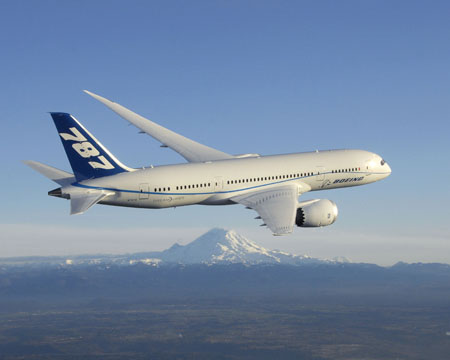 EVERETT, Wash., Feb. 24, 2011 /PRNewswire/ — The Boeing 787 Dreamliner made its 1,000th flight yesterday, marking another milestone in the flight test program. There are seven airplanes participating in flight testing. The landing of 787 flight test airplane ZA004, just after 1 p.m. MST at Yuma International Airport in Arizona, counted as the official 1,000th flight.


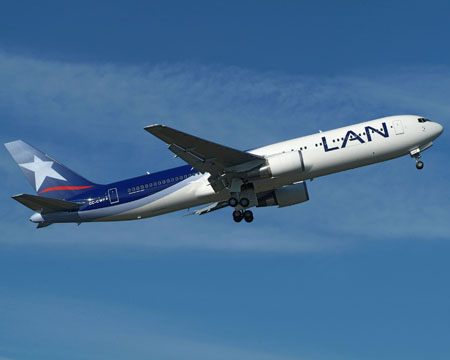 Additional 767-300ER airplanes part of the airline’s fleet expansion plans
 Washington State Leadership & Assistance for Science Education Reform (LASER) assists school districts with research-based science programs