Boeing

  • | | | |

    Smokey Continental Airlines Flight Lands at Newark


    Click to view full size photo at Airliners.net
    Contact photographer Heber Alejandro Doblado Perez

    What: Continental Airlines Boeing 737-700 en route from Newark to Boston
    Where: Newark Liberty Airport
    When: Jan 26, 2011
    Why: On take-off, the plane filled with smoke. The pilot announced that the smoke was due to de-icing procedures, and made an emergency landing in Newark. Weather conditions at the time included snow, and freezing temperatures.

    The plane made a safe landing with emergency services on standby.

  • | | | | |

    Qantas: AC Failure, Cabin Pressure


    Click to view full size photo at Airliners.net
    Contact photographer Allen Zhao

    What: Qantas B737-400 en route from Adelaide to Melbourne
    Where: Melbourne
    When: Jan 24, 2011
    Who: 99 passengers and six crew
    Why: On experiencing an air conditioning problem, (turning off an overheated air conditioning system and the second system shut down), the plane lost cabin pressure. Thirty minutes out of Melbourne, the pilot descended to 10,000 feet, and continued to make a safe landing at Melbourne.

  • | | |

    Air New Zealand Bird Strike

    What: Air New Zealand Boeing 737 en route from Dunedin to Wellington
    Where: Dunedin
    When: Jan 26, 2011 4: 50 pm
    Who: 115 passengers
    Why: 20 minutes after takeoff, the plane had a bird strike; a bird was ingested into an engine. The plane returned to make a safe landing

  • | |

    American Airlines Orders Two GE90-Powered Boeing 777s

    –EVENDALE, OHIO– American Airlines has ordered two new GE90-115B-powered Boeing 777-300ER aircraft. The aircraft will be delivered in late 2012.

    “GE Aviation is very pleased that American Airlines will be the first U.S. airline to operate the Boeing 777-300ER aircraft,” said Kevin McAllister, vice president and general manager of global sales for GE Aviation. “American and GE enjoy a relationship that started in the late 1960s, with American being the launch customer for the CF6-6 powered DC10-10. The entire GE team is excited to see that American will soon be operating our most advanced turbofan engine in service, the GE90-115B.”

    The Boeing 777-300ER, -200LR and 777 Freighters powered by GE90-115B engines have been highly popular aircraft/engine combinations. More than 580 of these aircraft have been ordered by 43 customers worldwide.

    At 115,000 pounds of thrust, the GE90-115B engine combines advanced technologies from the GE90 family with three-dimensional aerodynamic (3-D aero) compressor and wide-chord, swept composite fan blades for greater efficiency. The dual annular combustor emits no more than 40 percent of the hydrocarbons allowed by today’s international standards. Since entering service in 2004, the GE90-115B engine has proven to be one of the quietest engines per pound of thrust.

    Snecma of France, Avio SpA of Italy, and IHI Corporation of Japan are revenue-sharing participants in the GE90 program.

    The GE90-115B engine is part of GE’s “ecomagination” product portfolio — GE’s commitment to develop new, cost-effective technologies that enhance customers’ environmental and operating performance.

  • | |

    Boeing Expands Training Capability in Europe

    SEATTLE, Jan. 27, 2011 — Boeing Training & Flight Services has signed a long-term agreement with Blue1 to provide 717 training capabilities in Stockholm, Sweden, beginning the first quarter of 2011. Blue1 is a Scandinavian Airlines’ subsidiary based in Helsinki, Finland.

    “Enhancing safe and efficient flight operations, with cost-effective solutions implemented closer to our customer’s home bases is our main priority,” said Roei Ganzarski, chief customer officer, Boeing Training & Flight Services. “Through this partnership with Blue1, we are bringing our 717 training programs closer to our customers.”

    Blue1 operates five Boeing 717s with an additional four scheduled to enter its fleet by the end of March 2011. “As we transitioned to the 717, it became increasingly clear that we would benefit from a regional 717 training solution,” said Mr. Heikki Setala, head of Flight Operations, Blue1. “Boeing, as the original manufacturer of our airplanes, was wholly supportive of our needs and provided an overall cost-reducing solution.”

    The European Aviation Safety Agency-certified 717 full-flight simulator will be relocated from Boeing’s Atlanta campus to a training center in Stockholm. Boeing will continue to support its customers with 717 solutions in North America and Asia Pacific.

    Under the terms of the agreement, Boeing continues to hold the exclusive license to market the Stockholm-based 717 training capacity to third parties.

    Boeing Training & Flight Services offers comprehensive training solutions worldwide through its global network of campuses and other locations that best serve its customers’ needs.

    The Boeing 717 is a proven and reliable 100-seat jetliner, with more than 125 in active service with airlines today.

  • |

    Boeing Tests New Ka-band SATCOM Antenna System

    KENT, Wash., Jan. 27, 2011 — Boeing [NYSE: BA] announced today that it successfully conducted its first over-the-air ground test of a Ka-band satellite communications (SATCOM) phased-array antenna system that will enable wideband SATCOM on aircraft, providing increased bandwidth for networking in flight.

    This third-generation antenna system gives commercial and military aircraft operators worldwide the ability to offer communications using the growing fleet of commercial K- and Ka-band satellites. The low-profile antenna is also an option for government operators using military satellites such as the Wideband Global SATCOM (WGS) system. The active phased array system uses electronically controlled beams to transmit and receive signals from a designated satellite.
    The test demonstrated the new system’s ability to support a range of applications, including file transfer and a Voice over Internet Protocol videoconference.

    “This Ka-band phased-array antenna system supports a significant increase in bandwidth with a smaller antenna than previous Ku-band antennas, while still providing the same low profile, low drag, and lower cost of installation,” said Charles Toups, vice president and general manager, Boeing Network and Tactical Systems (N&TS). “Boeing is continuing to invest in secure data-communication technologies that will improve our customers’ ability to remain networked while mobile.”

    Boeing has more than 15 years of experience designing phased array antenna systems flying on commercial and military aircraft. Boeing developed the antenna as a joint effort between N&TS, part of Boeing Defense, Space & Security, and Boeing Research & Technology, a division of Boeing Engineering, Operations & Technology.

  • | |

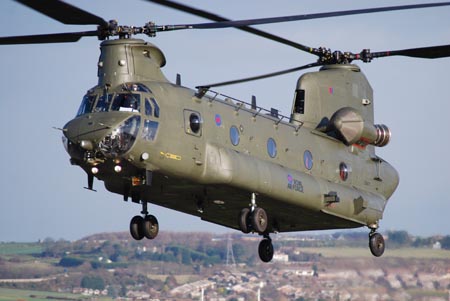
    Boeing, Netherlands MOD Mark 1st Flight of Royal Netherlands Air Force CH-47F (NL) Chinook

    Ridley Township, Pa., Jan. 26, 2011 — Representatives of Boeing [NYSE: BA], its suppliers and the Netherlands Ministry of Defence marked the first flight of the Royal Netherlands Air Force (RNLAF) CH-47F (NL) Chinook heavy-lift helicopter in a ceremony Jan. 25 at Summit Aviation in Middletown, Del.

    The aircraft made its first flight on Dec. 8 and is scheduled to complete its flight test program in August after approximately 100 flight hours. There are two aircraft in flight test.

    The RNLAF has ordered six CH-47F (NL) Chinooks to enhance its current fleet of 11 CH-47D (NL) aircraft. The new Chinooks are equipped with survivability equipment, a forward-looking infrared system, and fast rope positions, which will be used to support Special Forces operations. The engines will include air particle separators for operation in harsh environments. These additions will make the RNLAF CH-47F a versatile, multi-role aircraft for worldwide operations.

    Boeing expects to begin delivering the aircraft later this year, making the RNLAF the first international customer to field the new CH-47F.

    The flight tests have included assessments of the advanced operational capabilities enabled by the aircraft’s Avionics Control and Management System cockpit and newly integrated Digital Automatic Flight Control System. By the conclusion of the tests, the aircraft will be certified airworthy by the Netherlands Military Aviation Authority.

    “The Chinook has over the years proven itself to be a true workhorse for the Netherlands Air Force,” said Air Commodore Theo ten Haaf, Commanding Officer Defence Helicopter Command of the RNLAF. “The aircraft proved to be ‘the right tool’ for a difficult and challenging job, especially in austere environments and during the combined air and ground operations in Afghanistan. Both ground troops and aircrew speak highly of it.”

    He added, “The CH-47F is a major improvement over the 47D model. The arrival of these new aircraft in the RNLAF will ensure that the RNLAF continues to operate with the best in the field of tactical transport helicopter operations both now and in the future.”

    “Our goal is to use available technology to provide customers with the best solutions while enabling long-term sustainability,” said Leanne Caret, H-47 Programs vice president for Boeing. “We have a long-standing relationship with the Netherlands and this new aircraft is another example of our focus on providing advanced solutions to meet our customers’ growing demands.”

    The Netherlands MOD and Boeing also are evaluating a potential upgrade of the current CH-47D (NL) Chinook fleet to the new CH-47F (NL) configuration.

  • |

    Boeing, Alaska Airlines Complete Contract for 15 Next-Generation 737s

    SEATTLE, Jan. 25, 2011 /PRNewswire/ — Boeing (NYSE: BA) and Alaska Airlines today announced an order for 15 Next-Generation 737 airplanes, comprised of 13 737-900ERs (extended range) and two 737-800s. The 737-900ER is a new model for the Alaska Airlines fleet. The contract, which includes exercised options previously placed by Alaska, is valued at $1.3 billion at list prices.

    The largest and newest model in the 737 family, the 737-900ER can carry up to 26 more passengers or fly about 500 nautical miles (926 km) farther than the 737-900. The longer range of the 737-900ER will connect distant city pairs across continents, such as Seattle to Orlando, Fla., in a generous two-class configuration. It has substantial economic advantages over competing models, including six percent lower operating costs per trip and four percent lower operating costs per seat mile. Alaska Airlines plans to operate the 737-900ER in a two-class configuration with 178 to 184 seats.

    “The reliability and efficiency of our 737 fleet has been a direct contributor to our strong financial performance,” said Brad Tilden, president of Alaska Airlines. “The 737-900ER will be a perfect fit for our transcontinental, high traffic west coast and mid-continental markets and will be the most fuel efficient airplane in our fleet. We look forward to adding the same ‘Proudly All Boeing’ logo to these airplanes that already adorns the rest of our 737 fleet.”

    The Next-Generation 737s will add capability to Alaska Airlines’ fleet of 114 737s currently serving 61 destinations in the United States, Canada and Mexico.

    “Alaska Airlines has established a strong record of operational and financial performance by operating a highly efficient and flexible all-Boeing 737 fleet,” said Marlin Dailey, vice president of Sales and Marketing for Boeing Commercial Airplanes. “The addition of these Next-Generation 737s demonstrates our hometown partner’s strong investment in its future growth. It also speaks to the continuous improvements we are making to the Next-Generation 737 in terms of efficiency, economics, reliability and passenger comfort.”

    The Next-Generation 737 family is the world’s best-selling commercial jetliner. Demand for the Next-Generation 737 has led Boeing to announce two production rate increases, leading to the highest-ever production rates for the airplane in 2013.

  • |

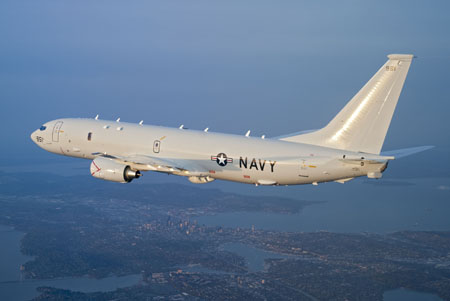
    Boeing Receives $1.6B Contract for P-8A Poseidon Low-Rate Initial Production


    SEATTLE, Jan. 25, 2011 — Boeing [NYSE: BA] on Jan. 21 received a $1.6 billion contract from the U.S. Navy for low-rate initial production (LRIP) of the P-8A Poseidon aircraft. The LRIP 1 contract is for six P-8A aircraft, spares, logistics and training devices.

    The Navy plans to purchase 117 of the Boeing 737-based P-8A anti-submarine warfare, anti-surface warfare, intelligence, surveillance and reconnaissance aircraft to replace its P-3 fleet. Initial operational capability is planned for 2013.

    “Providing these production aircraft to the Navy fleet on schedule is our No. 1 goal,” said Chuck Dabundo, Boeing vice president and P-8 program manager. “This is an exciting day for Boeing and the Navy and a testament to the P-8 team’s hard work and determination.”

    “This first production contract represents a significant commitment by the U.S. Navy to recapitalize its force of long-range maritime patrol and reconnaissance aircraft,” said Capt. Leon Bacon, P-8A deputy program manager for the Navy. “Ensuring that this capability arrives on schedule and within budget remains our primary objective.”

    Boeing will begin final assembly of the first LRIP aircraft at its Renton, Wash., facility this summer. The Poseidon team is using a first-in-industry in-line production process that draws on Boeing’s Next-Generation 737 production system. All P-8A-unique aircraft modifications will be made in sequence during fabrication and assembly.

    “The in-line approach we’ve incorporated on this military derivative aircraft is already paying the dividends we expected by helping us improve efficiency and reduce costs,” said John Pricco, Boeing Commercial Airplanes P-8 program manager.

    As part of the U.S. Navy System Development and Demonstration contract awarded to Boeing in 2004, the team is building and testing six flight-test and two ground-test aircraft. The first three flight-test planes, T1, T2 and T3, are completing testing at Naval Air Station Patuxent River, Md. The program’s static test plane, S1, recently completed its test program, which began in May 2009; S2, the fatigue test plane, will begin testing later this year.

    A derivative of the Next-Generation 737-800, the Poseidon is built by a Boeing-led industry team that includes CFM International, Northrop Grumman, Raytheon, Spirit AeroSystems, BAE Systems and GE Aviation.

  • |

    Boeing Names 3 to Business Development Leadership Positions

    ST. LOUIS, Jan. 24, 2011 — Boeing [NYSE: BA] today announced that it has named three Business Development leaders to new positions within its Boeing Defense, Space & Security (BDS) business unit:

    • Tom Bell, vice president of Strategic Development for BDS
    • Bill Bonadio, vice president of Business Development for Network and Space Systems (N&SS)
    • Jeff Kohler, vice president of Business Development for Boeing Military Aircraft (BMA).

    Previously, Bonadio was vice president of Strategic Development for BDS, Bell served as vice president of Business Development for Boeing Military Aircraft, and Kohler was vice president of BDS International Market Strategy.

    All three remain based in Arlington, Va.

    In his new position, Bell will provide leadership on business strategy and facilitate efforts to grow both core business and adjacent markets.

    “Having considerable international, sales and strategy experience with two of our businesses, Tom is highly qualified to lead Strategic Development for BDS,” said Chris Raymond, vice president of BDS Business Development.

    Bell joined Boeing in 1988. He holds a bachelor’s degree in sociology and business from Louisiana State University, Baton Rouge, and a master’s degree in business administration from the Florida Institute of Technology, with a concentration in international contracts.

    Bonadio is responsible for all aspects of strategy, sales, and customer relations for the N&SS portfolio, its divisions and programs.

    “Bill understands our customers’ perspectives and requirements, and he’ll bring that knowledge to bear within N&SS,” said Roger Krone, president of N&SS.

    Prior to joining Boeing in 2006, Bonadio was a vice president of Business Development at Danaher Corporation, and also worked in management consulting with Bain & Co. A former U.S. Navy submarine officer, Bonadio holds a bachelor’s degree in mechanical engineering from Bucknell University and a master’s in business administration from the J.L. Kellogg Graduate School of Management at Northwestern University.

    Kohler is responsible for all aspects of strategy, sales, and customer relations for the BMA portfolio, its divisions and programs.

    “Jeff brings significant international and customer experience to his new position, which will serve him and our business well as we look to increase market share internationally while continuing to grow our core business domestically,” said Chris Chadwick, president of BMA.

    Kohler joined Boeing in 2007 after a 34-year career with the U.S. Air Force. He holds a Bachelor of Science degree from the U.S. Air Force Academy and a master’s degree in history from the University of Indiana.

  • |

    Boeing Begins Flight Testing UK Chinook Mk4

    LONDON, Jan. 24, 2011 — Boeing and its Boeing Defence UK subsidiary today announced that the Boeing UK Rotorcraft Support team has begun flight testing the first Chinook Mk4 helicopter for the Royal Air Force (RAF). The first flight took place on Dec. 9 in Hampshire, England.

    “Project JULIUS, as the Mk4 program is known, will modernize the current Royal Air Force Chinook fleet – essentially giving us new aircraft,” said Chris White-Horne, Mk4 project team leader for the United Kingdom Ministry of Defence.
    Project JULIUS will modify 38 Mk2/2A Chinooks into the Mk4/4A configuration and eight Mk3 Chinooks into the Mk5 configuration. All the aircraft will be delivered to RAF Odiham in Hampshire.

    A major part of the modification for both the Mk4/4A and Mk5 aircraft is the Thales TopDeck cockpit. Thales UK is under contract with Boeing to supply its Cockpit Display System/Mission Avionic System, which will provide improved situational awareness, increased safety and options for capability enhancement. The upgraded and integrated cockpit display includes four multifunction displays, two stand-by flight displays, updated communications interfaces, and two new air data computers.
    “The first of the modified JULIUS Chinook helicopters is expected to be available to commanders before the end of 2011,” said David Pitchforth, managing director, Boeing UK Rotorcraft Support. “The entire Mk2 fleet will be fitted with the JULIUS cockpit by early 2015, followed by Mk2A and Mk3 modifications by 2015 and 2016, respectively.”

    The modifications also include the addition of a third crew-member seat and an update of Airworthiness & Safety Certification and Qualification for the modernized Chinook. The aircraft are being modified at the Gosport Fleetlands facility operated by Vector Aerospace, Boeing’s principal subcontractor for deep support of the RAF Chinook fleet. Vector Aerospace has established a dedicated production line at Fleetlands to support the JULIUS program, with specialist component manufacture provided from its Almondbank facility near Perth, Scotland.

    “Vector Aerospace is delighted to be associated with this significant milestone. It is a testimony to the skill and dedication of our teams in Fleetlands and Almondbank, who have worked in a spirit of true partnership with our customer Boeing and the key equipment suppliers,” said Tim Rice, managing director, Vector Aerospace UK.

  • | | | | |

    Southwest Airlines Emergency Landing in Oakland

    What: Southwest Airlines Boeing 737-700, en route from San Francisco to Chicago
    Where: Oakland
    When: Jan 22nd 2011 2:51 pm
    Who: 86 passengers
    Why: While en route, the pilot of the Southwest Airlines Boeing received a warning message indicating a fire in wheel well. The pilot diverted to Oakland and made a safe landing where passengers disembarked and waited to transfer to another plane.

  • |

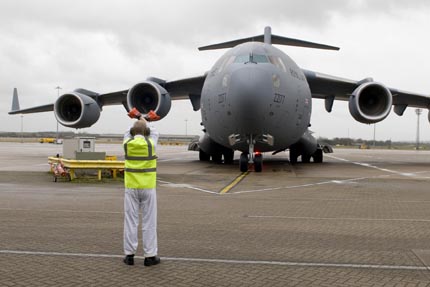
    7th Boeing C-17 for Royal Air Force Arrives in United Kingdom


    LONDON, Jan. 21, 2011 — Boeing and its Boeing Defence UK subsidiary today announced the arrival of the Royal Air Force’s seventh C-17 Globemaster III airlifter at RAF Brize Norton in Oxfordshire, England. The aircraft was officially delivered on Nov. 16 from Boeing’s facility in Long Beach, Calif., and underwent modifications at the company’s San Antonio facility before flying to the United Kingdom.

    “The RAF C-17 fleet, along with the rest of the Airbridge, delivers an incredible capability to our deployed forces on the front line,” said Air Officer Commanding 2 Group, Air Vice-Marshal Philip Osborn, Royal Air Force. “I am also extremely proud of the outstanding contribution that all our aircraft and personnel are making toward continued progress in Afghanistan.”

    Assigned to 99 Squadron at RAF Brize Norton, the UK fleet of C-17s provides critical airlift capability for the nation’s Joint Rapid Reaction Force and has supported humanitarian and disaster-relief missions to Pakistan, Haiti and Chile. 99 Squadron’s C-17s are equipped with upgraded software and avionics, as well as additional fuel tanks that extend the aircraft’s nautical mile range to over 4,000 miles. In normal operations, the aircraft carries a crew of three — two pilots and one air-loadmaster.

    “May 2011 will mark the 10th anniversary of the delivery of the Royal Air Force’s first C-17, which continues to perform superbly — anytime and anywhere,” said Boeing UK C-17 Program Manager Liz Pace. “The RAF uses its C-17s more than any other service today, which is why it has surpassed 60,000 flight hours with just six aircraft.”

    The UK Ministry of Defence announced it would acquire its seventh C-17 in December 2009, less than one year before delivery.

    Boeing supports the RAF’s C-17s through the C-17 Globemaster III Sustainment Partnership, a performance-based logistics program, at RAF Brize Norton, the RAF’s main operating base for strategic air transport and air-to-air refueling. The arrangement provides the RAF with the benefits of complete “virtual fleet” access and an extensive support network. The virtual fleet concept enables C-17 customers, especially those with smaller numbers of aircraft, to benefit from worldwide parts availability and economies of scale when purchasing materials.

    Boeing Defence UK Ltd. is a wholly owned subsidiary of The Boeing Company and a business unit of Boeing Defense, Space & Security. It currently has employees at 20 locations throughout the UK supporting Ministry of Defence and U.S. military programs.

  • | |

    Delta Kicks Off 70th Anniversary Year as Atlanta’s Hometown Airline

    Celebration includes christening of Delta Boeing 777 as the “Spirit of Atlanta”

    Jan 21, 2011

    ATLANTA, Jan. 21, 2011 — When Lynda Lloyd boarded her first Delta Air Lines flight in Atlanta as a flight attendant in 1964, the airline had recently become the first commercial carrier to fly across the country in less than three hours and had just launched the industry’s most sophisticated electronic reservations system, all under the watchful eye of company founder and then-chief executive C.E. Woolman.

    Today, Lloyd, Delta’s most senior employee who lives and works in Atlanta, will join hundreds of her fellow Atlanta-based employees as well as elected, community and business leaders from across Georgia to mark the airline’s 70th anniversary as Atlanta’s hometown airline.

    A Delta Boeing 777-200LR aircraft used to connect Atlanta nonstop to cities such as Tokyo, Dubai, Johannesburg and Tel Aviv, will be christened as the “Spirit of Atlanta” during a celebration at Delta’s massive Technical Operations Center, adjacent to Hartsfield-Jackson Atlanta International Airport and in the shadow of the $1.4 billion Maynard H. Jackson Jr. International Terminal currently under construction.

    Delta (NYSE: DAL), today among the largest airlines in the world, was a small carrier focused on the Southeast when it moved its headquarters from Monroe, La., to Atlanta in 1941. In the decades that followed, Delta built the world’s largest connecting hub in Atlanta, and for more than two decades has remained Georgia’s largest private employer and a major economic force in the region.

    With 25,000 employees based in Atlanta, Delta is estimated to pump more than $25 billion into the local economy, and is a major contributor to key community organizations, including the Grady Health Foundation, the Woodruff Arts Center, AID Atlanta, Hands On Atlanta, Habitat for Humanity, CARE, the Carter Center and the National Center for Civil and Human Rights.

    “Delta Air Lines and Atlanta have a unique partnership that has been inextricably linked to the success and prosperity of our city and our airport for nearly three quarters of a century,” said Atlanta Mayor Kasim Reed. “The strong relationships among companies such as Delta, state and local elected officials and civic organizations are what make Atlanta not only a global, dynamic city, but a great place to live and do business. Congratulations to Delta Air Lines, Chief Executive Officer Richard Anderson and all employees on the company’s 70th anniversary as Atlanta’s hometown airline.”

    “Delta is truly an economic force for Georgia,” said Georgia Gov. Nathan Deal. “It is our biggest employer and its presence here plays a key role in helping us attract new investment and jobs. I look forward to partnering with Delta as it sets out on the next 70 years.”

    “The success of Delta and the city of Atlanta have been intertwined for seven decades, and it’s hard to argue with the results,” said Richard Anderson, Delta’s chief executive. “Atlanta has grown into a major international city while Delta built the world’s largest hub at the city’s airport. Central to this success has been the historic partnership between Delta, the city of Atlanta, the state of Georgia and our thousands of Atlanta-based employees and customers.”

    Recognizing one of Atlanta’s longest and most successful business partnerships, the “Spirit of Atlanta” will be christened at the celebration with a bottle of Coke. Muhtar Kent, chairman and chief executive of the Coca-Cola Company, will be honored and make remarks at the celebration.

    In addition, Lloyd will be honored as the Delta employee who has lived and worked in Atlanta the longest. The airline also will recognize its most frequent Atlanta flyer, Ed Robinette, who has flown nearly 7 million miles on Delta over the past 30 years, and Cheryll Davis, Delta’s most active Atlanta-based community volunteer, who has dedicated thousands of hours during her 20-year Delta career to the airline’s preferred local charities.

    “As a longtime Atlanta resident it’s been so exciting to be part of this airline, which is such a positive force for the community,” Lloyd said. “It was the very best decision of my life, to come to Atlanta, remain here, and be a Delta Flight Attendant. I am still enjoying the very best job in the world. It always makes me proud when I tell people I work for Delta.”

    “Two years ago, I moved my business to Atlanta because of the great flights and service offered by Delta, and I’m not the only one, we have so many businesses based in Atlanta solely because of Delta,” said Robinette, who has been a member of the Delta SkyMiles frequent flier program since its inception in 1981. “I’ve flown 7 million miles on Delta, and I can honestly say I don’t remember a single bad experience.”

    “Delta has always encouraged its employees to become involved in our communities, and service is a big part of being a member of the Delta family,” said Davis. “As an Atlanta resident, it’s great that Delta is so supportive of our community, and it’s one of the benefits of being Delta’s hometown.”

    “It gives me great pleasure to congratulate Delta on its 70th anniversary as Atlanta’s hometown airline,” said U.S. Sen. Saxby Chambliss, R-Ga. “Delta Air Lines has come a long way since its beginnings in Monroe, La., to the international commercial airline it is today. For seven decades, Delta has thrived, employing thousands of Georgians and becoming an integral part of our communities. Delta has established itself as an economic engine not only for Georgia, but for the entire Southeast. I am grateful that such a company calls Atlanta its home.”

    “As Georgians, we are all proud to be recognizing Delta’s 70th anniversary as our hometown airline,” said U.S. Sen. Johnny Isakson, R-Ga. “Over the past seven decades, Delta has become an integral part of the community, bringing jobs, businesses and great opportunities to the state of Georgia by connecting us to cities across the country and the world.”

    Delta Air Lines serves more than 160 million customers each year. With an industry-leading global network, Delta and the Delta Connection carriers offer service to 357 destinations in 67 countries on six continents. Headquartered in Atlanta, Delta employs more than 75,000 employees worldwide and operates a mainline fleet of more than 700 aircraft. A founding member of the SkyTeam global alliance, Delta participates in the industry’s leading trans-Atlantic joint venture with Air France-KLM and Alitalia. Including its worldwide alliance partners, Delta offers customers more than 13,000 daily flights, with hubs in Amsterdam, Atlanta, Cincinnati, Detroit, Memphis, Minneapolis-St. Paul, New York-JFK, Paris-Charles de Gaulle, Salt Lake City and Tokyo-Narita. The airline’s service includes the SkyMiles frequent flier program, the world’s largest airline loyalty program; the award-winning BusinessElite service; and more than 50 Delta Sky Clubs in airports worldwide. Delta is investing more than $2 billion through 2013 in airport facilities and global products, services and technology to enhance the customer experience in the air and on the ground. Customers can check in for flights, print boarding passes, check bags and review flight status at delta.com.

  • |

    Boeing and SAIC Submit Revised Ground Combat Vehicle Proposal to US Army

    The Boeing Company [NYSE: BA] has teamed with Science Applications International Corporation (SAIC) [NYSE: SAI] to submit a revised proposal for the technology development phase of the U.S. Army’s Ground Combat Vehicle (GCV) program. The team originally submitted a proposal in May, but the initial Request for Proposal was rescinded and a second request was issued in November.

    The SAIC-led GCV team, known as Team Full Spectrum, remains intact from its original proposal effort. SAIC will be the prime contractor, with Boeing, Krauss-Maffei Wegmann and Rheinmetall Defence as subcontractors. The team’s offering draws on experience gained from the Puma and Manned Ground Vehicle programs and will be built in the United States with a team of experienced American small- and mid-tier supplier businesses.

    “Team Full Spectrum has again put together an exceptional proposal to answer the Army’s requirement for a modern infantry fighting vehicle,” said Charles Toups, vice president and general manager of Boeing Network and Tactical Systems. “We have focused on the four key elements the Army has emphasized – capacity for a nine-soldier dismounted squad; a schedule that will allow production in seven years; force protection; and full-spectrum operations from civil relief through full combat operations. Our proposal offers mature technology for unequaled capability at the lowest possible risk.”

    The team’s focus is to provide a solution that balances the technology the customer requires with the speed it needs to meet operational goals.

    “Our offering is designed to protect soldiers by decreasing their burden of mechanical tasks so they can concentrate on accomplishing their mission,” said Deb Alderson, SAIC group president. “In addition, our team’s high technical readiness levels will help us meet the Army’s timeline.”

    The GCV program will replace aging fighting vehicles currently in the Army’s inventory with a single platform capable of carrying an entire squad and protecting that squad from improvised explosive devices and other threats of modern warfare. The Army will award up to three technology demonstration contracts worth approximately $450 million each, with a 24-month time frame for development. The contract awards are expected in the second quarter of this year.

  • | | | |

    Cracked Windshield on takeoff

    This is the weather for cracked windshields. One almost wonders if maintenance crews are using hot water on that cold glass in Denver.
    We see:

    Denver: Skywest CRJ7-Cracked windshield
    Denver: Skywest CRJ12-Cracked windshield
    Denver: B752-Cracked windshield

    Cold makes glass more brittle so that it can crack more easily without additional stresses. We also have:

    Valdosta: PSA CRJ7 Cracked windshield

    Do think that PSA flight flew from Charlotte NC to Tallahassee by way of Denver?

  • | | |

    Turbulence Over Florida


    Click to view full size photo at Airliners.net
    Contact Nino Buda-CYYZ Aviation Photography

    What: Air Transat/ Boeing 737-800, en route from Havana Cuba to Montreal,QC Canada
    Where: Florida
    When: Jan 17th 2011
    Who: 167 aboard
    Why: While en route south of Miami, the plane encountered turbulence. The seat belt sign was on, and cabin crew were seated. The flight experienced turbulents for about two minutes and the plane dropped 500 feet before stabilizing. There were no injuries. The flight continued on to Montreal.

  • | |

    Statement on Chinese Approval of 200 Boeing Aircraft

    SEATTLE, Jan. 19, 2011 — Boeing (NYSE: BA) is pleased to have received final approval today from the Chinese Government confirming a $19 billion aircraft agreement.

    China’s approval of airline contracts for 200 orders covers aircraft to be delivered over a three-year period, 2011-2013. The approval helps Boeing maintain and expand its market share in the world’s fastest growing commercial aircraft market. Comprised of 737s and 777s, the agreement positively impacts more than 100,000 jobs including those at Boeing and with its thousands of suppliers throughout the U.S.

    “We value China’s support for our products and its confidence in Boeing,” said Jim Albaugh, president and CEO, Boeing Commercial Airplanes. “With the outstanding support provided by the United States Government, this deal is a win-win for the Boeing-China partnership, which is approaching its 40th anniversary.”

    Today, Boeing jets are a mainstay in China’s air travel and cargo system, representing more than 50 percent of all commercial jetliners operating in China. Over the next 20 years, Boeing projects that China will need 4,330 new airplanes, worth more than $480 billion, and will be Boeing’s largest commercial airplane customer.

  • | |

    Boeing, American Airlines Complete Contract for Two 777-300ERs

    American Airlines becomes the first U.S. airline to order the 777-300ER

    SEATTLE, Jan. 19, 2011 — Boeing (NYSE: BA) and American Airlines today announced the Fort Worth, Texas-based carrier has exercised options for two 777-300ERs (extended range).

    “American Airlines is an industry leader whose vision and disciplined approach to growth has made it one of the largest airlines in the world,” said Boeing Commercial Airplanes President and CEO Jim Albaugh. “American is the first carrier in the United States to order the 777-300ER. These new airplanes will complement their large fleet of 777-200ERs offering additional flexibility in serving the nonstop routes, while providing increased efficiency and reliability.”

    The Boeing 777 is the world’s most successful twin-engine, long-haul airplane. The 777-300ER extends the 777 family’s span of capabilities, bringing twin-engine efficiency and reliability to the long-range market.
    “These additional wide-body aircraft will bolster our network strategy, particularly the international growth opportunities we expect from our joint businesses with oneworld® partners in the transatlantic and transpacific markets,” said Tom Horton, President, AMR Corp., the parent company of American Airlines and American Eagle. “We value the combination of size, range and performance of the 777-300ER, as well as the extensive customer amenities it offers. The seating capability of the aircraft will give us growth flexibility in slot-constrained airports and provide us with greater ability to serve new long-haul markets.”

    The Boeing 777-300ER is 19 percent lighter than its closest competitor. It produces 22 percent less carbon dioxide per seat and costs 20 percent less to operate per seat. The airplane can seat up to 365 passengers in a three-class configuration and has a maximum range of 7,930 nautical miles (14,685 km). The 777 family is the world’s most successful twin-engine, twin-aisle airplane.

    Boeing incorporated several performance enhancements for the 777-300ER, extending its range and payload capabilities. Excellent performance during flight testing, combined with engine efficiency improvements and design changes that reduce drag and airplane weight, contributed to the increased capability.

  • |

    Robert E. Verbeck Named New CFO for Boeing Defense, Space & Security

    ST. LOUIS, Jan. 19, 2011 — The Boeing Company today announced that it has named Robert E. Verbeck, 51, chief financial officer of its $34 billion (2009 revenues) Boeing Defense, Space & Security (BDS) business. He succeeds Randy Simons, who is retiring.

    “In our business, we have to keep building momentum around our strong performance culture to best serve our customers and earn the opportunity to grow,” said Dennis Muilenburg, president and CEO of BDS. “Bob’s practical know-how in all disciplines of business finance will help us compete and innovate more effectively. His experience will have a direct impact on our ability to drive performance in all dimensions for our stakeholders, including customers, shareholders, employees and local communities.”

    Verbeck most recently served as CFO for the Boeing Military Aircraft business unit of BDS. He previously held posts as BDS controller, program manager for the United Kingdom tanker program, and general manager of BDS Finance.
    Verbeck reports to Muilenburg and James Bell, Boeing executive vice president and chief financial officer. As BDS CFO, he is responsible for reporting on the financial performance of BDS and its three business segments — Boeing Military Aircraft, Network & Space Systems, and Global Services & Support. Verbeck leads more than 6,000 global finance employees making up teams in financial planning and analysis, accounting, estimating, contracts and pricing, procurement financial analysis, integrated scheduling, rate forecasting, earned value management compliance, and productivity improvement.

    Verbeck joined McDonnell Douglas, a Boeing heritage company, in 1986 in the Finance organization after working as a steelworker. He holds a bachelor’s degree in economics from Southern Illinois University and a master’s degree in international business from Saint Louis University (SLU). He has served as the Boeing executive focal for SLU and is currently a member of the advisory council for the university’s Boeing Institute of International Business.

  • | | | |

    Czech Plane Lands Due to Undisclosed Mechanical Problem


    Click to view full size photo at Airliners.net
    Contact photographer Erik Lofgren Bengtson

    What: Czech Airlines Boeing 737-500 en route from Sofia to Prague
    Where: Sofia
    When: Jan 18th 2011
    Who: 30 passengers
    Why: While en route, the pilots encountered mechanical problems with the plane.

    They diverted to Hungary where they made a safe landing. Mechanics in Hungary made repairs.

  • |

    Boeing Sets 787 First Delivery for Third Quarter

    EVERETT, Wash., Jan. 18, 2011 /PRNewswire/ — Boeing (NYSE: BA) announced today that it expects delivery of the first 787 Dreamliner in the third quarter of this year. The new delivery date reflects the impact of an in-flight incident during testing last November and includes the time required to produce, install and test updated software and new electrical power distribution panels in the flight test and production airplanes.

    “This revised timeline for first delivery accommodates the work we believe remains to be done to complete testing and certification of the 787,” said Scott Fancher, vice president and general manager of the 787 program. “We’ve also restored some margin in the schedule to allow for any additional time that may be needed to complete certification activities,” Fancher said.

    The 787 program has been gradually returning individual airplanes to the flight test program. After receiving interim software and hardware improvements, four flight test airplanes have been subjected to extensive ground testing and a thorough review to ensure their readiness to return to flight. The remaining two airplanes will be returning to flight in the days ahead to bring the full flight test fleet back up to flight status.

    The revised first delivery date is not expected to have a material impact on 2010 financial results. Financial guidance and anticipated initial 787 deliveries for 2011 will be discussed in the company’s earnings call on Jan. 26.

  • |

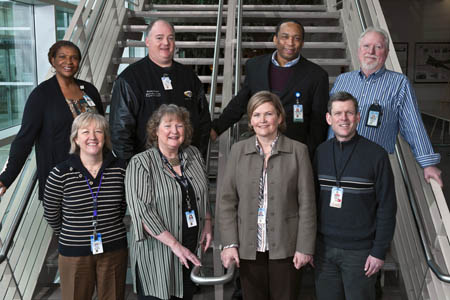
    Employees Community Fund of Boeing Puget Sound Elects New Board Trustees


    SEATTLE, Jan. 17, 2011 /PRNewswire/ — The Employees Community Fund (ECF) of Boeing (NYSE: BA) Puget Sound has elected a new slate of board trustees for 2011.

    Pictured from left to right: (first row) Patty Rhodes, first-year trustee; Joyce Nugent, secretary; Andrea Hutchins, first-year trustee; and Bob Malone, treasurer; (second row) Sukari Mdogo, vice president; Robley Evans, president; Renard Burnett, first-year trustee; and Dave Hopkins, first-year trustee.
    Serving for two years, ECF trustees manage the day-to-day operations of the Puget Sound region fund. Since 1951, Boeing employees have donated more than $500 million to ECF Puget Sound, which celebrates its 60th birthday on Sept. 20. The companywide Boeing ECF is one of the world’s largest employee-owned and operated charitable funds.

  • | | | |

    Ryanair Vibration on Landing


    Click to view full size photo at Airliners.net
    Contact photographer Jussi Seppala

    What: Ryanair Boeing 737-800, registration EI-DLJ performing flight FR-9052 from Alicante Spain to Brussels Belgium
    Where: Brussels
    When: Jan 18th 2011
    Why: On approach to landing in Charleroi, the plane developed engine vibrations.

    The flight made a safe landing. No report has been released regarding the cause of the engine vibration.

  • | | | |

    Qantas Diverts Due to Faulty fuel Valve


    Click to view full size photo at Airliners.net
    Contact photographer Aldo Bidini

    What: Qantas Boeing 747-400 en route from Sydney,NS (Australia) to Los Angeles,CA
    Where: Nadi, Fiji
    When: Jan 18th 2011
    Why: While en route to Los Angeles, the plane’s engine 4 developed fuel valve problems. The flight diverted to Nadi where they made a safe landing. Passengers were processed by 3 immigration officers.

    The number of passengers was not available.

    25 Qantas economy passengers were offered a ride on the Air Pacific FJ810 service from Nadi to LAX without their luggage. Other passengers took advantage of overnight accommodations as they waited for a replacement flight to come from Sydney. Apparently their first replacement flight also had to be replaced.