I don’t know if we should blame George Jetson and his hover car commute to work, or Bruce Willis’s talkative flying taxi in The Fifth Element, but the fiction world (or at least the world according to movie directors) predicts a day when flying cars will endure a traffic filled commute identical to gridlock traffic that occurs on rush hour highways. It’s a completely irrational view, given the state of contemporary air traffic control. I don’t see it happening. At least, not until planes or flying cars can defy gravity and manage to hover motionless on demand, the flying car commute to work can’t happen. Not with our current protections. And that’s a good thing. The extra safety measures we have today are essential, because because gravity works. We can only hope our safety measures are adequate, or better than adequate. Just to keep from falling, physics requires that planes have to hurtle through the air at high speed to stay aloft, and require a multitude of safety measures to keep from colliding at all angles. Planes rely on pilots, of course, but also air traffic control, which is supposed to monitor plane trajectory and make certain that planes are miles apart. Commercial planes also have the TCAS (traffic collision avoidance) system which relies on on board transponders that monitor airspace around a plane, in order to avoid airborne collisions.
I have ranted before about the misnomer of the near miss. If two planes nearly collide, they nearly hit. If they almost miss (i.e. near miss), then it must have actually hit. So I dislike the term, because it doesn’t mean what it sounds like it means. I’d be happy to play around with the semantics, though, if it meant we could avoid the actual situation of planes colliding or nearly colliding. It’s a crucial thing to consider, especially since there were two near air collisions plus a collision a couple of weeks ago.
One (nearly) happened when a United Airlines San Francisco-Newark flight (155 passengers and six crew), and a Newark-Memphis ExpressJet (47 passengers and three crew) flew within 200 feet laterally and 400 feet vertically. The Expressjet was taking off; and the United pilot was ordered to abort their landing, and circle the airport but instead chose to land the plane.
The preliminary report for the United flight says that “on Thursday, April 24, 2014, about 1503 eastern daylight time, a near midair collision occurred at Newark Liberty International Airport (EWR), Newark, New Jersey, when an Embraer ERJ145, departing EWR runway 4R for Memphis, Tennessee, passed in close proximity to a Boeing 737-800 arriving from San Francisco, California, intending to land on runway 29. Both aircraft were on regularly scheduled 14 Code of Federal Regulations Part 121 passenger flights and under control of EWR airport traffic control tower (ATCT) at the time of the incident. There was no damage reported to either aircraft, or any injuries to passengers or crew.
The B737 contacted the EWR tower on the Bridge Visual approach to runway 29. The local controller instructed the pilot to follow a B717 ahead, and cleared the pilot to land on runway 29. When the B717 was on short final, the local controller instructed the ERJ145 pilot to line up and wait on runway 4R. After the B717 crossed runway 4R, the local controller cleared the ERJ145 for takeoff. At that time, the B737 was about three miles from the runway 29 threshold. The ERJ145 did not actually begin its takeoff roll until the B737 was about 1 mile from the runway 29 threshold. The local controller recognized that the spacing was insufficient and instructed the B737 to go around. He provided traffic advisories to both the B737 and the ERJ145 pilots and instructed the ERJ145 pilot to maintain visual separation from the B737. The ERJ145 pilot responded that he was going to keep the aircraft’s nose down. The B737 overflew the ERJ145 at the intersection of runways 29/4R.
According to recorded Federal Aviation Administration radar data, the closest lateral and vertical proximity was approximately 0.03 miles and 400 feet.”
The preliminary report for the ExpressJet flight says that “On Thursday, April 24, 2014, about 1503 eastern daylight time, a near midair collision occurred at Newark Liberty International Airport (EWR), Newark, New Jersey, when an Embraer ERJ145, departing EWR runway 4R for Memphis, Tennessee, passed in close proximity to a Boeing 737-800 arriving from San Francisco, California, intending to land on runway 29. Both aircraft were on regularly scheduled 14 Code of Federal Regulations Part 121 passenger flights and under control of EWR airport traffic control tower (ATCT) at the time of the incident. There was no damage reported to either aircraft, or any injuries to passengers or crew.
The B737 contacted the EWR tower on the Bridge Visual approach to runway 29. The local controller instructed the pilot to follow a B717 ahead, and cleared the pilot to land on runway 29. When the B717 was on short final, the local controller instructed the ERJ145 pilot to line up and wait on runway 4R. After the B717 crossed runway 4R, the local controller cleared the ERJ145 for takeoff. At that time, the B737 was about three miles from the runway 29 threshold. The ERJ145 did not actually begin its takeoff roll until the B737 was about 1 mile from the runway 29 threshold. The local controller recognized that the spacing was insufficient and instructed the B737 to go around. He provided traffic advisories to both the B737 and the ERJ145 pilots and instructed the ERJ145 pilot to maintain visual separation from the B737. The ERJ145 pilot responded that he was going to keep the aircraft’s nose down. The B737 overflew the ERJ145 at the intersection of runways 29/4R.
According to recorded Federal Aviation Administration radar data, the closest lateral and vertical proximity was approximately 0.03 miles and 400 feet.”
A second close call occurred outside of Hawaii; but the preliminary reports have not been posted yet. Proximity between United Airlines Kona-Los Angeles Flight 1205 and a westbound US Airways Jet initiated a TCAS alert on the United flight. The Los Angeles-bound United pilot took evasive action and made a steep dive to avoid a collision. TCAS (and the alert pilot) saved the day, after what appears to have been an air traffic control error on the ground in Honolulu.
All four of the planes were better off than the two planes that collided on April 27, in Port Richmond, resulting in one fatality and two injuries. A Cessna and a Hawker collided in midair over San Pablo Bay north of Brother Island off Richmond, California. The Sea Fury landed at Ione, California, and the Cessna impacted the waters of San Pablo Bay. Two occupants aboard the Sea Fury were uninjured.
The preliminary report for the Cessna indicates that a couple of days after that near accident, a collision occurred. On April 27, 2014, about 1606 Pacific daylight time, a Cessna 210E, N4962U, and a Hawker Sea Fury, N20SF, collided in flight near Port Richmond, California. Sanders Aircraft, Inc., was operating both airplanes under the provisions of 14 Code of Federal Regulations (CFR) Part 91. The private pilot in the Cessna sustained fatal injuries; the commercial pilot and one passenger in the Sea Fury were not injured. The Cessna was destroyed during the accident sequence, and the Sea Fury sustained substantial damage to the empennage. Both cross-country personal flights departed Half Moon Bay, California; the Sea Fury departed about 1530 and the Cessna departed at an unknown time. Both airplanes were en route to Eagle’s Nest Airport, Ione, California. Visual meteorological conditions (VMC) prevailed, and no flight plans had been filed.
The National Transportation Safety Board investigator-in-charge (IIC) interviewed the Sea Fury pilot. The Sea Fury pilot stated the he and the Cessna pilot had flown their airplanes to Half Moon Bay to display them at an open house for the airport.
The pilot reported that after departure, he flew over the airport, and rendezvoused with a Beechcraft A36 Bonanza for a photo shoot over the Golden Gate Bridge in San Francisco, California. They flew several 360-degree patterns over the bridge, completed their photo work, and he set his course for the return to Ione.
While en route the Sea Fury pilot broadcast on a common frequency, and the Cessna pilot responded with his position. The Sea Fury pilot made visual contact with the Cessna, which was ahead and to his left. He broadcast to the Cessna pilot that he would pass low and to the left. The Cessna pilot responded that it would be a good picture. The Sea Fury pilot replied that probably not due to the speed differential; the Sea Fury airspeed was about 200 miles per hour. The Sea Fury pilot proceeded on a path that he thought would allow adequate separation; however, as he was passing the Cessna, he felt and heard a thump and he realized that the two airplanes had collided. He pulled up and looked over his shoulder and he observed the Cessna inverted and going down.
The Sea Fury pilot stated that he concentrated on flying his airplane, and initiated a climb, and conducted a controllability check to determine that he could control the airplane in the current configuration. He wanted to avoid populated areas, so he continued toward his home airport. While en route he contacted company personnel, who decided to fly another company airplane to meet and examine the Sea Fury’s condition. The Sea Fury pilot lowered the landing gear, and did a controllability check to include turns. He lowered the flaps, and repeated the testing. He reduced airspeed to a landing compatible speed of 130 mph, and checked controllability again. Determining that he had adequate control to land, he made a full stop landing at his home airport.
The Sea Fury is silver in color and the Cessna has blue wingtips with blue paint on the leading edge of both wings, on top of the cowling, and along the sides of the fuselage.
During the postaccident examination of the Sea Fury it was noted that the top remaining portion of the vertical stabilizer was crushed aft and down with blue paint transfer marks on the aft portion of the remaining metal. The operator reported that the missing vertical stabilizer section was about 12 inches long. The rudder had crush damage. The right elevator separated outboard of the middle hinge and about 3 feet of the elevator was missing. About 3 feet of the outboard section of the right horizontal stabilizer was missing. The outboard fracture surface was jagged and angular, and the upper surface had crushed inboard in an accordion fashion. Blue paint transfer marks and scratches were observed on the upper surface and within the folds of the metal.
The Cessna descended into San Pablo Bay, and the wreckage was retrieved on April 30. The recovered wreckage consisted of the fuselage and the engine. The left wing was not located. The propeller separated from the crankshaft, and was not located.
A similar report for the Hawker has also been published.
Flight has become commonplace, but we can not take it for granted.
To include the featured image in your Twitter Card, please tap or click their icon a second time.


 Transavia flight HV-5753 made a hard landing at Marrakesh Menara Airport, Morocco, on October 10th.
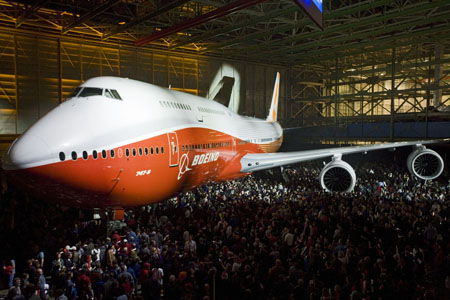 EVERETT, Wash., Feb. 13, 2011 /PRNewswire/ — Boeing (NYSE: BA) today unveiled its new 747-8 Intercontinental, the new high-capacity passenger airplane that offers airlines the lowest operating costs and best economics of any large passenger airplane while providing enhanced environmental performance.
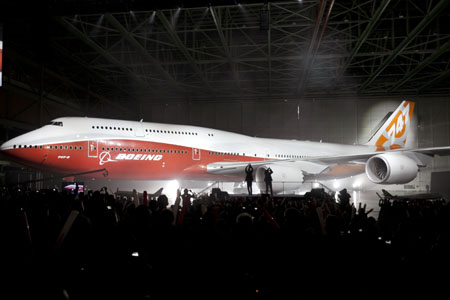 Approximately 10,000 guests, including customers, Boeing employees, government officials, partners and suppliers, gathered in the factory in Everett, Wash., to witness the premiere of the Intercontinental at an event themed “Incredible, Again.” Boeing Commercial Airplanes President and Chief Executive Officer Jim Albaugh said the newest 747 incorporates technological advancements that make it an extremely productive airplane for customers.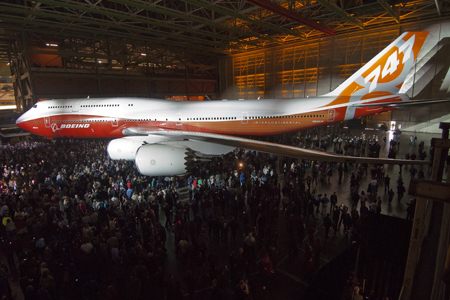
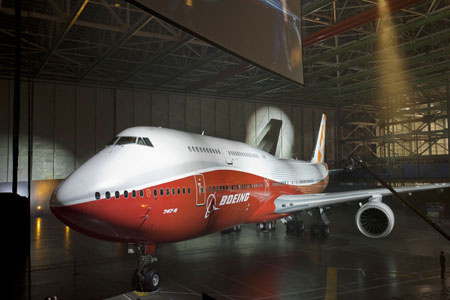 Korean Air and VIP customers have joined launch customer Lufthansa in ordering a total of 33 747-8 Intercontinentals. First delivery of the 747-8 Intercontinental is scheduled for the fourth quarter.

 Virgin Australia flight VA-233 encountered severe turbulence near Adelaide, Australia, on September 13th.