
Statement of John Hickey, Deputy Associate Administrator for Aviation Safety
Before the House of Representatives, Committee on Transportation and Infrastructure, Subcommittee on Aviation on Aircraft Icing
Chairman Costello, Ranking Member Petri, Members of the Subcommittee: Thank you for inviting me here today to discuss the challenges icing conditions pose to flight operations and the Federal Aviation Administration’s (FAA) efforts to mitigate the safety risks posed by icing. For more than a decade, the FAA has been working to better understand the hazards posed by icing conditions and to improve regulations, policies and procedures to ensure safe airplane operation. Still, research into the complicated phenomenon of icing continues to yield new insights and mitigation measures.
Today, I want to highlight some of the known icing threats and mitigation measures as well as our icing program approach and a number of our recent efforts that have been crucial to further decreasing the risk associated with aircraft icing. First, however, it is important to understand the framework within which we work to address icing risks.
As the agency charged with setting the standards for safe aircraft operations, we establish the standards for operations during all types of meteorological conditions, including those that might result in icing on the ground or in flight. Aircraft manufacturers and operators meet these standards through a variety of means depending on where the icing risk occurs (on the ground or in flight), and the aircraft’s system capabilities and intended usage. Our standards for operations in icing conditions encompass both operational and aircraft certification requirements. Operational requirements include standards and aircraft specific operating procedures for icing encounters and pilot and dispatcher training. All pilots engaged in commercial operations must receive training on identification of, safe operation in, and how to avoid and exit icing conditions. They must also be trained on deicing system operation and capabilities of the particular aircraft they operate.
An aircraft design approval — what we call a “type certificate” — provides the design specifications that an aircraft must be built to, in order to meet the FAA’s standards for safe design. Aircraft must also comply with operation requirements, as set forth by the rules under which the airplane is being operated. Design and operation requirements must both be met in order to satisfy the FAA’s standards for safe operation. In order for an aircraft to be certificated for operations in icing conditions, the aircraft’s manufacturer must be able to demonstrate that the aircraft can safely operate within the icing conditions specified by FAA regulations. We know today that these specified conditions represent 99% of all known atmospheric conditions that result in icing. For the remaining 1%, we are conducting research and are working to translate our findings into certification standards. I want to emphasize that airplanes are prohibited from operations in known icing conditions unless they meet the certification standards for operations in those conditions and at no time may any aircraft continue to operate in severe icing conditions.
Aircraft Icing
Unmitigated icing presents risks to aircraft. The accumulation of ice on an aircraft’s wing changes the shape of the wing, and hence the aerodynamic capabilities of the wing to generate lift. For this reason, ice accumulation on an aircraft on the ground may impact the aircraft’s ability to takeoff, while ice accumulation in flight has the potential to raise the minimum speed at which the wing is capable of creating sufficient lift, and potentially causing the aircraft to stall.
Ground icing: Ground icing is, as the name implies, the accumulation of ice, snow or frost on the aircraft while it is on the ground. This form of icing is both common and meteorologically predictable. During the winter months, the conditions in which ice accumulation on an aircraft is possible become more prevalent and vigilant action becomes necessary to ensure planes are properly deiced and cleared of snow and ice prior to takeoff. Winter precipitation poses a threat to aviation operations because airplane performance is predicated upon the wings being free of contamination. The accumulation of ice, snow, or frost has an adverse effect on the wing’s ability to produce lift, potentially limiting an airplane’s ability to takeoff and climb.
Currently, the FAA prohibits takeoff unless the airplane’s critical surfaces are completely clear of wintry precipitation. As many of you have likely seen, this is typically achieved by applying deicing or anti-icing fluids to the critical surfaces of the airplane. To provide for a safe takeoff, it is important that a deiced airplane not remain on the ground for an extensive period after deicing during precipitation. At the start of this winter season, as in years past, the FAA issued its annual winter “hold over times” and list of approved anti ice and deicing fluids. “Hold over times” govern the amount of time that may elapse between deicing and takeoff. In the event that the aircraft exceeds the amount of wait time permitted between deicing and takeoff, FAA regulations require the aircraft to be reinspected for adhering contamination or exit the takeoff queue and be deiced again prior to departure. These holdover time tables are revised annually. Some of the reasons for the annual update include improvements in the effectiveness of deicing and anti-icing fluids, reduction of environmental impacts and new information learned through FAA fluid research.
In-flight icing: Unlike ground icing, in-flight icing knows no season and can be difficult to predict. In-flight icing results from atmospheric conditions that can occur at anytime of the year, regardless of the weather conditions on the ground. According to FAA regulations, any pilot who finds himself or herself in icing conditions while operating an aircraft that is not approved for operations in icing must immediately exit the icing conditions. This means redirecting the aircraft to a different altitude or route, or landing.
There are multiple atmospheric conditions that can result in the build-up of ice on an aircraft during flight. To mitigate the risk of ice build-up during flight, aircraft that are certificated to operate in icing conditions are equipped with devices that shed ice from the aircraft, such as expandable pneumatic boots, or prevent the formation of ice through the use of heat. A pilot’s ability to recognize icing conditions and activate deicing and anti icing systems in a timely manner is critical to those systems’ effectiveness. Because of the pilot’s critical role in managing flight in icing conditions, we have used both our rulemaking and advisory authorities, to provide pilots with the latest information on how to identify icing, to require early and systematic use of deicing systems and to require exit from icing conditions under certain circumstances.
Some aircraft are also equipped with ice detection systems. Ice detection systems assist the flightcrew with ice detection and timely activation of the ice protection system. These systems automatically detect ice accretion and annunciate the presence of ice accretion to the flightcrew. Some ice detection systems are designed to automatically initiate the operation of the aircraft deicing systems while others are what we call “advisory” and require the flightcrew to ensure ice protection systems are activated at the first sign of ice accretion on the airplane.
Although our current regulations address the vast majority of all known icing conditions, we have steadily worked to address two types of in-flight icing phenomena outside of the existing icing certification envelope: supercooled large droplets (SLD) and ice crystals. SLD icing can occur in freezing rain and freezing drizzle conditions — turning water to ice upon contact with the airframe, which can lead to larger accumulations or build up on areas of the wing and tail aft of the protected area. We expect to issue a Notice of Proposed Rulemaking (NPRM) to address this small area of vulnerability, by incorporating atmospheric conditions that are associated with SLD icing into our certification criteria. In the interim, we have taken immediate steps through our airworthiness directive authority to ensure that pilots can identify severe icing which may be produced by SLD conditions and execute exit procedures.
Ice crystals are also a newly identified threat. We now believe that flight into certain types of storm clouds can cause ice to build up deep inside the core of jet engines and cause temporary shutdowns. Understanding this threat has been particularly challenging because, typically, by the time an aircraft lands, the affected engine has restarted and there is no evidence for us to evaluate. We are currently working with industry and other governmental research partners on developing ways to recreate the atmospheric conditions in which ice crystals form and learn all that we can about how to mitigate the threat of this phenomenon. Although there is research that still needs to be done in this area, we are closely monitoring the condition and its possible causes. To mitigate the risk, the FAA issued Airworthiness Directives (ADs) requiring operational changes when in or near convective weather and engine design changes to make jet engines more tolerant of ice crystal conditions.
Icing Safety Actions
Safety concerns about the adequacy of the icing certification standards were brought to the forefront of public and governmental attention by a 1994 accident in Roselawn, Indiana, involving an Avions de Transport Regional ATR 72 series airplane. The NTSB attributed this accident to what we now call SLD–an icing phenomenon that, at the time, was not fully understood. Shortly after this accident, the FAA initiated a review of aircraft safety in icing conditions to determine what could be done to increase safety. This review resulted in our current icing program.
As meteorologists will attest, simply understanding some of these icing phenomena are difficult and complex. Determining how to address these complex phenomena to support safe aircraft operations takes additional time and extensive research. That is why we tackle the dangers of icing with a multi-prong approach. To address those threats that are clearly understood or for which immediate mitigation is available, we take immediate safety action. In the meantime, concurrent research and development and rulemaking efforts are underway. To date, our icing program includes seven rulemaking initiatives–three have been adopted as final rules, while others are in various stages of development. Additionally, we have issued over 200 ADs on 50 different aircraft models, and have undertaken other operational training and mitigation initiatives.
Immediate Actions: The FAA’s icing program addresses the immediate icing safety concerns for the current fleet of aircraft through the use of ADs. The FAA has the authority to issue an AD if we determine that some aspect of flying in icing conditions on a particular airplane model creates an unsafe condition that puts the flying public in immediate danger. ADs carry the same force as a regulation and are targeted to specific aircraft makes and models. ADs must be complied with in order to continue operating a covered airplane. As described above, the FAA has been aggressive in issuing ADs when we determine they are needed. These ADs cover safety issues ranging from crew operating procedures and training, to design changes that have significantly reduced the icing risk to the overall fleet.
For example, with our AD authority, we require that pilots of airplanes equipped with deicing boots activate those boots at the first sign of icing conditions. We have also issued numerous ADs that direct the crews of certain airplane designs on how to monitor and detect early signs of the onset of severe icing and to exit the area immediately. Other ADs require stall warning systems of certain airplanes to be modified to provide an earlier warning of a potential stall in icing conditions and mandate changes to address any susceptibility to stalling of the horizontal tail in icing conditions. These ADs serve as effective safety measures for the current fleet.
Longer Term Actions: The FAA’s icing program also includes a number of longer term actions to further improve the safety of flying in icing conditions both for the current fleet and for future airplane designs. These actions include rulemaking, issuing safety bulletins, developing improved training material, drafting new or updating existing Advisory Circular guidance material, and further research. We recognize that fast action is an important goal for implementing any safety improvement. We also acknowledge that some actions, such as rulemaking, take longer than others. Rulemaking is a deliberative process that must involve the input of those stakeholders who are affected by the rules.
Also, in some cases, developing and implementing rules depends on extensive research to understand the particular phenomena and its effect on safety, and to develop appropriate risk mitigations.
For example, in order to understand SLD icing sufficiently to identify an appropriate set of requirements that airplane manufacturers could comply with, a significant amount of research had to be done. We needed to learn how to characterize SLD, then reproduce it, and finally, understand its effect on airplane operations and designs. For these reasons, at the same time that we tasked the Aviation Rulemaking Advisory Committee (ARAC) to develop certification criteria for the safe operation of airplanes in SLD icing conditions, we also began supporting research efforts by NASA and Environment Canada to gather additional SLD data. Using existing and new SLD data and analysis, the ARAC completed the majority of the work defining the SLD icing envelope. But even after the SLD icing envelope was defined, we continued to learn more about the complexities of SLD, which led us to focus analysis of the impact of SLD on aircraft engines and determine that new standards for smaller aircraft should be considered in a separate rulemaking. The process took time, more time than we anticipated and more time than we wanted, but once we had a sufficient understanding of the science and the technical solutions, we moved forward with the SLD rulemaking. I am pleased to report that the SLD NPRM is now in executive coordination within the Department.
In the meantime, we formed and tasked an Aviation Rulemaking Committee (ARC) to review the proposed regulations applicable to transport category aircraft for SLD, mixed phase, and ice crystals and recommend how they should be modified for smaller aircraft. The SLD research we conducted for the transport category SLD rulemaking provides the basis for our scientific understanding of SLD, upon which we can develop additional technological solutions for smaller aircraft.
In addition to the intensive efforts to understand and revise our regulations to address SLD and ice crystals, since 2007, FAA has completed three icing rules and just this week closed the comment period on an additional NPRM. The completed icing rules include:
- Performance and Handling Qualities in Icing Conditions for Transport Category Airplanes, adding new airworthiness requirements that require designers to demonstrate specific airplane performance and handling qualities for flight in icing conditions.
- Activation of Airframe Ice Protection System for Transport Category Airplanes, requiring either the automatic activation of ice protection systems or a method to alert pilots when they should be activated. Further, after the initial activation, the ice protection system must operate continuously, automatically turn on and off, or alert the pilots when the system should be cycled.
- Removal of Airplane Operating Regulations Allowing Polishing of Frost on Wings of Airplanes, effectively prohibiting all aircraft from taking off with polished frost on the wings.
The NPRM, for which the comment period just closed, would require certain scheduled airlines either to retrofit their existing fleet with ice-detection equipment or make sure the ice protection system activates at the proper time. For those aircraft with an ice-detection system, the FAA proposes that the system alert the crew each time they should activate the ice protection system. The ice protection system would either turn on automatically or pilots would manually activate it. For aircraft without ice-detection equipment, the crew would activate the protection system based on cues listed in their airplane’s flight manual during climb and descent, and at the first sign of icing during cruise.
We are also evaluating the comments received in response to an additional NPRM that included proposed changes to training and checking requirements for pilots operating flights under part 121. In addition to many other revisions, this NPRM proposed changes that would further specify training requirements for icing operations.
I want to acknowledge that throughout our ongoing and comprehensive effort to mitigate the risks presented by airplane icing, the National Transportation Safety Board icing recommendations have been instructive. Although we are not always able to take the exact action the Board recommends, we value and fully analyze their recommendations and benefit from their investigations of icing-related accidents. We firmly believe that our actions meet the intent of the vast majority of the Board’s icing recommendations.
Although we have made significant advancements in our understanding of icing since the tragic 1994 Roselawn accident, icing related threats continue to be a focus of the FAA’s safety experts. The total number of accidents related to environmental icing of airplanes has been decreasing steadily, year after year, for the last 13 years. This safety achievement is the direct result of our intensive focus on improving our understanding of complex icing phenomenon and the best methods for avoiding and mitigating icing conditions. The FAA is proud of this growing safety record and is committed to expanding it.
Mr. Chairman, Congressman Petri, Members of the Subcommittee, this concludes my prepared remarks. I would be happy to answer any questions that you might have.
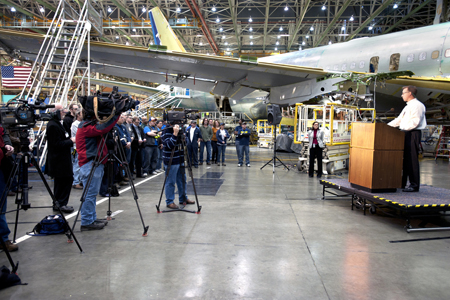 EVERETT, Wash., Jan. 10, 2011 — Final assembly started today on the 1,000th Boeing (NYSE: BA) 767 airplane. Workers marked the milestone with a celebration at the Everett, Wash. factory.