|

Dassault’s Falcon 2000LX Receives Approval for London City Airport (LCY)

Similar Posts

  • | | |

    Raw video

    When you see this amateur video of the Asiana Airlines crash, you really wonder how there were any survivors at all. Of the 307 people—291 passengers and 16 crew—aboard Asiana Airlines Boeing 777-200ER Flight 214, two passengers were killed and 181 injured.
    Click to open video page

    Asiana Press Releases for Incident Involving Asiana Flight

    OZ 214 – July 7, 2013 06:30 (Kor. Time) 2013-07-07 10:02
    The following information has been confirmed.

    Asiana Airlines flight OZ214 (Aircraft Registration HL7742) departed Incheon International Airport on July 6, 2013 at 16:35 (Korea time) bound for San Francisco. Only July 7, 2013 at 11:28 (Local time) an accident occurred as OZ214 was making a landing on San Francisco International Airport’s runway 28.

    There were a total of 291 passengers (19 business class, 272 travel class) and 16 cabin crew aboard. The majority of the passengers were comprised of 77 Korean citizens, 141 Chinese citizens, 61 US citizens, 1 Japanese citizen, etc. for a total of 291 people.

    Asiana Airlines is currently investigating the specific cause of the incident as well as any injuries that may have been sustained to passengers as a result. Asiana Airlines will continue to cooperate fully with the investigation of all associated government agencies and to facilitate this cooperation has established an emergency response center at its headquarters.

    At this point no additional information has been confirmed. New developments will be announced as more information becomes available.

    #2
    Official Asiana Statement from OZ214 Incident Press Conference 2013-07-07 16:31
    We at Asiana Airlines would like express our utmost sympathy and regret for the distress experienced by the passengers of OZ flight 214 and their families as a result of this accident. We apologize most deeply.

    Asiana Airlines flight OZ214 departed Incheon International Airport on July 6, 2013 at 16:35 (Korea time) bound for San Francisco. On July 6, 2013 at 11:27 (Local time) an accident occurred as OZ214 landed on San Francisco International Airport’s runway 28.

    A total of 291 passengers were aboard the aircraft. (77 Koreans, 141 Chinese, 64 Americans, 3 Indians, 3 Canadians, 1 French, 1 Japanese and 1 Vietnamese)

    Asiana Airlines has established emergency response centers to ascertain the cause of this crash and to look after injured passengers and contact their families. Asiana continues to actively cooperate with all Korean and US governmental institutions in the ongoing investigation.

    # 3
    Statement from July 8th Press Conference on OZ214 Incident 2013-07-08 15:42
    Asiana would like to provide a brief update regarding the status of OZ214.

    The special charter flight dispatched by Asiana Airlines yesterday at 13:33 (Korea Time) carrying twelve support staff, eight government inspectors and members of the Korean media has arrived on location in San Francisco. Its passengers have begun supporting the victims and their familes and assisting in the investigation.

    Asiana Airlines is providing airfare and lodging for families of the passengers. In the event that the number of family members seeking support increases, Asiana is also preparing to operate additional charter flights.

    Two Korean family members departed for the United States yesterday. Another four are expected to depart today followed by an additional four on Wednesday. Asiana Airlines is also supporting twelve Chinese family members and six Chinese government officials, who will depart from Shanghai for the United States (via Incheon) today.

    48 injured persons are being treated at local hospitals in the San Francisco area. Each hospital is staffed with dedicated personnel and transportation to provide the utmost support for the victims and their families.

    Asiana Airlines deeply regrets this accident and is dedicating great efforts to support and ensure a swift and thorough investigation.

    * A cautionary note: The official investigation of the cause of the crash will take a year or more. No matter what news releases or speculations come about before the official investigation is just speculation. We do not know, for example, if some part or software in the plane malfunctioned, leading the pilots to respond as they did.

    To include the featured image in your Twitter Card, please tap or click their icon a second time.
  • |

    He’s Making a List, Checking it Twice – Santa Claus is Coming to Town

    From One Continent to the Next, AirTran Airways Tracks Santa’s One-Night World Tour –

    ORLANDO, Fla., Dec. 24, 2010 /PRNewswire/ — For the seventh consecutive year, AirTran Airways, a subsidiary of AirTran Holdings, Inc. (NYSE: AAI), is providing its first of three Satellite-based Aviation Navigational Tracking Apparatus (S.A.N.T.A.) reports. The following information regarding Santa Claus’ international flight is based on data from AirTran Airways’ System Operations Control Center in Orlando:

    As December is shaping up for a somewhat warm time of year in Antarctica, the first confirmed satellite data found Santa and his reindeers flying up to a rookery to watch newborn penguin chicks cluster and brood at their parents’ feet.

    As Santa and his reindeer zipped up the coastline, they took to warmer summer climates in Santiago, Chile. Who can blame Santa for wanting to make a pit stop in a country known for its bountiful range of delicious desserts?

    Satellite data indicates that Santa next headed west over the Pacific Ocean, bringing holiday cheer to the lush island of New Zealand to unassumingly watch a rugby match before beginning his trek through Asia.

    As Santa covered Asia in record time, he slowed down to admire the terra cotta warriors and horse figurines in Beijing that date back to 210 BC. After a much-needed snack of cookies and hot chocolate on the Great Wall of China, Santa and his reindeer headed further west toward India.

    The next S.A.N.T.A. update is scheduled to cross the national wire at 3 p.m. EST.

    To include the featured image in your Twitter Card, please tap or click their icon a second time.
  • Aeroflot may lift in-flight call ban

    The issue of lifting the call ban will be a topic at a Feb 19 governmental commission meeting.

    They plan on allowing the use of an onboard antenna which creates a local GSM network rather than the standard phone which can disrupt pilot equipment.

    OnAir and Norway’s Telenor Mobile Aviation offer mobile calls on Delta, Air France, Lufthansa, Emirates Airlines and Ryanair.

    The State-owned Russian Rossiya Airline is going to be merging with Aeroflot. Aeroflot is already more than 50% government owned.

    To include the featured image in your Twitter Card, please tap or click their icon a second time.
  • | |

    Blue Grass Airport Executive Director Eric Frankl Receives Federal Aviation Administration Award

    LEXINGTON, Ky., Jan. 28, 2011 — Eric J. Frankl, A.A.E., Executive Director of Lexington’s Blue Grass Airport, has been selected as the 2010 Air Carrier Airport Manager of the Year by the Federal Aviation Administration (FAA) Southern Region. The award was presented at the annual FAA Southern Region Airports Communications Conference in Atlanta, Georgia on January 27, 2011.

    “Eric Frankl has been very instrumental in the remarkable accomplishments at Lexington’s Blue Grass Airport,” said Winsome A. Lenfert, Manager, Airports Division, FAA Southern Region. “Frankl’s tireless leadership has transformed Blue Grass Airport into a model facility. He is an inspiration to airport managers throughout the Southern Region.”

    In his position at Blue Grass Airport, Frankl and his team have overseen more than $66 million worth of airport improvement projects to ensure a safe and efficient airport for the traveling public. Projects included renovation of the airport terminal interior and exterior, building a new crosswind general aviation runway, unveiling a new airport entrance reflective of the Bluegrass region, and taxiway, ramp and electrical vault improvements.

    Under Frankl’s leadership, Blue Grass Airport has seen a 19.3 percent passenger growth rate in 2010. This double-digit increase is attributed to the welcoming of AirTran Airways in February 2010 as well as new Allegiant Air service to Punta Gorda/Southwest Florida, American Eagle service to Chicago, Delta Air Lines service to Minneapolis and US Airways service to New York’s LaGuardia Airport.

    In October 2010, as the airport hosted the Alltech FEI World Equestrian Games, Frankl led the airport through one of the busiest months in its history when it experienced a 39 percent growth in passenger enplanements over the previous year. Held every four years, attendance for the Games exceeded 500,000 spectators and included representation from 58 countries.

    “We are proud of the accomplishments Eric Frankl and his staff have undertaken since his tenure at Blue Grass Airport,” said Richard Hopgood, Chairman of the Lexington-Fayette Urban County Airport Board. “He has made tremendous efforts in building relationships within the aviation industry and local community, and he has led us through one of the busiest construction seasons in the airport’s history. We are pleased he is receiving this distinguished recognition and appreciate the excellent relationship he has built with the FAA.”

    Since 2008, the FAA has provided Blue Grass Airport with 15 grants totaling $26 million in Airport Improvement Program funds for various airport projects including the new general aviation runway. The Southern Region is the FAA’s largest, encompassing eight southeastern states, Puerto Rico and the U.S. Virgin Islands.

    In addition to this award, Blue Grass Airport was recognized with the FAA Airport Safety Mark of Distinction Award earlier in the week at the FAA Southern Region 2011 Airport Safety and Certification Conference. Blue Grass Airport received this honor for construction of its new general aviation runway and for the development of an airport operations department.
    Eric Frankl was confirmed as Executive Director of Blue Grass Airport in October 2009. In addition to his work for Blue Grass Airport, Frankl previously served as Director of Airports for the Toledo-Lucas County Port Authority (Ohio), Executive Director for the Abraham Lincoln Capital Airport in Springfield, Illinois and Director of Operations at Fort Wayne International Airport in Fort Wayne, Indiana. Frankl received his professional accreditation from the American Association of Airport Executives (AAAE) in 1996, and he served as President of the AAAE Great Lakes Chapter in 2004/2005.

    Blue Grass Airport, located in Lexington, Kentucky, is served by seven major airlines providing convenient non-stop service to 15 major hub cities and connecting service to hundreds of destinations worldwide.

    To include the featured image in your Twitter Card, please tap or click their icon a second time.
  • Address by the Secretary General of ICAO


    Address by the Secretary General of ICAO
    Mr. Raymond Benjamin,
    to the IATA Global Aviation Security Summit

    (Geneva, 22 January 2010) Giovanni, thank you for this invitation to join Secretary Napolitano and such an impressive gathering of airline CEOs. I very much enjoyed your presentation and the perspective of the Secretary, and I look forward to a stimulating discussion after my brief remarks.

    The attempted sabotage of Northwest Airlines Flight 253 on 25 December is a vivid reminder that security threats transcend national boundaries and can only be properly addressed through a global strategy based on effective international cooperation. As the UN agency responsible for promoting the development of civil aviation worldwide, ICAO facilitates cooperation in all areas of civil aviation, including aviation security – one of our highest priorities.

    Within hours of the 25 December incident which prompted this meeting, I was in contact with high-level officials of the States involved and initiated a series of actions to coordinate and harmonize responses to the terrorist act. We communicated with security authorities in all of our member States to encourage them to conduct risk assessments and implement appropriate screening measures.

    In addition, and at the request of the United States government, a meeting was held on 6 January at ICAO with officials from the Department of Homeland Security (DHS) and the Transportation Security Administration (TSA), headed by the Undersecretary for the National Protection Programme Directorate. The meeting focussed particularly on four areas: collecting passenger information; sharing information between States; requirements for travel document security, and training and technical assistance.

    ICAO provided briefings on each of these subjects, with particular emphasis on work being undertaken in the fields of Advance Passenger Information Systems, the Machine-Readable Travel Documents (MRTD) Programme, the Universal Security Audit Programme (USAP) and associated assistance activities and mechanisms involved in improving compliance with security Standards.

    The US Delegation expressed a strong desire to work with ICAO to address these challenges on a multilateral basis, including through the various initiatives that had been presented to them during the meeting, and by providing assistance to States in coordination with ICAO and other donor States.

    I would like to take this opportunity to commend the United States and all other States concerned for their quick and decisive action to contain the situation. The emergency measures implemented, which included increased gate screening for U.S-bound flights and passenger profiling, were necessary in light of the heightened level of risk. Although these measures have caused costly delays and inconvenience, the attempt to detonate an explosive device on board Northwest Flight 253 clearly justifies greater vigilance in the form of more stringent processes.

    The decision to implement emergency measures is never easy because of the enormous impact on overall operations. But these actions must be taken, to protect the integrity of the system and maintain public confidence in air travel.

    In this connection, I was invited to Washington on 14 January for a meeting, which took place within the framework of bilateral negotiations between authorities of the United States and the European Union, devoted to discussions on the consequences of the events of 25 December. At the outset, it was acknowledged that notwithstanding that the incident was aimed at an American aircraft, it represents a threat to the entire aeronautical community. Three main issues related to passenger safety were discussed:

    First, how long these measures would stay in force. It was recognized that the emergency measures adopted could not be permanent as resources being dedicated to these new processes were being drawn from other essential safety systems.

    Second, the issue of discrimination, whereby some States have difficulty in discriminating between measures applied to one set of passengers and not to another.

    The third issue related to the US Transportation Security Administration deciding on the basis of incoming information, the percentage of screening applicable to different passengers. This percentage would vary and be very difficult to establish.

    The meeting concluded with the two parties confirming that they would like to see ICAO adopt a leadership role.

    As we speak, ICAO remains in close contact with its Member States and industry to facilitate and implement a solid response to this latest threat. But we must not forget that aviation is a global system and it requires global solutions. I emphasize that my staff and I are dedicated to ensuring that security threats are addressed in the most effective and efficient manner possible and this means that responses must be implemented with the highest degree of harmonization worldwide. We have a strong record of doing just that.

    The challenge from ICAO’s standpoint is to achieve and maintain an optimum balance between the more stringent security measures required to address emerging threats and the processes intended to facilitate air travel by 2.3 billion passengers per year. This is obviously a tall order. While ICAO’s objective is to ensure air travellers reach their destinations as efficiently as possible, every one of these individuals is subject to screening. The challenge becomes more complicated when you consider that different States may implement different measures. A multilateral approach is more likely to avoid confusing passengers while boosting efforts by States and industry to strengthen the security of the air transport system. This is why collaboration is vital, and concepts such as one-stop security should be encouraged.

    Since this latest serious incident, ICAO has been working to promote international cooperation. Terrorism is a transnational issue, and the attempted sabotage of Flight 253 is reflective of a worldwide problem; as such, it calls for a global response under ICAO’s leadership, with the support of its member States.

    To respond effectively to threats over the long term, it is essential to review existing measures and strategy from time to time, and assess how these need to change to remain effective. In this regard, ICAO is fortunate to have a multinational team of security experts at its disposal. The next meeting of the Aviation Security Panel will be held in late March, and is expected to produce concrete recommendations on how to prevent incidents such as the attempted sabotage of 25 December. In responding to this incident, it will be necessary to consider both procedural and technological solutions to this security gap, including the possible use of imaging technology – commonly referred to as body scanners – as one means of screening passengers, taking into account privacy, data protection and health issues.

    The point is that every time a new type of incident arises, we face the prospect of introducing yet another layer of security. To do so when necessary, but without overburdening the industry, it is important to evaluate existing measures at the same time, and eliminating and revising provisions as required. In developing countermeasures to new threats, they must be practical as well as appropriate for the level of threat. Adapting to each new threat with minimum adverse impact on the air transport system remains a significant challenge.

    I want to assure you that this and other aviation security challenges have ICAO’s full attention, and are being addressed on a proactive basis. Through our panel of security experts, we are striving to identify new ways of anticipating the next threat. In this manner, an increasing risk can be managed by implementing practical countermeasures instead of requiring emergency action.

    The air transport system remains a highly attractive target for terrorist organizations precisely because it has been so successful in promoting global economic growth and has become an essential mode of transport. The volume of operations, and our reliance on an efficient air transport system, means we can expect aviation to remain a target. By remaining proactive, our intention is to ensure that civil aviation’s vulnerabilities are not exploited by terrorists.

    My message today is quite simple. ICAO is keenly aware of the challenges you face as operators and recognizes that whatever security measures are put into place, now and in the future, must not unduly disrupt operations or increase the cost of doing business. Our objective has always been to strike the right balance between protecting the safety of passengers while assuring they transit through airports as quickly and as efficiently as possible. We recognize that the health of the air transport industry, and its ability to support economic and social development around the world, are at stake.

    src=http://www.icao.int/icao/en/osg/2010/20100122_SG_IATA_GASS_en.pdf

    To include the featured image in your Twitter Card, please tap or click their icon a second time.
  • |

    Electrical & Electronics Engineers Honor Boeing


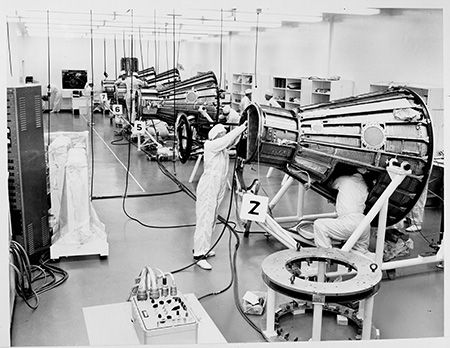
    ST. LOUIS, Feb. 25, 2011 – Boeing today received an IEEE Milestone award in Electrical Engineering and Computing from the Institute of Electrical & Electronics Engineers (IEEE) in recognition of the company’s work on the Mercury spacecraft. IEEE is the world’s largest technical professional association.

    The Mercury spacecraft, America’s first manned space vehicle, was designed, developed and built by McDonnell Douglas Aircraft (a Boeing heritage company) in St. Louis. A total of 20 Mercury spacecraft were delivered to NASA, six of which carried astronauts into space between 1961 and 1963. John Glenn piloted Friendship 7 in the first U.S. human orbital flight on Feb. 20, 1962.
    “We are truly honored to receive this recognition and pay tribute to the engineers who worked on the Mercury spacecraft,” said Dennis Muilenburg, president and CEO, Boeing Defense, Space & Security. “They helped set a strong foundation on which America’s space program continues to grow and thrive. Boeing and our heritage companies have supported human space exploration from the beginning, and our talented, innovative engineers and other employees will continue to build upon this legacy for many years to come.”
    The award cites electrical and electronic systems invented by McDonnell Douglas Aircraft engineers that made the Mercury flights and future space flights possible. Among the engineers’ key contributions were navigation and control instruments, autopilot, rate stabilization and control, and fly-by-wire systems.

    The IEEE Milestones in Electrical Engineering and Computing program honors significant technical achievements that occurred at least 25 years ago in technology areas associated with IEEE. To date, more than 100 Milestones have been approved and dedicated around the world. This award also recognizes technological innovation and excellence for the benefit of humanity.
    Home to Boeing Defense, Space & Security headquarters, the Boeing St. Louis site employs approximately 15,600 employees and is Missouri’s largest manufacturer and second-largest employer. Key products manufactured at the site include F/A-18E/Fs, F-15s, C-17s and weapons.

    To include the featured image in your Twitter Card, please tap or click their icon a second time.