Cooperation to Keep Flying Secure

Similar Posts

  • Northwest Pilot Decision

    FOR IMMEDIATE RELEASE: March 18, 2010
    SB-10-08

    NTSB SAYS NORTHWEST PILOTS’ DISTRACTION LED TO OVERFLIGHT OF MINNEAPOLIS, NOTES ATC SHORTCOMINGS; ISSUES RECOMMENDATIONS ON ATC PROCEDURES

    Washington, DC – The National Transportation Safety Board has determined that Northwest Airlines flight 188 overflew its destination airport of Minneapolis by more than 100 miles and failed to maintain radio communications because the pilots became distracted by a conversation unrelated to the operation of the aircraft. The NTSB’s accident brief, released today, also note air traffic control shortcomings during the event, and the Board issued two safety recommendations to address those shortcomings.

    On October 21, 2009, Northwest Airlines flight 188, an Airbus A320 (N374NW) operating as a scheduled flight between San Diego and Minneapolis, did not communicate with air traffic control for approximately one hour 17 minutes. While in this NORDO (no radio communications) state, it flew past its intended destination at a cruise altitude of 37,000 feet. The crew subsequently re-established radio communications and landed without further incident. There were no injuries.

    The NTSB said that the pilots continued to fly through several air traffic control sectors without replying to any radio commands. The investigation found that the pilots had become engaged in a conversation dealing with the process by which pilots request flight schedules and during the conversation each was using his personal laptop computer, contrary to company policy. The pilots were not aware of the repeated attempts by air traffic controllers’ and the airline to contact them until a flight attendant used the intercom to inquire about the progress of the flight.

    The NTSB also found that the lack of national requirements for recording ATC instructions when using automated flight tracking systems, such as directing an aircraft to switch frequencies or to indicate that an aircraft has checked in on an assigned frequency, was a factor in the controllers delay in performing necessary actions and notifications required by lost communications procedures. In addition, because NORDO events of a short duration are not uncommon, the Safety Board found that controllers and managers may have become complacent in completing necessary NORDO actions and required notifications in a timely manner.

    As a result of deficiencies in ATC communications procedures revealed in this investigation and an accident involving a Pilatus PC-12/45 that crashed in Butte, Montana on March 22, 2009, the Safety Board is making recommendations to the FAA to address the following issues:

    The lack of standard procedures for identifying flight crew-ATC communications in ATC facilities that use automated flight tracking systems.
    The lack of standard phraseology for identifying the emergency nature of emergency ATC radio transmissions.
    The Safety Board’s probable cause finding, with factual narrative, can be accessed at the following link on the Board’s website: http://www.ntsb.gov/ntsb/brief.asp?ev_id=20091022X00120&key=1

    The Safety Recommendation letter can also be found on the Board’s website at: http://www.ntsb.gov/Recs/letters/2010/A10_42_43.pdf.

    Previously, the Safety Board has addressed the potential hazards created by the use of personal electronic devices by transportation operators. Last month, following the Board’s investigation of the Colgan Air 3407 accident near Buffalo, NY, the Board issued a safety recommendation to the FAA to require all Part 121, 135, and 91K operators to incorporate explicit guidance to pilots, including checklist reminders as appropriate, prohibiting the use of personal portable electronic devices on the flight deck. Details of Safety Recommendation A-10-30 can be accessed at: http://www.ntsb.gov/Recs/letters/2010/A10_10_34.pdf.

    Recent accidents and incidents such as the midair collision over the Hudson River last August, Colgan Air flight 3407, and the Northwest pilot’s overflight of the Minnesota airport have demonstrated the clear hazards to aviation safety when pilots and air traffic controllers depart from standard operating procedures and established best practices.

    The Safety Board will convene a 3-day public forum on professionalism in aviation to address methods for ensuring excellence in pilot and air traffic controller performance. The forum is intended to raise awareness by promoting an open discussion between the Safety Board and invited panelists drawn from industry, labor, academia, and government on the importance of developing and reinforcing professionalism in the aviation industry. The forum is scheduled for May 18-20, 2010. More information regarding the forum will be announced in the coming weeks.

    – 30 –

    To include the featured image in your Twitter Card, please tap or click their icon a second time.
  • |

    Press Release – FAA Celebrates Completion of San Francisco International Airport Recovery Act Projects

    For Immediate Release
    August 27, 2010

    SAN FRANCISCO — The U.S. Department of Transportation’s Federal Aviation Administration (FAA) today marked the completion of $14.5 million in runway projects funded by the American Recovery and Reinvestment Act of 2009 (ARRA) that will ensure continued safety for flights at San Francisco International Airport (SFO).
    “The Recovery Act made it possible for this important safety work to happen ahead of schedule,” said U.S Transportation Secretary Ray LaHood. “These projects kept workers in good-paying jobs, and these safety improvements will benefit the airport and passengers for years to come.”
    On Friday, FAA Administrator Randy Babbitt marked the completion of the work at an event at San Francisco International Airport. A $5.5 million ARRA grant allowed the Runway 10L/28R project to be completed a year ahead of schedule. Runway 1R/19L was also completed two years ahead of schedule thanks to a $9 million ARRA grant.
    “Healthy runways are safe runways,” said Administrator Babbitt. “Old pavement can crumble, creating debris that can damage aircraft and shut runways down causing delays for passengers.”
    The Recovery Act-funded projects leveled out two runways that tend to settle over time because of ground conditions. The new asphalt concrete resurface also will prevent unexpected runway shutdowns due to pavement breakdown, and will guard against crumbling pavement creating debris that can damage aircraft. The work also included: paving both runways with asphalt concrete; reconstructing sections of the runways; upgrading the runway and taxiway lighting systems with more energy efficient LED lighting; re-painting runway markings to increase visibility and improve safety for aircraft on the airfield; and improving the surrounding drainage system.
    Granite Rock Company of Watsonville, Calif. was the prime contractor for both projects, which required 92,000 tons of asphalt concrete covering 3.46 million square feet of runways. Work on both runway projects was done on the weekends to minimize disruption to the traveling public.
    The Recovery Act funded an additional $22.4 million in upgrades to airports and facilities in and around the San Francisco Bay Area.
    At Oakland International Airport, $14.9 million in Recovery Act funding is being used in the reconstruction of a large apron area used by airlines and cargo carriers and to reconfigure a taxiway. By replacing old apron pavement, the project will improve efficiency and allow larger aircraft to use the taxiway.
    In San Jose, a $5.17 million Recovery Act grant is funding the extension a taxiway at Norman Y. Mineta San Jose International Airport. This project, which was recommended by an FAA Runway Safety Action Team, will improve safety by eliminating the need for private planes to cross a runway while taxing to an engine run-up area.
    An additional $2.4 million in Recovery Act funds is being employed to modernize and make safety upgrades at area facilities and airports.
    Nationwide, $1.3 billion in Recovery Act money has been made available for both airport improvement projects and air traffic control facility and system upgrades. These Recovery Act grants have been distributed to airports that serve commercial passengers, cargo and general aviation.

    To include the featured image in your Twitter Card, please tap or click their icon a second time.
  • |

    Boeing and IBM Research Pilot Experimental Air Traffic Management Initiatives

    ARMONK, N.Y., Dec. 1, 2010 /PRNewswire-FirstCall/ — Boeing (NYSE: BA) and IBM (NYSE: IBM) announced today that they have successfully completed a pilot research project designed to show how officials from multiple organizations can have more timely, consistent and complete information to resolve fast-changing or unpredictable aviation events.

    The quicker availability of better information potentially can help authorities make more informed decisions to protect passenger and national security when airspace anomalies are detected, such as when an aircraft is found to be traveling off course. The project has demonstrated that advances in software can accelerate and orchestrate the flow of information from sensors and networks on a nationwide scale.

    To better assess and manage these events, officials have been striving to implement “network centric operations” — the quick exchange of information from a variety of electronic sources — to gain better “situational awareness” of the many aspects of an aviation event. These situations require the sharing of updated and detailed information about temporary or ongoing airspace restrictions, flight plans, reports about weather and natural phenomena such as volcanoes, radar and beacon tracks, or the track of an aircraft sent to investigate an unfolding, midair event.
    The Boeing-IBM project involves the research and development of new technology to overcome the technical challenge of assembling and delivering such a variety of information at a moment’s notice. The team has applied “Responsive, Reliable and Real-Time” (R3) Messaging, which can help ensure that complex data gathered from distributed sensors — located on aircraft, radar and other ground locations — can arrive at a specific time and in a sequence. Additional software can then correlate and analyze the information efficiently.

    “One can well think of the R3 Messaging technology as a kind of mail carrier, train conductor, telephone switchboard operator and traffic police officer, all rolled into one, synchronizing nationwide — or even worldwide — logistics,” said Paul Giangarra, an IBM Distinguished Engineer who linked IBM’s messaging technology with Boeing’s business needs. “It moves information gathered from sensors in a secure, predictable manner.”

    Added IBM Researcher Dr. Hui Lei, who managed the project team: “R3 Messaging exploits novel techniques to discover routing paths and schedule message deliveries with remarkable dependability. It is quite useful for moving critical and time-sensitive information between the physical and digital worlds. By integrating those two spheres, it makes it easier to make better and smarter decisions.”

    The project was part of IBM Research’s First-of-a-Kind Program, leveraging internal research and development performed by Boeing Research & Technology’s Advanced Air Traffic Management group. The program pairs IBM researchers with clients to explore how emerging technologies can solve real-world business problems.

    “R3 messaging is directly applicable to the work we do in aviation information management,” said Paul Comitz, Boeing Advanced ATM chief architect, System-Wide Information Management. “It provides capabilities that we need.”

    Enterprise messaging technology, and the ability to manage a barrage of large amounts of data, has existed for some time. But until now, it has only been able to ensure the routine delivery, at an unspecified time, of electronic information within a self-contained computer network. Using new, patent-pending algorithms, IBM computer science researchers have now taken it further: For the first time, messaging technology ensures the synchronization of rapidly changing business events on a massive scale, with the ability to handle diverse and complicated systems.

    To include the featured image in your Twitter Card, please tap or click their icon a second time.
  • |

    Boeing to Build 3-Satellite System for Government of Mexico

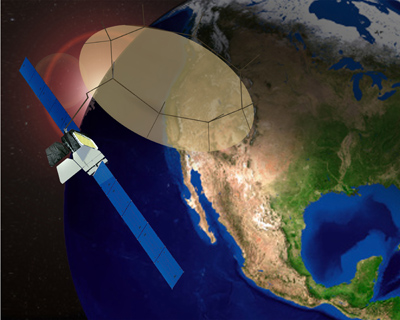
    EL SEGUNDO, Calif., Dec. 20, 2010 — Boeing today announced that it has received a contract for approximately $1 billion from the government of Mexico to deliver an end-to-end satellite communications system. The system, known as MEXSAT, will consist of three satellites, two ground sites, associated network operations systems and reference user terminals. MEXSAT will provide secure communications for Mexico’s national security needs, as well as enhanced coverage for the country’s civil telecommunications.

    “MEXSAT is the fourth generation of satellites Boeing has provided to Mexico for government and civilian satellite communications,” said Craig Cooning, chief executive officer of Boeing Satellite Systems International. “MEXSAT builds on Boeing’s 13 years of experience in designing and delivering advanced geomobile systems.”

    Under the contract, Boeing will deliver a complete turnkey satellite system comprised of Boeing 702HP geomobile satellites MEXSAT-1 and MEXSAT-2 and one extended C- and Ku-band satellite, MEXSAT-3, which will provide fixed satellite services from geosynchronous orbit. MEXSAT-3 is scheduled to launch first, at the end of 2012.

    Each Boeing 702HP satellite will supply 14 kilowatts of power through five-panel solar array wings that use high-efficiency, ultra triple-junction gallium arsenide solar cells. Both satellites will carry a 22-meter L-band reflector for mobile satellite services, complemented by a 2-meter Ku-band antenna.

    Boeing will procure MEXSAT-3 and a spacecraft operations center from its supplier partner Orbital Sciences Corporation [NYSE: ORB]. MEXSAT-3, an Orbital Star 2.4 satellite, will provide full coverage of Mexico and its patrimonial seas and relay civil communications for socioeconomic development.

    Boeing also will develop two ground sites in Mexico with advanced beam-forming flexibility to direct mobile user spot beams to government agencies operating in Mexico and its patrimonial seas, including the Pacific Ocean and Gulf of Mexico.

    Boeing has previously provided five satellites that serve Mexico, beginning with Morelos 1 and Morelos 2, both launched in 1985; the Solidaridad 1 and Solidaridad 2 satellites, launched in 1993 and 1994; and Satmex 5, which was launched in 1998. Solidaridad 2, which has exceeded its contract life, is still in service, and Satmex 5 is expected to end its service life in 2012.

    A unit of The Boeing Company, Boeing Defense, Space & Security is one of the world’s largest defense, space and security businesses specializing in innovative and capabilities-driven customer solutions, and the world’s largest and most versatile manufacturer of military aircraft. Headquartered in St. Louis, Boeing Defense, Space & Security is a $34 billion business with 68,000 employees worldwide.

    To include the featured image in your Twitter Card, please tap or click their icon a second time.
  • Virginia, NASA keep eyes on skies for air quality


    Virginia, NASA keep eyes on skies for air quality

    HAMPTON, Va. – Air quality in the skies above Hampton Roads will be monitored daily under a new partnership between NASA’s Langley Research Center and the Virginia Department of Environmental Quality (DEQ).

    The agreement relocates the state agency’s air-quality measurement operation to Langley following closure of the Hampton organization where it had been located, the Virginia School for the Deaf and Blind. The DEQ’s new site is expected to open in May, said Margaret Pippin, the scientist coordinating the move at Langley.

    “This site will bring together the partnership of NASA, DEQ, and the Environmental Protection Agency (EPA) in a coordinated effort to assess the relationship between space-based observations and surface observations of air quality,” Pippin said.

    The federal and state agencies are both interested in generating a comprehensive data record of pollution from industrial processes and vehicles.

    The DEQ station will be located at Langley’s Chemistry and Physics of the Boundary Layer Experiment site (CAPABLE), which will measure ozone and nitrogen dioxide. The DEQ will measure ozone, nitrogen dioxide, sulfur dioxide, carbon monoxide, and particulate matter.

    The partnership will be mutually beneficial, said Pippin. The DEQ will have a bigger pool of data and a larger location to add to its statewide network of air-quality monitoring sites. And NASA scientists will be able to use the combined measurements to enhance a future satellite mission to measure air quality from space.

    Since the early 1970s, the DEQ has worked with the EPA to uphold the standards of U.S. Clean Air Act. That includes taking widespread air quality measurements in Virginia and keeping a data record.

    NASA Langley’s Science Directorate has a legacy in atmospheric science as well, leading early discoveries about the ozone hole and improving knowledge of human-created pollution on air quality and the atmosphere.
    Last week at the new Langley site, NASA and DEQ began monitoring what the U.S. EPA calls “criteria pollutants.” These are the emissions from factories, power plants and cars that can damage human health, plants, the environment and infrastructure. They include ozone, carbon monoxide, nitrogen oxides, sulfur oxides and other airborne particulates.

    “For NASA Langley and the DEQ, I see this as a win-win situation where we can work together, share air-quality data and monitoring information and learn from each other,” said Tom Jennings of the DEQ Office of Air Quality Monitoring.
    The DEQ’s transition to Langley will occur over the next two months and result in two identical environmental shelters positioned in a mirror image to one another – one for NASA’s instruments and the other for DEQ’s.

    The partnership was formalized in what is called a Space Act Agreement, which was signed last week. The agreement calls for a five-year partnership at the Langley site.

    To include the featured image in your Twitter Card, please tap or click their icon a second time.
  • |

    NTSB TO OPEN DOCKET ON INVESTIGATION INTO THE CRASH OF A PILATUS AIRCRAFT IN MONTANA

    NTSB Advisory
    National Transportation Safety Board
    Washington, DC 20594
    December 2, 2010

    As part of its continuing investigation into a plane crash in Montana, the National Transportation Safety Board will open the public accident docket on Friday, December 3, 2010.

    On March 22, 2009, at 1430 mountain daylight time, a Pilatus PC-12/45, N128CM, crashed near the approach end of runway 33 at Bert Mooney Airport (BTM), Butte, Montana. The airplane was owned and operated by Eagle Cap Leasing of Enterprise, Oregon, as a personal flight under the provisions of 14 Code of Federal Regulations Part 91. All 14 people on board the airplane were killed in the accident. There were no ground injuries. The flight departed Oroville Municipal Airport, Oroville, California, at 1110 Pacific Daylight Time (1210 mountain daylight time) on an instrument flight rules flight plan and was destined for Gallatin Field, Bozeman, Montana. The airplane was diverting to Butte at the time of the accident. Visual meteorological conditions prevailed at the time of the accident.

    The information being released is factual in nature and does not provide analysis. The docket includes: investigative group factual reports, interview summaries, crew statements, air traffic control transcripts, controller statements, the meteorology report, and other documents.

    Additional material will continue to be added to the docket as it becomes available. Analysis of the accident, along with conclusions and a determination of probable cause, will come at a later date when the final report on the investigation is completed.

    The docket material will be made available at 10:00 am ET on December 3 on the NTSB website at http://www.ntsb.gov/dockets/foia_fri-dockets.htm#Aviation2010 in the FOIA electronic reading room. Details are listed by date.

    This will be a document release only. No interviews will be conducted.

    To include the featured image in your Twitter Card, please tap or click their icon a second time.