|

$2 Million Environmental Grant from FAA

Similar Posts

  • | |

    FAA Shutdown

    All air traffic controllers and safety inspectors continue to work at full capacity during the shutdown, however:
    4,000 FAA employees are still furloughed
    70,000 construction workers commissioned for aviation-related projects out of a job.

    FAA Administrator Randy Babbitt has come out in support of a long-term reauthorization bill recognizing the safety priorities of the FAA. “We’re not going to budget safety.”

    219 STOP WORK ORDERS have been issued.

    A Press Release was submitted July 27, 2011 titled What They’re Saying: We Need an FAA Bill Extension

    Contractors have been told to stop work on critical airport modernization projects around the country after Congress failed to pass legislation giving the FAA the authority necessary for work to continue by last Friday’s deadline. Dozens of “stop work orders” have been issued for major projects designed to build and modernize control towers and other aviation infrastructure from coast to coast. Construction workers, engineers and planners were told not to come to worksites across the country after the FAA was forced to issue stop work orders on projects ranging from the construction of new air traffic control towers to the rehabilitation and modernization of air traffic facilities. Nearly 4,000 FAA personnel, many needed to oversee various aspects of these projects, were furloughed on Saturday. Stopping work on these projects could significantly increase the ultimate costs of construction for taxpayers. Affected contractors, airport managers, and local officials across America are calling for action.

    “This is no way to run the best aviation system in the world.”
    -Ray LaHood, Secretary of Transportation, Portland Press Herald, July 26, 2011

    “Unless Congress acts quickly, more work on projects critical to our nation’s aviation system will come to a halt.”
    -Randy Babbitt, FAA Administrator, My Fox News Chicago, July 25, 2011

    “So for them [construction workers] this is like running into a brick wall, and they’re asking me, ‘How do we explain this to our families?’ I don’t know what to say to them.”
    – Lucca Toscano, Vice President Paul J. Scariano construction firm, Fast Lane, July 25, 2011

    “I got a telephone call Friday about noon that said the job was going to go into suspension effective midnight Friday…Disappointment for the most part. Most don’t really understand what’s going on and why something like that there is affecting what’s going on here on their everyday job.”
    –Ken Hengst, project manager for EAS Contracting, KRIV-FOX Houston, July 26, 2011

    “It’s never a good way to run a construction project just to randomly tell people just to stop work.”
    -Paul Bradbury, Jetport Director, Portland Daily Sun, July 26, 2011

    “I’ve been doing this for 19 years, 7 here at this airport. I’ve never seen anything quite like this… As you can tell, if this project stopped right now, we’d literally have a torn-up ramp. The busiest ramp here at the airport, having this kind of hole in it.”
    – Brian Kulpin, Reno-Tahoe International Representative, KTVN Nevada, July 25, 2011

    “It’s depressing, you got a site [McCarran Control Tower] that was flourishing with activity and there’s nothing going on right now.”
    –Sasha Milosavljevich of Archer-Western Contractors, CBS News, July 26, 2011

    “The economy has devastated construction in Las Vegas in the last couple years and we were really excited to get this going…It’s disheartening we’re in this position now and our people have to stay home while Congress works this out.”
    –Darren Enns, secretary-treasurer of the Southern Nevada Building and Construction Trades Council, Las Vegas Sun, July 26, 2011

    “It’s very frustrating. It puts about 50 construction workers out of a job. But about 200 people are involved in this some way—designers, engineers, vendors, delivery folks. It’s going to be a hardship on them.”
    – Kevin Klein, Cherry Capital Airport Director, Associated Press, July 26, 2011

    “The longer it goes on, the worse it affects us.”
    – Bob Graf, contractor for Palm Springs International Airport, Desert Sun, July 26, 2011

    “We were informed Friday to stop all construction activity… The scary portion for us is the indefinite nature of all this”
    – Dan Anello, project manager at Oakland International Airport, San Francisco Chronicle , July 26, 2011
    “The shutdown affected all airport divisions…The folks I normally deal with have been furloughed. Any questions or things we have to do are on hold until this is resolved.”
    – Rich Nuttall, Denver Airport Manager, Telluride News, July 26, 2011

    “We had already bidded and awarded the contract and most of that cash would have stayed in the local economy, so there is an economic impact.”
    – Cindi Martin, Glacier Park International Airport Director, Daily Inter Lake, July 26, 2011

    “Our airports are not only our most important resources for moving goods and people, they are critical to creating jobs and putting Americans back to work…we need Congress to pass extension legislation for the FAA now.”
    -Antonio Villaraigosa, Mayor of Los Angeles, Our Weekly, July 25, 2011

    “We seem to be being hijacked by a completely ego-driven and frankly ridiculous fight in Washington,”
    – Annise Parker, Houston Mayor, KHOU 11 News, July 26, 2011.

    “It’s inaction like this that’s hurting our economy that everyone is working so hard to improve. Laying all these employees off, stopping this project, delaying grant money that’s already been awarded, it only trickles down to hurt our economy even more.”
    -Luzerne County Commissioner Maryanne Petrilla, Citizen’s Voice, July 27, 2011

    “It’s very important that the people in Washington get back to work and get this bill passed so the tower is completed and the working-class people get back to work.”
    – Wilkes-Barre Mayor Tom Leighton, Citizen’s Voice, July 27, 2011

    To include the featured image in your Twitter Card, please tap or click their icon a second time.
  • |

    Electrical & Electronics Engineers Honor Boeing


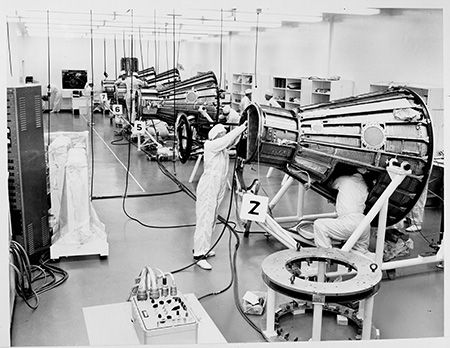
    ST. LOUIS, Feb. 25, 2011 – Boeing today received an IEEE Milestone award in Electrical Engineering and Computing from the Institute of Electrical & Electronics Engineers (IEEE) in recognition of the company’s work on the Mercury spacecraft. IEEE is the world’s largest technical professional association.

    The Mercury spacecraft, America’s first manned space vehicle, was designed, developed and built by McDonnell Douglas Aircraft (a Boeing heritage company) in St. Louis. A total of 20 Mercury spacecraft were delivered to NASA, six of which carried astronauts into space between 1961 and 1963. John Glenn piloted Friendship 7 in the first U.S. human orbital flight on Feb. 20, 1962.
    “We are truly honored to receive this recognition and pay tribute to the engineers who worked on the Mercury spacecraft,” said Dennis Muilenburg, president and CEO, Boeing Defense, Space & Security. “They helped set a strong foundation on which America’s space program continues to grow and thrive. Boeing and our heritage companies have supported human space exploration from the beginning, and our talented, innovative engineers and other employees will continue to build upon this legacy for many years to come.”
    The award cites electrical and electronic systems invented by McDonnell Douglas Aircraft engineers that made the Mercury flights and future space flights possible. Among the engineers’ key contributions were navigation and control instruments, autopilot, rate stabilization and control, and fly-by-wire systems.

    The IEEE Milestones in Electrical Engineering and Computing program honors significant technical achievements that occurred at least 25 years ago in technology areas associated with IEEE. To date, more than 100 Milestones have been approved and dedicated around the world. This award also recognizes technological innovation and excellence for the benefit of humanity.
    Home to Boeing Defense, Space & Security headquarters, the Boeing St. Louis site employs approximately 15,600 employees and is Missouri’s largest manufacturer and second-largest employer. Key products manufactured at the site include F/A-18E/Fs, F-15s, C-17s and weapons.

    To include the featured image in your Twitter Card, please tap or click their icon a second time.
  • IATA PR: IATA e-freight Goes Live In US Domestic Market

    Washington – The International Air Transport Association (IATA) announced today the dawn of a new era for the air cargo supply chain in the domestic United States market. IATA e-freight for domestic shipments went live in the US earlier this month and is currently operational at 58 US airports.

    IATA e-freight, one of the Simplifying the Business projects, improves service and cuts costs by taking the paper out of the air cargo supply chain. Facilitated by IATA, the project is an industry-wide initiative involving customs authorities, carriers, freight forwarders, ground handlers and shippers. IATA e-freight effectively eliminates the need to send paper documents with air cargo shipments, hence streamlining processes, improving speed and reliability.

    The IATA e-freight implementation team was led by American Airlines Cargo in close cooperation with DB Schenker Logistics.

    International e-freight in the US went live in October 2008 and operates at Chicago, New York JFK and Miami for both imports and exports, and Atlanta, Dallas/Fort Worth and Los Angeles for imports only. There are plans to increase the number of US ports for both export and import over the coming months.

    IATA e-freight is also operational in Australia, Austria, Canada, Chile, China, Chinese Taipei, Denmark, Dubai, Egypt, Finland, France, Germany, Hong Kong, Iceland, Japan, Luxembourg, Malaysia, Mauritius, Netherlands, New Zealand, Norway, Singapore, South Korea, Spain, Sweden, Switzerland, United Kingdom and United States.

    To include the featured image in your Twitter Card, please tap or click their icon a second time.
  • |

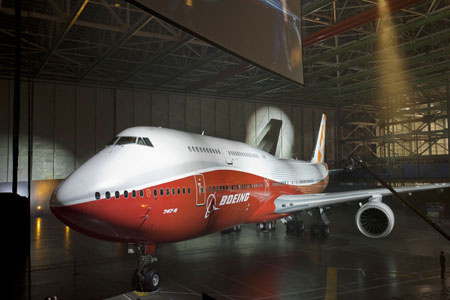
    Boeing Celebrates Premiere of New 747-8 Intercontinental

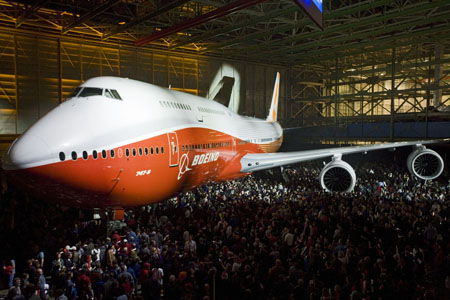
    EVERETT, Wash., Feb. 13, 2011 /PRNewswire/ — Boeing (NYSE: BA) today unveiled its new 747-8 Intercontinental, the new high-capacity passenger airplane that offers airlines the lowest operating costs and best economics of any large passenger airplane while providing enhanced environmental performance.
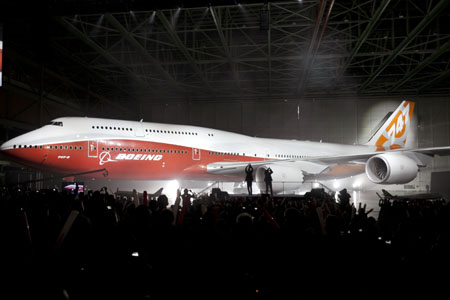
    Approximately 10,000 guests, including customers, Boeing employees, government officials, partners and suppliers, gathered in the factory in Everett, Wash., to witness the premiere of the Intercontinental at an event themed “Incredible, Again.” Boeing Commercial Airplanes President and Chief Executive Officer Jim Albaugh said the newest 747 incorporates technological advancements that make it an extremely productive airplane for customers.
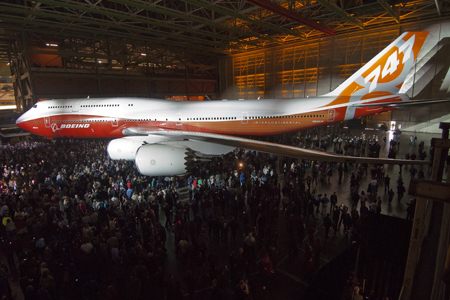
    “The new 747-8 Intercontinental features the latest in innovative technologies — applying many of the breakthroughs also found on the 787 Dreamliner,” said Albaugh. “We think our customers will value the low operating costs and passengers will enjoy the comfort of the striking new interior.”

    “The 747-8 Intercontinental will be a great complement to our fleet, fitting nicely into the 400-seat category, improving our fleet’s eco-efficiency even further,” said Nico Buchholz, executive vice president, Lufthansa Group Fleet Management. “As launch customer, we are looking forward to welcoming this new aircraft to our fleet next year as it adds to our ongoing fleet modernization and environmental efforts.”

    Korean Air and VIP customers have joined launch customer Lufthansa in ordering a total of 33 747-8 Intercontinentals. First delivery of the 747-8 Intercontinental is scheduled for the fourth quarter.

    “As the only airplane in the 400 to 500-seat market, the 747-8 Intercontinental will give operators an airplane perfectly suited for long, heavily traveled routes around the world,” said Pat Shanahan, vice president and general manager, Airplane Programs, Boeing Commercial Airplanes. “The new 747-8 Intercontinental will set a new standard in economic and environmental performance, while providing a world-class passenger experience.”

    The 747-8 Intercontinental will have the lowest seat-mile cost of any large commercial jetliner, with 12 percent lower costs than its predecessor, the 747-400. The airplane provides 16 percent better fuel economy, 16 percent less carbon emissions per passenger and generates a 30 percent smaller noise footprint than the 747-400. The 747-8 Intercontinental applies interior features from the 787 Dreamliner that includes a new curved, upswept architecture giving passengers a greater feeling of space and comfort, while adding more room for personal belongings.
    The airplane unveiled today is painted in a new Sunrise livery of red-orange that only will appear on the first 747-8 Intercontinental and is a significant departure from Boeing’s standard blue. The new color palette honors many key Boeing customers whose cultures recognize these colors as symbols of prosperity and good luck.

    To include the featured image in your Twitter Card, please tap or click their icon a second time.
  • |

    Boeing and State Corporation Rostechnology Finalize Order for Next-Generation 737s

    MOSCOW, Oct. 29 — Boeing and the State Corporation Rostechnology today announced the finalization of an order for 50 Next-Generation 737 airplanes. The order includes purchase rights for an additional 35 Next-Generation 737s. The State Corporation’s Supervisory Board approved the definitive agreement that was signed and announced on Sept. 17 during the Sochi Investment Forum in Russia. The order is valued at $3.7 billion at average list prices. Rostechnology’s order includes 15 Next-Generation 737-700s, 25 737-800s and 10 737-900ERs (extended range). 

    "The order of Next-Generation 737s by Rostechnology represents a substantial investment in our future and will accelerate the significant progress we are making in improving the global competitiveness and efficiency of our airline industry," said Roman Pakhomov, chief executive officer of Aviation Capital Services, aviation leasing division of Rostechnology. "This agreement continues to build upon the strategic partnership between Rostechnology and Boeing."

    The economic benefits, comfort and operating efficiencies consistently demonstrated by the Next-Generation 737 directly support Rostechnology’s plan to provide Russian airlines with efficient and reliable airplanes that will help them profitably grow domestic and international operations.

    "This is a great day in the history of our long and enduring partnership with Rostechnology," said Marlin Dailey, vice president of Sales, Boeing Commercial Airplanes. "Today’s order for 737-700s, 737-800s and 737-900ERs underscores Rostechnology’s confidence in the world’s most successful single-aisle airplane. The entire Next-Generation 737 family offers superior operating economics and the 737-900ER has the best seat mile cost of any single-aisle airplane and provides our Next-Generation 737 customers with a compelling low-risk growth opportunity."

    Rostechnology 737s will be delivered with the all-new 737 Boeing Sky Interior. Inspired by the passenger experience, it promises to redefine the 737 travel experience. In addition to the new design, Boeing also announced a performance improvement package offering a 2 percent reduction in fuel consumption through various airframe and engine improvements.

    Over the past 20 years, Boeing’s joint programs in Russia have resulted in almost $6 billion in highly successful joint projects with its Russian partners making Boeing the largest international aerospace investor in Russia.

    Boeing announced in September that its production rate for the Next-Generation 737 program will increase from the current rate of 31.5 airplanes per month to 35 in early 2012 and to 38 airplanes per month in the second quarter of 2013.

    To include the featured image in your Twitter Card, please tap or click their icon a second time.
  • | | | |

    NTSB Issues 9 New Safety Recommendations

    NTSB Issues Nine New Safety Recommendations as a Result of Its Investigation of the 8/26/2011 Crash of a Eurocopter AS350 B2 Near Mosby, Missouri

    May 6, 2013 The National Transportation Safety Board Issues the Following Recommendations to the Following Organizations:

    • Prohibit flight crewmembers in 14 Code of Federal Regulations Part 135 and 91 subpart K operations from using a portable electronic device for nonoperational use while at their duty station on the flight deck while the aircraft is being operated. (A-13-007)
    • Require all 14 Code of Federal Regulations Part 121, 135, and 91 subpart K operators to incorporate into their initial and recurrent pilot training programs information on the detrimental effects that distraction due to the nonoperational use of portable electronic devices can have on performance of safety-critical ground and flight operations. (A-13-008)
    • Require all 14 Code of Federal Regulations Part 121, 135, and 91 subpart K operators to review their respective general operations manuals to ensure that procedures are in place that prohibit the nonoperational use of portable electronic devices by operational personnel while in flight and during safety-critical preparatory and planning activities on the ground in advance of flight. (A-13-009)
    • Inform pilots of helicopters with low inertia rotor systems about the circumstances of this accident, particularly emphasizing the findings of the simulator flight evaluations, and advise them of the importance of simultaneously applying aft cyclic and down collective to achieve a successful autorotation entry at cruise airspeeds. (A-13-010)
    • Revise the Helicopter Flying Handbook to include a discussion of the entry phase of autorotations that explains the factors affecting rotor rpm decay and informs pilots that immediate and simultaneous control inputs may be required to enter an autorotation. (A-13-011)
    • Require the installation of a crash-resistant flight recorder system on all newly manufactured turbine-powered, nonexperimental, nonrestricted-category aircraft that are not equipped with a flight data recorder and a cockpit voice recorder and are operating under 14 Code of Federal Regulations Parts 91, 121, or 135. The crash-resistant flight recorder system should record cockpit audio and images with a view of the cockpit environment to include as much of the outside view as possible, and parametric data per aircraft and system installation, all as specified in Technical Standard Order C197, “Information Collection and Monitoring Systems.” (A-13-012)
    • Require all existing turbine-powered, nonexperimental, nonrestricted-category aircraft that are not equipped with a flight data recorder or cockpit voice recorder and are operating under 14 Code of Federal Regulations Parts 91, 121, or 135 to be retrofitted with a crash-resistant flight recorder system. The crash-resistant flight recorder system should record cockpit audio and images with a view of the cockpit environment to include as much of the outside view as possible, and parametric data per aircraft and system installation, all as specified in Technical Standard Order C197, “Information Collection and Monitoring Systems.” (A-13-013)

      To Air Methods Corporation:

    • Expand your policy on portable electronic devices to prohibit their nonoperational use during safety-critical ground activities, such as flight planning and preflight inspection, as well as in flight. (A-13-014)
    • Revise company procedures so that pilots are no longer solely responsible for nonroutine operational decisions but are required to consult with the Air Methods Operational Control Center for approval to accept or continue a mission when confronted with elevated risk situations, such as fuel-related issues and unplanned deviations. (A-13-015)
    To include the featured image in your Twitter Card, please tap or click their icon a second time.