|

BEA release: Human Factors Committee

Similar Posts

  • |

    Boeing News Across the board

    • CEO Jim McNerney said that the 5-foot rip in the roof of a Boeing 737 was due to a “workmanship issue” in a single plane. “The initial data that I think we’re all seeing is suggesting a possible workmanship issue on an airplane rather than a design issue across a fleet of airplanes.” It appears that the holes drilled in the plane’s skin were too big for the rivets and were not properly lined up. Other experts do not agree, and believe the problem is unlikely to be a single plane, and more likely to be more widespread.
    • Boeing reports that its Vigilare network centric command and control system has passed its last formal operational test. Testing of the system took place at Royal Australian Air Force Base Williamtown’s Eastern Regional Operations Centre from March 28 to April 8.
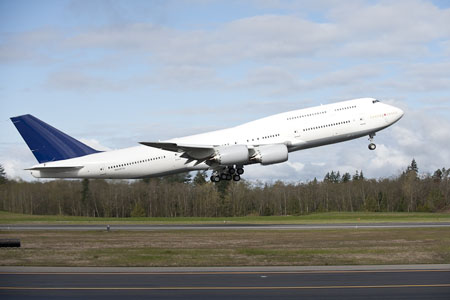
    • In other Boeing news, Piloted by Captains Keith Otsuka and Ron Johnston, with Ralph Chaffin serving as system operator and Greg Lichneckert as flight analyst, the second Boeing 747-8 Intercontinental RC021made a three-hour, twenty-minute flight. This was its first flight, the beginning of 600 hours of flight testing.
    • In response to today’s ruling by Federal District Court in the Central District of California, overturning California Senate Bill 990, a state law governing the cleanup of Santa Susana Field Laboratory, a former federal government rocket engine and energy testing facility in southern California:

      “We are pleased that Federal District Court agreed that the cleanup of Santa Susana should not be treated differently from the cleanup of other sites in California. “We look forward to continuing our ongoing work with the state to clean up the site under the comprehensive Consent Order issued in 2007. We will apply the same standards to Santa Susana that are applied to cleanup sites throughout the state in a manner that also ensures protection of the invaluable natural and cultural resources for future generations. Boeing intends to continue to clean up the site to a suburban residential standard, more stringent than would be required for its future use as open space.”Boeing has met every obligation of our 2007 cleanup agreement with the state, and we will continue our discussions with the state Department of Toxic Substances Control so that we can move toward the goal of cleaning up Santa Susana in the most expeditious manner, which is in the best interest of the public and the state of California.”

    To include the featured image in your Twitter Card, please tap or click their icon a second time.
  • |

    FAA Announces Improvements

    Washington, D.C. – The U.S. Department of Transportation’s Federal Aviation Administration (FAA) announced the completion of the expansion and renovation of the passenger terminal at the Pitt-Greenville Airport in Greenville, N.C. The project was paid for with $7.9 million from the American Recovery and Reinvestment Act.

    “Investing in projects like this is critically important to helping us compete in the global economy,” said U.S. Transportation Secretary Ray LaHood. “These improvements at Pitt-Greenville Airport will result in business and employment opportunities in North Carolina that will strengthen America’s future economic competitiveness.”

    The Pitt-Greenville Airport terminal was expanded to a two-story structure that meets current floodplain standards. The airport was severely flooded during Hurricane Floyd in 1999. Improvements include a departure waiting area for passengers, two additional gates and a security checkpoint.

    “Recovery Act dollars have given FAA an additional tool to maintain and improve airport infrastructure across the country,” said FAA Administrator Randy Babbitt.
    Under the Recovery Act, more than $1.3 billion have been made available nationwide for both airport improvement projects and air traffic control facility and system upgrades. Because of low construction bids for projects, more Recovery Act dollars were available for additional facilities, equipment and airport projects. These grants have been distributed to airports that serve commercial passengers, cargo and general aviation flights.

    To include the featured image in your Twitter Card, please tap or click their icon a second time.
  • |

    Bell Boeing V-22 Program Delivers 6th Osprey Trainer to US Marines

    ST. LOUIS, Sept. 27, 2010 — The Bell Boeing V-22 Program, a strategic alliance between Boeing [NYSE: BA] and Bell Helicopter, has delivered the sixth and final MV-22 Osprey Containerized Flight Training Device (CFTD) to the U.S. Marines. In the past year, the team has delivered five CFTDs to the Marines, as well as upgrades to two trainers delivered previously.

    The CFTD trains aircrew on basic aircraft familiarization and handling qualities. Additional training capabilities include systems/subsystems operation, communication, malfunctions, day and night flying, use of night-vision goggles, formation flying, aerial refueling and landing on ships. The device is intended to train crews for any task that might be performed in the aircraft, while limiting the monetary and environmental costs and safety risks of in-flight training.

    The sixth device was delivered to Marine Corps Air Station (MCAS) New River, N.C., on Aug. 16, six weeks early. MCAS New River has six devices, including the first CFTD — delivered in 2007 — plus three full-flight, motion-based simulators and one non-motion-based flight training device. MCAS Miramar, Calif., has four CFTDs. An upgrade delivered to Miramar this month brought all CFTDs to full concurrency with the Osprey aircraft.

    "The V-22 Integrated Product Team has made all of these early deliveries possible,” said Mark McGraw, vice president, Boeing Training Systems & Services. “They delivered three devices on this contract early, and all of them for the lowest per-unit cost our customer has seen."

    All CFTDs can be locally networked to allow for more robust training capabilities. The CFTDs at MCAS New River also are able to network with AV-8 Harriers at MCAS Cherry Point, N.C.

    The V-22 Osprey is a tiltrotor aircraft manufactured by Boeing and Bell Helicopter, a Textron Inc. [NYSE: TXT] company. Bell and Boeing are teamed in a Strategic Alliance Agreement for the design, production and sustainment of the V-22.

    Bell Helicopter, a wholly owned subsidiary of Textron Inc., is an industry-leading producer of commercial and military, manned and unmanned vertical lift aircraft and the pioneer of the revolutionary tiltrotor aircraft. Globally recognized for world-class customer service, innovation and superior quality, Bell’s global work force serves customers flying Bell aircraft in more than 120 countries. More information is available at www.bellhelicopter.com.

    Textron Inc. is a multi-industry company that leverages its global network of aircraft, defense, industrial and finance businesses to provide customers with innovative solutions and services. Textron is known around the world for its powerful brands such as Bell Helicopter, Cessna Aircraft Company, Jacobsen, Kautex, Lycoming, E-Z-GO, Greenlee, and Textron Systems. More information is available at www.textron.com.

    To include the featured image in your Twitter Card, please tap or click their icon a second time.
  • |

    Press Release – FAA Celebrates Recovery Act Funded Airfield Upgrades at Kentucky’s Georgetown-Scott County Regional Airport

    For Immediate Release
    September 23, 2010

    WASHINGTON, D.C. — The U.S. Department of Transportation’s Federal Aviation Administration celebrated the completion of an airfield upgrade at Georgetown-Scott County Regional Airport in Kentucky, paid for with $3 million in American Recovery and Reinvestment Act funds.

    “Airport Recovery Act projects are helping boost local economies all across the country,” said U.S. Transportation Secretary Ray LaHood. “The Recovery Act is helping us keep our runways safe and well maintained."

    Recovery Act funds provided the full cost of repaving Georgetown-Scott County Regional Airport’s 5,500 foot-long runway. The runway had deteriorated and had not been fully repaved in nearly 17 years. The construction also included the widening of the ends of the parallel taxiway, which will now be able to accommodate larger aircraft turning on and off the runway.

    “General aviation is incredibly important to local communities nationwide and the Recovery Act is funding necessary safety improvements and upgrades that otherwise might not get done,” said FAA Administrator Randy Babbitt.

    Nationwide, $1.3 billion in Recovery Act money has been made available for both airport improvement projects and air traffic control facility and system upgrades. Because of low construction bids for projects, more Recovery Act dollars were available for additional facilities and equipment as well as airport projects. These Recovery Act grants have been distributed to airports that serve commercial passengers, cargo and general aviation.

    To include the featured image in your Twitter Card, please tap or click their icon a second time.
  • |

    Fill your pockets, only not too much.

    George’s Point of View

    What is a pocket for if not for putting something in?

    The FAA says no more than 3 lbs worth. But yeah, you can use it for small stuff, and you don’t have to sweat it.

    So if some zealous flight attendant has been lock-stepping down the aisle, forcing you to remove your glasses, your contact lens solution, or wrapped airport leftovers from the back pocket of the seat in front of you, you can now feel vindicated.

    Now, if those airport leftovers are as big as that Fred Flintstones rack of ribs that tilted his stone-aged car sideways, you’re on your own.

    But I’m going to print this FAA letter and carry it with me the next time I fly.

    To include the featured image in your Twitter Card, please tap or click their icon a second time.
  • |

    FAA Proposes $2.4 Million Civil Penalty Against Cessna Aircraft

    KANSAS CITY – The Federal Aviation Administration (FAA) is proposing a $2,425,000 civil penalty against Cessna Aircraft Co., of Wichita, Kan., after carbon composite parts of the wing of one of its aircraft came apart during flight.

    On Dec. 6, 2010, an FAA test pilot performing a production audit test flight in a Cessna Corvalis experienced a failure of the skin on the left wing. About seven feet of the left wing skin separated from the forward spar and damaged a fuel tank. A spar is a beam-like structure inside the wing and is a principal load-bearing component. The pilot made an emergency landing at the Independence, Kan., airport.

    Subsequently, the FAA issued emergency airworthiness directives grounding 13 specific Corvalis aircraft that used wings and parts produced in Cessna’s Chihuahua, Mexico, plant between Dec. 17, 2009, and Dec. 16, 2010. FAA investigators determined that the wing skin separated from the spar due to excessive humidity in the factory that prevented the bonded materials from curing properly.

    The FAA alleges that Cessna failed to follow its FAA-approved quality control system when it manufactured the wings on the damaged airplane, as well as 82 additional parts, in the Chihuahua factory. The manufacturer has since made improvements to the plant.
    “Safety is our highest priority,” said U.S. Transportation Secretary Ray LaHood. “We want to ensure that manufacturers are vigilant when it comes to aviation safety. There can be no exceptions.”

    “Quality control is a critical part of the aircraft manufacturing process and has to detect problems before planes leave the factory,” said FAA Administrator Randy Babbitt. “Manufacturers have to ensure that all the details are followed all of the time.”
    The Corvalis is a high-performance four-seat single-engine general aviation aircraft. It uses a significant number of composite parts and structures.

    Cessna has 30 days from the receipt of the FAA’s enforcement letter to respond.

    To include the featured image in your Twitter Card, please tap or click their icon a second time.