Public Statement

  • |

    Boeing News Across the board
    • CEO Jim McNerney said that the 5-foot rip in the roof of a Boeing 737 was due to a “workmanship issue” in a single plane. “The initial data that I think we’re all seeing is suggesting a possible workmanship issue on an airplane rather than a design issue across a fleet of airplanes.” It appears that the holes drilled in the plane’s skin were too big for the rivets and were not properly lined up. Other experts do not agree, and believe the problem is unlikely to be a single plane, and more likely to be more widespread.
    • Boeing reports that its Vigilare network centric command and control system has passed its last formal operational test. Testing of the system took place at Royal Australian Air Force Base Williamtown’s Eastern Regional Operations Centre from March 28 to April 8.
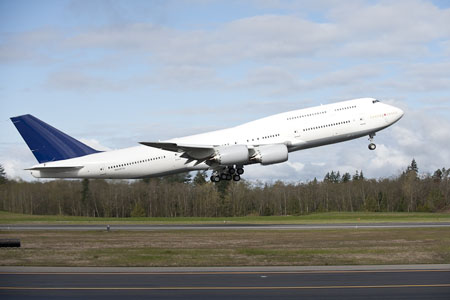
    • In other Boeing news, Piloted by Captains Keith Otsuka and Ron Johnston, with Ralph Chaffin serving as system operator and Greg Lichneckert as flight analyst, the second Boeing 747-8 Intercontinental RC021made a three-hour, twenty-minute flight. This was its first flight, the beginning of 600 hours of flight testing.
    • In response to today’s ruling by Federal District Court in the Central District of California, overturning California Senate Bill 990, a state law governing the cleanup of Santa Susana Field Laboratory, a former federal government rocket engine and energy testing facility in southern California:

      “We are pleased that Federal District Court agreed that the cleanup of Santa Susana should not be treated differently from the cleanup of other sites in California. “We look forward to continuing our ongoing work with the state to clean up the site under the comprehensive Consent Order issued in 2007. We will apply the same standards to Santa Susana that are applied to cleanup sites throughout the state in a manner that also ensures protection of the invaluable natural and cultural resources for future generations. Boeing intends to continue to clean up the site to a suburban residential standard, more stringent than would be required for its future use as open space.”Boeing has met every obligation of our 2007 cleanup agreement with the state, and we will continue our discussions with the state Department of Toxic Substances Control so that we can move toward the goal of cleaning up Santa Susana in the most expeditious manner, which is in the best interest of the public and the state of California.”

  • | | |

    NTSB Directive Contradicts Boeing Statement

    On April 25, the NTSB released information about the April 1 Southwest Airlines Boeing 737-300 fuselage incident where the rupture in the fuselage caused depressurization and forced pilots to make an emergency landing in Yuma.

    From the release

    The NTSB Materials Laboratory work is actively conducting additional inspections and examinations in the following areas:

    1. Removal of rivets and examination of rivet hole dimensions, rivet dimensions, and rivet hole alignment between upper and lower skins.
    2. Detailed fractographic analysis of the skin fractures emanating from the rivet holes using optical and scanning electron microscopes.
    3. Fatigue striation analysis using a scanning electron microscope of specific skin fractures to determine the rate of crack propagation.
    4. Additional portions of the lap joints from the accident aircraft.

    Of 136 airplanes inspected worldwide four had crack indications at a single rivet and one plane was found to have crack indications at two rivets.

    In spite of these findings, Boeing Chief Executive Jim McNerney told Reuters“I think the initial data that I think we’re all seeing is suggesting a possible workmanship issue on an airplane, rather than a design issue across a fleet of airplanes.”

    If Boeing believes that the problem was workmanship on a single plane, then how did other planes reveal conditions precursing the same type of rupture incident as was incurred on Southwest Airlines Flight 812?

  • | |

    NTSB Releases Safety Recommendations

    Partial summary of what is included

    • incorporate in Aircraft Flight Manuals a committed-to-stop point in the landing sequence
    • subpart K operators and Part 142 training schools to incorporate the information
    • establish, and ensure that pilots adhere to, standard operating procedures.
    • principal operations inspectors ensure that pilots use the same checklists in operations that they used during training for normal, abnormal, and emergency conditions.
    • require manufacturers to revise existing, checklists to require pilots to clearly call out and respond with the actual flap position
    • revise/describe terms severe thunderstorms, such as “bow echo,” “derecho,” and “mesoscale convective system.”
    • revise regulations and policies to permit appropriate prescription use
    • require fatigue education (training and policy for doctors and pilots)
    • runway excursion prevention development
    • wet runway landing data information provided to pilots
    • pilot in command line checks demonstrating expertise

    Safety Recommendation .pdf

  • | | | |

    Revisiting Ethiopia Flight 409

    We’ve been studying Ethiopia Flight 409 for a while, and now that the official investigation Progress Report is out, we have looked at it with quite some interest. The 28 page report is attached as a pdf at the end of this editorial, so if you haven’t seen it yet, we have it handy–

    In some places, we find that the report corroborates some of the the points we made (or discovered in our research.)

    According to the report:

    “Instruments meteorological conditions prevailed for the flight, and the flight was on an instrument flight plan. The accident occurred at night in dark lighting conditions with reported isolated cumulonimbus clouds and thunderstorms in the area.”

    Their report also states:
    The Lebanese Civil Aviation Authority reviewed the data from the Lebanese Meteorological Services that was collected on 25 January, 2010 after the accident. Meteorological data revealed some significant meteorological conditions in the area at the time of the accident. Relevant meteorological documents are included in the investigation file and will be analyzed during the investigation.

    1.7.1 General meteorological situation
    At the time of the accident, there was thunderstorms activity southwest and west of the field, as well as to the northwest on the localizer path for runway 16.

    We had found a satellite photo of the area at the time in question and found something more turbulent than isolated cumulonumbus clouds. Here are the details we turned up
    (thanks to Prof. Robert H. Holzworth
    Departments of Earth and Space Sciences, and Physics
    Director, World Wide Lightning Location Network )

    WWLLN lightning strokes between (45,35.2) and (33.6, 35.7) coordinates on25 Jan 2010 between 00 and 06 UTC
    .
    2010/01/25,00:26:01.675091, 33.7925,  35.3157, 18.6, 15 2010/01/25,00:32:36.535404, 33.6762,  35.3223,  2.6,  5 2010/01/25,00:35:33.147928, 33.8152,  35.3989, 17.1,  9 2010/01/25,00:36:46.386409, 33.7880,  35.4182,  6.3,  6 2010/01/25,00:37:57.880969, 33.7473,  35.4083, 12.9,  8 2010/01/25,00:38:56.307703, 33.8144,  35.4480,  6.7,  5 2010/01/25,00:39:52.170965, 33.8098,  35.4486, 22.5, 1 02010/01/25,00:47:07.877656, 33.7658,  35.5138, 16.3,  7 2010/01/25,00:47:08.129640, 33.7532,  35.5187,  6.8,  5 2010/01/25,00:51:28.917459, 33.7313,  35.4897, 15.8,  8 2010/01/25,00:57:16.994854, 33.7712,  35.5668,  6.2,  5 2010/01/25,00:57:17.172976, 33.8877,  35.6009,  3.1,  5 2010/01/25,00:57:16.970924, 33.8230,  35.5664,  9.2,  5 2010/01/25,01:05:02.878083, 33.6379,  35.5348, 10.9,  5 2010/01/25,02:58:51.961652, 33.6073,  35.3703,  2.3,  5 2010/01/25,03:00:31.235850, 33.6450,  35.3881,  5.8,  7 2010/01/25,03:02:45.342786, 33.6157,  35.3553,  4.5,  7 2010/01/25,03:30:07.101084, 33.6511,  35.3185, 17.5,  7 2010/01/25,04:06:25.411422, 33.8432,  35.3648, 10.9,  5 2010/01/25,04:07:31.723296, 33.9087,  35.3844,  7.0,  5 2010/01/25,04:13:12.295902, 33.9543,  35.4151, 17.0, 10 2010/01/25,04:29:17.203911, 33.9865,  35.4613, 20.7, 10 2010/01/25,04:33:22.703869, 33.9637,  35.3229,  7.6,  6 2010/01/25,04:35:07.805894, 33.8709,  35.3297, 13.3,  8 2010/01/25,04:46:45.611497, 33.9634,  35.4145, 12.9,  6 2010/01/25,05:19:51.913652, 33.6442,  35.4520, 19.5,  8 2010/01/25,05:35:10.788571, 33.9139,  35.2087,  9.5,  7 2010/01/25,05:56:25.149281, 33.6332,  35.6535, 14.0,  7

    and the satellite photo:

    The plane’s on board radar would have normally registered this unacceptable massive super cell in the area where the airplane hit the ocean and the pilot would have adjusted the flight path accordingly. This makes us question if the on board radar was intact and operable. The weather system pictured in the satellite photo is not weather a pilot would voluntarily fly into. So we were not surprised to see this included in the report:

    1.17.1.6 Procedure for use of on-board Weather Radar
    ET provided its SOP and Boeing procedure for the operation of the weather radar during departure. The procedure will be addressed during the analysis phase.

    OTHER POINTS
    Our investigation pointed out that when an aircraft fails, it is a crucial part of the research to look at timely Airworthiness Directives (issued before and after) on the type of plane involved and indeed, this has become part of the ongoing research:

    1.16.4.1 Removal and Analysis of the Trim Tab section:
    ADs were issued (Emergency AD, AD 2010-09-05, AD 2010-17-19) by the FAA respectively on March and August 2010 regarding trim tab control mechanism and this airplane (with serial number 29935) was found affected by these ADs.
    Therefore, and in accordance with the Airworthiness Group recommendation, the Investigation Committee decided the removal of the trim tab control mechanism for further test and research.

    This is not the final report. The final report is due out this summer. We are looking forward to seeing if it answers some of our questions.

    The Official Report

  • | |

    NTSB – 2008 Accident at Owatonna Airport

    NTSB DETERMINES THE CAPTAIN’S DECISION TO ATTEMPT A GO- AROUND LATE IN THE LANDING ROLL WITH INSUFFICIENT RUNWAY REMAINING CAUSED THE 2008 ACCIDENT IN OWATONNA

    The NTSB has released a conclusion in the 2008 plane crash at Owatonna Degner Regional Airport, Owatonna.

    According to the NTSB report, probable cause was determined to be the captain’s decision to attempt a go-around late in the landing roll with insufficient runway remaining. Contributing factors were cited as “pilots’ poor crew coordination and lack of cockpit discipline; fatigue, which
    likely impaired both pilots’ performance; and the failure of the Federal Aviation Administration (FAA) to require crew management training.”

    The synopsis is available here:
    http://www.ntsb.gov/events/2011/Owatonna_MN/synopsis.html

    The webcast from todays meeting on Aircraft Accident Report – Crash on landing of Hawker Beechcraft BAE 125-800A, N818MV, Owatonna, Minnesota, July 31, 2008 will be available here.

  • |

    NTSB Issues Cessna Service Letter


    After three Cessna Aircraft Company (Cessna) 560XL airplanes experienced loss of rudder control after ice built up inside the tailcone, it was established that water can collect and freeze inside the tailcone.

    Consequently Cessna service letter 560XL-53-08 was written.

    The letter is available here:

    http://www.ntsb.gov/recs/letters/2011/A-11-016.pdf

  • | |

    Nigeria Airports Audited for Safety

    The ICAO audit for Nigeria comes up in May (a whole lot of initials here — NAMA (Nigerian Airspace Management Agency), NCAA, FAAN, NCAT (Nigerian College of Aviation Technology), NIMET (Nigerian Meteorological Agency), and AIB (Accident Investigation Bureau)— and before all of that, the US American Transportation Security Administration (ATSA) is in phase two of auditing Nigerian airports.

    Arik Air, United Airlines, and Delta Airlines will be audited for safety as well, as they are the three carriers which fly to the US. Now that Nigeria has Category “ONE” status and can fly to the US, the FAA will continue strict safety auditing in order to maintain that safety status.

    In Montreal, Canada from 24-26 May 2011., the ICAO will be hosting an Enhancing Runway Safety symposium. The official event sponsors are Airbus, Airports Council International (ACI) and Boeing. In April of 2010, the ACI World Director General, declared support for the African States such as Nigeria who adopted the Abuja Declaration, which demonstrates the determination of African nations to contribute to the development of a new global aviation security strategy.

    Great press, but what happens next? Africa has a long way to go to establish true aviation safety standards.

  • |

    Pilots Avoid Weather Towers


    In case you didn’t know, planes should not fly into Meteorological Evaluation Towers.

    The NTSB has just issued a warning for pilots to avoid these towers, which at 200 feet are below the threshold for markings. The biggest danger, apparently is that they can be built quickly and whoever builds them is not required to inform aviators.

    So pilots, if you didn’t know to avoid them, you know now. Read the alert here.

    http://ntsb.gov/alerts/SA_016.pdf

  • |

    DGAC Oversight Focuses on Ageing Aircraft

    After Aerosur and Lloyd Aereo Boliviano experienced serious events with old airplanes, the Bolivian aviation authority announced an edict that banned planes older than 25 years from flying in Bolivian airspace to begin in January of this year. However, instead of a ban being activated, craft over than 25 years will undergo additional maintenance inspections and be under additional environmental scrutiny.

    Aerosur will be affected by the special restrictions, but not Lloyd Aereo Boliviano, which is no more.

  • |

    Timken Aerospace Replacement Parts Market

    The Timken Company is expanding its capabilities to serve the total lifecycle of overhaul and replacement parts for the aviation industry with 28 new FAA-certified replacement parts for a variety of helicopter drivetrain and engine platforms.

    Timken offers more than 1,600 FAA-certified replacement parts overall. The company will display parts at its 2011 Heli-Expo exhibit #1306, March 6-7, 2011 in Orlando, Fla.
    An expanded list of FAA-approved replacement parts with complete engine and helicopter drivetrain overhaul capabilities is generating new business for Timken worldwide.

  • |

    Aussie Aviation engineers urged to learn about new rules

    All licensed aircraft maintenance engineers, apprentices and aircraft maintenance engineers are being urged to attend a seminar on Australia’s new aviation maintenance regulations.

    All licensed aircraft maintenance engineers, apprentices and aircraft maintenance engineers are being urged to attend a seminar on Australia’s new aviation maintenance regulations.

    A series of 13 seminars on the new maintenance rules are being held by the Civil Aviation Safety Authority across the nation from mid March to mid April.

    Seminars are being run in all capital cities, except Canberra, as well as Newcastle, Wagga and Cairns.

    The new maintenance regulations come into effect on 27 June 2011.

    All licensed aircraft maintenance engineers (LAMEs) with current licences will have them converted to the new regulations before 27 June 2011. It is expected new licences will be issued in early June.

    LAMEs with licences that expire before the end of June are reminded to renew their existing licence.

    While LAMEs will retain their current privliges under the new rules it is important they understand how the new regulatory system operates and its impact on all sectors of the aviation maintenance industry.

    Apprentices and aircraft maintenance engineers also need an overview of the rule changes.

    Importantly, under the new rules there will be a focus on safety management systems and human factors training will be introduced for maintenance organisations which support regular public transport operations.

    The new maintenance suite of regulations covers all LAMEs, all maintenance training organisations, maintenance organisations maintaining regular public transport aircraft and regular public transport air operators.

    Revised maintenance regulations for other sectors of aviation such as charter, aerial work and private operations will be developed at a later date, after wide consultation with these sectors.

  • |

    FAA, Europe Sign NextGen Research Agreement

    March 3–The FAA and the European Union formally signed an agreement today to work together on research aimed at providing seamless air traffic service to aircraft flying between the United States and Europe.

    The agreement, signed in Budapest, calls for both sides to research the interoperability of avionics, communication protocols and procedures, as well as operational methods under NextGen and its European counterpart, the Single European Sky ATM Research (SESAR). Carey Fagan, the FAA’s executive director for international affairs, signed for the U.S. Pal Volner, state secretary for transport for Hungary, and Siim Kallas, EU vice president and commissioner for transport and mobility, signed on behalf of the EU.

    The agreement encourages industry participation on both sides of the Atlantic, ensuring the development, harmonization and use of the best technologies available. The collaborative arrangement will lay the foundation for expanding air traffic modernization around the world.

  • |

    American Airlines Employees Aid Veterans, US Troops

    FORT WORTH, Texas, March 2, 2011 — Thanks to the fuel conservation efforts of American Airlines employees, a total of $409,513 is being provided to Air Compassion for Veterans, a not-for-profit organization that helps active military, veterans and their families travel for medical, counseling and rehabilitation needs.

    Through its employee-driven fuel conservation program, called Fuel Smart, American granted a portion of the proceeds from the initiative to assist those who have served or currently serve in the U.S. military when they need access to medical and related resources.

    “American’s ability to make such a significant contribution to help service members and their families is a direct result of our employees’ participation in Fuel Smart,” said Matt Pfeifer, American’s Managing Director – Operations Strategic Planning. “When our troops and veterans return home, it is imperative that we all pull together to ensure that they receive access to the best possible care. This is made easier because of our employees’ tremendous fuel conservation efforts.”

    In 2010, nearly 1,000 flights were made possible on American and American Eagle aircraft as a result of direct contributions from American Airlines employees. In addition to medical-related travel, Air Compassion for Veterans provides transportation for family members to visit service men and women who are undergoing treatment away from home.

    “So many of our soldiers, sailors, airmen and Marines have been injured during their military service and face years of surgeries, therapy and rehabilitation,” said American Airlines First Officer Tom Marquardt, a Major in the Air Force Reserve who plays an instrumental role in American’s partnership with Air Compassion for Veterans. “The ability to go home, or to have your family visit while you’re undergoing rehab, is such an important part of the healing process. My fellow employees are helping make sure this is possible for these brave men and women.”

    Today, the final 2010 donation was made during a special ceremony at American’s Maintenance & Engineering facilities at Dallas/Fort Worth International Airport. A number of employee workgroups that helped make the contribution possible were honored for their efforts.

    “We are honored to partner with a company like American Airlines, which has made such a strong commitment to serving our military and veterans,” said Ed Boyer, President and CEO of Mercy Medical Airlift, the parent organization of Air Compassion for Veterans. “Without the hard work of American Airlines employees, many of the veterans and their family members simply would not be able to make important trips during rehab and recovery. On behalf of the men and women who wear the cloth of our great nation, we express our deepest thanks.”

    The success of this partnership depends on employee involvement in American’s Fuel Smart program, which aims to achieve fuel savings of 138 million gallons and reduce carbon emissions by 2.9 billion pounds in 2011.

    The employee-led program works across all departments to identify fuel savings opportunities and make them a part of daily routines. Several key programs drive donations and help improve fuel efficiency, including:

    Pilots reducing fuel burn by using a single engine to taxi in and out of gates when possible.
    Airport and flight crews working together to quickly connect ground power and pre-conditioned air hoses to planes and turning off the aircraft auxiliary power when they arrive at the terminal.

    Dispatchers and flight crews using all available planning tools, procedures and expertise to safely plan flight fuel loads without carrying excess fuel.

    American Airlines has a long history of supporting the nation’s armed forces and veterans, dating to World War II and C.R. Smith, the airline’s first president. Currently, more than 60 percent of American’s pilots and 10 percent of all American and American Eagle Airlines employees are active military/reservists or veterans. American supports members of the military, veterans and their families when they travel and in their communities, including special military airfares, waived baggage fees, support of non-profit organizations, and employee engagement in a wide variety of events and activities. To learn more about American’s Military/Veterans Initiatives, visit AA.com/JoinUs.

  • |

    Goodrich Hosts Rescue Hoist Users Conference

    CHARLOTTE, N.C., March 2, 2011– Goodrich Corporation’s Sensors and Integrated Systems business will present its tenth annual Rescue Hoist Users Conference along with a special maintenance training session, March 3-4, 2011, immediately prior to the HAI HELI-EXPO(R) trade show in Orlando, Fla.

    The conference will take place at the Hilton Orlando. The conference will include an exchange of information between operators, helicopter manufacturers and Goodrich about operational experiences, concerns and lessons learned. Hands-on rescue hoist maintenance training is planned for March 4, in which a full-scale hoist will be used for demonstrating troubleshooting, cleaning, inspections and other common maintenance tasks. A highlight of the conference will be the presentation of the Rescue of the Year award on March 3, in which Goodrich recognizes exceptional heroism and safety in a helicopter rescue effort.

    Alex Echeverria, rescue systems business development director at Goodrich’s Sensors and Integrated Systems business said, “This conference allows commercial and military operators from around the world to share experiences that improve the use and maintenance of Goodrich rescue systems. The best ideas come from the people who use our products, and we look forward to sharing best practices to enhance safe, reliable and affordable operations.”

    Goodrich’s Sensors and Integrated Systems business is a world leader in providing rescue hoist and cargo winch systems to commercial and military helicopter operators. Goodrich is the only rescue hoist manufacturer that provides a Category One translating drum cable management system, allowing for reliable operation in unlimited angles and extreme environments. A diverse array of Goodrich helicopter technology will be on display at the HELI-EXPO(R), stand 2142, March 5-8, 2011 in Orlando, Fla.

    Goodrich Corporation, a Fortune 500 company, is a global supplier of systems and services to aerospace, defense and homeland security markets. With one of the most strategically diversified portfolios of products in the industry, Goodrich serves a global customer base with significant worldwide manufacturing and service facilities.

  • |

    Boeing Leaders to Address Bio-Fuels, Growth, Emerging Issues at Asian Aerospace 2011

    HONG KONG, Mar. 2, 2011 – Experts from Boeing, the world’s largest aerospace company, will present key trends at Asian Aerospace 2011 and discuss their implications for commercial aviation. Asian Aerospace takes place March 8-10, at AsiaWorld-Expo in Hong Kong.

    Boeing also will provide the latest information about its commercial business, including updates on recent improvements to its existing family of airplanes and the company’s single- and twin-aisle development programs.

    Boeing executives will speak at conference sessions that address sustainable aviation bio-fuels and explore developments in the cargo sector. The company also will conduct a media briefing to share the company’s market outlook for the next 20 years. All Boeing speakers and executives will be available for exclusive interviews prior to and during Asian Aerospace 2011 on a first-come, first-served basis.

    Asia continues to be a growth region for Boeing Business Jets (BBJ) which now has airplanes certified and available for charter in both Hong Kong and mainland China. Media are invited to tour a BBJ, managed by Hong Kong based Metrojet, on static display March 8 and 9 at the Hong Kong Business Aviation Centre (HKBAC). Transportation will be provided from AsiaWorld Expo to HKBAC during show business hours, 10:00am – 4:00pm, by Asian Aerospace organizers.
    “Asian Aerospace is a great venue for Boeing to work with Asian customers, partners and suppliers, to share ideas and identify opportunities in technologies, products and services that present the best value,” said Rob Laird, vice president of Sales for India, East and South Asia, Boeing Commercial Airplanes. “Asia leads the world in terms of growth and the return to profitability. Boeing’s strategy is to provide the right mix of products and services that enable our customers provide a great customer experience, generate more revenue and reduce operating expenses.”

    With the commercial aviation sector growing ever more conscious of environmental issues, Al Bryant, vice president of Boeing Research and Technology, plans to share Boeing’s experience in promoting the development of sustainable aviation biofuels. The presentation will take place during “The Future of Aviation-Emerging Issues & Solutions” conference as part of the Asian Aerospace Congress.

    Randy Tinseth, vice president of Marketing, and Jim Edgar, regional director, Cargo Marketing, both of Boeing Commercial Airplanes, will provide a commercial airplane and air cargo market update for media, with a focus on the Asia Pacific region. In addition to providing the company’s market projections for the next 20 years, the media briefing also will include product updates.
    Edgar also will participate on a panel at the “Air Freight Asia Conference” on the growth of the air cargo industry in countries neighboring China.

  • | |

    Boeing, TAM Complete Contract for Two 777-300ERs

    TAM 777-300ER fleet will now consist of 12
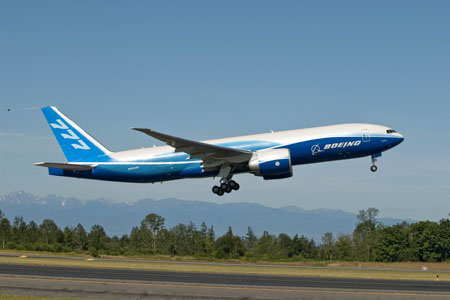
    SEATTLE, Feb. 28, 2011 /PRNewswire/ — Boeing and TAM Linhas Aereas today announced the Brazilian carrier ordered two additional 777-300ERs (extended range) with two purchase rights. Today’s order, valued at approximately $568 million at current list prices, brings the total number of 777s TAM has on order to 12.

    “TAM continues to position itself as one of the world’s leading airlines,” said Marlin Dailey, vice president of Sales & Marketing for Boeing Commercial Airplanes. “We are pleased TAM continues to choose Boeing’s 777-300ER for its long-haul fleet needs and look forward to working together with TAM as they grow their international network.”

    The Boeing 777 is the market leader in the 300 to 400 seat market. It is the world’s most successful twin-engine, long-haul airplane.

    “These additional airplanes will help us expand our long-haul service capability to meet the growing market demand in Brazil and beyond,” said Marco Antonio Bologna, chief executive officer, TAM Holdings.

    The 777 delivers exceptional value to the airlines that fly it and is consistently ranked at the top of operator and investor polls.

    “The Brazilian aviation market continues to grow at a rapid pace. The 777-300ER provides us the performance and versatility we need to develop our network competitively and capitalize on robust international traffic growth,” added Libano Barroso, chief executive officer, TAM Airlines.

    The Boeing 777-300ER is 19 percent lighter than its closest competitor. It produces 22 percent less carbon dioxide per seat and costs 20 percent less to operate per seat. The airplane can seat up to 365 passengers in a three-class configuration and has a maximum range of 7,930 nautical miles (14,685 km).

  • |

    Boeing Names Jeffrey Johnson New Leader for Middle East

    CHICAGO, March 1, 2011 — The Boeing Company today named Jeffrey Johnson as president of Boeing Middle East. Johnson succeeds Paul Kinscherff, who has been appointed chief financial officer for international finance.

    Johnson will be based in Dubai, United Arab Emirates (UAE) and report to Shep Hill, president of Boeing International and senior vice president of Business Development and Strategy. Johnson will be responsible for Boeing’s growth and productivity plans across the Middle East region, working closely with Boeing Saudi Arabia president Ahmed Jazzar.

    Johnson will lead company-wide activities that include government affairs and the development and implementation of the Boeing Middle East strategy focused on new business and industrial partnership opportunities, corporate citizenship projects, expanding the Boeing presence and strengthening company relationships with customers and other stakeholders.

    “Jeff’s leadership skills, business development experience and detailed customer knowledge will strengthen our efforts to grow our business in the Middle East,” said Shep Hill. “In this regard, Jeff will continue to build on the solid foundation established by Paul and what he has accomplished across the region.”
    Prior to this appointment, Johnson was a senior director of business development for Boeing Defense, Space & Security (BDS). Before that, he served as the Middle East and Africa business development director for BDS. Johnson joined Boeing in 1982 and has managed programs in more than 40 countries during his career. Johnson also worked in Design Engineering, Electronics Design and Manufacturing, System Engineering, Program Management and Flight Test Engineering.

    Kinscherff served as president of Boeing Middle East from March 2008. During his tenure, the company has doubled its presence across the region, expanded its defense and aviation business and forged closer customer relationships. In his new role, Kinscherff will be based at the company’s headquarters in Chicago.
    “Paul was instrumental in expanding our business and strengthening Boeing’s image in the Middle East. Under his leadership, Boeing implemented a robust strategy to grow its business and develop long-term relationships critical to the company’s success,” added Hill.

    Boeing’s relationship with the Middle East dates back more than 60 years. Its first office was established in Riyadh, Kingdom of Saudi Arabia, in 1982. Since then, the company has expanded its presence and relationships across the region. Boeing opened an office in Abu Dhabi, UAE, in 1999, a regional office

  • |

    Boeing 777 Freighter Completes 2 Years in Service

    EVERETT, Wash., Feb. 28, 2011 /PRNewswire/ — Hauling everything from giant panda bears to high-performance race cars the Boeing 777 freighter in its first two years in service is earning the reputation as the work horse of the industry.

    The growing fleet of 777 freighters has flown approximately 120,000 hours and boasts a daily utilization rate of 11.34 hours. Fleet schedule reliability is at 99.37 percent, which means the freighter has a near-perfect record of on-time takeoff and landings. Eighty-three have been ordered, and 39 freighters now are in service with nine airlines.

    FedEx Express is the largest 777 freighter operator with a fleet of 11 currently in operation, and another airplane just delivered. An additional 13 777 freighters remain in Boeing’s backlog for FedEx.

    “The world’s longest range twin-engine freighter is elevating our high level of service to customers around the world,” said James R. Parker, executive vice president of FedEx Express Air Operations. “Our customers are enjoying the nonstop 777 flights that offer them the latest cutoff times in key manufacturing centers in China, an advantage unmatched by the competition.”

    Emirates SkyCargo, the freight division of Emirates airline, now operates two 777 freighters. The airplane is playing an integral role in Emirates’ freighter fleet due to the airplane’s long-range capability.

    “Emirates has opted for these brand new, super-efficient aircraft to ensure we are best placed to serve the industry’s requirements in the long term,” said Emirates Divisional Senior Vice President Cargo Ram Menen. “We are absolutely delighted with this airplane!”

    The 777 freighter is the world’s longest-range, twin-engine freighter and features the lowest trip cost of any large freighter, with high-cargo density and 10-foot (3.1-meter) interior height capability that complements the popular 747 freighter family.

    Providing cargo capacity normally associated with larger airplanes, the 777 freighter can fly 4,900 nautical miles (9,070 kilometers) with a full payload of 225,200 pounds (102 metric tons). The 777 freighter is powered by General Electric’s GE90-110B1L and meets QC2 noise standards.

    “The 777 freighter is a great example of how Boeing is committed to continuously improving the 777 family to deliver top value to owners and operators,” said Larry Loftis, vice president and general manager of the 777 program.

    Boeing is the air cargo industry leader, using its expertise to support customers in their success and to promote the industry. The company also offers the most complete family of freighters, which provide superior efficiency and operational economics in support of airline profitability.

  • |

    Northrop Grumman Provides Air Traffic Surveillance Sys for Greek Airport

    LONDON – March 2, 2011 – Northrop Grumman Corporation’s Europe-based air traffic management subsidiary, Northrop Grumman Park Air Systems, is providing its Advanced Surface Movement Guidance and Control System ( for Greece’s Thessaloniki International Airport.

    Under the contract awarded by Greek consultants ATESE following an international competitive tender process, Northrop Grumman Park Air Systems will deliver its NOVA 9000 A-SMGCS system for operation by the Hellenic Civil Aviation Authority (HCAA). The company has previously supplied a similar system for Athens International Airport.

    “The NOVA 9000 A-SMGCS is widely accepted as a state-of-the-art system; we know it well and have been operating it for many years at our main airport in Athens. We and the controllers in Thessaloniki, look forward to its commissioning before this 2011 winter season”, said D6 director of Hellenic Civil Aviation Authority.

    The air traffic control system has successfully undergone system and sensor testing in Norway, Denmark and Czech Republic. Northrop Grumman Park Air Systems will deliver A-SMGCS to manage the tracking of aircraft and vehicles on the ground and using surveillance systems based on radar and multilateration, it will monitor aircraft at the airport’s two crossing runways. The system will assist the efficient management of air traffic particularly in periods of high volume and during adverse weather conditions.

    “We are pleased that our A-SMGCS capability has been recognised as the system of choice by airport operators”, said Eldar Hauge, managing director for Northrop Grumman Park Air Systems in Norway. “This win maintains our position as a leading supplier of A-SMGCS across Europe.”

    With a 50-year legacy in air traffic management systems ranging from individual airport installations to countrywide, multiple-site turnkey integrated system solutions, Northrop Grumman’s state-of-the-art air traffic management systems are operationally controlling air traffic in numerous countries around the world including recent major programmes in: France, Norway, Brazil, Qatar, Oman, Canada, India, Poland, UAE, U.S. and the U.K., in both civil and military applications.

    Northrop Grumman Park Air Systems, based in Oslo and Horten, Norway, and in Peterborough, U.K., supplies communication, navigation and surveillance systems for air-space operations worldwide.

    Northrop Grumman Corporation is a leading global security company whose 120,000 employees provide innovative systems, products, and solutions in aerospace, electronics, information systems, shipbuilding and technical services to government and commercial customers worldwide. Please visit www.northropgrumman.com for more information.

  • |

    SAFO: Embraer ERJ-190 Series Thrust Reverser Cowling Safety

    http://www.faa.gov/other_visit/aviation_industry/airline_operators/airline_safety/safo
    A SAFO contains important safety information and may include recommended action. SAFO content should be especially valuable to air carriers in meeting their statutory duty to provide service with the highest possible degree of safety in the public interest. Besides the specific action recommended in a SAFO, an alternative action may be as effective in addressing the safety issue named in the SAFO.

    Subject: Embraer ERJ-190 Series Thrust Reverser Cowling Safety Purpose: This SAFO notifies maintenance personnel of a potentially hazardous situation which
    can cause serious injury while working on or around the EMB 190 thrust reversers.

    Background: During a visit to Embraer Aircraft Maintenance Service (EAMS), a Maintenance Repair Organization (MRO), technicians reported that instances have occurred where the thrust reverser power door opening (PDO) actuator failed. Also, during high wind conditions, with the thrust reverser cowl open, the cowling can flex sufficiently enough to displace the locking feature of the PDO actuator. The failure of the PDO actuator can cause the thrust reverser cowl- door to come down on personnel, causing serious injury. As a precautionary safety means, and an interim option, EAMS installed the trust reverser hold-open-jib which is part of the engine- change boot-strap-kit. The jib is utilized to provide additional support to the PDO thrust reverser cowling-door in the event of a PDO failure. Embraer is evaluating the development of a tool to support the thrust reverser cowling while opened. However, until this tool is available, extreme caution is recommended during maintenance of the thrust reverser.

    Recommended Action: It is recommended that air carriers who operate this type of equipment, immediately alert maintenance to exercise extreme caution working around the area with the thrust reverser cowling opened, especially during high wind conditions. In addition, it is recommended that maintenance personnel utilize the thrust reverser hold-open-jib which is part of the engine change boot-strap-kit, to secure the door. The jib is utilized to provide additional support to the PDO thrust reverser cowling door in the event of a PDO failure.

    Contact: Questions or comments regarding this SAFO should be directed to Aircraft Maintenance Division, AFS-300, at (202) 385-6422.
    Distributed by: AFS-200 OPR: AFS-300

  • |

    Wildlife Hazard Mitigation Program Facts Released

    Background
    For almost 50 years, the FAA’s wildlife hazard management program has focused on mitigating wildlife hazards on or near airports through various methods including habitat modification, harassment technology, research, and partnerships with academia, military, government, and the aviation industry. The FAA has two wildlife staff biologists who manage the FAA’s wildlife program through the airport regulations (Part 139); advisory circulars and manuals; education and outreach; data collection; and memorandums of agreements and understanding with other government agencies, and the military.
    FAA Wildlife Hazard Mitigation Efforts
    In 2009, following the USAir 1549 bird strike and emergency landing in the Hudson River, the FAA started a number of new initiatives, including:
    National Wildlife Strike Database Goes Public
    On April 24, 2009, the FAA made its entire bird strike database available to the public. Previously, only portions of the database were publicly available. The FAA began collecting data in the 1990s for use by the FAA, academia, and researchers as a means to improve airport safety and reduce wildlife hazards. Over the last three years the FAA has received 21, 489 strike reports – 7,545 strikes in 2008; 9,484 in 2009; and 4,460 through July 2010.
    Certification Alert
    The FAA issued a certification alert to airport operators on June 11, 2009, reminding them of their obligation under the FAA regulations to conduct Wildlife Hazard Assessments if they experience a triggering event such as wildlife being ingested into an aircraft engine. The FAA provides Airport Improvement Program (AIP) funds for assessments and for the development of a follow-on Wildlife Hazard Management Plan, if needed.
    Mandatory Wildlife Hazard Assessments
    The FAA initiated rulemaking in late summer 2009 to make assessments mandatory whether or not an airport has had a triggering event. The FAA plans to publish a Notice of Proposed Rulemaking later this year for Part 139 airports.
    Wildlife Hazards at General Aviation Airports
    The FAA’s Office of Airports is initiating a program to encourage general aviation (GA) airports to conduct Wildlife Hazard Assessments. The FAA will support GA airports by making Airport Improvement Program (AIP) grants available to conduct an assessment. The assessments will help the airport operator understand the nature of wildlife in the vicinity. It can lead to the preparation of a Wildlife Hazard Management Plan to implement measures to mitigate the risk of wildlife strikes.
    Level of Reporting and Mandatory Reporting
    In a report dated December 2009, Dr. Richard Dolbeer and SRA International, Inc., estimated that the total number of reported strikes has increased from 20 percent during the period from 1990-1994 to 39 percent from 2004-2008 at the Part 139 airports. Although the number of reports has increased, the number of damaging strikes has not risen. Dolbeer and SRA attributed this to the successful implementation of professionally-run wildlife hazard programs at many certificated airports. Dolbeer determined the current level of reporting (39 percent) is statistically valid and is sufficient for the FAA to develop national trends and mitigation policies, making mandatory reporting unnecessary. The study did identify some reporting gaps among certificated airports, air carriers, and from general aviation airports, that have prompted the FAA conduct educational outreach with the aviation community to emphasize the importance of wildlife strike reporting and to close the reporting gaps.
    Redesigned Web Site
    The FAA redesigned the wildlife hazard web site to make it more user-friendly and to allow more advanced data mining. The new site, FAA Wildlife Strike Database, has search fields that enable users to find data on specific airports, airlines, engine types, as well as the date and state, without having to download the entire database.
    Online Strike Reporting
    The FAA developed mobile application software to make strike reporting easier. Now, anyone who needs to report a wildlife strike can do so via the web or their personal data devices such as the Blackberry and iPhone.
    “One-Stop-Reporting”
    The FAA also has made strike reporting easier by creating a generic web service. When airline and airport employees report a wildlife strike the information is automatically sent to the FAA’s wildlife database.
    Continuing Wildlife Hazard Efforts
    Avian or Bird Radar Technology
    In 2001, the FAA began working with the United States Air Force to develop a radar system for detecting and tracking birds on or near airports. Because of the rapid development of avian radar, the FAA switched its research focus and began evaluating commercially available avian radar. Specifically, the FAA wanted to know how airport operators could use the technology to help implement their wildlife hazard mitigation programs.
    Commercial avian radar systems are designed to detect birds flying on and in the vicinity of an airport and to provide information about the bird targets in terms of position and direction of movement. The target information can be displayed in the form of text, visual display or map. People who need the data will then be able to use that information to mitigate the risks associated with the bird activity and aircraft safety.
    The Center of Excellence for Airport Technology (CEAT) at the University of Illinois has served as the FAA’s research partner for the performance assessments. CEAT selected airports based on size, type of operations, weather condition, and the wildlife programs at the airports. The initial avian radar systems were deployed at Seattle-Tacoma and Whidbey Island Naval Station in 2007, Chicago O’Hare in 2009, and John F. Kennedy and Dallas-Fort Worth in 2010.
    The goal of the avian radar evaluation program is to deploy commercially available avian radar systems and complete assessments that document the performance of the radar. In November, 2010, the FAA published a performance specification in the form of an advisory circular, which airports can reference to competitively purchase bird radar systems. The specification provides the operational guidelines for airport operators to competitively acquire avian radar systems to enhance wildlife hazard mitigation practices.
    The FAA will continue to evaluate commercially available avian radars and emerging sensor technologies such as phased array radar systems. These systems send beams out in all directions rather than using the standard revolving radar antenna. Phased array radar systems eliminate the time delay for scanning that is incurred with standard revolving radar. A new research effort will begin at the end of 2011 and will examine the feasibility and practicality of having pilots and air traffic controllers use aviation radar data to further reduce the likelihood of collisions between birds and aircraft.
    FAA-Smithsonian Interagency Agreement
    The FAA’s working relationship with the Smithsonian goes back to the 1960s, when the two agencies, along with the military and aircraft manufacturers, began working together to identify the bird species from remains after a strike. Bird identification helps airfield personnel implement habitat management schemes that discourage birds from airfields and provides information so aircraft manufacturers can better design engines and aircraft to withstand the impact of bird collisions. The FAA has provided financial support to the Smithsonian to identify bird remains from civil aviation bird strikes as a free-of-charge service to any United States-registered aircraft, regardless of where the strike occurred, and foreign carriers if the strike occurred at a United States airport. The Agency also provided funding for another Smithsonian program for bird strike identification using DNA technology.
    United States Department of Agriculture (USDA)
    For the last 15 years, the FAA and the USDA have conducted a research program to make airports safer by reducing the risks of aircraft-wildlife collisions. The research efforts designed to improve wildlife management techniques and practices on and near airports include:
    Methods for making airport habitats less attractive to species that are the most dangerous in terms of aircraft collisions. This is accomplished by studying which species use the airport property, how they behave in that environment, and why they are attracted;
    Techniques for controlling species by restricting access to attractive features like storm water ponds; and
    Technologies for harassing and deterring hazardous species.
    FAA Partnerships and Outreach
    Bird Strike Committee USA
    The FAA cosponsors the Bird Strike Committee-USA as part of its continued public outreach and education effort to increase awareness within the aviation community about wildlife hazards. This is an international forum where biologists, engineers, airline personnel, and others come together to exchange ideas and learn about the latest technology to mitigate wildlife hazards. The FAA has three members on the Bird Strike Committee – one wildlife staff biologist and two airport safety certification inspectors.

  • |

    Electrical & Electronics Engineers Honor Boeing


    ST. LOUIS, Feb. 25, 2011 – Boeing today received an IEEE Milestone award in Electrical Engineering and Computing from the Institute of Electrical & Electronics Engineers (IEEE) in recognition of the company’s work on the Mercury spacecraft. IEEE is the world’s largest technical professional association.

    The Mercury spacecraft, America’s first manned space vehicle, was designed, developed and built by McDonnell Douglas Aircraft (a Boeing heritage company) in St. Louis. A total of 20 Mercury spacecraft were delivered to NASA, six of which carried astronauts into space between 1961 and 1963. John Glenn piloted Friendship 7 in the first U.S. human orbital flight on Feb. 20, 1962.
    “We are truly honored to receive this recognition and pay tribute to the engineers who worked on the Mercury spacecraft,” said Dennis Muilenburg, president and CEO, Boeing Defense, Space & Security. “They helped set a strong foundation on which America’s space program continues to grow and thrive. Boeing and our heritage companies have supported human space exploration from the beginning, and our talented, innovative engineers and other employees will continue to build upon this legacy for many years to come.”
    The award cites electrical and electronic systems invented by McDonnell Douglas Aircraft engineers that made the Mercury flights and future space flights possible. Among the engineers’ key contributions were navigation and control instruments, autopilot, rate stabilization and control, and fly-by-wire systems.

    The IEEE Milestones in Electrical Engineering and Computing program honors significant technical achievements that occurred at least 25 years ago in technology areas associated with IEEE. To date, more than 100 Milestones have been approved and dedicated around the world. This award also recognizes technological innovation and excellence for the benefit of humanity.
    Home to Boeing Defense, Space & Security headquarters, the Boeing St. Louis site employs approximately 15,600 employees and is Missouri’s largest manufacturer and second-largest employer. Key products manufactured at the site include F/A-18E/Fs, F-15s, C-17s and weapons.

  • |

    FAA Announces Improvements

    Washington, D.C. – The U.S. Department of Transportation’s Federal Aviation Administration (FAA) announced the completion of the expansion and renovation of the passenger terminal at the Pitt-Greenville Airport in Greenville, N.C. The project was paid for with $7.9 million from the American Recovery and Reinvestment Act.

    “Investing in projects like this is critically important to helping us compete in the global economy,” said U.S. Transportation Secretary Ray LaHood. “These improvements at Pitt-Greenville Airport will result in business and employment opportunities in North Carolina that will strengthen America’s future economic competitiveness.”

    The Pitt-Greenville Airport terminal was expanded to a two-story structure that meets current floodplain standards. The airport was severely flooded during Hurricane Floyd in 1999. Improvements include a departure waiting area for passengers, two additional gates and a security checkpoint.

    “Recovery Act dollars have given FAA an additional tool to maintain and improve airport infrastructure across the country,” said FAA Administrator Randy Babbitt.
    Under the Recovery Act, more than $1.3 billion have been made available nationwide for both airport improvement projects and air traffic control facility and system upgrades. Because of low construction bids for projects, more Recovery Act dollars were available for additional facilities, equipment and airport projects. These grants have been distributed to airports that serve commercial passengers, cargo and general aviation flights.

  • |

    Lockheed Martin Delivers 300th Common Cockpit to the U.S. Navy

    OWEGO, N.Y., Feb. 23, 2011 /PRNewswire/ — Lockheed Martin (NYSE: LMT) has successfully delivered the 300th Common Cockpit, the nerve center for every multi-mission helicopter in the U.S. Navy fleet, aboard an MH-60S.
    “The Common Cockpit underwent one of the most demanding certification processes at NAVAIR, and is now the standard by which all cockpits are judged,” said Capt. Dean Peters, NAVAIR program manager for H-60 Multi-Mission Helicopters. “Our MH-60R and MH-60S crews rely on this system to support the broad range of missions and operations they fly every day.”

    The Common Cockpit is the hub of all activity aboard MH-60R and MH-60S aircraft. Four large, flat-panel, multi-function, night-vision-compatible, color display screens provide the crew with instant information on everything from weather to weapons and sensors.

    “The Common Cockpit reduces workload and increases situational awareness for MH-60R and MH-60S crews,” said George Barton, director of Naval Helicopter programs at Lockheed Martin. “Having a common cockpit also reduces the logistics footprint and total ownership cost to the Navy.”

    Upcoming improvements to the Common Cockpit will include the addition of the Situational Awareness Technology Insertion (SATI) package, which is a set of upgrades to the flight management system. A new integrated digital map will provide pilots with a clear picture of their operating area, and an upgrade to the Identification Friend-or-Foe system will ensure there is no interference during transmission and that it is interoperable with the Federal Aviation Administration and other agencies.

    Headquartered in Bethesda, Md., Lockheed Martin is a global security company that employs about 132,000 people worldwide and is principally engaged in the research, design, development, manufacture, integration and sustainment of advanced technology systems, products and services. The Corporation’s 2010 sales from continuing operations were $45.8 billion.

  • |

    Pratt & Whitney Rocketdyne X-51A WaveRider Team Vies for Collier Trophy

    WEST PALM BEACH, Fla., Feb. 23, 2011 /PRNewswire/ — Pratt & Whitney Rocketdyne is among seven nominees competing for one of the most prestigious awards in aerospace, the National Aeronautic Association’s (NAA) Robert J. Collier Trophy. Pratt & Whitney Rocketdyne is being nominated as part of the team that powered the hypersonic X-51A WaveRider vehicle last May in the longest-ever supersonic combustion ramjet (scramjet) powered flight. Pratt & Whitney Rocketdyne is a United Technologies Corp. (NYSE: UTX) company.

    The other X-51A team members are the U.S. Air Force, the Defense Advanced Research Projects Agency (DARPA), the National Aeronautics and Space Administration (NASA) and The Boeing Company. The Collier Trophy winner will be announced March 15 at NAA’s Spring Awards Luncheon.

    The Pratt & Whitney Rocketdyne scramjet engine is the world’s first air breathing hydrocarbon-fueled and -cooled propulsion system capable of powering vehicles at hypersonic speeds. The X-51A WaveRider demonstrated a number of critical “firsts” and achievements during its 3:30 minutes of flight, including scramjet ignition, stabilized combustion and thermal balance, and acceleration.

    “This historic flight has quite literally changed the course of aviation history, to the point where we can now be confident that scramjet power will be practical for transporting humans and payloads across the globe and into space at 6,000 mph, while also giving the U.S. military an effective tool to respond rapidly to threats,” said Steve Bouley, Vice President, Launch Vehicle & Hypersonic Systems, Pratt & Whitney Rocketdyne. “The X-51A team would be an appropriate recipient of the 100th presentation of the Collier Trophy, named for a renaissance man whose interest in aviation did so much to encourage breakthroughs such as that demonstrated by the X-51A WaveRider.”
    Pratt & Whitney Rocketdyne, a part of Pratt & Whitney, is a preferred provider of high-value propulsion, power, energy and innovative system solutions used in a wide variety of government and commercial applications, including the main engines for the space shuttle, Atlas and Delta launch vehicles, missile defense systems and advanced hypersonic engines. For more information about Pratt & Whitney Rocketdyne, go to www.prattwhitneyrocketdyne.com. Pratt & Whitney Rocketdyne is headquartered in Canoga Park, Calif., and has facilities in Huntsville, Ala.; Kennedy Space Center, Fla.; West Palm Beach, Fla.; and Stennis Space Center, Miss.