Public Statement

  • |

    Southwest Airlines Announces New AirTran Transition Agreement With Its Pilots’ Union

    Southwest Airlines (NYSE: LUV) announced today that it has reached an agreement with its Pilots, represented by the Southwest Airlines Pilots’ Association (SWAPA), on an initial Transition Agreement that establishes a procedural framework for eventually integrating the Pilots of Orlando-based AirTran Airways into Southwest.The integration addressed by the agreement would follow the official legal closing of Southwest’s acquisition of AirTran’s parent company, AirTran Holdings, Inc., which is currently anticipated to occur during the second quarter of 2011. Closing is subject to the approval of AirTran stockholders, receipt of certain regulatory clearances, and fulfillment of customary closing conditions.

    With this initial transition agreement, Southwest and SWAPA establish a framework to begin an orderly transition from operating Southwest and AirTran as separate carriers, to a single carrier under one Single Operating Certificate (SOC). This transition agreement is an integral first step in that process.

    “This transition agreement, which was unanimously agreed to by our SWAPA Board of Directors, is an important step in the AirTran acquisition and integration process,” said Chuck Magill, Southwest Airlines Vice President of Flight Operations. “Our hard-working Pilots are now poised to begin the important and challenging work of integrating their AirTran colleagues into Southwest Airlines.”

    In its 40th year of service, Southwest Airlines continues to differentiate itself from other low-fare carriers–offering a reliable product with exemplary Customer Service. Southwest Airlines is the nation’s largest carrier in terms of originating domestic passengers boarded; now serving 69 cities in 35 states. Beginning March 13, 2011, Southwest will initiate service to Charleston and Greenville/Spartanburg, South Carolina, and on March 27, 2011, service will begin to Newark Liberty International Airport. Southwest also is one of the most honored airlines in the world known for its commitment to the triple bottom line of Performance, People, and Planet. To read more about how Southwest is doing its part to be a good citizen, visit southwest.com/cares to read the Southwest Airlines One Report(TM). Based in Dallas, Southwest currently operates more than 3,200 flights a day and has nearly 35,000 Employees systemwide.

  • |

    Southwest Airlines Confirms FAA Acceptance of Transition Plan for AirTran Airways Acquisition

    Plan Outlines How the Two Operations Will Combine, Following Financial Close
    DALLAS, Feb. 24, 2011 /PRNewswire via COMTEX/ —
    The Federal Aviation Administration (FAA) informed Southwest Airlines that it has accepted the carrier’s transition plan to combine the operations of Dallas-based Southwest Airlines and Orlando-based AirTran Airways, following the financial close of its transaction to acquire AirTran. On Sept. 27, 2010, Southwest (NYSE: LUV) announced an agreement to acquire all outstanding shares of common stock of AirTran Holdings, Inc. (NYSE: AAI), the parent company of AirTran Airways (AirTran), for a combination of cash and Southwest Airlines’ common stock. Closing is subject to the approval of AirTran shareholders, receipt of certain regulatory clearances, and fulfillment of customary closing conditions.

    “It’s been a great team effort by a lot of people to reach this initial milestone, but we still have a lot of work to do to ultimately bring our two carriers together. We appreciate the collaborative approach of all parties, including the FAA Joint Transition Team (JTT),” said Brian Hirshman, Southwest’s Vice President Maintenance and Engineering, and Executive Sponsor of the carrier’s Single Operating Certificate (SOC) team. “We consider this acceptance by the FAA as the first major milestone on the journey towards SOC. There are too many people to recognize individually, but we are hopeful the team’s hard work will allow us to achieve our SOC goal in the first quarter 2012.”
    Southwest and AirTran currently have separate operating certificates. The transition plan accepted by the FAA outlines the methodology, processes, tools, and timing to be employed to maintain the safety of their day-to-day operations during the transition period and to ultimately achieve a Single Operating Certificate. The SOC is issued by the FAA once all of the steps outlined in the transition plan have been completed. The carriers’ processes, and procedures may not be fully integrated when the SOC is issued, however; they will operate under a single FAA certificate at that time.

    Relevant to its submitted plan, Southwest clarified that after the transaction close, which is currently anticipated to occur during the second quarter of 2011, all certificated and flight-related AirTran Employees (Pilots, Dispatchers, Flight Attendants, Mechanics, Schedulers, etc.) will maintain their AirTran employment status at least until the SOC is issued by the FAA for the combined carriers. The logistics of how and when this group of certificated employees will then be transitioned to Southwest employment status has yet to be determined.

    In its 40th year of service, Southwest Airlines continues to differentiate itself from other low-fare carriers–offering a reliable product with exemplary Customer Service. Southwest Airlines is the nation’s largest carrier in terms of originating domestic passengers boarded, now serving 69 cities in 35 states. Beginning March 13, 2011, Southwest will initiate service to Charleston and Greenville/Spartanburg, South Carolina, and on March 27, 2011, service will begin to Newark Liberty International Airport. Southwest also is one of the most honored airlines in the world known for its commitment to the triple bottom line of Performance, People, and Planet. To read more about how Southwest is doing its part to be a good citizen, visit southwest.com/cares to read the Southwest Airlines One Report(TM). Based in Dallas, Southwest currently operates more than 3,200 flights a day and has nearly 35,000 Employees systemwide.

  • |

    Boeing Receives US Air Force Contract to Build Next-Generation Refueling Tanker

    ST. LOUIS, Feb. 24, 2011 — The Boeing Company [NYSE: BA] has received a contract from the U.S. Air Force to build the next-generation aerial refueling tanker aircraft that will replace 179 of the service’s 400 KC-135 tankers.
    The contract calls for Boeing to design, develop, manufacture and deliver 18 initial combat-ready tankers by 2017.
    “We’re honored to be given the opportunity to build the Air Force’s next tanker and provide a vital capability to the men and women of our armed forces,” said Jim McNerney, Boeing chairman, president and CEO. “Our team is ready now to apply our 60 years of tanker experience to develop and build an airplane that will serve the nation for decades to come.”

    In selecting the Boeing NewGen Tanker after a lengthy and rigorous proposal process, the Air Force has chosen an American-built, multi-mission tanker that is based on the proven Boeing 767 commercial airplane and meets all requirements at the lowest risk for the warfighter and the best value for taxpayers. The Boeing proposal was created by an integrated “One Boeing” team from various sites across the company, including employees from the Commercial Airplanes; Defense, Space & Security; and Engineering, Operations & Technology organizations.
    “This contract award would not have been possible without the hundreds of Boeing employees across the entire company, and the thousands of our industry teammates, who remained laser-focused on our commitment to offer a solution that is first in capability and best in value,” said Dennis Muilenburg, president and CEO of Boeing Defense, Space & Security. “This award is also a tribute to the Air Force and Defense Department officials who worked so tirelessly to make this procurement process fair, ultimately resulting in the selection of the right plane for the mission. We look forward to working with our Air Force customer to deliver this much needed capability to the servicemen and women we are honored to serve.”

    The KC-46A tankers will be built using a low-risk approach to manufacturing by a trained and experienced U.S. work force at existing Boeing facilities. The KC-46A tanker also will fuel the economy as it supports approximately 50,000 total U.S. jobs with Boeing and more than 800 suppliers in more than 40 states.

    “Boeing has always been committed to the integrity of the competitive process, and the men and women across our Boeing commercial and defense teams and our entire supplier network are ready to extend that commitment to delivering these tankers on time and on budget,” said Jim Albaugh, president and CEO of Boeing Commercial Airplanes.

    Based on the proven Boeing 767 commercial airplane, the KC-46A Tanker is a widebody, multi-mission aircraft updated with the latest and most advanced technology and capable of meeting or exceeding the Air Force’s needs for transport of fuel, cargo, passengers and patients. It includes state-of-the-art systems to meet the demanding mission requirements of the future, including a digital flight deck featuring Boeing 787 Dreamliner electronic displays and a flight control design philosophy that places aircrews in command rather than allowing computer software to limit combat maneuverability. The NewGen Tanker also features an advanced KC-10 boom with an expanded refueling envelope, increased fuel offload rate and fly-by-wire control system.

  • |

    Boeing Completes 1,000th 787 Flight

    EVERETT, Wash., Feb. 24, 2011 /PRNewswire/ — The Boeing 787 Dreamliner made its 1,000th flight yesterday, marking another milestone in the flight test program. There are seven airplanes participating in flight testing. The landing of 787 flight test airplane ZA004, just after 1 p.m. MST at Yuma International Airport in Arizona, counted as the official 1,000th flight.

    The program is near its 3,000th hour of flying and 787s have flown a total of more than one million miles.
    “The team is making great progress,” said Scott Fancher, vice president and general manager of the 787 program. “We are getting through the test conditions needed to certify this airplane with nearly 80 percent of the conditions for the first model, with Rolls-Royce engines, already complete. And, we’re more than 60 percent of the way through the test conditions for the 787s with General Electric engines.”

    Capt. Mike Carriker, chief pilot for the 787, Boeing Test & Evaluation, said the airplane continues to behave well in testing.

    “We’re really eager to get this airplane through its flight testing so our customers can see for themselves this airplane’s excellent performance,” said Carriker.

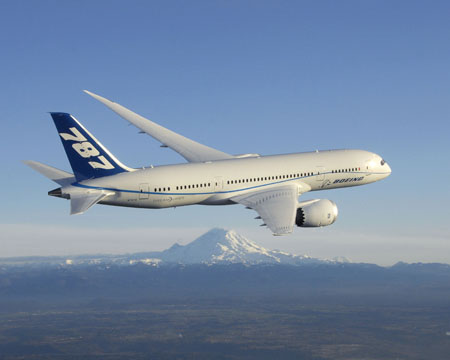
    Pictured here, ZA004 frames Mt. Rainier in Western Washington during a test flight earlier this year.

  • |

    FAA Proposes $227,500 Civil Penalty Against Dover Chemical

    ATLANTA– The Federal Aviation Administration is proposing a $227,500 civil penalty against Dover Chemical Corporation of Dover, Ohio, for alleged violations of federal hazardous materials regulations.

    The FAA alleges that Dover Chemical offered sulfur monochloride, a hazardous material, to United Parcel Service for transportation by air from Hammond, Ind., to Dover on June 15, 2010. The hazardous materials regulations prohibit carriage of sulfur monochloride aboard any type of aircraft. The chemical’s vapors are poisonous if they are inhaled.
    Dover Chemical allegedly offered the material when it was not packaged, marked, classed, described, labeled or in condition for shipment as required by regulations. UPS workers at the carrier’s sorting hub in Louisville discovered the shipment because it had leaked.

    Dover Chemical has 30 days from receipt of the FAA’s enforcement letter to respond to the agency.

  • |

    FAA Announces Recovery Act Funded Improvements

    Washington, D.C. – The U.S. Department of Transportation’s Federal Aviation Administration (FAA) announced the completion of the expansion and renovation of the passenger terminal at the Pitt-Greenville Airport in Greenville, N.C. The project was paid for with $7.9 million from the American Recovery and Reinvestment Act.

    “Investing in projects like this is critically important to helping us compete in the global economy,” said U.S. Transportation Secretary Ray LaHood. “These improvements at Pitt-Greenville Airport will result in business and employment opportunities in North Carolina that will strengthen America’s future economic competitiveness.”
    The Pitt-Greenville Airport terminal was expanded to a two-story structure that meets current floodplain standards. The airport was severely flooded during Hurricane Floyd in 1999. Improvements include a departure waiting area for passengers, two additional gates and a security checkpoint.

    “Recovery Act dollars have given FAA an additional tool to maintain and improve airport infrastructure across the country,” said FAA Administrator Randy Babbitt.

    Under the Recovery Act, more than $1.3 billion have been made available nationwide for both airport improvement projects and air traffic control facility and system upgrades. Because of low construction bids for projects, more Recovery Act dollars were available for additional facilities, equipment and airport projects. These grants have been distributed to airports that serve commercial passengers, cargo and general aviation flights.

  • |

    LUNAR AND PLANETARY CONFERENCE HIGHLIGHTS SOLAR SYSTEM EVOLUTION

    HOUSTON — NASA researchers and other scientists will present findings that provide new insights into the evolution of the solar system during the 42nd annual Lunar and Planetary Science Conference.

    The conference will run March 7-11 at the Woodlands Waterway Marriott Hotel and Convention Center, 1601 Lake Robbins Drive, The Woodlands, Texas.

    Key events include the unveiling of future planetary science strategy; early science results from a Japan Aerospace Exploration Agency mission, called Hayabusa, that returned the first particle samples from an asteroid; presentations about the recent comet Hartley 2 flyby; and the upcoming MESSENGER mission, the first spacecraft to orbit Mercury.

    The conference also will include a briefing about the Planetary Decadal Survey at 5:30 p.m. CST on March 7. The survey is a strategy released by the National Research Council in Washington to prioritize missions, research areas and observations ten or more years into the future. The briefing’s featured speaker will be Steve Squyres of Cornell University. He is the survey’s chair and principal investigator for NASA’s Mars Exploration Rovers.

    News media representatives interested in registering or obtaining more information should visit:

    http://www.lpi.usra.edu/meetings/lpsc2011/

    The conference is hosted by the Lunar and Planetary Institute in . The institute is managed by the Universities Space Research Association, a national, nonprofit consortium of universities chartered in 1969 by the National Academy of Sciences at NASA’s request.

  • |

    Aircraft Accident Rate is Lowest in History – Still Room for Improvement, Regional Concerns Remain

    Tokyo – The International Air Transport Association (IATA) announced the aviation safety performance for 2010 showing that the year’s accident rate for Western-built jet aircraft as the lowest in aviation history.

    The 2010 global accident rate (measured in hull losses per million flights of Western-built jet aircraft) was 0.61. That is equal to one accident for every 1.6 million flights. This is a significant improvement of the 0.71 rate recorded in 2009 (one accident for 1.4 million flights). The 2010 rate was the lowest in aviation history, just below the 2006 rate of 0.65. Compared to 10 years ago, the accident rate has been cut 42% from the rate recorded in 2001. A hull loss is an accident in which the aircraft is destroyed or substantially damaged and is not subsequently repaired.

    “Safety is the number one priority. Achieving the lowest accident rate in the history of aviation shows that this commitment is bearing results. Flying is safe. But every fatality is a human tragedy that reminds us of the ultimate goal of zero accidents and zero fatalities. We must remain focused and determined to move closer to this goal year by year,” said Giovanni Bisignani, IATA’s Director General and CEO.

    In absolute numbers, 2010 saw the following results:

    • 2.4 billion people flew safely on 36.8 million flights (28.4 million jet, 8.4 million turboprop)
    • 17 hull loss accidents involving western-built jet aircraft compared to 19 in 2009
    • 94 accidents (all aircraft types, Eastern and Western built) compared to 90 in 2009
    • 23 fatal accidents (all aircraft types) compared to 18 in 2009
    • 786 fatalities compared to 685 in 2009

    IATA member airlines outperformed the industry average with a Western-built jet hull loss rate of 0.25. That rate is equal to one accident for every 4 million flights. The IATA Operational Safety Audit (IOSA) became a condition of IATA membership from 1 April 2009. All 234 IATA member airlines are now on the IOSA registry. The IOSA registry is open to all airlines and it currently consists of over 350 airlines.

    “The numbers tell the story. In the first full year after the IOSA became a condition of IATA membership, the accident rate for IATA carriers has never been so low. The data confirms that IOSA is helping to drive safety improvements around the world. It is an important part of a comprehensive safety strategy involving governments and industry working together to further reduce the number of accidents and fatalities,” said Bisignani.

    There are significant regional differences in the Western built jet hull loss accident rate:

    • North America (0.10), Europe (0.45), North Asia (0.34) and the Commonwealth of Independent States (0.0) performed better than the global average of 0.61
    • Asia-Pacific was higher than the global average at 0.80 in 2010 and about the same from the previous year (0.86)
    • The Middle East and North Africa region saw its accident rate fall significantly to 0.72 (compared to 3.32 in 2009) with only one accident involving a carrier from the region
    • Latin America & the Caribbean reported a higher accident rate of 1.87 with four airlines from the region involved in accidents, compared with a zero accident rate in 2009
    • Africa had an accident rate of 7.41, which was lower than the 2009 rate of 9.94. While showing improvement, Africa once again has the worst rate in the world. There were four Western-built jet hull losses with African carriers in 2010. African carriers are 2% of global traffic, but 23% of global western-built jet hull losses.

    Safety in Africa

    In 2010, the accident rate of IOSA carriers in Africa (for all aircraft types) was more than 50% better than non-IOSA airlines. Among IATA’s efforts in Africa, it established the IATA Program for Safe Operations in Africa (IPSOA). IPSOA ensured that flight data analysis tools are available to all IATA carriers in Africa, and as of the last quarter of 2010, all IATA carriers have this essential safety tool in place. IPSOA will provide IATA with the data needed to develop safety programs targeted at specific challenges in the region.

    “Flying must be equally safe in all parts of the world. An accident rate in Africa that is over 12 times the global average is not acceptable. Improvements can happen. IATA’s African carriers performed significantly better than non-IATA airlines in the region. I encourage all governments in the region to make use of the IOSA tool to boost the region’s performance,” said Bisignani.

    An analysis of the causes of the 2010 accidents focuses on several areas:

    Runway excursions, which are instances when an aircraft departs the runway during takeoff or landing, were once again the most common cause of accidents, accounting for 21% of all accidents in 2010 (vs. 26% in 2009). The number of industry runway excursions accidents dropped by 13% (20 vs. 23 in 2009) and IATA members have reduced their runway excursion accidents by 43% since 2008 (4 vs. 7 in 2008).

    IATA analysis shows about 35% of runway excursions on landing occurred on wet runways. Another leading cause of runway excursions on landing is an “unstable approach,” where the aircraft is approaching too fast, too high, or touches down beyond the desired runway touchdown point. IATA is working with industry and regulators to address this safety challenge.

    In 2009, IATA released the Runway Excursion Risk Reduction (RERR) toolkit which provides high-level reference material as well as an in-depth analysis of runway excursion accident data and a compilation of significant risk factors. The toolkit also provides recommendations for operators, pilots, airports, air traffic management, and regulators. A major update to the RERR toolkit is planned for the spring of 2011 and will bring together all major international safety organizations in a collaborative effort to eliminate these types of accidents.

    Ground damage accounted for 11% of all accidents in 2010, improved from 17% in 2008 when IATA launched the IATA Safety Audit for Ground Operations (ISAGO) to address this challenge. ISAGO is the industry’s first global standard for the oversight and auditing of ground handling companies. The program, containing over 400 standards, was launched in February 2008 and the first audits took place in May of the same year. To date, a total of 288 audits have been conducted and 56 providers operating at 81 different locations are already on the ISAGO registry. The program has gained broad support from several aviation authorities and airports and has been mandated in Lebanon and Turkey.

    Data Driving Further Improvements

    Further improvements to the industry’s safety performance will be guided by data that can assist airlines in identifying trends and initiate preventive measures. IATA established the Global Safety Information Center (GSIC) in 2010. This interactive website is a one-stop resource combining safety data from sources such as IOSA and ISAGO audits, flight data analysis, pilot reports and accident investigations without compromising commercial privacy.

    “Safety is a constant challenge. Industry and governments need to accelerate their efforts on data sharing. In 2010, IATA launched GSIC providing its members with unprecedented access to safety information. More than 430 different organizations are already submitting safety data into the GSIC, and over 50% of IATA member carriers are participating. Substantial GSIC expansion is planned over the next few years and the industry will reap the benefits,” said Bisignani.

    In September 2010, IATA signed an historic agreement with the International Civil Aviation Organization, the US Department of Transportation and the Commission of the European Union to launch the Global Safety Information Exchange. This first global private/public partnership will exchange safety information aimed at improving safety by reducing risk.

    “Safety is not a competitive issue—among carriers or governments. Improvement is in everybody’s interest. By sharing data and best practices we will continue to drive improvements to make a safe industry even safer,” said Bisignani.

  • |

    Boeing Forms Commercial Satellite Services Group to Sell Satellite Capacity

    EL SEGUNDO, Calif., Feb. 22, 2011 — Boeing [NYSE: BA] announced today that it has established Boeing Commercial Satellite Services to market commercial satellite telecommunications services to the U.S. government and other satellite users. Headquartered in El Segundo, the group is a part of Boeing Space & Intelligence Systems.
    “Boeing has received orders for five hosted payloads in the past 18 months,” said Craig Cooning, CEO of Boeing Satellite Systems International and vice president and general manager of Boeing Space & Intelligence Systems. “The market response to hosted payloads as a creative solution to limited military bandwidth availability has been extremely positive, and we believe that the Boeing Commercial Satellite Services unit will perform a valuable service both for the military and for commercial users of satellite services to meet mission needs.”

    Hosted payloads represent an important move Boeing is making to respond to the global demand for more communications bandwidth. Hosted payloads can be designed in a variety of configurations based on customer needs and can be a more affordable and timely option than procuring a complete satellite. A commercial satellite carrying a hosted payload can generally be delivered in less than three years.

    Boeing Commercial Satellite Services will work with the owners of satellite systems to market available bandwidth on active systems as well as to include hosted payloads on their future spacecraft. The new division will market the payloads to prospective customers in cooperation with the host satellites’ owners.

    “The demand for satellite communications continues to be greater than the supply, and in 2010 we entered into an agreement with Inmarsat to assist them in leasing Ka-band services to the U.S. government and others,” said Cooning. “This business model can be applied to a commercial satellite operator interested in leasing service to governments.”
    Boeing’s history of hosted payloads dates back to 1993, when the company helped the U.S. Navy upgrade its ultra-high frequency (UHF) satellite communications system by augmenting several vehicles to host an extremely high frequency (EHF) payload as well as the first military Ka-band payload, which has provided Global Broadcast Service capabilities since 1998. Boeing has also built L-band, X-band and Ka-band hosted payloads that have served foreign governments through spacecraft owned by commercial satellite operators.

    In July 2009, Boeing announced a four-satellite contract from Intelsat; two of these satellites incorporate hosted payloads in the UHF band. In August 2010, Inmarsat ordered three Boeing 702HP satellites, each of which will carry a hosted payload operating in the Ka-band. Boeing also is pursuing opportunities to expand this concept to cover other types of communications capacity.

  • |

    Boeing to Highlight the Products and Services Australia Depends on at Avalon 2011

    MELBOURNE, Victoria, Feb. 22, 2011 — The Boeing Company [NYSE: BA] will highlight the products and services that the Australian Defence Force (ADF) depends on every day during this year’s Avalon 2011 Australian International Airshow. The show begins March 1 at Avalon Airport near Melbourne and coincides with the 90th anniversary of the Royal Australian Air Force (RAAF).
    “Boeing is committed to providing products and services that allow the ADF to carry out vital operations in-country and overseas,” said Bill Profilet, Boeing Defense, Space & Security vice president, Australia Business Development. “We’re proud of our 85-year relationship with the RAAF and look forward to furthering this partnership for years to come.”

    Boeing products on display during the show include the RAAF’s F/A-18F Super Hornet, F/A-18A Hornet, C-17 Globemaster III and 737 Wedgetail Airborne Early Warning & Control (AEW&C) aircraft and the Insitu ScanEagle unmanned aircraft system. Boeing-manufactured aircraft displayed by other countries will include a U.S. Air Force KC-135 Stratotanker and C-17 Globemaster III, and a Royal New Zealand Air Force Boeing 757.
    The Boeing-sponsored Afternoon Airshow and Night Alight Finale on March 4 will feature the RAAF’s new advanced, multirole Boeing F/A-18F Super Hornets. Boeing will hold a series of briefings on key products and programs throughout the show. Each day, media can check the briefing schedule at the media center and Boeing chalet for updates.

  • |

    Phillips Service Industries Acquires Skytronics, Inc.


    LIVONIA, Mich., Feb. 21, 2011 /PRNewswire/ — Phillips Service Industries, Inc. (PSI), a global manufacturing and service corporation that serves a wide variety of industries with its diverse collection of technology-based companies, announced today that it has acquired Skytronics, Inc., a leading aircraft component manufacturer and maintenance repair organization located in El Segundo, CA.

    Skytronics specializes in the manufacturing, repair, overhaul and sales of aircraft ball screw and actuator assemblies and the transmissions that drive them. Skytronics is an OEM that also holds license parts manufacturing authority on stabilizer ball screws installed on Boeing 727/737/747/757/767 aircraft, as well as a distributor of both new and overhauled aircraft components.

    Established in 1956, Skytronics has been an FAA-approved Repair Station for over 50 years, with current FAA, EASA, CAAC and Boeing approvals. Skytronics has expanded its capabilities to include Boeing flight controls, horizontal stabilizer trim actuators (HSTAs), trim tab actuators, flap transmissions and leading-edge actuators. Skytronics also manufactures, repairs, overhauls and sells ignition harnesses, alternators, regulators and ignition lead conduits that are used in general aviation.

    The Skytronics acquisition further expands PSI’s reach into the aerospace market. Other PSI subsidiaries that serve the aerospace industry include Beaver Aerospace & Defense, Sciaky, Inc., Mountain Secure Systems, Evana Automation Specialists and PSI Repair Services.

    “The aerospace industry is very significant to PSI,” said Scott Phillips, CEO and President of Phillips Service Industries, Inc. “The Skytronics acquisition provides additional products and services to our valued customers.”

  • |

    JetSelect Aircraft Maintenance Services, LLC Obtains FAA Certification as a Part 145 Repair Station

    COLUMBUS, Ohio, Feb. 22, 2011
    — JetSelect Aviation, LLC, a Global Aviation Service Provider, announced today that its maintenance division has obtained FAA Certification as a Part 145 Repair Station. JetSelect Maintenance Services, LLC operates its repair station and offers aircraft maintenance services from their primary base at the Port Columbus International Airport (CMH), Columbus, Ohio.
    JetSelect’s Maintenance Team consists of highly skilled and experienced technicians who have proven their capabilities maintaining one of the largest private charter fleets in the U.S. With this latest certification, they will be able to market their expertise and private jet maintenance services to the aviation community.

    Robert Austin, CEO for JetSelect Aviation, commented, “Our aircraft maintenance team has worked very hard for this achievement and we are very proud to have our private jet maintenance capabilities stand out in the aviation marketplace. As an organization we are experiencing solid and planned growth on several fronts and this certification will strengthen our ability to support our operations as well as to enhance our revenue streams.”

    Gordon MacSwain, Director of Aircraft Maintenance for JetSelect Aviation, said today, “We are pleased with this major achievement which is the result of a lot of hard work by our team. The timing is right, the location is right, and our market is steadily growing. We are excited about our accomplishments and you can expect us to build upon our outstanding capabilities, technology and experience to create a legacy of superior private jet maintenance service.”

    Mario Bustamante, Manager of JetSelect’s Avionics Department, added, “This is what we have been working towards. Our Airframe, Engine and Avionics capabilities can now be fully leveraged by the marketplace. We are extremely excited about this milestone achievement in the airplane maintenance industry.

  • | |

    Boeing Helps Saudi Arabian Airlines Upgrade 777-200ER Fleet

    SEATTLE, Feb. 20, 2011 / — Boeing and Saudi Arabian Airlines have teamed to modernize the flag carrier’s 777 fleet to enhance the passenger experience and environment. The project involves modifying the interiors of 22 of Saudi Arabian Airlines’ 23 Boeing 777-200ERs (extended range).

    The passenger cabin modification program began in early 2009 after certification of the new Business Market seating configuration. Modifications on this scale are generally scheduled to coincide with required heavy maintenance checks. However, under this modification program, the majority of the fleet already has been modified and returned to service. The modifications are scheduled to be completed in 2011.

    “This interior modification affects an important segment of our long-haul fleet and our passengers expect the best from us,” said Ali Milaat, CEO of Saudia Aerospace Engineering Industries. “With its experience as the airplane manufacturer, Boeing has done a great job in working with us to develop and support this process and we look forward to sharing the great results with our customers.”

    Boeing Commercial Aviation Services, working with the airline team, developed a cabin layout that provides increased comfort and amenities for passengers while providing the airline with an attractive, new in-flight identity. Boeing also provided the engineering services and program integration.
    “Saudi Arabian Airlines plays an important role in Middle East and global aviation and this interior refresh is a great opportunity for Boeing to bring value to an important customer,” said Dennis Floyd, vice president, Fleet Services for Boeing Commercial Airplanes. “Boeing is uniquely positioned with experience and expertise to engineer, certify and manage modification programs for our customers.”

    Eight of the airplanes feature Saudi Arabian Airlines’ new Business Market configuration with 24 first class, 38 business class and 170 economy class seats. The remaining jetliners are in the new High Density configuration that accommodates 14 business class and 327 economy class seats.

    The airplanes are configured with new Avio Interiors first, business and economy class seats. Widescreen displays are at each seat, connected to a Thales TopSeries i5000 In-Flight Entertainment (IFE) system. This system features on-demand movies, music and games and provides for a laptop power connector, USB port and RCA jack.

    The first class seats feature 15.4-inch (39.1-cm) in-seat video monitors with PC power and powered seat adjustment, at a 79-inch pitch. Business class seats have 12.1-inch (30.7-cm) in-seat video monitors, also with PC power and powered adjustment capability, at a 58-inch (147.3-cm) pitch. Economy seats are on a 32-inch (81.3-cm) pitch and have 8.9-inch (22.6-cm) video monitors in-seat.

    Boeing produced the U.S. Federal Aviation Administration-certified service bulletin and kit of parts to accommodate the seat installation and the new in-flight entertainment system. Boeing also relocated and updated floor coverings, ceilings, sidewalls, class divider partition walls, stowage bins, closets and plumbing to enable the airplane modernization. As a full-service integrator, Boeing can perform as much of an airline interior upgrade as required, including management of all aspects of the project through certification.

  • |

    ICAO: CLEAR, PROACTIVE AND TARGETED STRATEGY TO MANAGE SUSTAINED GROWTH IN TRAFFIC

    MONTRÉAL, 17 February 2011 – The annual number of passengers worldwide will increase from 2.5 billion to 5 billion over the next 20 years and the number of flights from 26 million to 50 million, Raymond Benjamin, Secretary General of ICAO told a luncheon hosted by the French Chamber of Commerce in Canada today.

    The major challenge for the air transport sector will be to manage this sustained growth and, at the same time, improve the safety, security and sustainability of civil aviation.

    “Our strategy is clear, proactive and targeted,” said Mr. Benjamin before a gathering of leaders of the Franco-Canadian business community.

    Through its Global Air Navigation Plan, ICAO will facilitate the harmonization of a variety of large scale regional programmes to be implemented by States in the next 10 years to upgrade their national aeronautical infrastructures.
    To reduce the number of accidents occurring during take-off and landing at airports, today’s leading cause of serious accidents, the United Nations agency has adopted a multi-disciplinary approach involving the relevant government entities and industries.

    Special efforts will also be undertaken to promote closer cooperation between civil and military aviation authorities, which will lead to more efficient use of airspace for the benefit of all users.
    As concerns security, “Our ultimate goal is to ensure that the wait times at checkpoints are as short as possible and that the measures deployed are unnoticeable to passengers, while providing the highest level of protection,” the Secretary General explained.

    This will require proactive measures including the application of improved technologies for the detection of prohibited items, the further strengthening of international standards, more effective sharing of security information, the continuation of the mandatory audits by ICAO, and assistance to States that lack the expertise or resources to develop their aviation security systems.

    Finally, although aviation accounts for a very small proportion of global greenhouse gas emissions from human activity, Mr. Benjamin presented a bold strategy for the aviation sector. “What matters most is that we stick to our targets of zero emissions growth as of 2020 and a 2 per cent annual fuel efficiency improvement up to the year 2050, on the basis of a global approach that takes into account technological progress, operational improvements, market-based measures and sustainable alternative fuels for aviation,” Mr. Benjamin concluded.

  • | |

    Airline Passengers Benefit as Flight Attendants Gain Ground on Sanitation and Temperature Standards

    Flight Attendants Get Cabin Health and Safety Standards in Senate’s FAA Reauthorization

    WASHINGTON, Feb. 18, 2011 e-USNewswire/ — Members of the Association of Flight Attendants-CWA (AFA) put key U.S. Senate offices on speed dial in a successful call-in campaign to press for long-overdue health and safety protections: Yesterday, the Senate defeated an attempt to strip OSHA protections for Flight Attendants from the Federal Aviation Administration (FAA) Reauthorization Bill. The amendment to remove health and safety protections for Flight Attendants and passengers, including sanitation and temperature standards in the aircraft cabin, was rejected by a 52-47 party line vote.

    “No sanitation standards in the passenger cabin. Really???” said Veda Shook, AFA International President. “It is not funny. To date, OSHA has been kept out of the aircraft cabin and that means Flight Attendants and passengers are subject to an environment absent sanitation standards, temperature standards and proper procedures for clean up of biohazards. This is inexcusable and our union of Flight Attendants will not rest until we get the OSHA protections for passengers and crew. We applaud the Senate for taking this action today and we implore the House to act quickly to include the same provision in their version of the bill.”

    For Flight Attendants, each day on the job brings potential exposure to turbulence, severe air pressure changes, unwieldy service carts, broken luggage bins, balky exit doors and door handles, exposure to toxic chemicals, unruly passengers, communicable diseases, and emergency evacuations. As a result, safety and health violations occur on a daily basis for Flight Attendants yet the Federal Aviation Administration, which claims exclusive jurisdiction over the safety and health of crew members on civil aircraft, has failed to extend basic OSHA protections afforded to other workers across the country.

    The Association of Flight Attendants has already begun a targeted grassroots advocacy campaign to implore members of the House to include the health and safety provisions for Flight Attendants and passengers. The FAA Reauthorization bill has been extended 17 times over three years, delaying critical safety and health protections for Flight Attendants and the traveling public

  • |

    Boeing, LAN Airlines Announce Order for Three 767s

    Additional 767-300ER airplanes part of the airline’s fleet expansion plans

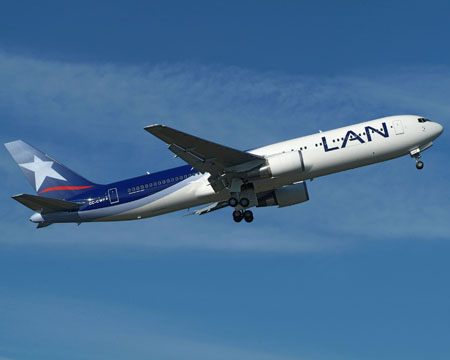
    EVERETT, Wash., Feb. 18, 2011 /PRNewswire/ — Boeing (NYSE: BA) announced today that Chile’s LAN Airlines ordered three additional 767-300ER airplanes valued at $493 million at today’s list prices. Today’s order brings the total number of 767s ordered from LAN to 33.

    “This order for additional 767s builds on the long-standing relationship between Boeing and LAN,” said Marlin Dailey, vice president of Sales & Marketing for Boeing Commercial Airplanes. “LAN is one of the world’s premier airlines and we are happy to help them expand and grow their long-haul fleet.”

    The 767 family of airplanes is sized between the single-aisle 737 Next-Generation and the twin-aisle 777. As one of the most fuel-efficient airplanes in operation today, the 767 offers improved environmental performance and operating economics over competing jetliners.

    “The versatility, comfort, range and increased payload capabilities continue to make the 767 a staple in the fleets of today’s leading airlines,” said Dailey. “The 767 has benefited from years of technological improvements for greater efficiency and passenger comfort.”

    LAN’s fleet currently consists of 28 767-300ERs and 11 767-300 freighters. The airline has used Boeing’s product advancements to drive operational efficiencies into their long-haul fleet and increase passenger comfort including the passenger-pleasing Boeing Signature Interior.

    The Boeing 767 family is a complete family of clean, quiet, fuel-efficient airplanes that provide maximum market versatility in the 200- to 300-seat market. The Boeing 767 family includes three passenger models — the 767-200ER, 767-300ER and 767-400ER — and a medium-widebody freighter, which is based on the 767-300ER fuselage.

  • |

    Boeing to Engage Army Leaders with Adaptive, Versatile Capabilities at AUSA Winter Symposium

    FORT LAUDERDALE, Fla., Feb. 18, 2011 — The Boeing Company [NYSE: BA] will showcase a wide variety of capabilities and technology solutions used by U.S. Army soldiers and allied defense forces around the globe at next week’s Association of the United States Army (AUSA) Winter Symposium and Exposition, Feb. 23-25 in Fort Lauderdale.

    The capabilities to be featured at the Boeing exhibits and in presentations by company leaders include airlift and attack/reconnaissance platforms, Army modernization initiatives, unmanned systems, cybersecurity solutions, logistics support, and logistics command and control programs.

    “Like our Army customer, the defense industry is becoming more adaptive and versatile in meeting the demands of the warfighter,” said Leo Brooks, Boeing vice president, National Security & Space Group. “Boeing’s goal, as always, is to provide warfighters with the best capabilities, systems and services to complete their assigned missions effectively, efficiently and safely.”

    Boeing’s interactive indoor booth, 2223, will include a number of hands-on demonstrations and scale models. Featured solutions include Army Brigade Combat Team Modernization; the AH-64D Apache and AH-6 helicopters; C4ISR and cybersecurity solutions; the ScanEagle unmanned aerial system; and the Joint Tactical Radio System — Ground Mobile Radio.

    The company’s outdoor display, 3323, will feature aircraft such as the CH-47F Chinook, A160T Hummingbird, and S-100 unmanned system; the Airborne Ground Surveillance trailer; the Avenger Adaptive Force Protection Solutions system; and the Mobile Guardian — Tactical Surveillance and Observation System.

    “The outdoor display area at Winter AUSA is an excellent venue for our customers to see our products in person,” said Jamey Moran, Boeing vice president of Army Systems. “Whether it’s the Chinook, our unmanned systems, or new capabilities such as the Joint Recovery and Distribution System and the Avenger Adaptive Force Protection Solutions system, The Boeing Company’s commitment to the warfighter is paramount.”

    Boeing’s online press kit at www.boeing.com/bds/mediakit/2011/ausa/ will be updated throughout the show with briefing presentations and schedule changes, if any. The site also contains program backgrounders, executive biographies and a link to high-resolution photos. Reporters may contact the media relations representatives listed below to schedule interviews with Boeing executives at the show.

    The company will participate in a Ground Combat Vehicle media roundtable hosted by prime partner SAIC on Feb. 24 at 2:45 p.m. in the SAIC B2B suite (

  • ASPIRE Partnership Goes Green on Daily Basis

    The Asia and Pacific Initiative to Reduce Emissions (ASPIRE), a partnership with the FAA’s counterparts and airlines in Australia, New Zealand, Japan and Singapore to reduce aviation’s impact on the environment, is moving beyond the demonstration stage with the launch of ASPIRE-Daily service in selected Pacific markets.

    Air New Zealand will begin ASPIRE-Daily service from Auckland to San Francisco on Feb. 21 using some of the flight procedures identified by the ASPIRE partners to help reduce fuel burn and carbon emissions.

    “This is another significant step in our rollout of the Next Generation Air Transportation System,” said FAA Administrator Randy Babbitt. “We’re beginning to bring the green benefits of NextGen to the airlines and passengers in the Pacific on a daily basis.”
    Over the next four months, other carriers are expected to join Air New Zealand in flying ASPIRE-Daily routes between additional city pairs.

    Airlines flying ASPIRE-Daily routes must be equipped with advanced avionics that allow them to use at least four of the environmentally friendly procedures per flight outlined in the ASPIRE program. These include the satellite-based Required Navigation Performance avionics, which automatically update an aircraft’s precise position to air traffic controllers and provide an on-board system to monitor navigation performance. Another satellite-based system in use is the Future Air Navigation System, which transmits communications data directly from pilots to controllers.

    Five ASPIRE demonstration flights have taken place since the agreement was signed on Feb. 12, 2008. Air New Zealand flew the first demonstration flight from Auckland to San Francisco in September 2008. Qantas flew from Los Angeles to Melbourne in October 2008. United flew from Sydney to San Francisco on November 2008. Japan Airlines flew from Honolulu to Kansai in October 2009, and Singapore Airlines flew from Los Angeles to Singapore via Tokyo in January 2010.

    ASPIRE-DAILY PROGRAM PROCEDURES:
    User-Preferred Routes allow an airline to request a specific routing, regardless of projected winds, instead of flying along a fixed route. This procedure, made possible by advanced technologies used by air traffic controllers monitoring aircraft over oceanic airspace, results in a substantial reduction in greenhouse gas emissions.

    Dynamic Airborne Reroute Procedures are the airborne equivalent of User-Preferred Routes. While User-Preferred Routes are approved prior to takeoff, Dynamic Airborne Reroute Procedures allow an aircraft to deviate from its flight path to take updated wind projections into account. This procedure also results in reduced fuel burn.

    30/30 Reduced Oceanic Separation is the safe reduction in the required separation between aircraft from 100 nautical miles to 30. This procedure improves capacity and efficiency over oceanic routes.

    Time-based Arrivals Management allows controllers to sequence aircraft more efficiently as they get closer to their arrival airports. This reduces low altitude vectoring and holding patterns, which burn fuel, while improving the merging and spacing of arriving aircraft to maximize efficiency.

    Arrival Optimization is the use of any one of several satellite-based procedures that allow aircraft to descend smoothly from cruising altitude to the arrival airport. These procedures – Continuous Descent Approaches, Optimized Profile Descents and Tailored Arrivals – allow aircraft to descend at idle thrust, rather than doing step-down descents that burn more fuel.

    Departure Optimization is the climb-out version of Arrival Optimization. This minimizes low altitude vectoring and the need to level off at interim altitudes.

    Surface Movement Optimization allows aircraft to move between gates and runways as efficiently as possible to save time and reduce fuel burn.

  • |

    OIG: FAA Fulfilled AARA

    ACTION: FAA Fulfilled Most ARRA Requirements in Awarding Airport Grants Federal Aviation Administration Report Number AV-2011-053
    From: JeffreyB.Guzzetti Assistant Inspector General
    for Aviation and Special Program Audits

    February 17, 2011
    JA-10
    Memorandum
    On February 17, 2009, the President signed into law the American Recovery and Reinvestment Act (ARRA),1 designating $1.1 billion for the Federal Aviation Administration (FAA) to invest in Airport Improvement Program (AIP) projects. These funds were intended for airport projects that could achieve several key goals, including investing in transportation infrastructure to provide long-term economic benefits, create jobs, and promote economic recovery. ARRA established tight timeframes for distributing and expending funds and emphasized preference for projects that could be completed in 2 years.

    In August 2009, we issued an advisory to the Office of the Secretary outlining our concerns with FAA’s process for awarding ARRA grants.2 We questioned the economic merit of some lower scoring projects and highlighted several ARRA recipients with grant management problems identified in prior single audit reports.3 Based on these preliminary findings, we initiated this audit to determine the extent to which FAA’s process for awarding ARRA grants complied with ARRA requirements and other associated guidance.4 We conducted this audit from September 2009 through December 2010 in accordance with government

    American Recovery and Reinvestment Act of 2009, Pub. L. No. 111–5 (2009). OIG Advisory Number AA-2009-003, “FAA’s Process for Awarding ARRA Airport Improvement Program Grants,” August 6, 2009. OIG reports are available on our website: www.oig.dot.gov. Single audit is a mechanism relied upon by Executive Branch agencies to oversee financial compliance and grant 4 assurances. For the purpose of this report, we define “requirements” as a collective term to refer to ARRA statutory requirements, Presidential direction, and Office of Management and Budget (OMB) and FAA guidance related to ARRA implementation.

    Read the entire PDF here

  • |

    NASA RESCHEDULES NEWS CONFERENCE ON STARDUST-NEXT COMET FLYBY

    PASADENA, Calif. — NASA has rescheduled the news conference about the Stardust-NExT comet flyby for 12:30 p.m. PST (3:30 p.m. EST) today.

    The briefing will release images and early data from the comet encounter and will be carried live on NASA Television and the agency’s website.

    The participants are:

    -Ed Weiler, NASA’s associate administrator, Science Mission Directorate, Washington
    -Joe Veverka, Stardust-NExT principal investigator, Cornell University

    -Tim Larson, Stardust-NExT project manager, NASA’s Jet Propulsion Laboratory, Pasadena, Calif.
    -Don Brownlee, Stardust-NExT co-investigator, University of Washington, Seattle
    -Pete Schultz, Stardust-NExT co-investigator, Brown University

    The news conference was originally scheduled for 10 a.m. PST (1 p.m. EST). The additional time will allow scientists to process and analyze data and images gathered when the spacecraft flew past comet Tempel 1, with closest approach at a distance of 112 miles. The mission team had expected the closest-approach images to be sent first. Instead, the images were downlinked in chronological order, starting with the most distant approach views.

  • |

    NTSB Safety Recommendation A-11-7 through -11

    National Transportation Safety Board
    Washington, DC 20594

    The National Transportation Safety Board recommends that the Federal Aviation Administration:

    Require Boeing to develop a method to protect the elevator power control unit input arm assembly on 737-300 through -500 series airplanes from foreign object debris. (A-11-7)

    Once Boeing has developed a method to protect the elevator power control unit input arm assembly on 737-300 through -500 series airplanes from foreign object debris as requested in
    Safety Recommendation A-11-7, require operators to modify their airplanes with this method of protection. (A-11-8)

    Require Boeing to redesign the 737-300 through -500 series airplane elevator control system such that a single-point jam will not restrict the movement of the elevator control system and prevent continued safe flight and landing. (A-11-9)

    Once the 737-300 through -500 series airplane elevator control system is redesigned as requested in Safety Recommendation A-11-9, require operators to implement the new design. (A-11-10)

    Require Boeing to develop recovery strategies (for example, checklists, procedures, or memory items) for pilots of 737 airplanes that do not have a mechanical override feature for a jammed elevator in the event of a full control deflection of the elevator system and incorporate those strategies into pilot guidance. Within those recovery strategies, the consequences of removing all hydraulic power to the airplane as a response to any uncommanded control surface should be clarified. (A-11-11)

  • |

    Northrop Grumman’s Joint STARS Re-Engining Program Completes Preliminary Design Review for Updated Bleed Air System

    MELBOURNE, Fla., Feb. 9, 2011 ( ) — Northrop Grumman Corporation recently completed the JT8D propulsion pod’s bleed air system’s preliminary design review (PDR) for the E-8C Joint Surveillance Target Attack Radar System (Joint STARS).

    “The successful completion of the PDR indicates that the design is extremely mature and will meet the Joint STARS mission requirements,” said Steve Pauly, Northrop Grumman program director for Joint STARS Development and Modernization. “This significant design effort has been a major focus of the Re-Engining development program.”

    The Northrop Grumman program team is re-designing the E-8C’s commercial off-the-shelf (COTS) bleed air system’s equipment in support of the Joint STARS Re-Engining program.

    The main function of the bleed air system is to extract high-pressured hot air generated from the JT8D’s engines and convert it into cool air. The resulting cool air pressurizes the Air Cycle Machines (ACM) which cools the aircraft’s environmental control system, cabin and prime mission equipment (PME), as well as pressurizes the utility hydraulic subsystem, engine starting capability and liquid cooling system.

    “The newly designed bleed air system will be installed and flight tested towards the middle of next year,” stated Pauly. “This is a major step toward clearing the way for full production and installation of the new JT8D propulsion pod system.”

    Today, the 17-aircraft Joint STARS fleet is the only all-weather, long-range, real-time, wide area surveillance and battle management and command and control weapons system in the world. It is flown by the 116th Air Control Wing based on Warner Robins, Ga. and since 2001, the crews have flown over 63,000 hours in 5,200 combat missions in support of Operation Iraqi Freedom, Operation Enduring Freedom and Operation New Dawn.

    On Jan. 14, 2011, the weapons system marked the 20th anniversary of its first operational combat sortie in support of Operation Desert Storm. A developmental test aircraft system at that time, two E-8A aircraft were called into theatre in January 1991 by then General Norman Schwarzkopf.

  • |

    Northrop Grumman Delivers Europe’s First Runway Status Light Control System at Charles de Gaulle Airport, Paris

    LONDON — Northrop Grumman Corporation’s Europe-based air traffic management subsidiary, Northrop Grumman Park Air Systems, has been awarded a contract to provide a Runway Status Light (RWSL) Control System for Charles de Gaulle Airport, Paris, the first European airport to implement this safety feature.

    The RWSL Control System is an automated system that warns aircraft and vehicles if it is safe to enter or cross runways through a series of lights embedded in the pavement. The contract, awarded by Direction des Services de la Navigation Aérienne — Direction de la Technique et l’Innovation (DSNA-DTI) of France, is to be completed by end of 2011.

    “Winning this first European RWSL contract is a major achievement which confirms Northrop Grumman Park Air Systems’ position as the leading supplier of advanced air traffic control surveillance systems,” said Eldar Hauge, managing director for Northrop Grumman Park Air Systems in Norway. “We are already a leading European supplier of Advanced Surface Movement Guidance and Control Systems (A-SMGCS) for some of the largest airports in Europe and Asia Pacific. RWSL can be offered as an upgrade to any A-SMGCS, regardless of make, and will give Northrop Grumman Park Air Systems a competitive edge in projects where RWSL is a requirement.”

    Northrop Grumman Park Air Systems is also supplying the A-SMGCS which connects to the RWSL Control System, offering the best technical solution and providing added safety to busy international airports.

    The A-SMGCS comprises the NOVA 9000 display processing system and surface movement radar. NOVA 9000 delivers enhanced air traffic control capabilities and ensures air traffic controllers have a clear view of ground movements under normal and low visibility operations.

    With a 50-year legacy in air traffic management systems ranging from individual airport installations to countrywide, multiple-site turnkey integrated system solutions, Northrop Grumman’s state-of-the-art air traffic management systems are operationally controlling air traffic in numerous countries around the world including recent major programmes in: Norway, Brazil, Qatar, Oman, Canada, India, Poland, UAE, U.S. and the U.K., in both civil and military applications.

    Northrop Grumman Park Air Systems, based in Oslo and Horten, Norway, and in Peterborough, U.K., supplies air traffic management systems for air-space operations worldwide.

    Northrop Grumman Corporation is a leading global security company whose 120,000 employees provide innovative systems, products, and solutions in aerospace, electronics, information systems, shipbuilding and technical services to government and commercial customers worldwide. Please visit www.northropgrumman.com for more information.

  • |

    Pinnacle, Mesaba, Colgan Pilots Approve ALPA Contract

    MEMPHIS, Tenn., Feb. 17, 2011 /PRNewswire/ — Pinnacle Airlines Corp. (Nasdaq: PNCL) has announced that its pilots have ratified a collective bargaining agreement with the Air Line Pilots Association, International (ALPA). The single contract covers pilots at all three of Pinnacle’s operating subsidiaries – Pinnacle Airlines, Inc.; Mesaba Aviation, Inc.; and Colgan Air, Inc.

    The single contract completes negotiations that were under way at Pinnacle and Colgan prior to Pinnacle’s acquisition of Mesaba on July 1, and provides a new contract for pilots at Mesaba that would supersede their present contract. Pinnacle has 1,305 pilots, Mesaba has 1,080 and Colgan has 541.

    “I am extremely pleased that our pilots ratified the agreement with ALPA for a strong contract that brings together the pilots of Pinnacle, Mesaba and Colgan,” said Philip H. Trenary, President and CEO of Pinnacle Airlines Corp. “The new contract provides for competitive compensation for our pilots and will help ensure that we maintain our place as a leader within the regional industry.”

    The five-year agreement provides improved salary and benefits, which will result in a substantial increase in compensation for the majority of the pilots. The majority of the new terms will go into effect March 1, 2011.

    About Pinnacle Airlines Corp.