Spain

  • | | |

    Spanair Movie In Ethical Spotlight

    Telecinco made a film about Spanair JK 5022. On 20 August 2008 at 14:45 CEST, a Spanair McDonnell Douglas MD-82 JK 5022, crashed on takeoff from Madrid’s Barajas Airport. The first half of the movie aired last Wednesday and now there’s a protest against the second half being shown next Wednesday because the courts have not ruled yet. Over 50,000 signatures have been collected by the association representing the families.

  • | | | | |

    Vueling Airbus Diverts to Seville


    Click to view full size photo at Airliners.net
    Contact photographer Fabrizio Berni

    What: Vueling Airbus A320-200 en route from Granada to Barcelona
    Where: Granada
    When: Aug 22 2010
    Who: 138 passengers, 6 crew
    Why: On departure from Granada, the Airbus suffered a failure in the nose wheel steering. The crew diverted to Sevilla and made a safe landing. The plane was towed. Maintenance determined that the problem developed as a result of hydraulic system failure.

    Passengers were booked on alternative flights.

  • | | | | |

    Spanair Airbus Engine Shut down over Madrid


    Click to view full size photo at Airliners.net
    Contact photographer Marco Zeininger

    What: Spanair Airbus A321-200 en route from Las Palmas to Madrid
    Where: Las Palmas
    When: Aug 19 2010
    Who: 194 people on board
    Why: After take off, the flight was underway when the engine made a big bang, and an engine began sparking. The pilot shut down the engine and returned to Las Palmas where they made a safe landing. A replacement jet was provided.

    George’s Point of View

    It was good to hear the Spanair jet made it back to Las Palmas safely. I could not help but be reminded of Spanair flight JK 5022, which crashed with 172 aboard.

    Although the CIAIAC, the Civil Aviation Accidents and Incidents Investigation Commission, published their opinion on 6 October 2010, the final conclusion did not discuss why the alarm did not go off for its abnormal takeoff configuration, why one thrust reverser was deployed and other abnormal and/or pre-existing abnormalities. A cause of that incident may have been Trojans in Spanair’s central computer. La computadora no operaba correctamente por unos programas ‘troyanos’.

    For the 194 aboard the Las Palmas flight, they at least had a safe landing. Not so for the 172 victims of Spanair flight JK 5022.

  • | | | |

    Wizzair Airbus Flat in Madrid


    Pictured: A Wizz Air Airbus A320-232 in Budapest
    Click to view full size photo at Airliners.net
    Contact photographer Laszlo Gyori

    What: Wizzair Bulgaria Airbus A320-200 en route from Madrid to Sofia Bulgaria
    Where: Madrid
    When: May 22nd 2010
    Who: 136 passengers
    Why: During takeoff, two tires burst. Takeoff was rejected. Passengers disembarked and the tires were replaced, with the flight not arriving in Sophia until nearly 18 hours later.

  • | | | | |

    Spanair Cautionary Landing in Madrid


    Click to view full size photo at Airliners.net
    Contact photographer Jose Muñoz

    What: Spanair McDonnell Douglas MD-87 en route from Madrid to Valencia
    Where: Madrid
    When: Apr 25 2010
    Who: 43 passengers
    Why: After takeoff, the flight developed an issue with the hydraulics. The crew decided to return to Madrid where they made a safe landing. A replacement jet was provided for the passengers.

  • | | | | |

    Vueling: Engine problems and Bird Strike


    Click to view full size photo at Airliners.net
    Contact photographer Darren Varney

    What: Vueling Airbus A320-200 en route from London to La Coruna
    Where: London
    When: Apr 23rd 2010
    Why: While en route, the plane indicated low engine oil pressure. The flight landed safely at Heathrow and was cancelled.


    Click to view full size photo at Airliners.net
    Contact photographer Alfredo La Marca

    What: Vueling Airbus A320-200 en route from Seville to Barcelona
    Where: Sevilla
    When: Apr 26 2010
    Why: After takeoff, the Vueling Airbus impacted a bird, which was ingested in the right engine. After the crew shut down the affected engine, they made a safe landing at Seville’s San Pablo Airport, where the Airbus was taken out of service for examination, maintenance and repairs. A replacement aircraft was flown in by Vueling for the passengers.

    Although both jets involved were Vueling Airbus A320-200, they were different jets, and neither problem had anything to do with volcanic ash.

  • | | | | | |

    Spain: Norwegian Air Shuttle Emergency Landing


    Click to view full size photo at Airliners.net
    Contact photographer Alan Lebeda

    What: Norwegian Air Shuttle Boeing 737-800 en route from Alicante to Stockholm
    Where: Alicante
    When: Apr 2nd 2010
    Who: 106 passengers
    Why: After takeoff, passengers smelled smoke, and one of the indicators detected fire in a wheel well. The plane returned to Alicante, and made a safe landing. During emergency evacuation, four passengers were injured. Passengers were provided hotel accommodations and Boeing brought in another plane to transport them.

  • | | | | |

    SAS Scandinavian Airlines Emergency Landing


    Click to view full size photo at Airliners.net
    Contact photographer Varani Ennio

    What: SAS Scandinavian Airlines Boeing 737-800 en route from Las Palmas to Stavanger
    Where: Las Palmas Spain
    When: Mar 13th 2010
    Who: 114 passengers
    Why: While en route, the plane developed a technical problem. The flight diverted to Madrid, where the plane landed safely. Passengers disembarked without any problem, and were booked on an alternative flight the next day.

  • | | | |

    Faulty indicator Sends Air Europa Flight back to Madrid


    Click to view full size photo at Airliners.net
    Contact photographer Andreas Fietz

    What: Air Europa Airbus A330-200 en route from Madrid, to Tenerife
    Where: Madrid
    When: Mar 7th 2010
    Why: While en route, the flight experienced a technical problem and returned to Madrid to make a safe landing. The problem turned out to be an open door indicator, which was repaired. Passengers were able to reboard the plane and continue to their destination.

  • | |

    Temperature rising in Spanish ATC

    PRESS RELEASE-Safety bulletin 12 February 2010–IFALPA has been notified by its Spanish Member Association SEPLA that the negotiation of a new labour agreement between Spanish controllers and AENA (the ATM service provider) has taken an unexpected twist after the approval by the Spanish government of a “Urgent Royal Decree” which changes the previous agreement.

    The Federation has no position on the state of the negotiations or the tactics employed in the dispute. However, the dispute does raise some safety concerns. Consequences may include increased tension in the controller’s work place, economic worries of ATC staff, unanticipated shortage of ATCOs and unexpected delays throughout Spanish airspace.
    SEPLA recommend that aircrews exercise extreme caution when flying within the Spanish FIRs (this includes the Spanish mainland, Balearic and Canary Islands as well as delegated airspace) and to consider the following safety recommendations:

    • Increased vigilance of all ATC procedures
    • Adhere strictly to standard operating procedures, paying extra attention to communications mainly when entering congested
      airspace (TMAs for example)

    • Consider taking extra fuel for unexpected extended delays or diversions
    • Exercise special attention during all ground movements
  • | | |

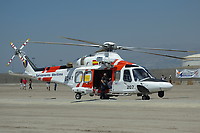
    Spain: Helimer 207 Crashes in Sea


    Click to view full size photo at jetphotos.net
    Contact photographer JUSTO-M. PRIETO

    What: “Salvamento Marítimo (Helisureste)” Agusta Westland AW.139 in a training mission out of LEAM (Almeria Airport, Spain)
    Where: In sea 4 nm of Almeria airport
    When: Jan 21, 2010
    Who: 3 fatalities, one severe injury
    Why: The marine search and rescue helicopter fell into the sea off Almería 4 miles from the runway. They were on approach to the airport and returning from aerial maneuvers with Névola (ship). Only one person was rescued, and he was in serious condition. Rescue services included four helicopters, two boats and a tugboat, as well as member of Marine Rescue, Civil Guard.

    Those who died were Commander Jose Luis Lopez Alcala, of Granada; copilot Kevin Holmes of New Zealand/Granada; and Iñigo Vallejo Garcia,of Seville.

    Suffering from hypothermia, rescued craneman Alberto Elvira Vallejo was taken to Torrecárdenas Hospital.

  • | | | |

    Air Nostrum Emergency Landing


    Pictured: Air Nostrum (Iberia Regional/Denim Air)
    De Havilland Canada DHC-8-315Q Dash 8

    Click to view full size photo at Airliners.net
    Contact photographer Pablo Napoli

    What: Air Nostrum Dash 8 Q-300 en route from Barcelona to San Sebastian
    Where: El Prat, Barcelona
    When: October 22, 2009
    Who: 31 passengers, 3 flight crew
    Why: While en route, the Dash 8 developed a problem with its nose gear and returned to Barcelona for an emergency landing. The plane landed safely with the front landing gear retracted, and after they debarked, were provided an alternative Air Nostrum flight to continue to their destination.

  • | | | | |

    Air Europa Lineas Aereas Boeing Engine Problem over Barcelona


    Pictured: An Air Europa Boeing over Barcelona
    Click to view full size photo at Airliners.net
    Contact Photographer Rui Miguel

    What: Air Europa Lineas Aereas Boeing 737-800 en route from Barcelona to Madrid
    Where: El Prat airport, Barcelona
    When: Sep 13th 2009 12.35
    Why: After takeoff, the indicator light for engine failure lit, a noise was heard and the plane experienced what is described by passengers as a “tremor.” After the safe landing at El Prat, the airport of origin, passengers continued on another plane to Madrid.

  • | | | | | |

    British Airways Boeing Lands with Smoke Alert in Barcelona


    Click to view full size photo at Airliners.net
    Contact Photographer Gordon Gebert JR

    What: British Airways Boeing 757-200 en route from London Heathrow,EN to Barcelona
    Where: Barcelona
    When: Aug 2nd 2009
    Who: 176 passengers 2 pilots and 5 crew members
    Why: When smoke was detected in the cabin en route, the crew declared an emergency. The flight landed safely in Barcelona, and passengers debarked via slides. The examination of the plane as it was checked for fire which delayed the passengers retrieval of baggage, but no actual source of smoke or fire was ever detected.

  • | | |

    Romanian Flight: Emergency landing in Madrid


    Click to view full size photo at Airliners.net
    Contact Photographer Matthias Bindseil

    What: Tarom Romanian Air Transport Airbus A310-300 en route from Bucharest Otopeni (Romania) to Tenerife Sur Reina,CI (Spain)
    Where: Madrid
    When: Jun 18th 200p
    Who: 201 passengers and 10 crew members
    Why: En route the windshield cracked, and the flight was diverted safely to Madrid. No injuries were reported though the cockpit depressurized.

  • | | |

    Spain Punishes Officers for Body Misidentification

    George’s Point of View

    After 30 bodies were misidentified and sent to the wrong grieving families, General Vicente Navarro received a three year sentence; and Commander Jose Ramirez and Captain Miguel Saez received 18-month sentences.

    Some of the bodies had to be exhumed so that the misidentification could be verified.

    Sixty-two soldiers died in the Yak-42 crash in Turkey on May 26, 2003. Imagine how the families felt. First they have to suffer the deaths. Then almost half of the victims were misidentified. And remember to the families, these weren’t random victims. They were husbands and sons.

    Imagine how the families felt when they had to dig up their husbands and sons and have the remains crosschecked with dental records and DNA samples. It probably wasn’t limted to 30, either; they probably exhumed all the victims except for whichever ones might have been visually recognizable by family members.

    One wonders if the buck stopped in the right place. Was the decision not to perform DNA/Dental verification really made by General Vicente Navarro or was it a decision that was passed down to him from defence minister Federico Trillo? Isn’t there a public policy of aviation procedure in cases such as this? My question is not whether the sentence is just, but whether the right individual was sentenced.

    Carelessness of this profundity goes beyond cruelty.

    If I were a Spanish lawyer or on the Ministerio de Fomento, Civil Aviation, I’d be going through policies with a fine toothed comb. I’d love to hear from Madrid to find out just exactly what they’ve done in the past three years to prevent this kind of inhuman treatment in the future.

  • | | |

    Piper Emergency Landing in Jerez


    Click to view full size photo at Airliners.net
    Contact photographer Paulo Carvalho
    What: Piper PA-28-161 Warrior III registration EC-IYU en route from JEREZ DE LA FRONTERA
    Where: two miles northwest of the JEREZ DE LA FRONTERA runway 20
    When: 8. FEB-2009
    Who: pilot
    Why: A pilot’s training flight was interrupted at 1:30 when he had to make an emergency landing two miles from the airport. He was transported to the hospital with minor injuries.

  • | | | |

    Canadair Emergency Landing at Santander-Intl


    Click to view full size photo at Airliners.net
    Contact photographer Alejandro Hdez Leon
    What: Canadair BOMBARDIER CRJ-200ER registration EC-IKZ en route from Madrid to Santander-Intl
    Where: Santander-Intl
    When: 24. Feb.2009
    Who: 44 passengers, 4 crew
    Why: One engine apparently flamed out on approach. Another report said both engines flamed out and one was restarted. The CL-600-2B19 Regional jet made a safe landing on runway 11.

  • | | | | | | |

    Spanair Cause Inconclusive

    So far there have been no groundbreaking discoveries regarding the cause of the Aug. 20 Spanair crash beyond what was known originally: a problem with the plane’s wing flaps and the failure of a cockpit alarm, evidence of which is backed up by the plane’s black boxes. The plane’s history indicates that this was not the first time the wing slats were an issue. Two days before the accident, they were repaired.

    Before the crash, on the plane’s first pass, a warning sounded from a “heat sensor in the engine inlet” which prompted the pilots to return to the gate and get it inspected. The system was “isolated, ” i.e. unplugged.

    The technician discusses the disconnected probe.
    http://www.elpais.com/articulo/espan…/elpepiesp/20080823elpepinac_5/Tes

  • | | |

    Spanair Update

    Update
    Based on findings derived from the MD-82’s flight and cockpit voice recorder, the wing flaps of the Spanair airliner (that crashed killing 154 people) were not set for take off, and pilots were unaware of it because the warning alarm did not go off.

    The faulty valve that prevented the first attempt at takeoff was disconnected rather than repaired. Planes are allowed to fly for up to 10 days with the system involved disconnected.

    Newlywed Brazilian Ronaldo Gomes Silva, 25, and his Spanish wife Yanina Celisdibowsky had been living in the UK for three years. a month ago in Sao Paolo, Brazil, they got married; They had just gotten on a plane to visit the Canary Islands, where Yanina was going to meet her in laws for the first time.

    They got on the wrong plane. They were two of the victims of Spanair Flight JK5022.

    Juliao Alves da Silva, the groom’s father said: “I have lost my son and a daughter-in-law. I am destroyed.”

    I don’t even know these people and I am nearly inconsolable.

    • What: Spanair Flight JK5022, a 15-year-old MD-82 jet bound bound for Las Palmas in the Canary Islands.
    • Where: Madrid airport Terminal Four
    • When: Wednesday, Aug. 20, 2008 2:45pm
    • Who: Carrying 166 passengers and nine crew, at the time of this writing, the number of fatalities had mounted to 154 people.
    • Why: The jet swerved off the runway and caught fire during takeoff. Spanish Comisión de Investigación de Accidentes e Incidentes de Aviación Civil (CIAIAC) is investigating