Public Statement

  • |

    United and Continental Offer Rebooking Options to Customers Affected by Winter Weather

    CUSTOMERS TRAVELING TO IMPACTED CITIES MAY RESCHEDULE WITHOUT PENALTY on united.com OR continental.com
    CHICAGO, Jan. 10, 2011

    United Continental Holdings, Inc. (NYSE: UAL) today announced travel options for United and Continental customers whose flight plans may be affected by severe winter weather forecast for the U.S. Northeast region and Chicago. Weather conditions are expected to lead to the delay or cancellation of certain flights at Continental’s New York hub at Newark Liberty International Airport for travel from Jan. 11 through Jan. 13 and United’s hub at Chicago O’Hare International Airport for travel on Jan. 11. Operations at other airports throughout the Northeast may also be affected.

    The travel waiver for the Southeast region continues for customers traveling through Jan. 11.

    Change Flights for No Fee at united.com or continental.com

    Customers scheduled on flights to, from or through the impacted areas may reschedule their itinerary with a one-time date or time change, and the change fees will be waived. If a flight has been canceled, a refund in the original form of payment may be requested. Complete details and eligible travel dates are available at united.com and continental.com.

    The fastest and most convenient way to change travel plans is via united.com or continental.com, and customers should continue to manage their reservations on the respective company’s website from which their ticket was purchased. Customers may also book a new reservation, change an existing reservation or check flight status by calling United Reservations at 800-UNITED-1 or Continental Reservations at 800-525-0280 or their travel agent.

    Another excellent way to receive information about flight delays, cancellations and gate changes is with United’s EasyUpdate service or Continental’s TripAlert service, which provide customers notifications via phone, text or e-mail.

  • |

    Pratt & Whitney’s JT8D Engine Receives FAA Certification for Engine Enhancements

    EAST HARTFORD, Conn., Jan. 10, 2011 /PRNewswire/ — Pratt & Whitney, a United Technologies Corp. (NYSE: UTX) company, today announced the certification of several enhancements for the JT8D-219 engine. These enhancements successfully completed 150 hours of endurance testing in May, clearing the way for Federal Aviation Administration certification of the upgrades in early November.

    “The JT8D is a major part of Pratt & Whitney’s history; improving its reliability and modernizing its capability will keep it a viable engine for years to come,” says Rick Krueger, chief engineer for Pratt & Whitney’s Operational Commercial Engines.

    The overall project includes several configuration updates: a nickel high-pressure compressor rotor system that provides enhanced corrosion resistance, external changes to accommodate mounting the engine under the wing, an enhanced bleed override system, and higher load-carrying towershaft and gearbox elements to accommodate increased power extraction.

    The JT8D-219 engine will be offered to support B707 re-engining via the Supplemental Type Certificate approved by the FAA for Pratt & Whitney’s Joint Venture partner, Seven Q Seven, on July 20, 2010. Seven Q Seven is a San Antonio, Texas-based company that converts and upgrades aircraft, primarily Boeing 707s, for commercial and military support applications.

    The first enhanced JT8D-219 engine is on track to be delivered to Northrop Grumman in February, in support of re-engining the USAF E-8C Joint Surveillance Target Attack Radar System (Joint STARS) aircraft. The E-8C is a modified B707-300.

    “Pratt & Whitney is excited to provide the enhanced JT8D-219 configuration, which will provide improved mission capability to the Joint STARS platform,” says Bev Deachin, vice president Military Engines and Customer Support. “Joint STARS will benefit from the significantly reduced fuel consumption and additional thrust. Joint STARS is the only all weather, long-range, real-time Wide Area Surveillance (WAS) and Battle Management System. The fleet operates out of Robins Air Force Base, Georgia, and plays a significant role in supporting ground and airborne forces.”

    The JT8D-219 engines will be assembled and tested in Pratt & Whitney’s Middletown, Conn., facility. If the U.S. Air Force chose to retrofit its entire Joint STARS fleet, production quantities could result in excess of 80 engines.
    Pratt & Whitney is a world leader in the design, manufacture and service of aircraft engines, space propulsion systems and industrial gas turbines. United Technologies, based in Hartford, CT, is a diversified company providing high technology products and services to the global aerospace and building industries.

    This press release contains forward-looking statements concerning future business opportunities and operational engine performance. Actual results may differ materially from those projected as a result of certain risks and uncertainties, including but not limited to changes in funding related to the JSTARS aircraft and JT8D engines, changes in government procurement priorities and practices or in the number of aircraft to be built; challenges in the design, development, production and support of advanced technologies; as well as other risks and uncertainties, including but not limited to those detailed from time to time in United Technologies Corp.’s Securities and Exchange Commission filings.

  • |

    Delta Air Lines Supports Saudi Arabian Airlines’ Application to Join SkyTeam

    Jan 10, 2011

    ATLANTA, Jan. 10, 2011 /PRNewswire/ — Delta Air Lines (NYSE: DAL) today issued the following statement in support of Saudi Arabian Airlines’ decision to join the SkyTeam global airline alliance in 2012.

    “Saudi Arabian’s growing hub in Riyadh and extensive network throughout the Middle East will bring Delta customers greater access to destinations across one of the world’s most important economic regions,” said Charlie Pappas, Delta’s vice president – Alliances. “We are honored that Saudi Arabian has chosen to link its future growth and success with Delta and our SkyTeam partners, while bringing our alliance greater access to destinations across the Middle East.”

    Saudi Arabian has a broad Middle Eastern and international network that will add 35 new destinations to the SkyTeam alliance network including Alexandria, Islamabad and Colombo. Delta customers can connect onto Saudi Arabian flights at Delta and SkyTeam hubs, including New York-JFK, Paris Charles de Gaulle and Milan.

    Saudi Arabia is one of the Middle East’s leading economies and one of the world’s largest oil producers. SkyTeam is actively working to grow its presence in the region, with Saudi Arabian Airlines becoming the first Middle Eastern airline to announce its intention to join SkyTeam.

    In 2010, the SkyTeam Alliance saw considerable growth in its tenth anniversary year. Vietnam Airlines and TAROM joined the alliance in June, while China Eastern Airlines, Shanghai Airlines, China Airlines, Garuda Indonesia and Aerolineas Argentinas are each slated to join by 2012.

    More information on Saudi Arabian Airlines and SkyTeam is available in the SkyTeam news release.

    Delta Air Lines serves more than 160 million customers each year. With an industry-leading global network, Delta and the Delta Connection carriers offer service to 357 destinations in 67 countries on six continents. Headquartered in Atlanta, Delta employs more than 75,000 employees worldwide and operates a mainline fleet of more than 700 aircraft. A founding member of the SkyTeam global alliance, Delta participates in the industry’s leading trans-Atlantic joint venture with Air France-KLM and Alitalia. Including its worldwide alliance partners, Delta offers customers more than 13,000 daily flights, with hubs in Amsterdam, Atlanta, Cincinnati, Detroit, Memphis, Minneapolis-St. Paul, New York-JFK, Paris-Charles de Gaulle, Salt Lake City and Tokyo-Narita. The airline’s service includes the SkyMiles frequent flier program, the world’s largest airline loyalty program; the award-winning BusinessElite service; and more than 50 Delta Sky Clubs in airports worldwide. Delta is investing more than $2 billion through 2013 in airport facilities and global products, services and technology to enhance the customer experience in the air and on the ground. Customers can check in for flights, print boarding passes, check bags and review flight status at delta.com.

  • |

    Saudi Arabian Airlines to Join SkyTeam

    Alliance expands reach to the Middle East

    Jan 10, 2011

    JEDDAH, Saudi Arabia, Jan. 10, 2011 — Saudi Arabian Airlines, the flag carrier of Saudi Arabia, today signed an agreement to join SkyTeam in 2012. The airline will be SkyTeam’s first member from the Middle East, adding 35 new destinations to the alliance network.

    Saudi Arabian Airlines complements the SkyTeam network by offering customers access to destinations across the Middle East not currently served by SkyTeam members. Through Saudi Arabia’s major hubs of Riyadh, Jeddah and Dammam, travelers can connect to new destinations on the Arabian Peninsula, the Indian subcontinent and Northern Africa. Examples are Alexandria, Aden, Colombo and Islamabad.

    SkyTeam members will have access to new potential customers from the region as Saudi Arabian Airlines offers direct flights to Europe, Asia, Africa and the United States. Customers can transfer to SkyTeam partner flights via hubs such as Paris, Rome, Nairobi and New York-JFK. SkyTeam partner China Southern also offers regular connections to Asia from Jeddah.

    Turnaround program to improve the product offering

    Saudi Arabian Airlines is focused on its four-year turnaround program to be completed by 2013. Key elements of this plan include modernization of its infrastructure, restructuring of its domestic and international network and implementing its fleet modernization plan through the purchase of the most advanced aircraft.

    Director General of Saudi Arabian Airlines, Eng. Khalid Al-Molhem, said joining SkyTeam will add value to the carrier’s services: “The SkyTeam network provides our customers with excellent connections to most parts of the world. Through the exchange of services and knowledge between all member airlines, Saudi Arabian Airlines can achieve qualitative improvements, made available to our customers. These include airport services, ground services and First Class and Business Class passenger lounges.”

    Leo van Wijk, Chairman of SkyTeam, said: “Saudi Arabian Airlines is a significant player in the Middle East and covers a considerable part of the Arabian Peninsula and the Indian subcontinent. Its membership in SkyTeam will enable us to compete more efficiently within the region.”

    Marie-Joseph Male, Managing Director of SkyTeam, added: “Announcing our first new member in 2011 clearly illustrates the continuing global expansion that we accelerated last year. In 2010, China Eastern and its daughter company Shanghai Airlines, China Airlines, Garuda Indonesia and Aerolineas Argentinas all confirmed their future membership in SkyTeam. Adding Saudi Arabian Airlines will definitely complement our network offer to our customers.”

  • | |

    Japan Airlines and American Airlines Announce Joint Business Benefits for Trans-Pacific Consumers

    TOKYO, Jan. 11, 2011 /PRNewswire/ — Japan Airlines and American Airlines today announced they have decided to commence their joint business from April 1, 2011, based on the expected start of revenue-sharing on applicable trans-Pacific flights. The airlines, after receiving regulatory approvals from the Japanese Government and the U.S. Department of Transportation, are using a phased approach to bring more travel choices and greater benefits to consumers as quickly as possible and to maximize the value for stakeholders.

    Customers can expect to benefit from better flight schedules, expanded codesharing, more coordinated services, and greater access to a wider variety of fares. Japan Airlines will also co-locate in American’s Terminal 3 at Chicago O’Hare International Airport effective March 27, when Japan Airlines’ summer schedule begins. Additional consumer benefits over the coming months are expected as the cooperation level deepens between the two airlines.

    In addition, to bring benefits to consumers sooner, Japan Airlines and American are announcing a jointly-formulated commemorative trans-Pacific economy-class airfare for sale in Japan from today for travel between Feb. 1 and March 31, 2011. Historically, routings involving both airlines were typically only available at much higher fare levels.

  • |

    American Airlines Assists Customers Affected by Weather in Northeast

    Travel in Southeast is Also Hampered by Icing Conditions

    FORT WORTH, Texas, Jan. 10, 2011 /PRNewswire/ — Due to the anticipated weather impact on the Northeastern United States, American Airlines offers customers the convenience to change their plans. Customers ticketed to travel on American Airlines, American Eagle or AmericanConnection flights to, from or through the airports listed below may change flights as shown without penalty.

    If you are traveling to/from/through those cities on Jan. 11-13 and your ticket was issued no later than Jan. 10, you may begin travel as late as Jan. 17.

    • Allentown/Bethlehem, Penn. (ABE)
    • Baltimore (BWI)
    • Boston (BOS)
    • Hartford, Conn. (BDL)
    • Newark (EWR)
    • New York Kennedy (JFK)
    • New York LaGuardia (LGA)
    • Philadelphia (PHL)
    • Pittsburgh (PIT)
    • Washington, D.C. (DCA and IAD)
    • White Plains, N.Y. (HPN)

    One ticket change is allowed with no penalty.

    Travel in the Southeastern U.S. has been hampered as well. If you are traveling to/from/through the following cities below on Jan. 11-14 and your ticket was issued no later than Jan. 10, you may begin travel as late as Jan. 14.

    • Augusta, Ga. (AGS)
    • Atlanta (ATL)
    • Asheville, N.C. (AVL)
    • Columbia, S.C. (CAE)
    • Chattanooga, Tenn. (CHA)
    • Charlotte, N.C. (CLT)
    • Columbus, Ga. (CSG)
    • Fayetteville, N.C. (FAY)
    • Greensboro, N.C. (GSO)
    • Greenville, S.C. (GSP)
    • Knoxville, Tenn. (TYS)
    • Raleigh/Durham, N.C. (RDU)
    • Tri-Cities, Tenn. (TRI)

    One ticket change is allowed with no penalty.

    To change travel dates, contact American’s Reservations personnel at 1-800-433-7300 within the U.S. or Canada. If you are calling from outside the U.S. or Canada, please check our Worldwide Reservations Numbers page on AA.com.

  • |

    American Airlines Statement Regarding Court Action Against Sabre

    FORT WORTH, Texas, Jan. 10, 2011 / — Today, American filed a lawsuit in Texas state court in Tarrant Country against Sabre. The lawsuit alleges that Sabre’s recent actions taken against American, including the biasing of American’s services in all Sabre flight displays, violates agreements between American and Sabre and harms American, the travel agent community, and the traveling public.

    Also, American today filed a request for a temporary restraining order prohibiting Sabre from continuing to bias its display of American flights. We are gratified that, after a contested hearing, the Court has granted American’s request for interim relief, to be in effect until the Court considers American’s request for longer term relief.

    The Court’s order prohibits Sabre from continuing its recently announced practice of intentionally making it difficult for American’s agents and customers from finding and purchasing American services in the Sabre global distribution system. American intends to vigorously pursue its litigation against Sabre, including seeking damages for other violations of our agreements.

  • |

    Boeing Celebrates Final Assembly of 1,000th 767

    EVERETT, Wash., Jan. 10, 2011 — Final assembly started today on the 1,000th Boeing (NYSE: BA) 767 airplane. Workers marked the milestone with a celebration at the Everett, Wash. factory.

    “This milestone is a credit to every employee who had a hand in building 767s over the past 30 years,” said Kim Pastega, vice president and general manager of the 767 program, Boeing Commercial Airplanes. “It is a testament to engineering a high-quality product that continues to improve through the years.”

    Final assembly is the last step of the production process before the airplane rolls out of the factory on its way to the paint hangar and the Everett Delivery Center for ground and flight tests. The 1,000th airplane – a 767-300ER (extended range) passenger model for ANA (All Nippon Airways) – is the last 767 to complete final assembly in its current home. Beginning with line number 1001 – also a 767-300ER for ANA – all future 767s will complete that step in a new, smaller bay where production is scheduled to increase in 2011.

    The 1,000th airplane is scheduled for delivery next month. ANA, a long-time Boeing customer, has taken delivery of 89 767s since placing its first order in 1979.

    Boeing will use the 767 as the platform for its NewGen Tanker if it wins the U.S. Air Force KC-X Tanker competition. That contract award currently is scheduled for early this year.

    The 767 family is a family of clean, quiet, fuel-efficient airplanes that provide maximum market versatility in the 200- to 300-seat market. The 767 family includes three passenger models — the 767-200ER, 767-300ER and 767-400ER — and a medium-widebody freighter, which is based on the 767-300ER fuselage.

  • |

    Boeing Director William M. Daley Resigns Board Seat

    CHICAGO, Jan. 10, 2011 /PRNewswire/ — The Boeing (NYSE: BA) board of directors today accepted the resignation of director William M. Daley who, on Jan. 7, submitted his request to resign following his appointment as U.S. President Barack Obama’s chief of staff.

    “All of us at Boeing thank Bill for his contributions to our company and wish him well as he tackles this next phase of his exemplary public service career,” said Chairman, President and Chief Executive Jim McNerney.

    The resignation is effective as of Jan. 7. Daley, 62, joined the board in 2006. His public career includes serving as President Bill Clinton’s Commerce secretary from Jan. 1997, to July, 2000.

  • 2011 SAFO: The Importance of Properly Inflated Aircraft Tires

    SAFO 11001 DATE: 11/6/11
    Flight Standards Service Washington, DC
    http://www.faa.gov/other_visit/aviation_industry/airline_operators/airline_safety/safo

    A SAFO contains important safety information and may include recommended action. SAFO content should be especially valuable to air carriers in meeting their statutory duty to provide service with the highest possible degree of safety in the public interest. Besides the specific action recommended in a SAFO, an alternative action may be as effective in addressing the safety issue named in the SAFO.

    Subject: The Importance of Properly Inflated Aircraft Tires

    Purpose: This SAFO stresses the importance of ensuring properly inflated tires and the potential consequences improper tire pressure can have on the performance of aircraft operations during Taxi, Takeoff and Landing.
    Background: The probable causes of numerous accidents have highlighted the importance of ensuring proper aircraft tire pressure. For instance, a Douglas DC-8-61 crashed shortly after takeoff from Jeddah, Saudi Arabia killing all 261 on board. The probable cause of the crash was under-inflated tires, which in turn caused an overheated tire to explode during taxi, which then caused other tires to catch on fire during the takeoff role. The fire continued as the wheels were retracted into the wheel well, eventually causing a loss of hydraulic control and finally an in-flight break-up which destroyed the aircraft. This accident also revealed numerous human factor issues that contributed to the underinflated tire.
    Recently, the National Transportation Safety Board (NTSB) determined that inadequate maintenance of the airplane’s tires was the probable cause of an accident where a Learjet 60 overran the runway in Columbia, South Carolina. The inadequate maintenance of tires resulted in multiple tire failures during the takeoff roll due to severe under inflation. This accident took the lives of both flightcrew members and two passengers; two other passengers were seriously injured.

    Discussion: Aircraft tires are designed to carry specified loads during a variety of temperatures and wheel speeds. When aircraft tires are improperly serviced as illustrated in the background paragraph above, they are severely compromised and catastrophic consequences can occur. The Federal Aviation Administration (FAA) suggests any individual associated with the operation of aircraft under Title 14 Code of Federal Regulations (14 CFR) part 121, 125, 129, 135 and 91 subpart K (91K), including those who perform servicing and maintenance functions at a certificated or non certificated repair facility (maintenance providers), make certain their procedures ensure tire pressure checks frequently to ensure tires remain inflated to within the maintenance manual-specified inflation range.
    Research has shown that transport-category airplanes can lose as much as five percent of tire pressure per day under typical operations. At a pressure rate loss of five percent per day, it would only take a few days before they require servicing. Tires not serviced within an acceptable range may require tire replacement due to under inflation limitations specified in the maintenance manual. Additionally, servicing of underinflated tires without proper protection such as a tire screen or other protective devices may cause damage to the aircraft or injury to the individual servicing an underinflated tire.

    Distributed by: AFS-200 OPR: AFS-330

    Recommended Action: Air Carrier Certificate Holders, Fractional Ownership Program Managers, Training Center Managers, Directors of Maintenance, Accountable Managers, Maintenance Providers and others with responsibility for maintenance should become familiar with the contents of this SAFO. This SAFO’s intent is to ensure appropriate personnel are made aware of the importance of proper tire pressures, appropriately calibrated tire pressure gauges and servicing safety precautions. The maintenance manual tire pressure interval checks are followed to ensure proper tire pressure is accurately maintained. Failure to follow the published procedures with aircraft tires could result in personal injury or catastrophic aircraft loss.

    Contact: Questions or comments concerning this SAFO can be directed to Aircraft Maintenance Divisions Air Carrier Maintenance Branch, AFS-330 at (202) 385-6426.

  • |

    Office Closures Due to Inclement Weather

    Southern Region
    Due to inclement weather, the FAA’s Southern Region Office in College Park, GA will be closed for normal business today, January 10, 2011.

    Employees and contractors who work in that office should follow local procedures to obtain more information.

    Central Region
    The FAA’s Central Region office in Kansas City, MO dismissed non-emergency personnel due to inclement weather effective at 1 p.m. Central Time, today, January 10, 2011.

    Central Region personnel should follow local procedures to obtain more information.

  • Qantas Airbus Failure: Australian investigation report


    src australian safety board

    Inflight engine failure – Qantas, Airbus A380, VH-OQA, overhead Batam Island, Indonesia, 4 November 2010

    Safety Recommendation AO-2010-089-SR-012
    On 4 November 2010, at 0157 Universal Coordinated Time (UTC), an Airbus A380 aircraft, registered VH-OQA (OQA), being operated as Qantas flight 32, departed from runway 20 centre (20C) at Changi Airport, Singapore for Sydney, New South Wales. On board the aircraft were five flight crew, 24 cabin crew and 440 passengers (a total of 469 persons on board).

    Following a normal takeoff, the crew retracted the landing gear and flaps. The crew reported that, while maintaining 250 kts in the climb and passing 7,000 ft above mean sea level, they heard two almost coincident ‘loud bangs’, followed shortly after by indications of a failure of the No 2 engine.

    The crew advised Singapore Air Traffic Control of the situation and were provided with radar vectors to a holding pattern. The crew undertook a series of actions before returning the aircraft to land at Singapore. There were no reported injuries to the crew or passengers on the aircraft. There were reports of minor injuries to two persons on Batam Island, Indonesia.

    A subsequent examination of the aircraft indicated that the No 2 engine had sustained an uncontained failure of the Intermediate Pressure (IP) turbine disc. Sections of the liberated disc had penetrated the left wing and the left wing-to-fuselage fairing, resulting in structural and systems damage to the aircraft. The No 2 engine was removed from the aircraft and disassembled in an authorised engine workshop for examination, under the supervision of the Australian Transport Safety Bureau. In addition, a large section of liberated IP turbine disc was also recovered from Batam Island for examination. Those examinations are ongoing.

    As a result of this occurrence, a number of safety actions were immediately undertaken by Qantas, the Australian Civil Aviation Safety Authority, Airbus, Rolls-Royce plc, and the European Aviation Safety Agency.
    The Australian Transport Safety Bureau has prepared a Preliminary Factual Report on the investigation of the occurrence. That report will be publicly released on 3 December 2010.

    Recent developments

    Recent examination of components removed from the failed engine at the Rolls-Royce plc facility in Derby, United Kingdom, has identified the presence of fatigue cracking within a stub pipe that feeds oil into the High Pressure (HP) / Intermediate Pressure (IP) bearing structure. While the analysis of the engine failure is ongoing, it has been identified that the leakage of oil into the HP/IP bearing structure buffer space (and a subsequent oil fire within that area) was central to the engine failure and IP turbine disc liberation event.
    \
    Further examination of the cracked area has identified the axial misalignment of an area of counter?boring within the inner diameter of the stub pipe; the misalignment having produced a localised thinning of the pipe wall on one side. The area of fatigue cracking was associated with the area of pipe wall thinning (Figure 1).

    Figure 1: Detail of stub pipe showing misaligned counter-bore

    Critical Safety Issue
    Misaligned stub pipe counter-boring is understood to be related to the manufacturing process. This condition could lead to an elevated risk of fatigue crack initiation and growth, oil leakage and potential catastrophic engine failure from a resulting oil fire.

    As a result of the identified critical safety issue, the Australian Transport Safety Bureau issues the following safety recommendation:

    Safety Recommendation AO-2010-089-SR-012

    The Australian Transport Safety Bureau recommends that Rolls-Royce plc address the safety issue and take actions necessary to ensure the safety of flight operations in transport aircraft equipped with Rolls-Royce plc Trent 900 series engines.

    On 4 November 2010, at 0157 Universal Coordinated Time (UTC), an Airbus A380 aircraft, registered VH-OQA (OQA), being operated as Qantas flight 32, departed from runway 20 centre (20C) at Changi Airport, Singapore for Sydney, New South Wales. On board the aircraft were five flight crew, 24 cabin crew and 440 passengers (a total of 469 persons on board).

    Following a normal takeoff, the crew retracted the landing gear and flaps. The crew reported that, while maintaining 250 kts in the climb and passing 7,000 ft above mean sea level, they heard two almost coincident ‘loud bangs’, followed shortly after by indications of a failure of the No 2 engine.

    The crew advised Singapore Air Traffic Control of the situation and were provided with radar vectors to a holding pattern. The crew undertook a series of actions before returning the aircraft to land at Singapore. There were no reported injuries to the crew or passengers on the aircraft. There were reports of minor injuries to two persons on Batam Island, Indonesia.

    A subsequent examination of the aircraft indicated that the No 2 engine had sustained an uncontained failure of the Intermediate Pressure (IP) turbine disc. Sections of the liberated disc penetrated the left wing and the left wing-to-fuselage fairing, resulting in structural and systems damage to the aircraft.

    As a result of this occurrence, a number of safety actions were immediately undertaken by Qantas, Airbus, Rolls-Royce plc and the European Aviation Safety Agency. On 1 December 2010, the ATSB issued a safety recommendation to Rolls-Royce plc in respect of the Trent 900 series engine high pressure/intermediate pressure bearing structure oil feed stub pipes. In addition, the Civil Aviation Safety Authority issued a Regulation 38 maintenance direction that addressed the immediate safety of flight concerns in respect of Qantas A380 operations with the Trent 900 series engine. On 2 December 2010, Qantas advised that the requirements of Rolls-Royce plc Service Bulletin RB211-72-G595 would take place within the next 24 hours on engines in place on A380 aircraft currently in service, and before further flighton engines on aircraft not yet returned to service.

    The investigation is continuing.


    Date: 04 Nov 2010 Investigation Status: Active
    Time: 0201 UTC Investigation Type: Occurrence Investigation
    Location: overhead Batam Island, Indonesia Occurrence Type: Powerplant / Propulsion
    State: International Occurrence Class: Mechanical
    Release Date: 03 Dec 2010 Occurrence Category: Accident
    Report Status: Preliminary Highest Injury Level: None

    Aircraft Details

    Aircraft Manufacturer: Airbus
    Aircraft Model: A380
    Aircraft Registration: VH-OQA
    Serial Number: 0014
    Type of Operation: Air Transport High Capacity
    Damage to Aircraft: Serious
    Departure Point: Singapore
    Destination: Sydney, NSW
  • |

    Pilots urged to keep Warrnambool skies safe

    CASA Media Release –
    Monday 10 January 2011

    Warrnambool pilots are being urged to attend an important air safety workshop next week.

    The workshop will give local pilots special training to improve their flying and safety skills.

    The Civil Aviation Safety Authority is holding the workshop to help make the skies over Warrnambool even safer.

    Safety issues to be covered at the workshop include airmanship. There will also be the opportunity for pilots to ask questions and raise issues about local flying.

    CASA’s Peter Gibson says the workshop is part of a national regional air safety campaign.

    “Giving pilots from Warrnambool extra training will lift their safety skills to even higher levels,” Mr Gibson says.

    “All pilots receive comprehensive training but this workshop means they will be even better equipped to fly safely at all times and deal with emergencies.

    “Warrnambool has a good air safety record but accidents do happen and everyone in aviation must work hard to keep local skies safe.”

    The workshop is being held at the Warrnambool Mid City Inn on Thursday 20 January 2011, starting at 6pm.

    CASA is providing free refreshments for everyone on the night.

  • |

    Press Release – FAA Proposes $330,000 Civil Penalty Against Heli-Dudes

    For Immediate Release
    January 6, 2011

    SALT LAKE CITY—The Federal Aviation Administration (FAA) is proposing a $330,000 civil penalty against Heli-Dudes LLC, of Salt Lake City, for allegedly operating sightseeing helicopter rides for hire when it was not authorized to do so, a violation of Federal Aviation Regulations.

    The FAA alleges that Heli-Dudes did not have an FAA operating certificate or letter of authorization when it conducted 30 sightseeing flights for hire between Feb. 6 and Feb 14, 2010, using a Robinson R-22, a two-seat, piston engine-powered helicopter.

    The FAA denied two Heli-Dudes applications for a Letter of Authorization in January and March, 2010. The first denial was because the company submitted the wrong employee drug-testing certificate. The second denial came because Heli-Dudes conducted for-hire flights when it was not authorized to do so.

    Heli-Dudes has 30 days from receipt of the FAA’s enforcement letter to respond to the agency.

  • |

    Wyle Veteran Named New President of the Company’s Lexington Park, Md.-Based Aerospace Group

    EL SEGUNDO, Calif., Jan. 7, 2011 — A longtime Wyle veteran has been named president of the company’s Lexington Park, Maryland-based Aerospace Group. Peter Green replaces Brent Bennitt, who has been promoted to the position of executive vice president in the company’s corporate offices.

    Green has spent the last 25 years with Wyle and its heritage companies as a systems engineer, program manager, chief pilot, and, for the last six years, as the Aerospace Group’s vice president for business development and strategic planning. Most notably, he played a key role in expanding Wyle’s presence in the DoD services market.

    He is a 1977 graduate of the U.S. Naval Academy, and served as a P-3 pilot and test pilot. He left active duty and joined the U.S. Naval Reserve in 1985, retiring in 2001. Green completed his graduate studies at the University of Southern California and the executive management program of the Darden School of Business at the University of Virginia.

    Wyle’s Aerospace Group provides a wide range of capabilities and services to the Department of Defense, including program office support; systems engineering; systems integration and analysis; cost analysis; life cycle management; sustainment engineering; pilot and aircrew services; test and evaluation support; and information operations.

    “Under Brent Bennitt’s leadership, the Wyle Aerospace Group has doubled in revenue over the last five years,” said George Melton, Wyle CEO and president. “Based on that outstanding record, Brent will focus on a broad portfolio of initiatives to accelerate Wyle’s growth and customer outreach. He will oversee Wyle’s multi-business unit pursuits and lead Wyle’s company-wide efforts in exploiting indefinite-delivery, indefinite-quantity (IDIQ) contact vehicles.”

    Bennitt joined Wyle in January 2005 and served as group president of the Aerospace Group which was formed as a result of the acquisition of General Dynamic’s Aeronautics business, formerly a sector within the Veridian Corporation. He joined Veridian as vice president of the Lexington Park, Maryland-based Naval Aviation Programs Group in 1998, and was named president of Veridian Engineering’s newly formed Aeronautics Sector in 2000.

    “My tenure as a group president, through our Veridian, General Dynamics and Wyle phases, has been a tremendously fulfilling experience for me,” said Bennitt. “It has been my honor to watch the Aerospace Group build itself into an organization with a culture, commitment, capability and business ethic that we can all be proud of.”

    Prior to joining Veridian, Bennitt served as a U.S. Navy vice admiral and had served as the commander, Naval Air Force, U.S. Pacific Fleet from January 1996 until his retirement in 1998. He commanded the nuclear powered aircraft carrier USS Nimitz from 1987 to 1989. Bennitt graduated from the Naval Academy in 1964 and has flown more than 4,000 hours in more than 50 different aircraft types and models.

    Wyle, a privately held company, is a leading provider of high tech aerospace engineering and information technology services to the federal government on long-term support contracts. The company also provides test and evaluation of aircraft, weapon systems, networks, and other government assets; and other engineering services to the aerospace, defense, and nuclear power industries.

  • |

    Delta Offers Winter Weather Travel Assistance to Customers in Atlanta

    Jan 7, 2011

    ATLANTA, Jan. 7, 2011 — Delta Air Lines is offering customers whose flight plans may be affected by winter weather expected in Atlanta beginning Sunday night the ability to make one-time changes to their travel schedules without fees. Delta’s weather advisory encourages customers to consider postponing or re-routing their travel to avoid possible inconvenience from expected flight delays.

    Customers booked on Delta-ticketed flights to, from or through Atlanta Jan. 9-11 may immediately rebook for travel with the same origin and destination before or after their original travel dates as long as new flights are ticketed and rescheduled with travel beginning by Jan. 13, 2011.

    Flight delays are expected at Hartsfield-Jackson Atlanta International Airport as a result of winter weather, and Delta will proactively reduce flight schedules to minimize delays.

    Delta encourages customers to make changes and manage their travel at delta.com. All customers traveling in impacted markets should check their flight status at delta.com before arriving at the airport.

    Changes to origin or destination may result in a fare increase, and any fare difference between the original ticket and the new ticket will be collected at the time of rebooking. Customers whose flights are cancelled may request refunds.

  • |

    SPACE STATION ASTRONAUTS TO CONNECT WITH CENTRAL FLORIDA STUDENTS

    WASHINGTON — International Space Station residents Scott Kelly, Cady Coleman and Paolo Nespoli will speak on Tuesday, Jan. 11, to 150 students from Kathleen High School’s Central Florida Aerospace Academy (CFAA) in Lakeland, Fla.

    The CFAA prepares students to go into advanced aerospace education or the aerospace industry. In 2009, the academy received an agency grant to develop a NASA-based science, technology, engineering and , or STEM, curriculum.

    The station astronauts will answer student questions on Jan. 11, from 11-11:20 a.m. EST. In preparation for the conversation with astronauts in space, the students have been participating in science activities, exploring careers in science with local scientists and engineers, studying a floor plan of the International Space Station and learning about experiments in microgravity.

    The event will air live on NASA Television and on the agency’s website. Media interested in attending this event should contact Obie Young at 407-341-3072 by 2 p.m. Monday, Jan. 10.

    The live downlink will be shared with other students through the Florida Aviation Network, the Federal Aviation Administration Training Network and the Government Educational Training Network. This will give approximately 93,000 students in Polk County’s K-12 classrooms the opportunity to watch the event.

    NASA astronauts Kelly and Coleman and Nespoli of the European Space Agency are conducting science experiments aboard the space station. Kelly serves as the Expedition 26 commander until March when he returns home. Coleman and Nespoli will complete their station mission in May.

    This live, in-flight education downlink is one in a series with educational organizations in the U.S. and abroad to improve teaching and learning in STEM subjects. It is an integral component of Teaching From Space, a NASA education program. Teaching From Space promotes learning opportunities and builds partnerships with the education community using the unique environment of space and NASA’s human spaceflight program.

    For NASA TV downlink, schedule and streaming video information, visit:

    http://www.nasa.gov/ntv

  • |

    NTSB MEETS TO CONSIDER SAFETY STUDY ON THE USE OF AIRBAGS IN GENERAL AVIATION AIRCRAFT

    National Transportation Safety Board
    Washington, DC 20594

    January 6, 2011

    The National Transportation Safety Board will hold a public
    Board meeting to consider a safety study on the
    effectiveness of airbags in general aviation (GA) aircraft.

    The NTSB initiated the safety study to 1) examine the
    effectiveness of airbags in mitigating occupant injury in a
    survivable GA accident, 2) identify any unintended
    consequences of airbag deployments, and 3) develop
    procedures to assist investigators in documenting airbag
    systems in future investigations.

    During the course of the study, investigators became aware
    of several potential issues that could compromise occupant
    safety associated with the use, adjustment and design of
    restraint systems. All of these findings will be presented
    to the five-Member Board for their consideration.

    The meeting will be held on Tuesday, January 11, at 9:30
    a.m., in its Board Room and Conference Center, 429 L’Enfant
    Plaza, S.W., Washington, D.C.

    A live and archived webcast of the proceedings will be
    available on the Board’s website at
    http://www.ntsb.gov/Events/Boardmeeting.htm. Technical
    support details are available under “Board Meetings.” To
    report any problems, please call 703-993-3100 and ask for
    Webcast Technical Support.

    A summary of the safety study, which will include its
    findings and safety recommendations, will appear on the
    website shortly after the conclusion of the meeting. The
    entire study will appear on the website several weeks later.

  • |

    NASA SELECTS HIGH-PERFORMING INTERNS AS AGENCY AMBASSADORS

    WASHINGTON — NASA has selected 101 of its high-performing interns and
    fellows for the agency’s Student Ambassador Program. The students
    will represent NASA at a variety of education and outreach events at
    schools and universities to help inspire future students interested
    in science, engineering, mathematics and technology, or STEM,
    opportunities.

    The new ambassadors represent 31 states and 64 different universities.
    This third group of student ambassadors, known as Cohort III, joins
    189 other student ambassadors selected in 2009 and 2010. NASA
    managers and mentors nominated the ambassadors from hundreds of
    current interns and fellows who have participated in various NASA
    Education projects.

    “The ambassadors have demonstrated their ability to motivate students
    to enter the STEM workforce,” said Leland Melvin, associate
    administrator for education at NASA Headquarters in Washington. “They
    play an important role in our effort to develop the next generation
    of explorers, because they can engage fellow students in a meaningful
    peer-to-peer dialogue. That’s something that more traditional
    approaches cannot accomplish.”

    The new student ambassadors will join a virtual web-based community,
    which allows them to interact with NASA staff and other ambassadors
    to share information and make professional connections. Through the
    website, the ambassadors also will have access to the latest NASA
    news, cutting-edge research and career resources.

  • |

    Lockheed Martin Awarded $15 Million Production Contract to Upgrade Military Helicopter Sensor System

    ORLANDO, Fla., Jan. 6, 2011 — The U.S. Army awarded Lockheed Martin (NYSE: LMT) a $15 million contract for production of a low-light-level TV capability, called VNsight, for the Apache’s combat-proven Modernized Target Acquisition Designation Sight/Pilot Night Vision Sensor (M-TADS/PNVS), also known as Arrowhead®. The new VNsight visible/near infrared sensor is integrated into the Modernized PNVS, providing the Warfighter with significant tactical advantages, particularly in low-light-level conditions.

    The VNsight Lot 1 production contract for 65 sensors and spares will equip two Apache battalions. It will also provide an initial quantity of cameras and spares to outfit a Foreign Military Sales customer. The M-TADS/PNVS systems will be upgraded as a field retrofit. Lockheed Martin Missiles and Fire Control will produce the VNsight lens and serve as the system integrator, while Lockheed Martin Mission Systems and Sensors in Akron, OH, will provide the sensor’s camera.

    “The VNsight completes a commitment to the Warfighter to deliver a blended image capability in the Apache to support both situational awareness for the pilot and improved air-to-ground coordination,” said U.S. Army Apache Sensors Product Manager Lt. Col. John Vannoy. “After thorough testing of this system with pilots experienced in both combat theaters, I’m confident that their appraisal of the system as a must-have capability will result in the Apache becoming even more lethal on the battlefield.”

    “The VNsight camera upgrade represents a mission enhancing capability improvement for the Lockheed Martin produced Apache sensor,” said Monty Watson, VNsight program manager at Lockheed Martin Missiles and Fire Control. “VNsight provides an increase in pilot situational awareness, flight safety and mission flexibility.”

    By blending VNsight imagery with the M-PNVS forward looking infrared (FLIR) imagery, pilots can see cultural and military lighting (lasers, markers, beacons, tracer rounds, etc.) accurately registered within the thermal image over the full 30-by-40 degree field of view of the sensor. This ensures safer flying conditions and enhanced mission capability by improving situational awareness in low-light-level conditions and situations where existing light sources cannot be imaged by the FLIR.

    The capability to image light sources in-band with the VNsight sensor allows aviators to see some laser pointers, improving coordination with ground units. It also allows the aircrew to see their own laser spot while designating targets for laser-guided munitions engagements, providing an extra level of certainty that the correct target and aim-point are designated. Enhanced air-to-ground situational awareness reduces the potential for fratricide.

    Headquartered in Bethesda, Md., Lockheed Martin is a global security company that employs about 133,000 people worldwide and is principally engaged in the research, design, development, manufacture, integration and sustainment of advanced technology systems, products and services. The Corporation’s 2009 sales from continuing operations were $44.0 billion.

  • |

    AvStar Aviation Group, Inc. Announces Chief Pilot Appointment

    HOUSTON, Jan. 6, 2011
    — AvStar Aviation Group, Inc. today announced that its wholly owned subsidiary, Twin Air Calypso Limited, Inc., appointed Arthur Stevenson to the position of Chief Pilot.

    Arthur Stevenson is an Airline Transport Pilot having flown over 142 different types of aircraft while accumulating over 11,000 flight hours. Arthur’s experience includes more than 11 years as point of contact with the FAA in the development and continuing operations of Part 135 Air Carriers. Positions previously held by Arthur include Line Pilot, Chief Pilot, Company Instructor, Company Check Airman, and Director of Operations with air carriers operating aircraft up to 19 passenger seats. Arthur also developed the “Operations”, “Maintenance”, “Training” and “First Responders” manuals for the Monroe County Florida Sheriff’s EMS helicopter operation based in the Florida Keys.

    “I am pleased to have someone with Art’s credentials join Twin Air Calypso Limited, Inc. His experience with larger aircraft and commuter operations will make our transition into these areas quicker and more efficient. We will be able to develop the required manuals and procedures ‘in-house’ thereby making their implementation easier and more cost effective,” said Clayton Gamber, CEO of AvStar Aviation Group, Inc.

    In December 2010 AvStar announced a Letter of Intent (see http://www.prweb.com/releases/2010/12/prweb4920324.htm for the full announcement) had been signed to purchase 35% of Aircraft Charters, LLC. Aircraft Charters, LLC is the owner of the aircraft currently leased to and operated by AvStar’s wholly owned subsidiary Twin Air Calypso Limited, Inc. The purchase is expected to close in January of 2011.

    “The purchase of Aircraft Charters, LLC will improve the balance sheet of AvStar while the addition of Art will improve the Income Statement. With Art’s experience we will be able to expedite the transition to the ‘Commuter’ operator designation as given by the FAA. With the ‘Commuter’ designation Twin Air Calypso Limited, Inc. will gain worldwide exposure through the airline industry’s established marketing services available only to ‘Commuter’ operators,” said Clayton Gamber, CEO of AvStar Aviation Group, Inc.

  • |

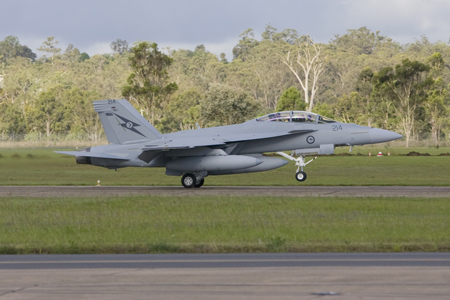
    Boeing Delivers 4 More Super Hornets to Australia Ahead of Schedule

    Milestone Reached as RAAF F/A-18Fs Achieve Initial Operating Capability

    AMBERLEY, Queensland, Jan. 6, 2011 — Boeing [NYSE: BA] delivered four new F/A-18F Super Hornets to Royal Australian Air Force (RAAF) Base Amberley in December, expanding the RAAF’s fleet of the advanced multirole fighters to 15. The delivery enabled the RAAF’s achievement of Initial Operating Capability (IOC) with its first Super Hornet squadron, the Amberley-based No. 1.

    Boeing has delivered all 15 Super Hornets to Australia ahead of schedule.

    “Early delivery of our new Super Hornets at Amberley has been a vital part of our path toward IOC for our first Super Hornet squadron, which we have now achieved ahead of schedule,” said RAAF Group Capt. Steve Roberton, Officer Commanding 82 Wing, which operates the Super Hornet. “As we’ve continued to hit our marks on time — or early, in many instances — with the Super Hornet program, we’ve enabled the RAAF to ensure Australia’s regional air superiority as we transition from the F-111 and classic Hornet.”

    The December arrival was the third Super Hornet delivery to the base during 2010. Three aircraft in the latest delivery were prewired for potential conversion to electronic attack capability during production at Boeing facilities in St. Louis; the remaining nine aircraft in the contract will be prewired in the same way before delivery to the RAAF’s No. 6 Squadron.

    “The Boeing Super Hornet team has surpassed expectations by delivering 15 aircraft to the RAAF in 2010 instead of the 12 originally scheduled,” said Carolyn Nichols, Australian Super Hornet program manager for Boeing. “Additionally, each aircraft has been delivered within budget. We are fully committed to ensuring the same delivery success and budget excellence throughout 2011. We congratulate the men and women of the RAAF on the outstanding achievement of reaching No. 1 Squadron’s Super Hornet IOC ahead of schedule.”

    The Australian government announced in March 2007 that it would acquire 24 of the advanced Block II versions of the Super Hornet, all of which are equipped with the Raytheon-built APG-79 Active Electronically Scanned Array (AESA) radar.

    The Boeing Super Hornet is a multirole aircraft, able to perform virtually every mission in the tactical spectrum, including air superiority, day/night strike with precision-guided weapons, fighter escort, close air support, suppression of enemy air defenses, maritime strike, reconnaissance, forward air control and tanker missions. Boeing has delivered more than 440 F/A-18E/Fs to the U.S. Navy. Every Super Hornet produced has been delivered on or ahead of schedule and on budget.

  • |

    Boeing Hits 2010 Airplane Delivery Target; Achieves Strong Order Bookings

    Company delivers 462 airplanes
    – 530 net orders booked as global economy shows recovery

    SEATTLE, Jan. 6, 2011 — Boeing recorded 462 commercial airplane deliveries in 2010, meeting company guidance of approximately 460 deliveries during the year. Boeing posted 530 net commercial orders for the year as air carriers transition from economic recovery to expansion. Boeing Commercial Airplanes maintains a strong order base of 3,443 unfilled orders.

    “With 376 deliveries in 2010, the Next-Generation 737 set a company delivery record for the second consecutive year,” said Jim Albaugh, president and CEO of Boeing Commercial Airplanes. “The 737 is the industry’s most in-demand airplane with 486 net orders as carriers continue to rely on its superior economics, versatility and continuous performance enhancements.”

    The 777 led Boeing’s twin-aisle programs with 74 deliveries and 46 net orders in 2010 as the airplane continues to rank at the top of operator, investor and frequent traveler polls for its efficiency and passenger comfort.

    Program orders, deliveries and backlog at the end of 2010 were as follows:

    Gross Orders

    Net Orders

    Deliveries

    Backlog Units

    737

    508

    486

    376

    2,186

    777

    76

    46

    74

    253

    747

    1

    (-1)

    0

    107

    767

    3

    3

    12

    50

    787

    37

    (-4)

    N/A

    847

  • Flight testing of six 787 Dreamliner airplanes passes 2,400 hours.
  • Pilots from ANA, the first 787 customer, fly the Dreamliner.
  • 747-8 Freighter surpasses 1,500 flight hours.
  • 900th 777 delivery.
  • 747-8 Intercontinental reaches final assembly and achieves power on.
  • 1,000th 767 prepares to enter Final Assembly.
  • First deliveries of Next-Generation 737s with the new Boeing Sky Interior.
  • Launching 787 GoldCare with TUI Travel – first of new comprehensive service offerings for customers.
  • On-time performance for urgent customer support requests of 99 percent through the Operations Center.
  • Boeing and China partner on sustainable aviation biofuel.
  • Last P-8A test airplane enters final assembly.
  • |

    NTSB ISSUES RECOMMENDATIONS DEALING WITH EMERGENCY LOCATOR TRANSMITTERS IN GENERAL AVIATION AIRCRAFT FOLLOWING CRASH INVOLVING SENATOR STEVENS

    FOR IMMEDIATE RELEASE: January 5, 2011
    SB-11-02

    The National Transportation Safety Board today issued two safety recommendations to the Federal Aviation Administration requiring a detailed inspection of all emergency locator transmitters (ELT) installed on general aviation aircraft to ensure that their mountings maintain their retention capabilities during an accident sequence.

    An ELT is designed to broadcast a signal through an externally mounted antenna that contains the aircraft’s registration information and the global positioning system coordinates of the original signal. Also, the “homing signal” can be detected locally by other aircraft, air traffic control facilities, or rescue personnel who use a compatible receiver.

    “In this case, the airplane was equipped with a functioning 406 megahertz ELT, which can be a tremendous aid to search and rescue operations,” said NTSB Chairman Deborah A.P. Hersman. “But this vital life-saving technology won’t do anyone any good if it doesn’t stay connected to the antenna.”

    On August 9, 2010, a de Havilland turbine Otter airplane crashed in mountainous tree-covered terrain approximately 10 miles from Aleknagik, Alaska. Nearly five hours after the crash, volunteer airborne search personnel located the aircraft approximately 19 miles from where the flight originated. The pilot and four passengers, including former U.S. Senator Ted Stevens, sustained fatal injuries. The other four passengers were seriously injured.

    Aircraft involved in the search and rescue efforts and satellites did not detect any ELT signals. Following the discovery of the airplane, a pararescuer found the ELT loose on the floor of the airplane. The ELT had activated but had separated from its mounting bracket and antenna.

  • |

    NTSB ISSUES RECOMMENDATIONS DEALING WITH EMERGENCY LOCATOR TRANSMITTERS IN GENERAL AVIATION AIRCRAFT FOLLOWING CRASH INVOLVING SENATOR STEVENS

    National Transportation Safety Board
    Washington, DC 20594

    FOR IMMEDIATE RELEASE: January 5, 2011

    Washington, DC – The National Transportation Safety Board
    today issued two safety recommendations to the Federal
    Aviation Administration requiring a detailed inspection of
    all emergency locator transmitters (ELT) installed on
    general aviation aircraft to ensure that their mountings
    maintain their retention capabilities during an accident
    sequence.

    An ELT is designed to broadcast a signal through an
    externally mounted antenna that contains the aircraft’s
    registration information and the global positioning system
    coordinates of the original signal. Also, the “homing
    signal” can be detected locally by other aircraft, air
    traffic control facilities, or rescue personnel who use a
    compatible receiver.

    “In this case, the airplane was equipped with a functioning
    406 megahertz ELT, which can be a tremendous aid to search
    and rescue operations,” said NTSB Chairman Deborah A.P.
    Hersman. “But this vital life-saving technology won’t do
    anyone any good if it doesn’t stay connected to the
    antenna.”

    On August 9, 2010, a de Havilland turbine Otter airplane
    crashed in mountainous tree-covered terrain approximately 10
    miles from Aleknagik, Alaska. Nearly five hours after the
    crash, volunteer airborne search personnel located the
    aircraft approximately 19 miles from where the flight
    originated. The pilot and four passengers, including former
    U.S. Senator Ted Stevens, sustained fatal injuries. The
    other four passengers were seriously injured.

    Aircraft involved in the search and rescue efforts and
    satellites did not detect any ELT signals. Following the
    discovery of the airplane, a pararescuer found the ELT loose
    on the floor of the airplane. The ELT had activated but had
    separated from its mounting bracket and antenna.