press release

  • |

    Aeromar and Continental Airlines to Start Codeshare Flights

    CHICAGO and MEXICO CITY, Jan. 25, 2011
    Aeromar and Continental Airlines, a wholly-owned subsidiary of United Continental Holdings, Inc. (NYSE: UAL) and a Star Alliance member, today announced that they will begin codeshare cooperation on routes within Mexico.

    Effective Feb. 1, 2011 Continental will initially place its code on Aeromar-operated flights between Mexico City and 13 destinations in Mexico. The codeshare builds on frequent-flyer cooperation launched in August 2010 that permits Continental OnePass members to accrue and redeem miles on all Aeromar-operated flights. In addition, Continental international first- and business-class passengers, Presidents Club members and Star Alliance Gold customers may access Aeromar’s Salon Diamante lounge in Mexico City.

    “The expansion of our partnership with Continental Airlines via codesharing will continue to broaden our leading joint market presence to better serve our customers, especially at a time when Aeromar is phasing in its first regional jets and further developing its route network within Mexico,” said Ami Lindenberg, Aeromar president.

    “We are pleased to expand our cooperation with Aeromar, which complements our extensive service to Mexico and offers new options to our customers,” said Jim Compton, executive VP and chief revenue officer of United Continental Holdings, Inc.

    About Aeromar

    Founded in 1987, Aeromar is Mexico’s most experienced airline. From its main operations base at Mexico City’s International Airport Terminal 2, Aeromar currently covers a network of 21 destinations in Mexico, as well as San Antonio, Texas, in the U.S.A. It performs over 100 average daily flights with a fleet of ATR-42 turboprop and CRJ-200 jet complying with the IOSA certification for the airline industry’s highest operational and safety audited standards established by IATA.

    Aeromar is a highly customer-focused airline, featuring the most convenient schedules and amenities for the business and leisure traveler, such as the “Salon Diamante” executive lounges, which are available at the Aguascalientes, Colima, Jalapa, Mexico City and Tepic airports. All-inclusive vacation packages, VIP charter flights and “FastPaq” courier and freight are among some of Aeromar’s additional products and services. For further information please visit us on the web at www.aeromar.us.

  • |

    Sabre, American Airlines Statement

    FORT WORTH, Texas, Jan. 24, 2011 – American Airlines and Sabre have agreed to put the litigation between the two companies on hold until June 1, 2011.

    American Airlines and Sabre will begin work shortly in an effort to reach a new agreement. Both parties will return to operating as they were prior to Jan. 5, 2011, in terms of Sabre displays, American Airlines content and economic terms.

    Officials at American Airlines and Sabre will not have any further comment on this announcement at this time.

  • |

    Goodrich to Address the Barclays Capital Third Annual Industrial Select Conference

    CHARLOTTE, N.C., Jan. 25, 2011 /PRNewswire via COMTEX/ — Marshall Larsen, Chairman, President and Chief Executive Officer of Goodrich Corporation (NYSE: GR), will address the Barclays Capital Third Annual Industrial Select Conference on Tuesday, Feb. 8, 2011, in Miami. The presentation is scheduled to begin at 1:55 p.m. Eastern time.

    A live audio webcast will be available on http://www.goodrich.com/ — see “Barclays Capital Conf.” link. Following the conference, the archived webcast will be available for replay. A slide presentation will be used during the conference and will be posted on the Investor Relations page of our website.

    Goodrich Corporation, a Fortune 500 company, is a global supplier of systems and services to aerospace, defense and homeland security markets. With one of the most strategically diversified portfolios of products in the industry, Goodrich serves a global customer base with significant worldwide manufacturing and service facilities.

  • |

    Alagro Fumigaciones Named Authorized Service Center for GE’s M601 and H80 Engines

    –EVENDALE, OHIO– Alagro Fumigaciones has signed an agreement with GE Aviation to become an Authorized Service Center for the M601 and H80 turboprop engines.

    As part of the agreement, Alagro Fumigaciones will offer comprehensive line maintenance, removals and re-installations of engines and LRUs and engine spares for the M601 and H80 engine families. GE Aviation will provide Alagro with comprehensive material support and training.

    “Alagro Fumigaciones is a well-known service provider in South America with more than 40 years of experience in the marketplace,” said Paul Theofan, president and managing executive of GE Aviation’s Business and General Aviation Turboprops. “With Alagro as an authorized service center, GE Aviation can better support its M601 and future H80 operators in the region.”

    Alagro Fumigaciones, located in Funes, Argentina, specializes in maintenance and repair of aircraft. Alagro provides engine inspections, airworthiness extensions, airworthiness approvals in Argentina, and a variety of repairs for aircraft and airframes. In addition to working with more than 90 customers across Argentina, Alagro also collaborates on repairs and production with Ecuador, Uruguay and Brazil.

    In 2009, Premier Turbines was selected as a Designated Repair Center in South and North Americas for GE’s M601 and, once in service, the H80 turboprop engines. As a Designated Repair Center, Premier Turbines offers heavy repair services, full test capabilities, exchange engines and rentals, line replacement unit rotable pools and field service support to all existing and future M601 and H80 engines in the Americas region. GE Aviation provides the necessary OEM parts to meet Premier Turbines’ needs.

    GE Aviation’s Business & General Aviation Turboprops has more than 1,600 M601 engines in service that have accumulated more than 17 million flight hours on 30 applications. Flight testing on the H80 engine continues on the Thrush 510G aircraft. The H80 is undergoing certification testing and will power business and general aviation, utility and agriculture aircraft. The H80 engine combines the elegant, robust design of the M601 engine with GE’s 3-D aerodynamic design techniques and advanced materials to create a more powerful, fuel-efficient, durable engine compared with the M601 engine, with no recurrent fuel nozzle inspections and no hot section inspection. The H80 engine will also feature an extended service life of 3,600 flight-hours or 6,600 cycles between overhauls, significantly enhanced hot-day takeoff performance and high-altitude cruise speeds. The H80 will provide the option of a single- or dual-acting governor, allowing customers flexibility in propeller selection.

    GE Aviation, an operating unit of GE (NYSE: GE), is a world-leading provider of jet and turboprop engines, components and integrated systems for commercial, military, business and general aviation aircraft. GE Aviation has a global service network to support these offerings. For more information, visit us at www.ge.com/aviation. Learn more about GE Business & General Aviation at http://facebook.com/GEBGA. Follow GE Aviation on Twitter at http://twitter.com/GEAviation and YouTube at http://www.youtube.com/user/GEAviation.

  • |

    Boeing, Alaska Airlines Complete Contract for 15 Next-Generation 737s

    SEATTLE, Jan. 25, 2011 /PRNewswire/ — Boeing (NYSE: BA) and Alaska Airlines today announced an order for 15 Next-Generation 737 airplanes, comprised of 13 737-900ERs (extended range) and two 737-800s. The 737-900ER is a new model for the Alaska Airlines fleet. The contract, which includes exercised options previously placed by Alaska, is valued at $1.3 billion at list prices.

    The largest and newest model in the 737 family, the 737-900ER can carry up to 26 more passengers or fly about 500 nautical miles (926 km) farther than the 737-900. The longer range of the 737-900ER will connect distant city pairs across continents, such as Seattle to Orlando, Fla., in a generous two-class configuration. It has substantial economic advantages over competing models, including six percent lower operating costs per trip and four percent lower operating costs per seat mile. Alaska Airlines plans to operate the 737-900ER in a two-class configuration with 178 to 184 seats.

    “The reliability and efficiency of our 737 fleet has been a direct contributor to our strong financial performance,” said Brad Tilden, president of Alaska Airlines. “The 737-900ER will be a perfect fit for our transcontinental, high traffic west coast and mid-continental markets and will be the most fuel efficient airplane in our fleet. We look forward to adding the same ‘Proudly All Boeing’ logo to these airplanes that already adorns the rest of our 737 fleet.”

    The Next-Generation 737s will add capability to Alaska Airlines’ fleet of 114 737s currently serving 61 destinations in the United States, Canada and Mexico.

    “Alaska Airlines has established a strong record of operational and financial performance by operating a highly efficient and flexible all-Boeing 737 fleet,” said Marlin Dailey, vice president of Sales and Marketing for Boeing Commercial Airplanes. “The addition of these Next-Generation 737s demonstrates our hometown partner’s strong investment in its future growth. It also speaks to the continuous improvements we are making to the Next-Generation 737 in terms of efficiency, economics, reliability and passenger comfort.”

    The Next-Generation 737 family is the world’s best-selling commercial jetliner. Demand for the Next-Generation 737 has led Boeing to announce two production rate increases, leading to the highest-ever production rates for the airplane in 2013.

  • |

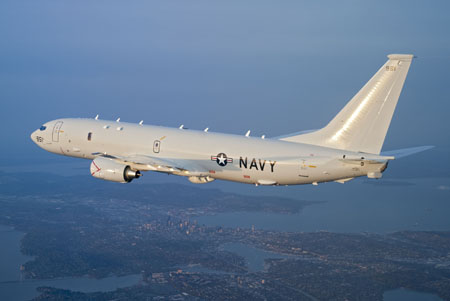
    Boeing Receives $1.6B Contract for P-8A Poseidon Low-Rate Initial Production


    SEATTLE, Jan. 25, 2011 — Boeing [NYSE: BA] on Jan. 21 received a $1.6 billion contract from the U.S. Navy for low-rate initial production (LRIP) of the P-8A Poseidon aircraft. The LRIP 1 contract is for six P-8A aircraft, spares, logistics and training devices.

    The Navy plans to purchase 117 of the Boeing 737-based P-8A anti-submarine warfare, anti-surface warfare, intelligence, surveillance and reconnaissance aircraft to replace its P-3 fleet. Initial operational capability is planned for 2013.

    “Providing these production aircraft to the Navy fleet on schedule is our No. 1 goal,” said Chuck Dabundo, Boeing vice president and P-8 program manager. “This is an exciting day for Boeing and the Navy and a testament to the P-8 team’s hard work and determination.”

    “This first production contract represents a significant commitment by the U.S. Navy to recapitalize its force of long-range maritime patrol and reconnaissance aircraft,” said Capt. Leon Bacon, P-8A deputy program manager for the Navy. “Ensuring that this capability arrives on schedule and within budget remains our primary objective.”

    Boeing will begin final assembly of the first LRIP aircraft at its Renton, Wash., facility this summer. The Poseidon team is using a first-in-industry in-line production process that draws on Boeing’s Next-Generation 737 production system. All P-8A-unique aircraft modifications will be made in sequence during fabrication and assembly.

    “The in-line approach we’ve incorporated on this military derivative aircraft is already paying the dividends we expected by helping us improve efficiency and reduce costs,” said John Pricco, Boeing Commercial Airplanes P-8 program manager.

    As part of the U.S. Navy System Development and Demonstration contract awarded to Boeing in 2004, the team is building and testing six flight-test and two ground-test aircraft. The first three flight-test planes, T1, T2 and T3, are completing testing at Naval Air Station Patuxent River, Md. The program’s static test plane, S1, recently completed its test program, which began in May 2009; S2, the fatigue test plane, will begin testing later this year.

    A derivative of the Next-Generation 737-800, the Poseidon is built by a Boeing-led industry team that includes CFM International, Northrop Grumman, Raytheon, Spirit AeroSystems, BAE Systems and GE Aviation.

  • |

    Press Release – FAA Celebrates Recovery Act Funded First Responder Facility

    For Immediate Release
    January 24, 2011

    WASHINGTON, D.C. – The U.S. Department of Transportation’s Federal Aviation Administration (FAA) today celebrated the completion of an Aircraft Rescue and Firefighting building at St. Louis Downtown Airport, East St. Louis, Ill., paid for with $4.7 million in American Recovery and Reinvestment Act funds.

    “This new facility in East St. Louis is one of the many Recovery Act projects that are helping make important safety improvements at airports around the country,” said U.S. Transportation Secretary Ray LaHood.

    Recovery Act funds paid the full cost of building the structure, which will house employees and a fire and rescue vehicle. FAA regulations require airports with unscheduled passenger-carrying aircraft of at least 31 passenger seats to have a fire and rescue facility on airport property. St. Louis Downtown Airport now receives charter operations by unscheduled air carriers and commuter service about three times per week and was required to build this facility.

    “Airports need to be prepared for any emergency, and this facility will help ensure the safety of passengers and flight crews,” said FAA Administrator Randy Babbitt.

    The St. Louis Downtown Airport is the third-busiest Illinois airport in number of operations, behind only Chicago O’Hare International Airport and Chicago Midway Airport. In fiscal year 2010, the airport had more than 111,000 takeoffs and landings.

    Nationwide, $1.3 billion in Recovery Act money has been made available for both airport improvement projects and air traffic control facility and system upgrades. Because of low construction bids for projects, more Recovery Act dollars were available for additional facilities and equipment as well as airport projects. These Recovery Act grants have been distributed to airports that serve commercial passengers, cargo and general aviation.

  • |

    Lufthansa names A380 after its first destination “Tokyo”

    Tokyo Governor Ishihara acts as godfather – Airline reinforces its position as
    Europe’s number One in Asia

    The Governor of Tokyo, Shintaro Ishihara, and Christoph Franz, Chairman of the Executive Board and Chief Executive Officer Deutsche Lufthansa AG, officially launched an Airbus A380 with the name “Tokyo”. The official ceremony took place at Narita Airport on the 150th anniversary of the signing of the first German-Japanese treaty of friendship on 24 January 1861 (at that time Prussia) and on the 50th anniversary of the first Lufthansa flight to Japan on 24 January 1961. As a result, the latest A380s delivered to Lufthansa with the registration D-AIMD and christened Tokyo, will now serve the airports of Frankfurt and the Japanese metropolis of Tokyo. The Japanese capital has already been the worldwide first Lufthansa-A380 destination since 10 June 2010. Meanwhile, Beijing and Johannesburg have been added as further destinations. As of the end of February, New York will become Lufthansa’s fourth A380 destination.

    “Our passengers have been flying on our Tokyo service for more than seven months in our new flagship and the enthusiasm for this aircraft and all the innovations associated with it is still as great as it was on the first day”, said Lufthansa chief Christoph Franz. “I am really delighted that with our A380 in the Japanese market, in particular, we have been able to further build upon our success and I am grateful for the support of our customers, partners as well as the state institutions. It is a great pleasure and honour, together with Governor Shintaro Ishihara and Germany’s Ambassador to Japan, Dr. Volker Stanzel, on this historic day to christen our flagship with the name ‘Tokyo’.

    The official ceremony took place at Tokyo-Narita International Airport. The first three Lufthansa A380s were named after Lufthansa’s two German hubs – “Frankfurt” and “Munich” and the A380 destination “Beijing”.

    “With this naming we would like to express our thanks to our customers and partners in Japan who have made us the number one European airline in one of the world’s strong growth regions. With this acknowledgement we confirm our engagement in Asia and will also continue to make investments for growth and innovations here in future”, said Christoph Franz.

    The “Tokyo” is the only Lufthansa aircraft up to now which was not – as is the usual tradition – baptized with champagne, but rather with Japanese “Sake” wine. In accordance with the Japanese tradition, Governor Isihara and Christoph Franz, together with Ambassador Volker Stanzel, broke open a barrel of Sake with a wooden hammer for the new aircraft, in order to welcome Tokyo’s new flying ambassador. Governor Shintaro Ishihara then “baptized” the aircraft. Christoph Franz said: “From today this aircraft will fly as a further symbol of German – Japanese friendship”.

    Japan was the first market worldwide to be served by the new Lufthansa flagship A380 since 10th June 2010 – in the meantime, with daily flight connections. Christoph Franz reported very positive results of the first months of the flight operations: “The A380 is efficient, environmentally-friendly and, with its low noise level, not only pleasant for the passengers, but also contributes to reducing noise pollution at heavily-used airports like Tokyo-Narita and Frankfurt. Quality, economic efficiency and also the environmental performance of the aircraft are trend-setting”.

    150 years of German-Japanese friendship
    Japan and what was then Prussia signed a friendship and trade agreement in Edo (today’s Tokyo) on 24th January 1861. As a result, official trade relations between Japan and Germany were initiated. Both countries today count among the world’s leading national economies.

    Patrons of the “Germany-Japan: 150 years of Friendship” celebrations are the German Federal President Christian Wulff and Japan’s Crown Prince Naruhito. The anniversary year was already opened with an official ceremony on 16th October 2010. Further highlights in 2011 are a German-Japanese Rock Festival as well as the Japanese- German Youth Summit in August. The German Embassy is organizing a German Festival in Tokyo in October as a grand finale. Full information about the dates of the events can be found on the Internet on the website: www.dj150.jp.

    50 years Lufthansa in Japan
    On 24th January 1961 Lufthansa initiated its East Asian scheduled services to Japan (Frankfurt – Tokyo) and thus laid the foundations for an important extension of the intercontinental route network. What at that time was the world’s largest passenger aircraft, a Boeing 707, covered the 15,000 kilometres to the Japanese metropolis of Tokyo in 25 hours with up to seven stops. Since 1969, further flights between Osaka and Frankfurt, since 1991 between Nagoya and Frankfurt and since 2002 between Tokyo and Munich, have been added to Lufthansa’s network to and from Japan. For more than 50 years now, Lufthansa has been consolidating its position as the leading European airline in Japan and, in the forthcoming summer flight schedule 2011, together with SWISS and Austrian Airlines, it will offer 82 flights per week between Japan and the Frankfurt, Munich, Zurich and Vienna hubs.

    The proportion of Japanese passengers on flights to and from Japan is over 70 percent. Furthermore, a comparison of Lufthansa capacity on the routes between Japan and Germany, from an initial 35,000 seats per year to over one million seats in 2011, clearly reflects the dynamic and successful development of air traffic between the two countries over the last 50 years.

    The long-standing and very successful cooperation with its Japanese Star Alliance partner All Nippon Airways ANA is extremely important for Lufthansa. Lufthansa offers its customers codeshare flights in the ANA network on three international and 16 national routes. Lufthansa and ANA are steadily improving and extending their cooperation for the benefit of the customers of both airlines.

    In its Lufthansa configuration, the Airbus A380 has a total of 526 seats. The totally new First Class with eight luxurious seats on the upper deck stands for individuality, optimal comfort and technical innovation, making travelling even more pleasant. Also on the upper deck is the Lufthansa Business Class with 98 seats. On the main deck 420 seats in the Economy Class offer more comfort than ever with impressive spaciousness. Full information about Lufthansa’s A380 can be found at www.lufthansa.com/A380. Photo material can be found under the following link: presse.lufthansa.com/de/mediathek/bildarchiv.html – Bildarchiv – Aktuelles – Lufthansa A380

  • |

    Boeing Names 3 to Business Development Leadership Positions

    ST. LOUIS, Jan. 24, 2011 — Boeing [NYSE: BA] today announced that it has named three Business Development leaders to new positions within its Boeing Defense, Space & Security (BDS) business unit:

    • Tom Bell, vice president of Strategic Development for BDS
    • Bill Bonadio, vice president of Business Development for Network and Space Systems (N&SS)
    • Jeff Kohler, vice president of Business Development for Boeing Military Aircraft (BMA).

    Previously, Bonadio was vice president of Strategic Development for BDS, Bell served as vice president of Business Development for Boeing Military Aircraft, and Kohler was vice president of BDS International Market Strategy.

    All three remain based in Arlington, Va.

    In his new position, Bell will provide leadership on business strategy and facilitate efforts to grow both core business and adjacent markets.

    “Having considerable international, sales and strategy experience with two of our businesses, Tom is highly qualified to lead Strategic Development for BDS,” said Chris Raymond, vice president of BDS Business Development.

    Bell joined Boeing in 1988. He holds a bachelor’s degree in sociology and business from Louisiana State University, Baton Rouge, and a master’s degree in business administration from the Florida Institute of Technology, with a concentration in international contracts.

    Bonadio is responsible for all aspects of strategy, sales, and customer relations for the N&SS portfolio, its divisions and programs.

    “Bill understands our customers’ perspectives and requirements, and he’ll bring that knowledge to bear within N&SS,” said Roger Krone, president of N&SS.

    Prior to joining Boeing in 2006, Bonadio was a vice president of Business Development at Danaher Corporation, and also worked in management consulting with Bain & Co. A former U.S. Navy submarine officer, Bonadio holds a bachelor’s degree in mechanical engineering from Bucknell University and a master’s in business administration from the J.L. Kellogg Graduate School of Management at Northwestern University.

    Kohler is responsible for all aspects of strategy, sales, and customer relations for the BMA portfolio, its divisions and programs.

    “Jeff brings significant international and customer experience to his new position, which will serve him and our business well as we look to increase market share internationally while continuing to grow our core business domestically,” said Chris Chadwick, president of BMA.

    Kohler joined Boeing in 2007 after a 34-year career with the U.S. Air Force. He holds a Bachelor of Science degree from the U.S. Air Force Academy and a master’s degree in history from the University of Indiana.

  • |

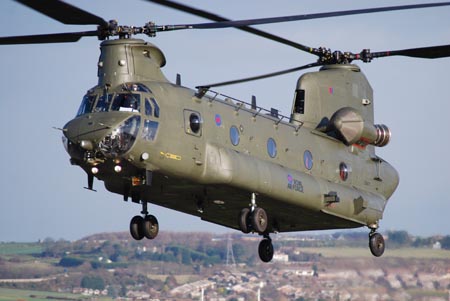
    Boeing Begins Flight Testing UK Chinook Mk4

    LONDON, Jan. 24, 2011 — Boeing and its Boeing Defence UK subsidiary today announced that the Boeing UK Rotorcraft Support team has begun flight testing the first Chinook Mk4 helicopter for the Royal Air Force (RAF). The first flight took place on Dec. 9 in Hampshire, England.

    “Project JULIUS, as the Mk4 program is known, will modernize the current Royal Air Force Chinook fleet – essentially giving us new aircraft,” said Chris White-Horne, Mk4 project team leader for the United Kingdom Ministry of Defence.
    Project JULIUS will modify 38 Mk2/2A Chinooks into the Mk4/4A configuration and eight Mk3 Chinooks into the Mk5 configuration. All the aircraft will be delivered to RAF Odiham in Hampshire.

    A major part of the modification for both the Mk4/4A and Mk5 aircraft is the Thales TopDeck cockpit. Thales UK is under contract with Boeing to supply its Cockpit Display System/Mission Avionic System, which will provide improved situational awareness, increased safety and options for capability enhancement. The upgraded and integrated cockpit display includes four multifunction displays, two stand-by flight displays, updated communications interfaces, and two new air data computers.
    “The first of the modified JULIUS Chinook helicopters is expected to be available to commanders before the end of 2011,” said David Pitchforth, managing director, Boeing UK Rotorcraft Support. “The entire Mk2 fleet will be fitted with the JULIUS cockpit by early 2015, followed by Mk2A and Mk3 modifications by 2015 and 2016, respectively.”

    The modifications also include the addition of a third crew-member seat and an update of Airworthiness & Safety Certification and Qualification for the modernized Chinook. The aircraft are being modified at the Gosport Fleetlands facility operated by Vector Aerospace, Boeing’s principal subcontractor for deep support of the RAF Chinook fleet. Vector Aerospace has established a dedicated production line at Fleetlands to support the JULIUS program, with specialist component manufacture provided from its Almondbank facility near Perth, Scotland.

    “Vector Aerospace is delighted to be associated with this significant milestone. It is a testimony to the skill and dedication of our teams in Fleetlands and Almondbank, who have worked in a spirit of true partnership with our customer Boeing and the key equipment suppliers,” said Tim Rice, managing director, Vector Aerospace UK.

  • | |

    CASA Media Release – Pilots urged to keep Shoalhaven skies safe

    Shoalhaven pilots are being urged to attend an important air safety workshop next month.

    The workshop will give local pilots special training to improve their flying and safety skills.

    The Civil Aviation Safety Authority is holding the workshop to help make the skies over Nowra and the Shoalhaven even safer.

    Safety issues to be covered at the workshop include aircraft maintenance and new rules for flying at regional aerodromes. There will also be the opportunity for pilots to ask questions and raise issues about local flying.

    CASA’s Peter Gibson says the workshop is part of a national regional air safety campaign.

    “Giving pilots from the Shoalhaven extra training will lift their safety skills to even higher levels,” Mr Gibson says.

    “All pilots receive comprehensive training but this workshop means they will be even better equipped to fly safely at all times and deal with emergencies.

    “Nowra and the Shoalhaven have a good air safety record but accidents do happen and everyone in aviation must work hard to keep local skies safe.”

    The workshop is being held at the Albatross Aero Club Museum Building on Tuesday 1 February 2011, starting at 6:00pm.

    CASA is providing free refreshments for everyone on the night.

  • |

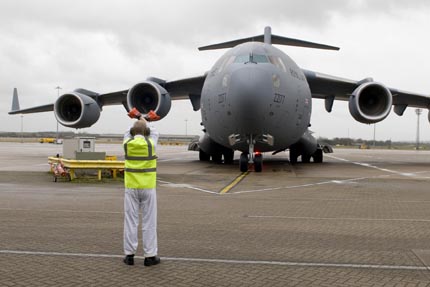
    7th Boeing C-17 for Royal Air Force Arrives in United Kingdom


    LONDON, Jan. 21, 2011 — Boeing and its Boeing Defence UK subsidiary today announced the arrival of the Royal Air Force’s seventh C-17 Globemaster III airlifter at RAF Brize Norton in Oxfordshire, England. The aircraft was officially delivered on Nov. 16 from Boeing’s facility in Long Beach, Calif., and underwent modifications at the company’s San Antonio facility before flying to the United Kingdom.

    “The RAF C-17 fleet, along with the rest of the Airbridge, delivers an incredible capability to our deployed forces on the front line,” said Air Officer Commanding 2 Group, Air Vice-Marshal Philip Osborn, Royal Air Force. “I am also extremely proud of the outstanding contribution that all our aircraft and personnel are making toward continued progress in Afghanistan.”

    Assigned to 99 Squadron at RAF Brize Norton, the UK fleet of C-17s provides critical airlift capability for the nation’s Joint Rapid Reaction Force and has supported humanitarian and disaster-relief missions to Pakistan, Haiti and Chile. 99 Squadron’s C-17s are equipped with upgraded software and avionics, as well as additional fuel tanks that extend the aircraft’s nautical mile range to over 4,000 miles. In normal operations, the aircraft carries a crew of three — two pilots and one air-loadmaster.

    “May 2011 will mark the 10th anniversary of the delivery of the Royal Air Force’s first C-17, which continues to perform superbly — anytime and anywhere,” said Boeing UK C-17 Program Manager Liz Pace. “The RAF uses its C-17s more than any other service today, which is why it has surpassed 60,000 flight hours with just six aircraft.”

    The UK Ministry of Defence announced it would acquire its seventh C-17 in December 2009, less than one year before delivery.

    Boeing supports the RAF’s C-17s through the C-17 Globemaster III Sustainment Partnership, a performance-based logistics program, at RAF Brize Norton, the RAF’s main operating base for strategic air transport and air-to-air refueling. The arrangement provides the RAF with the benefits of complete “virtual fleet” access and an extensive support network. The virtual fleet concept enables C-17 customers, especially those with smaller numbers of aircraft, to benefit from worldwide parts availability and economies of scale when purchasing materials.

    Boeing Defence UK Ltd. is a wholly owned subsidiary of The Boeing Company and a business unit of Boeing Defense, Space & Security. It currently has employees at 20 locations throughout the UK supporting Ministry of Defence and U.S. military programs.

  • |

    US Airways and Expedia Sign New Multi-Year Partnership Agreement

    TEMPE, Ariz. and BELLEVUE, Wash., Jan. 21, 2011 /PRNewswire/ — US Airways (NYSE: LCC) and Expedia, Inc., the world’s largest online travel company (Nasdaq: EXPE), today announced they have signed a multi-year strategic partnership agreement to continue offering US Airways’ full range of products and services, including all fares and inventory, through Expedia®, Hotwire® and Egencia® sites around the world.

    Under the agreement, US Airways has committed to offer all of its content to Expedia through the global distribution system (GDS) model, a central reservation system which is used by travel agencies to search and book travel. In addition, Expedia has committed to working with US Airways to enable the distribution of its Choice Seats product (offering customers the benefit of purchasing window or aisle seats toward the front of Coach class) through new channels, including the Expedia online travel marketplace.

    US Airways’ Senior Vice President, Marketing and Planning Andrew Nocella said, “We are committed to making it as easy as possible for our customers to purchase tickets from US Airways through as many sources as possible. More and more people want to book their own travel and they want to do it online. Expedia is the world’s largest online travel company and we’re pleased that they will continue to be one of our key points of distribution.”
    US Airways, Expedia and the companies’ many loyal customers will benefit from the new agreement, which gives US Airways continued access to Expedia’s marketplace, online travel expertise, broad reach and targeted merchandising opportunities. Additionally, Expedia’s travelers will gain greater access to all fares across US Airways’ extensive network of domestic and international flights. US Airways’ more than 3,200 flight options per day, and Expedia’s leading hotel and car rental offerings will allow consumers to find the most comprehensive travel options at the most competitive prices available, all in one place.

    Expedia’s Co-President, Partner Services Group Dhiren Fonseca said, “Expedia and US Airways share a commitment to providing travelers with affordable travel options around the world, without sacrificing the high level of service they have come to expect from our companies. They are one of the brands our customers come to look for and we’re thrilled to extend our partnership.”

    Expedia’s Co-President, Partner Services Group Gary Fritz added, “This agreement demonstrates the significance of Expedia’s marketplace for both our valued partners and our loyal customers. Expedia is committed to working collaboratively with our partners to offer customers the broadest range of opportunities at the guaranteed best prices.”

  • ST Aerospace Responds to FAA’s Press Release on Proposed Civil Penalty Charge

    SINGAPORE, Jan. 21, 2011 -USNewswire/ — We are disappointed with the Federal Aviation Administration (FAA)’s press release regarding a civil penalty proposal of US$1.025m against ST Aerospace’s U.S. facility ST Aerospace San Antonio, L.P. ST Aerospace takes our safety obligations seriously and has in fact addressed the issues raised by the FAA way back in 2008.

    Although we are concerned about the FAA’s notice, we are also comfortable with the fact that we co-operated with the FAA years ago to resolve their concerns and to implement quality controls to ensure that we continue to comply with the FAA’s drug-testing standards.

    We believe that the most important facts in this matter are:

    • Every one of the employees referred to in the FAA’s press release has passed their drug tests.
    • We have effective controls in place to ensure continued compliance with the drug testing standards found in the FAA’s regulations.
    • There are no allegations of current compliance issues.

    We intend to communicate with the FAA to explain why their informal allegations are incorrect. Nonetheless, we are treating this matter very seriously, and we will work closely with the FAA to resolve it.

  • |

    Copa Airlines Announces 2011 Expansion Plans: New Destinations, More Frequencies and Improved Schedules

    With the addition of three new destinations as of June 2011, the airline will serve 55 destinations in 27 countries on the American continent, with a total of 180 daily flights from the Hub of the Americas at Tocumen Airport in Panama City, Panama

    PANAMA CITY, Jan. 21, 2011 — Copa Airlines, subsidiary of Copa Holdings, S.A. (NYSE: CPA) announced today that as of June 2011 it will increase daily flight frequencies to several countries in its extensive route network, offer more convenient schedules and begin service to three new destinations: Toronto, Canada; Porto Alegre, Brazil; and Nassau, Bahamas.

    “Thanks to these new destinations and the increase in frequencies from our Hub of the Americas in Panama City, Copa Airlines continues to expand its coverage and reaffirm its leadership in Latin America and the Caribbean,” said Pedro Heilbron, CEO. “Copa offers flights to more international destinations than any other airline from any other hub in the Region.”

    “The Hub of the Americas continues to be the most efficient and convenient connection point on the continent,” Heilbron added. “The increase in flight frequencies will allow us to significantly improve our daily arrival and departure schedules to offer better connectivity, more flight options and more frequent connections throughout the day. In fact some destination will now have up to six daily frequencies.”

    In 2010 Copa Airlines transported more than 5.2 million passengers via the region’s most complete route network through the Hub of the Americas. The airline’s on-time performance of greater than 90 percent (measured by industry standards established by the U.S. Department of Transportation), puts the airline in a leadership position in Latin America and among the best in the world. The arrival of 10 new Boeing 737-800 aircraft this year will signal even greater growth.

    MORE FREQUENCIES AND CONVENIENT SCHEDULES FOR BUSINESS TRAVELERS

    Copa Airlines’ transition as of June 15 from a four-bank to a six-bank operational system (groups of connecting schedules) will allow the airline to better utilize Tocumen Airport’s existing infrastructure as well as offer passengers more and better scheduling options.

    As of June 15, the Hub of the Americas at Tocumen Airport will add to its existing flight banks, currently two in the morning and two in the afternoon, a group of early-morning departures – ideal for travelers who want to arrive at their destination early in the day – and a group of afternoon departures.

    These operational changes also translate to significant improvements in Copa Airlines’ flight schedules to major destinations on the American continent, such as New York’s JFK Airport and Dulles International Airport in Washington, D.C., as well as to South America’s principal cities.
    Opportunities for connection will increase throughout Copa’s extensive route network as well, resulting in shorter connecting times, giving the Panamanian airline a firm foothold as the best choice for connectivity and convenient travel schedules.

  • | |

    Delta Kicks Off 70th Anniversary Year as Atlanta’s Hometown Airline

    Celebration includes christening of Delta Boeing 777 as the “Spirit of Atlanta”

    Jan 21, 2011

    ATLANTA, Jan. 21, 2011 — When Lynda Lloyd boarded her first Delta Air Lines flight in Atlanta as a flight attendant in 1964, the airline had recently become the first commercial carrier to fly across the country in less than three hours and had just launched the industry’s most sophisticated electronic reservations system, all under the watchful eye of company founder and then-chief executive C.E. Woolman.

    Today, Lloyd, Delta’s most senior employee who lives and works in Atlanta, will join hundreds of her fellow Atlanta-based employees as well as elected, community and business leaders from across Georgia to mark the airline’s 70th anniversary as Atlanta’s hometown airline.

    A Delta Boeing 777-200LR aircraft used to connect Atlanta nonstop to cities such as Tokyo, Dubai, Johannesburg and Tel Aviv, will be christened as the “Spirit of Atlanta” during a celebration at Delta’s massive Technical Operations Center, adjacent to Hartsfield-Jackson Atlanta International Airport and in the shadow of the $1.4 billion Maynard H. Jackson Jr. International Terminal currently under construction.

    Delta (NYSE: DAL), today among the largest airlines in the world, was a small carrier focused on the Southeast when it moved its headquarters from Monroe, La., to Atlanta in 1941. In the decades that followed, Delta built the world’s largest connecting hub in Atlanta, and for more than two decades has remained Georgia’s largest private employer and a major economic force in the region.

    With 25,000 employees based in Atlanta, Delta is estimated to pump more than $25 billion into the local economy, and is a major contributor to key community organizations, including the Grady Health Foundation, the Woodruff Arts Center, AID Atlanta, Hands On Atlanta, Habitat for Humanity, CARE, the Carter Center and the National Center for Civil and Human Rights.

    “Delta Air Lines and Atlanta have a unique partnership that has been inextricably linked to the success and prosperity of our city and our airport for nearly three quarters of a century,” said Atlanta Mayor Kasim Reed. “The strong relationships among companies such as Delta, state and local elected officials and civic organizations are what make Atlanta not only a global, dynamic city, but a great place to live and do business. Congratulations to Delta Air Lines, Chief Executive Officer Richard Anderson and all employees on the company’s 70th anniversary as Atlanta’s hometown airline.”

    “Delta is truly an economic force for Georgia,” said Georgia Gov. Nathan Deal. “It is our biggest employer and its presence here plays a key role in helping us attract new investment and jobs. I look forward to partnering with Delta as it sets out on the next 70 years.”

    “The success of Delta and the city of Atlanta have been intertwined for seven decades, and it’s hard to argue with the results,” said Richard Anderson, Delta’s chief executive. “Atlanta has grown into a major international city while Delta built the world’s largest hub at the city’s airport. Central to this success has been the historic partnership between Delta, the city of Atlanta, the state of Georgia and our thousands of Atlanta-based employees and customers.”

    Recognizing one of Atlanta’s longest and most successful business partnerships, the “Spirit of Atlanta” will be christened at the celebration with a bottle of Coke. Muhtar Kent, chairman and chief executive of the Coca-Cola Company, will be honored and make remarks at the celebration.

    In addition, Lloyd will be honored as the Delta employee who has lived and worked in Atlanta the longest. The airline also will recognize its most frequent Atlanta flyer, Ed Robinette, who has flown nearly 7 million miles on Delta over the past 30 years, and Cheryll Davis, Delta’s most active Atlanta-based community volunteer, who has dedicated thousands of hours during her 20-year Delta career to the airline’s preferred local charities.

    “As a longtime Atlanta resident it’s been so exciting to be part of this airline, which is such a positive force for the community,” Lloyd said. “It was the very best decision of my life, to come to Atlanta, remain here, and be a Delta Flight Attendant. I am still enjoying the very best job in the world. It always makes me proud when I tell people I work for Delta.”

    “Two years ago, I moved my business to Atlanta because of the great flights and service offered by Delta, and I’m not the only one, we have so many businesses based in Atlanta solely because of Delta,” said Robinette, who has been a member of the Delta SkyMiles frequent flier program since its inception in 1981. “I’ve flown 7 million miles on Delta, and I can honestly say I don’t remember a single bad experience.”

    “Delta has always encouraged its employees to become involved in our communities, and service is a big part of being a member of the Delta family,” said Davis. “As an Atlanta resident, it’s great that Delta is so supportive of our community, and it’s one of the benefits of being Delta’s hometown.”

    “It gives me great pleasure to congratulate Delta on its 70th anniversary as Atlanta’s hometown airline,” said U.S. Sen. Saxby Chambliss, R-Ga. “Delta Air Lines has come a long way since its beginnings in Monroe, La., to the international commercial airline it is today. For seven decades, Delta has thrived, employing thousands of Georgians and becoming an integral part of our communities. Delta has established itself as an economic engine not only for Georgia, but for the entire Southeast. I am grateful that such a company calls Atlanta its home.”

    “As Georgians, we are all proud to be recognizing Delta’s 70th anniversary as our hometown airline,” said U.S. Sen. Johnny Isakson, R-Ga. “Over the past seven decades, Delta has become an integral part of the community, bringing jobs, businesses and great opportunities to the state of Georgia by connecting us to cities across the country and the world.”

    Delta Air Lines serves more than 160 million customers each year. With an industry-leading global network, Delta and the Delta Connection carriers offer service to 357 destinations in 67 countries on six continents. Headquartered in Atlanta, Delta employs more than 75,000 employees worldwide and operates a mainline fleet of more than 700 aircraft. A founding member of the SkyTeam global alliance, Delta participates in the industry’s leading trans-Atlantic joint venture with Air France-KLM and Alitalia. Including its worldwide alliance partners, Delta offers customers more than 13,000 daily flights, with hubs in Amsterdam, Atlanta, Cincinnati, Detroit, Memphis, Minneapolis-St. Paul, New York-JFK, Paris-Charles de Gaulle, Salt Lake City and Tokyo-Narita. The airline’s service includes the SkyMiles frequent flier program, the world’s largest airline loyalty program; the award-winning BusinessElite service; and more than 50 Delta Sky Clubs in airports worldwide. Delta is investing more than $2 billion through 2013 in airport facilities and global products, services and technology to enhance the customer experience in the air and on the ground. Customers can check in for flights, print boarding passes, check bags and review flight status at delta.com.

  • |

    American Airlines Assists Customers Affected By Weather in Northeast

    FORT WORTH, Texas, Jan. 20, 2011 — Due to the anticipated weather impact on the Northeastern United States, American Airlines offers customers the convenience to change their plans. Customers ticketed to travel on American Airlines, American Eagle or AmericanConnection flights to, from, or through the airports listed below may change flights as shown without penalty.

    If you are traveling to/from/through those cities on Jan. 20-21 and your ticket was issued no later than Jan. 19, you may begin travel as late as Jan. 24.

    • Allentown/Bethlehem, Penn. (ABE)
    • Boston (BOS)
    • Harrisburg, Pa. (MDT)
    • Hartford, Conn. (BDL)
    • Newark (EWR)
    • New York Kennedy (JFK)
    • New York LaGuardia (LGA)
    • Philadelphia (PHL)
    • Scranton/Wilkes Barre, Pa.(AVP)
    • White Plains, N.Y. (HPN)
  • |

    GE Aviation’s 2011 M601 Line Maintenance Training Schedule

    GE Aviation is offering M601 Line Maintenance Training at its Customer Technical Education Center (CTEC) in Cincinnati, Ohio. There are two sessions available – March 7 to 8 and Oct. 31 to Nov. 1.

    The first two M601E Line Maintenance courses were held at CTEC last year. The Air Transport Authority (ATA) level III course includes classroom and hands-on training for line maintenance mechanics and aircraft operators. Instructors will provide training on inspections, layout and operation, engine airflow, oil systems and components, fuel systems and components, exhaust systems, reduction gearboxes, air inlet, compressor section, power turbine section, combustion chambers, engine maintenance practices and general troubleshooting.

    To reserve your slot, contact Jennifer. For any questions regarding the course, contact Andrew Pierson. For more information about CTEC, visit http://geaviation.com/services/ctec.

    GE Aviation’s Business & General Aviation Turboprops has more than 1,600 M601 engines in service that have accumulated more than 17 million flight hours on 30 applications. The M601E-11 engine is the workhorse version of the proven M601 series engines for use in agriculture and utility aircraft applications. With no hot section inspection requirement and an internal fuel slinger free of recurrent fuel nozzle maintenance, the M601E engine provides distinct cost-of-ownership advantages.

    Flight testing on the H80 engine continues on the Thrush 510G aircraft. The H80 engine is undergoing certification testing and will power business and general aviation, utility and agriculture aircraft. The H80 engine combines the elegant, robust design of the M601 engine with GE’s 3-D aerodynamic design techniques and advanced materials to create a more powerful, fuel-efficient, durable engine compared with the M601 engine, with no recurrent fuel nozzle inspections and no hot section inspection. The H80 engine will also feature an extended service life of 3,600 flight-hours or 6,600 cycles between overhauls, significantly enhanced hot-day takeoff performance and high-altitude cruise speeds. The H80 will provide the option of a single- or dual-acting governor, allowing customers flexibility in propeller selection.

    GE Aviation, an operating unit of GE (NYSE: GE), is a world-leading provider of jet and turboprop engines, components and integrated systems for commercial, military, business and general aviation aircraft. GE Aviation has a global service network to support these offerings. For more information, visit us at www.ge.com/aviation. Learn more about GE Business & General Aviation at http://facebook.com/GEBGA. Follow GE Aviation on Twitter at http://twitter.com/GEAviation and YouTube at http://www.youtube.com/user/GEAviation.

  • |

    GE and AVIC Sign Agreement for Integrated Avionics Joint Venture

    GE Aviation of the United States and Aviation Industry Corporation of China (AVIC) today announced the signing of the agreement to form their new joint venture company. Chinese Commerce Minister Chen Deming and the U.S. Commerce Secretary Gary Locke witnessed the public signing by David Joyce, president and CEO of GE Aviation and Zhang Xinguo, vice president of AVIC today in Chicago.

    The new AVIC and GE joint venture company will develop and market integrated, open architecture avionics systems to the global commercial aerospace industry for new aircraft platforms. This system will be the central information system and backbone of the airplane’s networks and electronics and will host the airplane’s avionics, maintenance and utility functions. GE and AVIC will continue to service their legacy programs and existing contracts with customers. The agreement is subject to government approvals and the issuance of an operating license.

    This 50/50 joint venture represents a significant milestone in the growing aerospace relationship between Chinese aviation industry and GE Aviation since the mid-1980s. Chinese airlines now operate more than 2,500 jet engines produced by GE and CFM International (joint company of GE and Snecma), with an additional 1,000 engines on back order. GE Aviation’s collaboration in China also involves investment in a network of facilities for technical training, manufacturing, spare parts distribution, and engine maintenance and overhaul. Additionally, GE is powering China’s new ARJ21 regional aircraft and CFMI was selected to power the new Chinese C919 aircraft.

    The new GE-AVIC joint venture extends the relationship beyond engines into commercial avionics. It will enable GE and AVIC to grow a business together that will create jobs globally, including hundreds of new jobs in the US, the UK and China.

    “GE is extremely pleased and excited to be a part of this unique aviation business. The JV will build on the extensive avionics capabilities of both companies and create a technology center of excellence to serve the commercial aviation market,” said David Joyce. “GE’s aviation business in China results in 1,800 high-technology jobs in the U.S. The jobs are involved in producing and supporting jet engines for China, as well as developing the new engine and avionics system for the C919.”

    The joint venture company will be headquartered in China and will be the single route-to-market for integrated avionics systems for both GE and AVIC for new commercial aircraft. Also, GE and AVIC will each provide avionics products to the joint venture company as a customer and distributor.

    “The combination of AVIC and GE’s aviation experience, technical know-how and people skills will lead to the development of highly competitive commercial avionics products,” said Zhang Xinguo. “AVIC is looking forward to a long and successful partnership.”

    The name of the joint venture is GE-AVIC Civil Avionics Systems Company Limited. The joint venture will have its Chairman and General Manager nominated by AVIC and GE respectively with final approval from its board of directors. The company will be initially located at Zizhu Digital Hub Science Park in Shanghai until a permanent location is secured.

    “The joint venture will work to secure systems and other avionics products on future aircraft adding to the overall economic value and jobs created,” said Lorraine Bolsinger, president and CEO of GE Aviation Systems. “The JV and C919 program will support and maintain at least 300 high-tech jobs locally in each the US and China. This venture will challenge our team to come up with break-through technology. GE and AVIC will together develop a world-class engineering organization and the JV itself will be creating new IP and new technology. This is a 50/50 partnership; you have to be all in and be very committed.”

    The initial focus for the joint venture is integrated avionics systems for the C919 aircraft. This selection was formalized in a Letter of Intent with COMAC memorialized in a public signing on July 12, 2010. COMAC anticipates delivering more than 2300 C919 aircraft over the 20-year life of the program. This market potential provides an estimated value for the AVIC GE avionics systems of approximately $2 billion.

    Jeff Immelt, Chairman and CEO of GE and Lin Zuoming, president of AVIC, originally signed the framework agreement on November 15, 2009 regarding the formation of the visionary joint venture and the intention of jointly creating a market-leading integrated avionics system supplier.

    Since a major restructuring in November 2008, the AVIC Group has been ranked in the Fortune’s Global 500 list with a diversified aviation business portfolio ranging from helicopter-making to plane manufacturing. The company has also developed strong capabilities to supply avionics products to various models of aircrafts, both for military and civil use. AVIC has also been active in extensive international exchange and cooperation, viewing all industrial players in the aviation space globally as potential partners.

    China Aviation Industry Corporation (AVIC) is an ultra large state-owned enterprise and an investment institution, authorized and managed by the Central People’s Government. It is reorganized from AVIC I and AVIC II. The AVIC group oversees a wide range of business units, including defense, transport aircraft, aviation engine, helicopters, avionics, electromechanical systems, general aviation aircraft, aviation research and development, flight test, trade & logistics and asset management. It has nearly 200 subsidiaries (branches) and over 20 listed companies with a total of 400,000 employees. AVIC was ranked 330th in the Global Fortune 500 for 2010. It was the first Chinese aviation industrial company to make it into the rarified league. For more information, please visitwww.avic.com.cn.

    GE Aviation, an operating unit of GE (NYSE: GE), is a world-leading provider of jet engines, components and integrated systems for commercial, military, business and general aviation aircraft. GE has a global service network to support these offerings.

  • |

    Boeing and SAIC Submit Revised Ground Combat Vehicle Proposal to US Army

    The Boeing Company [NYSE: BA] has teamed with Science Applications International Corporation (SAIC) [NYSE: SAI] to submit a revised proposal for the technology development phase of the U.S. Army’s Ground Combat Vehicle (GCV) program. The team originally submitted a proposal in May, but the initial Request for Proposal was rescinded and a second request was issued in November.

    The SAIC-led GCV team, known as Team Full Spectrum, remains intact from its original proposal effort. SAIC will be the prime contractor, with Boeing, Krauss-Maffei Wegmann and Rheinmetall Defence as subcontractors. The team’s offering draws on experience gained from the Puma and Manned Ground Vehicle programs and will be built in the United States with a team of experienced American small- and mid-tier supplier businesses.

    “Team Full Spectrum has again put together an exceptional proposal to answer the Army’s requirement for a modern infantry fighting vehicle,” said Charles Toups, vice president and general manager of Boeing Network and Tactical Systems. “We have focused on the four key elements the Army has emphasized – capacity for a nine-soldier dismounted squad; a schedule that will allow production in seven years; force protection; and full-spectrum operations from civil relief through full combat operations. Our proposal offers mature technology for unequaled capability at the lowest possible risk.”

    The team’s focus is to provide a solution that balances the technology the customer requires with the speed it needs to meet operational goals.

    “Our offering is designed to protect soldiers by decreasing their burden of mechanical tasks so they can concentrate on accomplishing their mission,” said Deb Alderson, SAIC group president. “In addition, our team’s high technical readiness levels will help us meet the Army’s timeline.”

    The GCV program will replace aging fighting vehicles currently in the Army’s inventory with a single platform capable of carrying an entire squad and protecting that squad from improvised explosive devices and other threats of modern warfare. The Army will award up to three technology demonstration contracts worth approximately $450 million each, with a 24-month time frame for development. The contract awards are expected in the second quarter of this year.

  • |

    FAA Proposes $170,000 Civil Penalty For Pemco World Air Services

    For Immediate Release
    January 21, 2011

    WASHINGTON – The Federal Aviation Administration (FAA) is proposing a $170,000 civil penalty against Pemco World Air Services of Dothan, Ala., for allegedly failing to administer pre-employment drug tests to two individuals the company hired for safety-sensitive positions.

    The FAA also cited Pemco for failing to carry out required follow-up drug or alcohol testing on eight individuals reinstated after completing return-to-duty training during 2008. In all, the company failed to carry out 24 required follow-up tests. Failing to administer the pre-employment and reinstatement tests are violations of Federal Aviation Regulations.

    The FAA inspected Pemco’s pre-employment test program three times, and each time the FAA determined it had not complied with the requirements. These findings resulted in proposed civil penalties.

    Pemco has 30 days from receipt of the FAA’s enforcement letter to respond to the agency.

  • | |

    FAA Dedicates New Airport Traffic Control Tower for LaGuardia Airport

    For Immediate Release
    January 21, 2011

    NEW YORK–The Federal Aviation Administration today dedicated a new airport traffic control tower for LaGuardia Airport (LGA) that will replace the one that has served the airport since 1964. In 2010, air traffic controllers at LGA handled nearly 400,000 takeoffs and landings.

    “LaGuardia Airport plays an important role in our country’s aviation infrastructure,” said U.S. Transportation Secretary Ray LaHood. “This modern tower will help enhance the safety and efficiency of air travel in and out of the New York metropolitan area.”

    The tower will be equipped with the latest aviation technology, including the Airport Surface Detection System Model X (ASDE-X), which allows controllers to track surface movement of aircraft and vehicles. Controllers will also be using the Integrated Control and Monitoring System (ICMS), which consolidates information including navigational aid displays into one screen.

    “Today marks a culmination of years of hard work by many people both inside and outside the FAA,” said FAA Administrator Randy Babbitt. “This tower symbolizes the direction the FAA is taking by transforming the future of aviation with new technology.”

    The new 233-foot high tower is 82 feet higher than the previous tower and has an 850 square foot tower cab. The total cost to design, equip, and construct the new tower was approximately $100 million.

  • |

    Press Release – FAA Mandates Crew Resource Management Training for On-Demand Charters

    For Immediate Release
    January 20, 2011

    WASHINGTON – The Federal Aviation Administration (FAA) has finalized a rule that requires non-scheduled charter airlines and air taxis to train pilots and flight attendants in Crew Resource Management (CRM), a well-established concept that helps reduce human error in commercial aviation by teaching pilots, flight attendants and other aviation workers to act as a team.

    Air carriers affected by the final rule must establish initial and recurrent CRM training for crewmembers within two years of the effective date of the rule. The training must address the captain’s authority; intra-crew communications; teamwork; managing workload, time, fatigue and stress; and decision-making skills.

    “This type of training is critical for the safety of flight crews and passengers,” said U.S. Secretary of Transportation Ray LaHood.
    The FAA has required CRM training for air carriers operating larger airplanes since December 1995.

    “I know the value of making Crew Resource Management part of the safety culture from my days as an airline pilot,” said FAA Administrator Randy Babbitt. “A crew that works as a team is a better crew, regardless of the size of the plane or the size of the airline.”

    CRM training focuses on the interactions among personnel including pilots, flight attendants, operations personnel, mechanics, air traffic controllers and flight service stations. This training in communications and teamwork can help prevent errors such as runway incursions, misinterpreting information from air traffic controllers, crewmembers’ loss of situational awareness, and failure to fully prepare for takeoff or landing.

    This final rule responds to a 2003 National Transportation Safety Board recommendation that is currently on the Board’s “Most Wanted” list of safety improvements.

  • |

    NEXT INTERNATIONAL SPACE STATION CREW HOLDS NEWS CONFERENCE

    HOUSTON — The next three crew members to live and work aboard the International Space Station will hold a news conference at 1 p.m. CST on Wednesday, Jan. 26 at NASA’s Johnson Space Center in Houston. The news conference will be broadcast live on NASA Television and the agency’s website. Questions will be taken from participating NASA centers.

    NASA astronaut Ron Garan and crewmates, Russian cosmonauts Alexander Samokutyaev and Andrey Borisenko, will participate in individual round-robin interviews, in person or by phone, following the news conference. The crew also will participate in a photo opportunity for reporters at Johnson.

    U.S. and foreign media representatives planning to attend the briefing or participate in the round-robin interviews must contact the Johnson newsroom at 281-483-5111 by 4 p.m. on Monday, Jan. 24.

    Garan, Samokutyaev and Borisenko are three of the six crew members for Expedition 27 and 28. The trio is scheduled to launch to the station aboard a Russian Soyuz spacecraft from the Baikonur Cosmodrome in Kazakhstan on March 29 (March 30 Kazakhstan time). They will join Expedition 27 NASA astronaut Cady Coleman, European Space Agency astronaut Paolo Nespoli and Russian cosmonaut Dmitry Kondratyev who will stay aboard the station until mid-May.

    On June 1, NASA’s Mike Fossum, Japan’s Satoshi Furukawa and Russia’s Sergei Volkov will join Garan, Samokutyaev and Borisenko to complete the Expedition 28 crew.

  • |

    Goodrich Introduces New Lighter-Weight Wheels and Brakes for the Boeing 777 Fleet

    New main wheels and brakes will provide weight and cost savings for airline operators

    CHARLOTTE, N.C., Jan. 19, 2011 /PRNewswire via COMTEX/ — Goodrich Corporation (NYSE: GR) has introduced new lighter-weight main wheel and brake assemblies for Boeing 777-200LR, 777 Freighter, and 777-300ER airplane models. The new configuration wheels and brakes provide a weight savings of 260 pounds (118 kg) per airplane, resulting in reduced fuel costs for 777 operators. The new equipment is now standard on 777 airplanes delivered with Goodrich equipment, and will be available in the aftermarket starting in January 2011.

    The new assemblies are approved by Boeing, and are intermixable with existing Goodrich wheel and brake assemblies for the 777-200LR, 777 Freighter, and 777-300ER. In addition, the new brake will continue to provide a 35% brake life advantage over competitive products through the use of Goodrich’s latest DURACARB(R) carbon brake disk material.

    Jim Wharton, vice president of sales and program management for Goodrich Aircraft Wheels and Brakes, said, “This is another example of our commitment to continuously improve the products and services we provide to our airline customers. The introduction of these new Boeing 777 wheels and brakes will allow our existing and future customers to realize weight and fuel savings and reduce their cost of operation.”